



Edwardian Serving Trolley
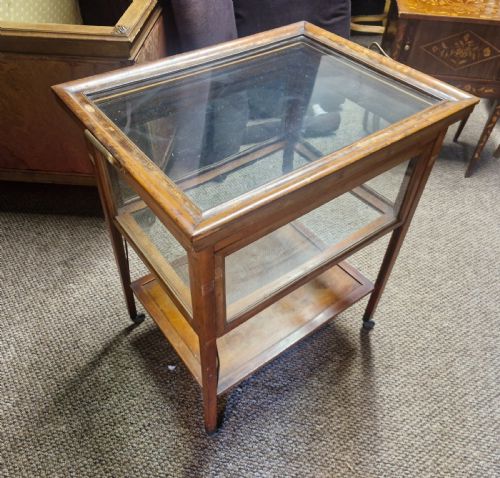
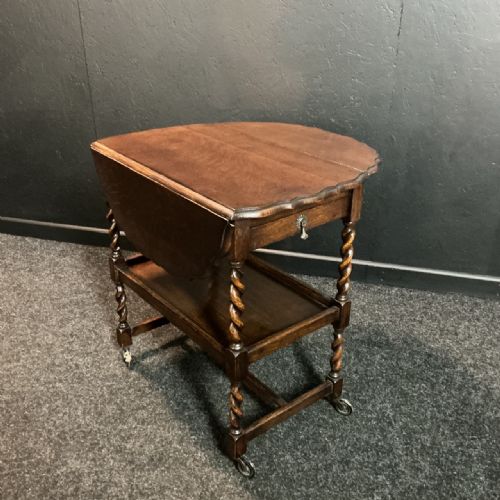
When you need an Edwardian serving trolley, these timber pieces bring refined mobility to hosting with tiered shelves and drop leaves.
Edwardian Serving Trolley
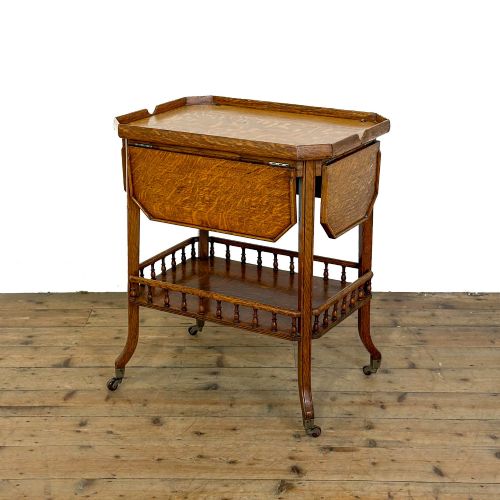
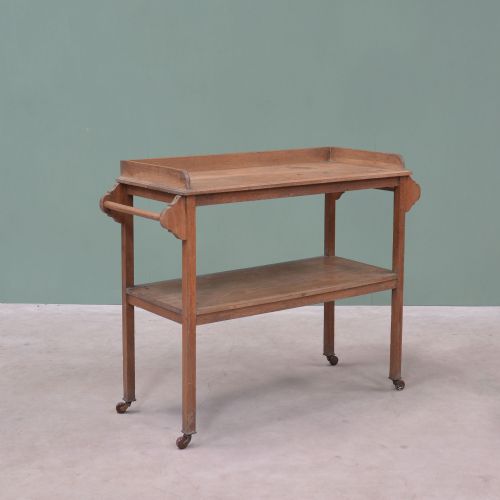
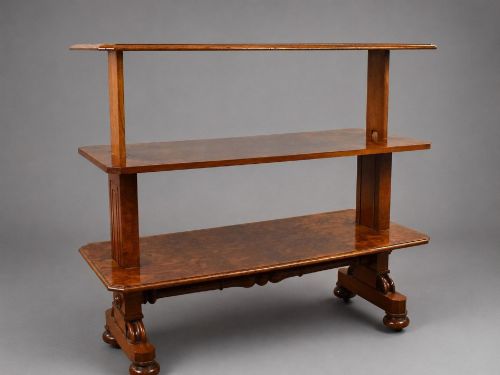
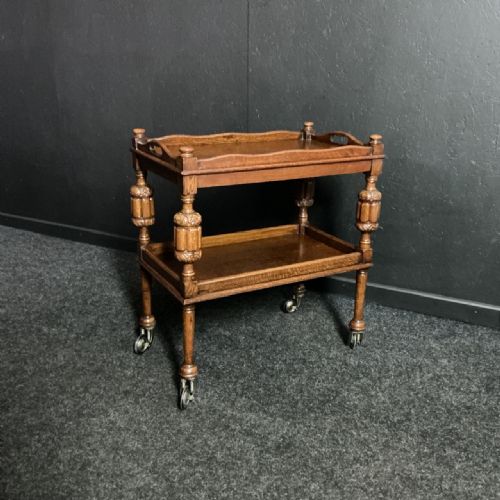
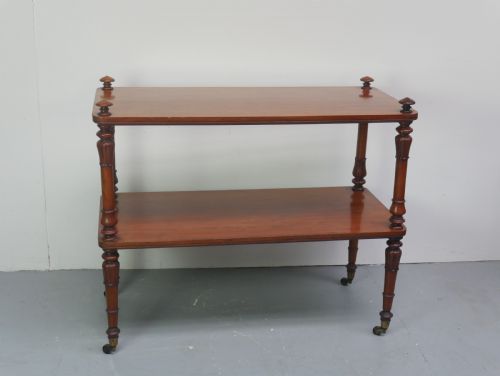
An edwardian serving trolley functions as a mobile surface for refreshments, often equipped with wheels or castors for easy movement across rooms. The selections span compact two-tier tea trolleys to larger buffets and etageres designed for hosting afternoon tea.
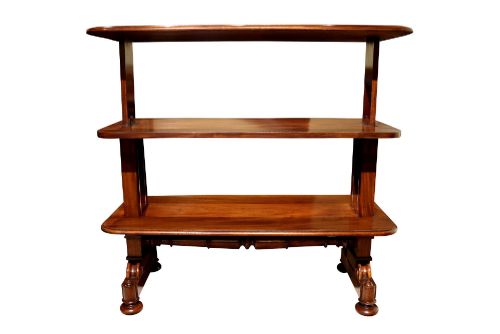
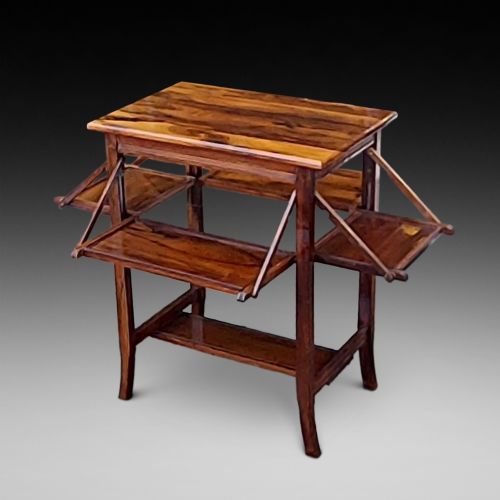
Most examples hail from the Edwardian period, though related designs stretch from Victorian dumbwaiters to later twentieth-century drop-leaf tea trolleys. These pieces typically feature multiple levels, folding tops, or removable trays suited for serving guests.
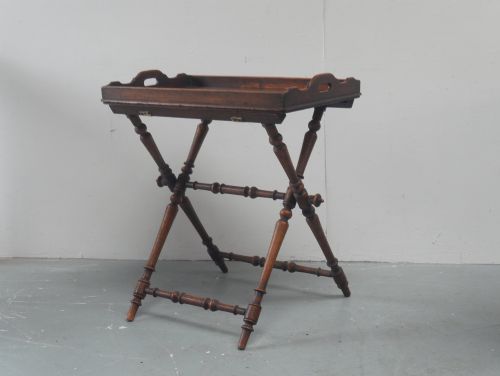
Makers utilised various formats, including butlers trays on stands, cake serving tables, and side tables with barley twist legs. The core utility remains practical hospitality, whether configured as a simple tea cart or an adjustable buffet.
Materials and Construction
Timbers dominate the construction of these pieces, with oak and mahogany appearing most frequently alongside walnut, rosewood, and teak. Cabinet makers shaped these woods into turned legs, drop-leaf surfaces, and framed tiers.
Metal components such as brass castors and gilt fittings support the mobility and structural detailing of the trolleys. Glass inserts and ceramic elements occasionally supplement the wooden frameworks for serving surfaces.
Joinery methods include turned barley twist supports, hinged drop leaves, and telescopic adjustments found on adjustable buffets and dumbwaiters. Carved details and satinwood inlay provide decorative contrast to the primary timber bodies.
Some clever trolleys double as card tables with baize surfaces, ready to transition from afternoon tea to an evening game of whist.
Assessing Quality and Craft
The choice of timber grain defines much of the visual merit, particularly when figured flame mahogany or burr walnut is employed. Superior examples display carefully matched veneers and rich, polished patination across the tiers.
Mechanical execution distinguishes finer pieces, seen in the smooth operation of folding tops, drop-leaf hinges, and telescopic mechanisms. Robust construction in the leg joints and sturdy brass castors ensure the trolley handles movement securely.
The Edwardian Serving Trolley Glossary
- Dumbwaiter
- A multi-tiered serving piece used for holding food and tableware without requiring extra attendants. These often feature revolving or fixed circular shelves.
- Barley Twist
- A type of turned wooden furniture leg resembling a spiral rope. This decorative carving style appears frequently on early twentieth-century oak trolleys.
- Drop-Leaf
- A table or trolley top with hinged flaps that fold down to save space. Raising the leaves extends the surface area for serving tea or meals.
- Etagere
- A set of open shelves for displaying small objects or serving items. These lighter frameworks often incorporate brass or inlaid wood.
- Butlers Tray
- A removable wooden tray with raised sides, designed to sit upon a folding stand. It combines portable service with elevated storage.
Edwardian Serving Trolley: Frequently Asked Questions
What is an edwardian serving trolley used for?
These pieces served primarily for wheeling tea, cakes, and beverages into sitting rooms during formal afternoon visits. They provided a mobile surface that kept refreshments within reach without crowding the main dining furniture.
Today, owners utilise them as practical drinks trolleys, side tables, or display surfaces for books and ceramics. Their tiered design offers compact storage in modern living spaces.
How do I date an edwardian serving trolley?
Dating relies on examining the timber species, hardware, and structural styling relative to historical periods. Edwardian pieces often show lighter oak or mahogany framing with simple inlay or turned supports.
Earlier Victorian precursors tend to be heavier, featuring dark walnut or mahogany with telescopic mechanisms and dumbwaiter configurations. Later twentieth-century versions introduce simplified joinery and different castor fixings.
Are these trolleys sturdy enough for daily use?
Solid timber construction and robust joinery allow most antique trolleys to handle regular weight when moving items across flat floors. Original brass castors roll smoothly if kept clean and properly lubricated.
Care should be taken with hinged drop leaves and folding mechanisms to avoid straining joints. Placing heavy loads on the lower tier helps maintain balance during transport.
What woods were used for edwardian serving trolleys?
Oak and mahogany form the vast majority of surviving examples, reflecting popular interior tastes of the era. Walnut, rosewood, and teak also appear in specific regional or high-end designs.
Inlay work frequently incorporates lighter satinwood contrasts against darker primary timbers. Brass fittings and glass inserts supplement the wooden structures.