



Wheeled Drinks Cart
A wheeled drinks cart brings mobility and period character to entertaining, spanning Edwardian oak designs to Art Deco brass and glass.
Wheeled Drinks Cart
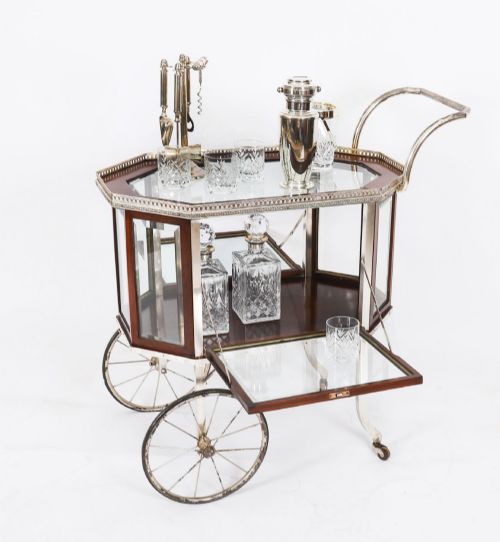
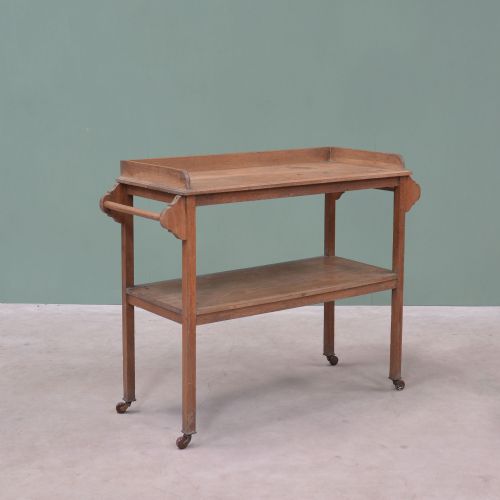
A wheeled drinks cart provides a mobile surface for serving refreshments, encompassing forms such as bar carts, tea trolleys, etageres, and serving trolleys. When you search for a wheeled drinks cart, you encounter pieces designed to transport bottles, glassware, and tea service across rooms.
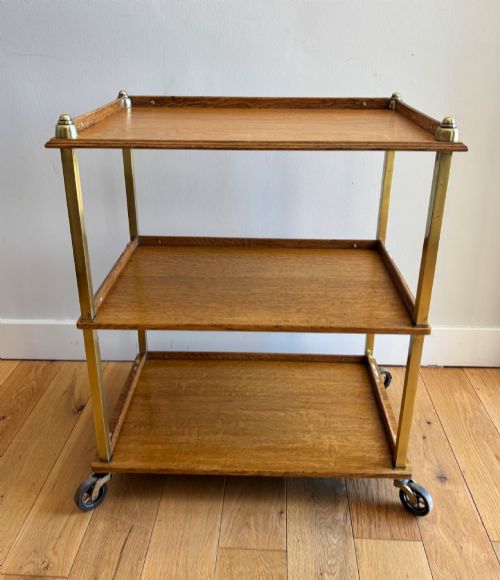
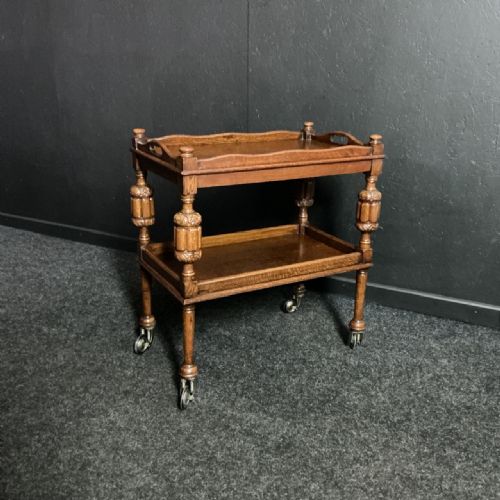
The selections span multiple eras, including Victorian, Edwardian, and the 1910s, 1920s, and 1930s. You are most likely to meet two-tier and three-tier examples in materials like oak, mahogany, brass, and glass.
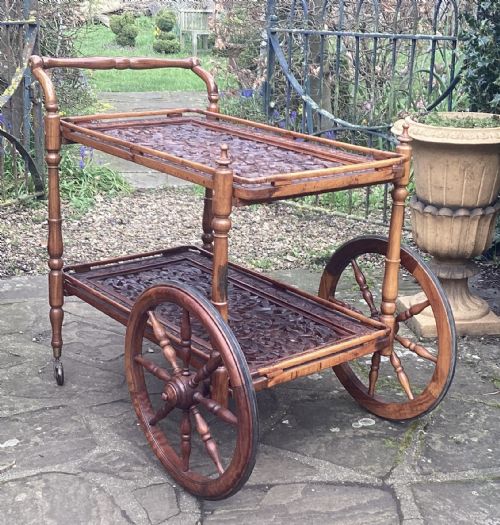
Origins vary from English and French workshops to Indian carved hardwood and specific designers. These movable pieces function equally well as static display furniture or active service carts in a modern home.
How they were made
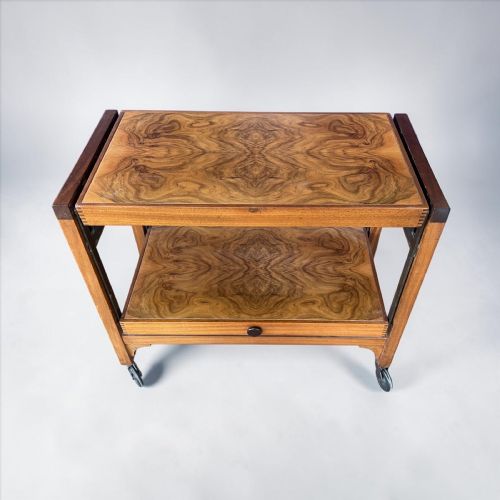
Construction relies on traditional cabinetmaking timbers such as oak, mahogany, walnut, and teak, often shaped into tiered frameworks. Carpenters utilised folding mechanisms, lift-off trays, and metamorphic designs to increase utility.
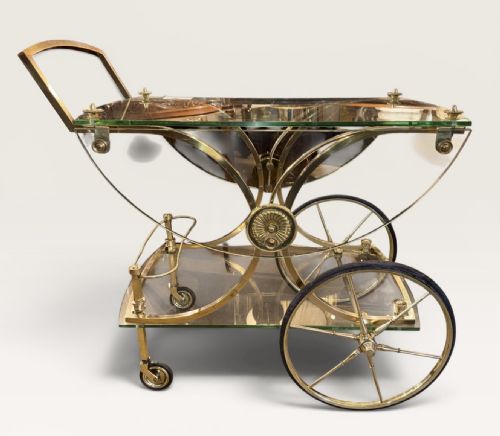
Metalwork plays a structural and decorative role, with brass frames, silver-plated elements, and mixed media such as goatskin applied to surfaces. Glass panels, etagere shelves, and carved hardwood details complete the construction of these carts.
Listings feature oak, mahogany, walnut, teak, brass, glass, silver plate, and goatskin across Edwardian, Victorian, and 1920s to 1930s periods.
What varies in quality
Quality shows in the selection of materials and the execution of specialty finishes, such as goatskin panels or fine brass casting, compared to standard timber framing. The integration of functional mechanisms, including folding tops and smooth-running wheels, distinguishes finer examples.
Design sophistication separates standard utility tea trolleys from attributed pieces by makers like Maison Bagues or Aldo Tura. The refinement of carving, whether in English oak or Indian hardwood, marks the upper tier of production.
Maison Bagues·Aldo Tura
The Wheeled Drinks Cart Glossary
- Etagere
- A piece of furniture with a set of open shelves for displaying small objects or serving items. These often feature in brass and glass drinks trolley designs.
- Metamorphic
- Describing furniture that transforms from one form into another, such as a trolley with a folding top. This engineering allows a compact surface to expand.
- Silver Plated
- A thin layer of silver applied to a base metal object. This technique provides the appearance of solid silver on serving items and coasters.
- Tea Trolley
- A wheeled cart specifically designed for serving afternoon tea, frequently featuring multiple tiers and wooden construction. They bridge domestic dining and mobile entertaining.
Wheeled Drinks Cart: Frequently Asked Questions
How do I use a wheeled drinks cart today?
These carts serve as mobile cocktail bars, side tables, or display surfaces for glassware and bottles in living spaces. Their wheels allow easy movement between rooms during gatherings.
Their tiered structure also provides practical storage for daily items while maintaining a decorative period presence in a room.
What is the difference between a tea trolley and a bar cart?
Tea trolleys typically date from the Edwardian and early twentieth-century periods, often constructed from oak or mahogany with folding tops for domestic service. Bar carts lean toward Art Deco or mid-century aesthetics, utilising brass, glass, and goatskin for entertaining.
Despite their original intended uses, both function well for holding bottles and glassware in contemporary interiors.
Are these carts sturdy enough for daily use?
Most examples are built from solid hardwoods like oak and mahogany, or robust brass frames, making them durable for holding bottles and glassware. Original wheels and joints provide sufficient stability when moved across carpets or wooden floors.
Care should be taken with folding mechanisms and antique glass shelves during relocation.
How do I identify an Edwardian tea trolley?
Edwardian examples usually feature solid oak or mahogany construction, often with two tiers and practical additions like lift-off trays or folding leaves. Their aesthetic is rooted in traditional English woodwork rather than metal-heavy industrial designs.
They date from the early 1900s and reflect the domestic entertaining habits of that period.