





Antique Hostesses Trolley
An antique hostesses trolley is a wheeled server for tea or drinks, bringing period charm and genuine utility to modern entertaining.
Antique Hostesses Trolley
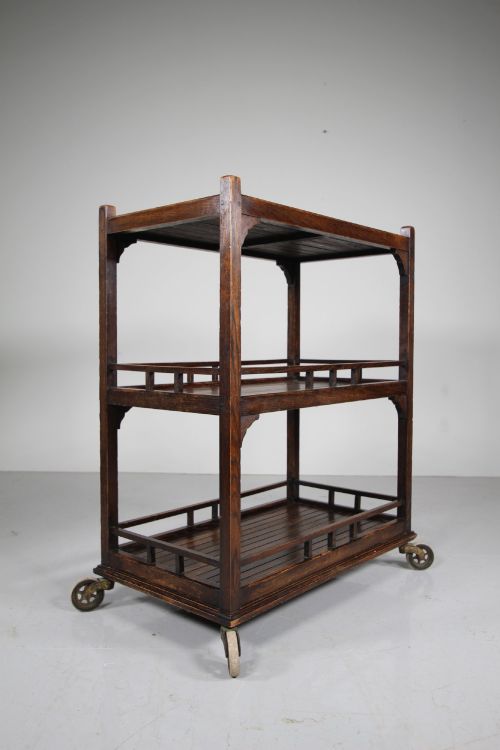
When you search for an antique hostesses trolley, you enter a field of mobile serving furniture designed to move food and drink across rooms with ease. These pieces range from simple tea trolleys to elaborate drinks bar carts used in domestic entertaining.
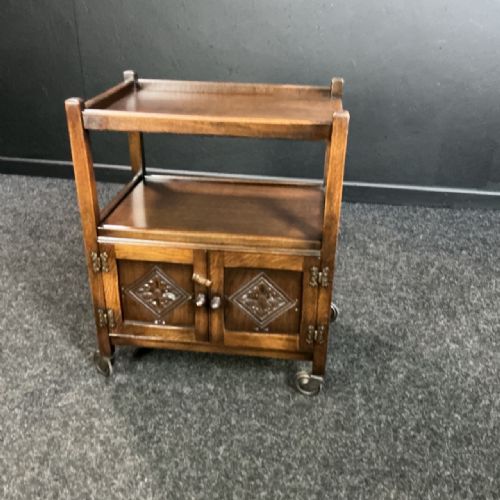
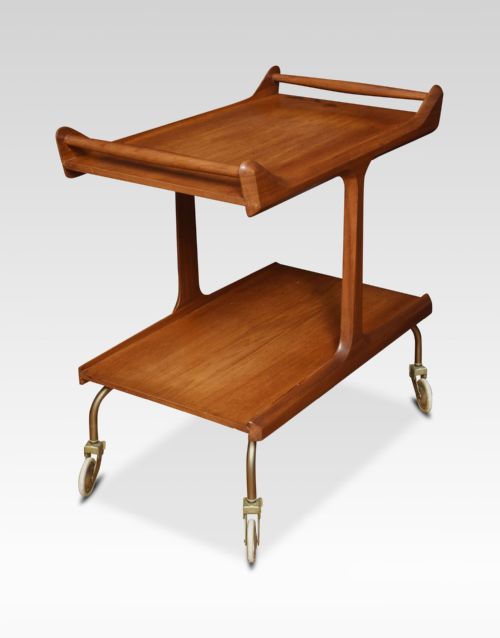
The versions you are most likely to meet on this page span the Edwardian period, the 1920s, the 1930s, and into the mid-century, alongside Victorian and Jacobean Revival examples. They take the form of tea trolleys, drinks trolleys, bar carts, etageres, and side tables.
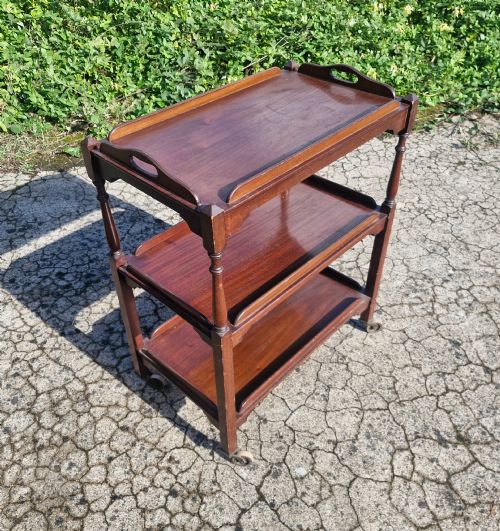
Materials vary widely across these eras, encompassing oak, walnut, mahogany, rosewood, metal, brass, iron, plywood, and chrome. You will encounter folding tops, removable trays, lift-off trays, two-tier designs, dropleaves, and circular configurations.
How they were made
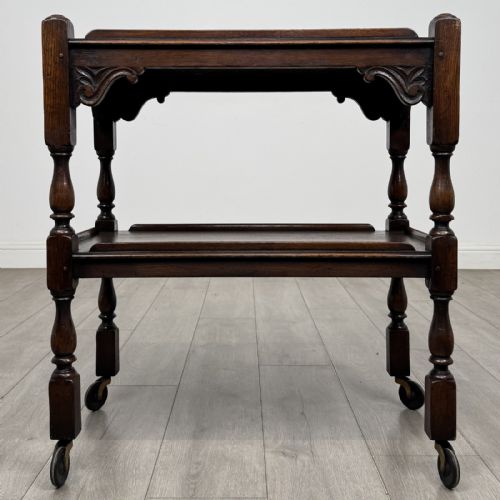
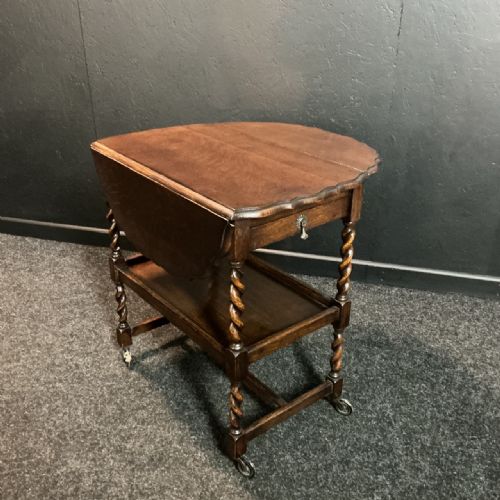
Cabinet makers utilised solid timbers like oak, mahogany, and walnut, often highlighting figured grain veneers on flat surfaces and serving trays. Turned woodwork such as barley twist legs appeared frequently in Edwardian and 1920s pieces.
By the 1930s, Art Deco designers incorporated modern industrial materials, combining chrome framework with mirror glass inserts and streamlined circular shapes. Plywood and iron also appeared in specialised constructions alongside traditional brass fittings and castors.
Antique Hostesses Trolley Retail Price Guide 2026
Typical asking prices for hostesses trolley among the pieces listed under this phrase on Sellingantiques today, from the lower quarter to the upper quarter. They describe what is for sale here now, not the wider market.
Object forms span tea trolleys, drinks trolleys, bar carts, etageres, and side tables equipped with wheels and lift-off trays.
What varies in quality
Quality in a hostesses trolley rests upon the integrity of its mobility and the crispness of its joinery. Smooth wheel action and securely fitted removable trays distinguish better examples from more utilitarian items.
The Antique Hostesses Trolley Glossary
- Barley twist
- A form of woodturning resembling a spiralling rope, frequently seen on table legs and supports. This decorative style was especially popular during the Edwardian period and the 1920s.
- Metamorphic
- Describing a piece of furniture that transforms or unfolds into a different configuration for alternate use. In trolleys, this often involves expanding top surfaces or changing tiers.
- Etagere
- A set of open shelves for displaying small objects or serving items. These tiered pieces function as mobile tables in various period interiors.
- Dropleave
- A hinged flap on a table or trolley top that folds down when not in use. It allows the surface area to expand quickly for serving.
- Baize
- A coarse woolen material resembling felt, traditionally used to line card tables or serving surfaces. It protects fine woodwork and dampens the sound of glassware.
Antique Hostesses Trolley: Frequently Asked Questions
What is an antique hostesses trolley used for?
These pieces serve primarily as mobile tables for transporting tea, cocktails, or dinner service between rooms. They keep glassware, bottles, and serving dishes organised and close at hand during social gatherings.
Many examples feature multiple tiers, removable trays, or folding leaves to accommodate different types of hospitality. Their mobility makes them practical additions to living spaces and dining rooms alike.
How do I identify an Art Deco trolley?
Art Deco trolleys typically date from the 1930s and display streamlined forms, circular shapes, or geometric lines. Look for materials such as figured walnut, polished chrome, and mirror glass surfaces.
Unlike earlier Edwardian or Victorian pieces with traditional turned legs, these twentieth-century designs favour sleek modernity and polished metallic finishes.
Are these trolleys suitable for daily use?
Most antique trolleys remain sturdy enough for gentle daily service, provided the castors and joints are stable. Removable trays and sturdy wooden tiers handle the weight of modern glassware and bottles easily.
Care should be taken with delicate veneers, polished wood surfaces, and antique mirror glass to prevent liquid damage and scratching during use.
What periods do these trolleys come from?
The selection includes pieces from the Victorian era, the Edwardian period, and the interwar decades of the 1920s and 1930s. You will also find occasional mid-century examples from the 1960s.
Revival styles such as Jacobean Revival also appear, bridging historical aesthetics with twentieth-century domestic utility.