


1930s Walnut Trolley
A 1930s walnut trolley brings tactile warmth and period utility to modern hosting, combining figured grain with clever folding mechanisms.
1930s Walnut Trolley
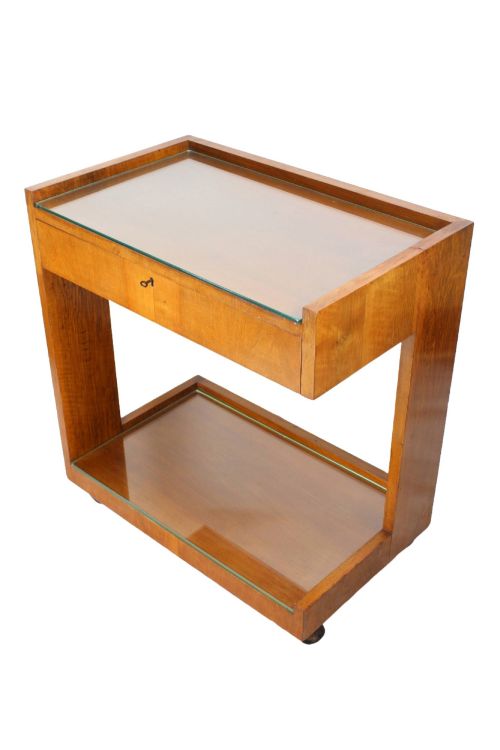
When you search for a 1930s walnut trolley, you encounter practical serving furniture designed for entertaining during the interwar years. These pieces function as drinks trolleys, cocktail bars, and serving carts, often featuring wheels for easy movement across the room.
The most common examples on this page date from the 1930s, though pieces from the 1920s and 1940s also appear. They span diverse forms, including two-tier structures, circular bar carts, and metamorphic designs that transform from side tables into serving surfaces.
Originating predominantly from English workshops, these items reflect the streamlined aesthetic of the period. They bridge the gap between formal dining room service and relaxed lounge culture.
How they were made
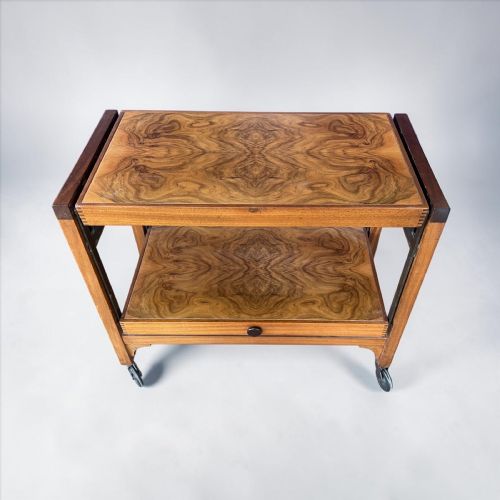
Cabinet makers utilised walnut timber, frequently applying figured walnut veneer to display rich grain patterns across circular and rectangular tops. This wood was selected for its decorative potential and finished to a smooth sheen.
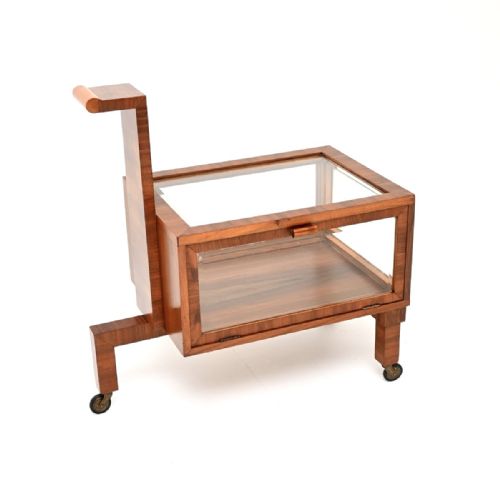
Metal components such as brass, castors, and structural framework provide mobility and structural support. Glass inserts frequently form the surface of shelves or serving trays within the wooden frames.
Ebonised wood occasionally appears as a contrasting detail, accentuating the Art Deco lines of the frame. Metamorphic items incorporate clever mechanical hinges to allow the furniture to alter its shape.
Some models feature pop up mechanisms that silently suggest the host is about to reveal a secret stash of spirits.
What varies in quality
The sophistication of the mechanism distinguishes standard serving carts from metamorphic designs that pop up or expand. Pieces with smooth, reliable folding action represent a higher standard of period engineering.
The selection and bookmatching of walnut veneer define the visual merit of the timber surfaces. Richly figured grain arranged symmetrically across a circular or rectangular top indicates careful initial material selection.
The integration of supportive materials like brass fittings and original castors contributes to the overall cohesion of the design. Subtle details such as ebonised accents demonstrate greater attention from the maker.
The 1930s Walnut Trolley Glossary
- Art Deco
- A design style characterised by sleek lines, geometric shapes, and modern materials popular during the interwar period. It heavily influences the silhouette of these serving pieces.
- Metamorphic
- Furniture designed to transform into another form, such as a side table expanding into a drinks chest. This engineering allows a single object to serve multiple functions in a room.
- Veneer
- A thin layer of superior walnut timber applied over a secondary wood base. This technique creates decorative grain patterns across large surfaces.
- Castor
- A small wheel mounted on a swivel assembly attached to the base of the legs. It enables the cart to glide smoothly across flooring during service.
- Ebonised wood
- Timber treated with a dark stain or finish to resemble ebony. It provides a sharp contrast against the lighter brown tones of walnut.
1930s Walnut Trolley: Frequently Asked Questions
How do I use a drinks trolley today?
A drinks trolley functions as a mobile station for glassware, bottles, and bar accessories in a living room or dining space. It keeps entertaining essentials organised and accessible while adding period character to the interior.
Position the cart against a wall when not in use, or roll it into the centre of the room during gatherings to serve guests directly.
What is a metamorphic trolley?
A metamorphic trolley incorporates hidden hinges and folding leaves that allow the furniture to alter its configuration. These designs can expand their surface area or raise internal compartments into view.
This adaptability made them popular for compact entertaining spaces where furniture needed to perform multiple roles.
How do I identify a 1930s trolley?
Look for characteristic Art Deco styling, including streamlined silhouettes, circular trays, and geometric framework. The extensive use of figured walnut veneer combined with brass and glass points directly to this era.
Construction methods, such as the style of the castors and the integration of mechanical tiers, also help confirm the period of manufacture.
Are these trolleys sturdy enough for daily use?
These pieces were built to transport heavy glassware and bottles, making them robustly constructed for practical service. The wooden frames and metal castors are designed to bear weight while remaining mobile.
Gentle handling and careful maintenance of the joints ensure the mechanism and wheels continue to function smoothly during regular use.