

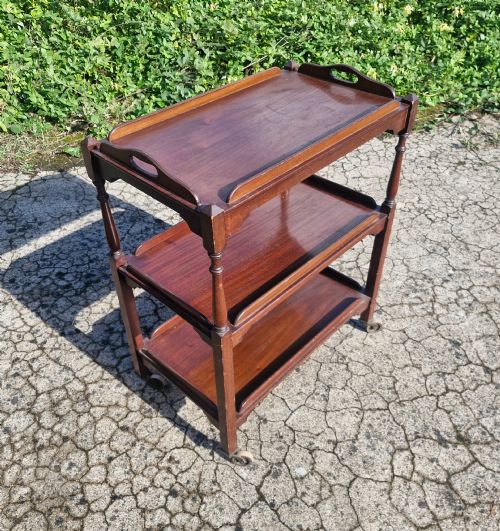
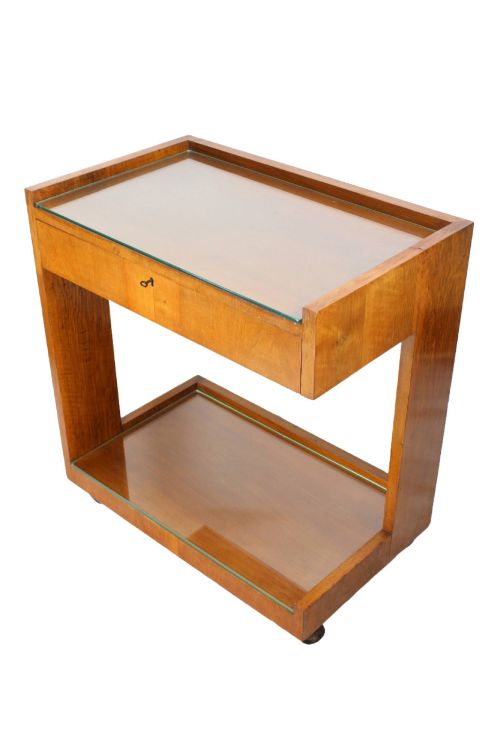

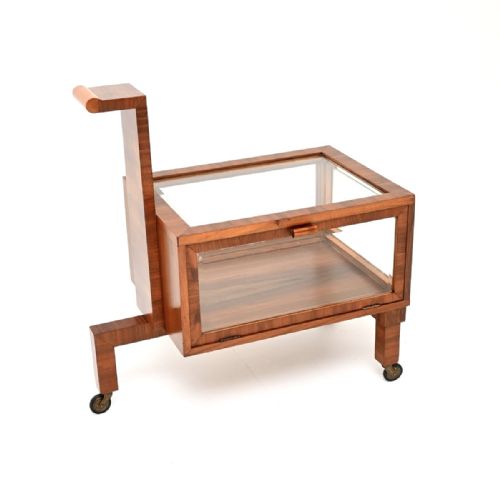


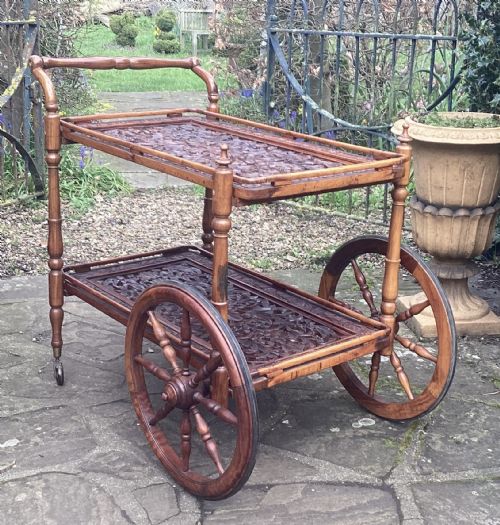


1930s Drinks Cart
A 1930s drinks cart brings the unmistakable glamour of the cocktail era straight into a modern room with its clever tiers and gleaming surfaces.
1930s Drinks Cart
When someone searches for a 1930s drinks cart, they are looking for mobile entertaining furniture designed to hold glassware, bottles, and barware during the interwar period. These pieces most commonly appear as two-tier trolleys or circular serving carts, often designated for cocktails and hospitality.
The dominant style on this page is Art Deco, frequently expressed through clean geometric lines, circular formats, and streamlined silhouettes. Alongside walnut and mahogany wood builds, French and English examples demonstrate a clear focus on hosting convenience.
Materials and construction
The construction of these trolleys relies heavily on a contrast between warm woods and reflective metal elements. Craftsmen utilised walnut, burr amboyna, and mahogany alongside chrome, brass, and silver plating to create durable yet visually striking surfaces.
1930s Drinks Cart Retail Price Guide 2026
Typical asking prices for 1930s drinks cart among the pieces listed under this phrase on Sellingantiques today, from the lower quarter to the upper quarter. They describe what is for sale here now, not the wider market.
Charlie Chaplin makes a surprise appearance on a novelty barware tray from the era.
Assessing quality in 1930s bar carts
Quality in these trolleys rests on the sophistication of the materials and the precision of the metalwork. Pieces incorporating burr amboyna veneer or substantial chrome plating sit at a different level from standard wood tea trolleys.
Makers such as Asprey or Carl Deffner introduce notable execution in silver-plated barware and specialised fittings, elevating individual items through refined finishes and distinctive hardware.
C S Green & Co·Asprey London·Carl Deffner
The 1930s Drinks Cart Glossary
- Art Deco
- A design style spanning the 1920s and 1930s characterised by streamlined forms, geometric shapes, and modern industrial materials. It dominates the aesthetic of these serving trolleys.
- Burr Amboyna
- A highly decorative wood burl prized for its rich, swirling grain patterns. It is used on select luxury cart surfaces.
- Metamorphic
- Describing furniture that transforms or changes configuration for different uses. A metamorphic trolley adapts its surfaces to assist with serving.
- Silver Plate
- A thin layer of silver applied to a base metal object such as a cocktail shaker or tray. This technique provides the appearance of solid silver at a different scale of production.
- Hostess Trolley
- A mobile piece of furniture designated for serving food or drinks to guests. These often feature multiple tiers for glass and bottle storage.
1930s Drinks Cart: Frequently Asked Questions
How were drinks carts used?
These carts served as mobile cocktail bars during the height of home entertaining in the interwar period. Hosts rolled them between rooms to supply guests with drinks and barware.
They kept bottles, shakers, and glasses organised on tiered shelves, allowing for easy mixing and serving without returning to the kitchen.
Are these carts suitable for daily use?
Most pieces function well for serving drinks or displaying glassware in a modern home. Their original mobile design means wheels and handles remain practical for repositioning.
Care must be taken with vintage wood surfaces and antique silver plate when cleaning up spills during regular entertaining.
How do I identify an Art Deco trolley?
Look for geometric shapes, circular trays, and streamlined frames that discard traditional ornate carving. Chrome supports and black glass shelves often signal the modernism of the period.
Wood examples favour figured walnut veneers and clean horizontal lines rather than historical revival motifs.
What is the difference between a tea trolley and a drinks cart?
While construction materials often overlap, drinks carts specifically accommodate cocktail culture with specialised trays, glass holders, and circular bar designs. Tea trolleys more commonly feature rectangular wooden tiers intended for afternoon tea service.
Many pieces share similar metamorphic or two-tier frameworks regardless of their original marketing.