




Art Deco Serving Table
An art deco serving table brings functional elegance to a room, combining rich woods and sleek metals for effortless entertaining.

Art Deco Serving Table
When you search for an art deco serving table, you encounter a versatile range of furniture designed for hospitality and dining. These pieces include console tables, sideboards, drinks trolleys, and serving stands originating primarily from the 1920s, 1930s, and 1940s.
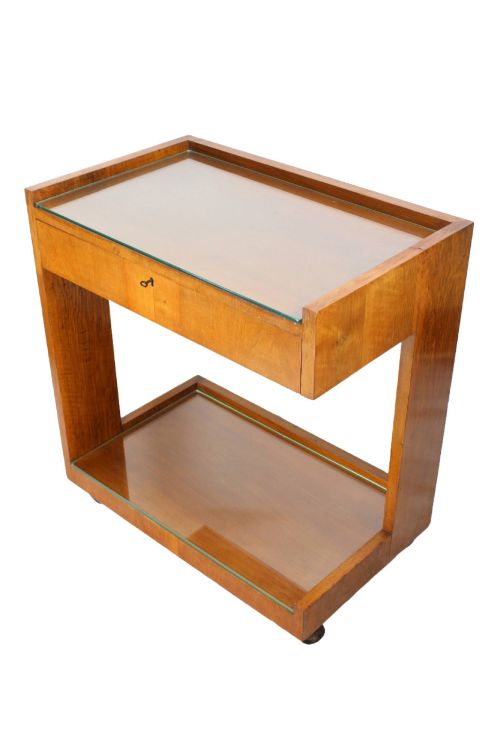
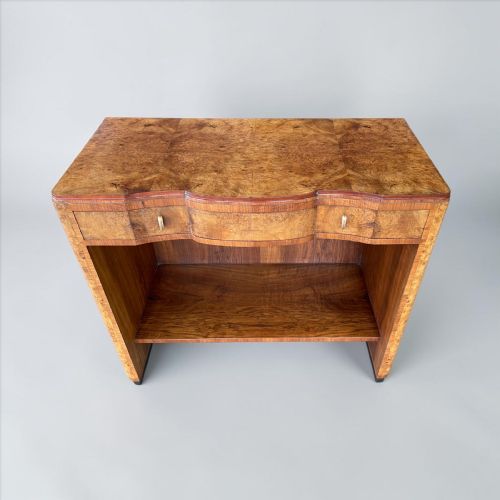
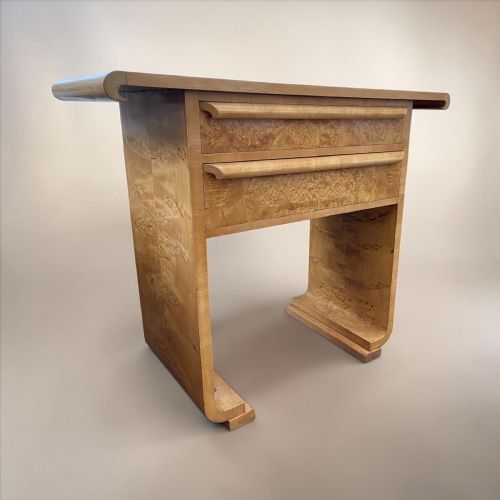
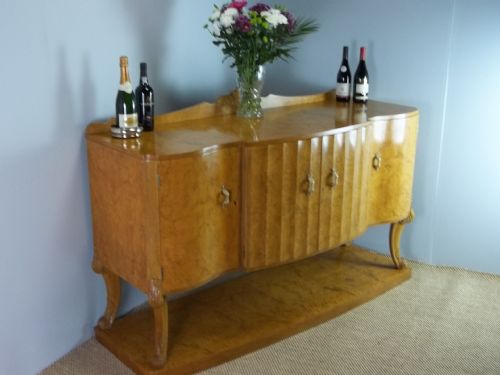
The version you are most likely to meet on this page is a walnut or burr walnut serving table, often featuring multiple tiers, mirrored glass, or veneered surfaces. English and French workshops produced these items to serve drinks, food, and afternoon tea with distinct geometric flair.
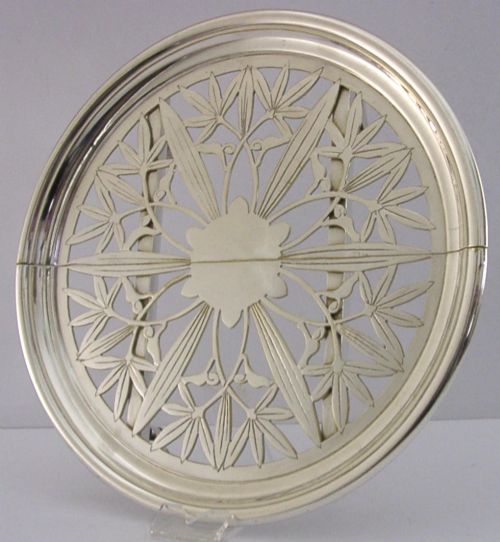
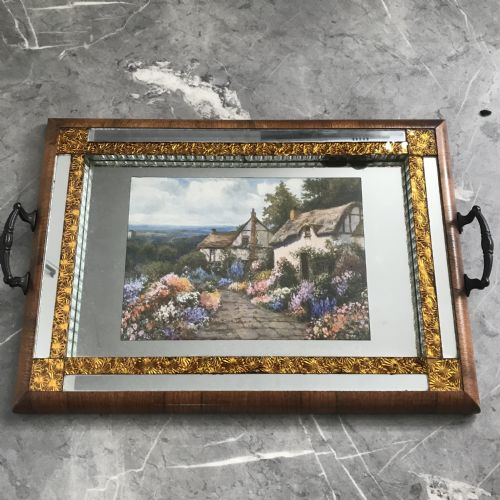
Alongside dedicated tables, the evidence includes related serving forms such as trays, trolleys, and side cabinets styled in the prevailing modernist and revival aesthetics of the period. Each piece reflects the functional demands of interwar domestic life.
How they were made
Cabinet makers utilised choice timbers such as walnut, burr walnut, oak, and macassar, frequently applying decorative veneers to achieve striking grain patterns across flat surfaces. These wooden structures are often paired with metal elements including brass, silver plate, and sterling silver.
Complementary materials like mirrored glass appear frequently in table tops and trays, adding reflective depth to the design. Workshops employed both traditional joinery and advanced metalworking techniques to construct these durable serving pieces.
Art Deco Serving Table Retail Price Guide 2026
Typical asking prices for art deco serving table among the pieces listed under this phrase on Sellingantiques today, from the lower quarter to the upper quarter. They describe what is for sale here now, not the wider market.
Some serving trolleys include clever metamorphic mechanisms that transform a compact side table into an extended serving station.
What varies in quality
The distinction between standard production and the finest examples lies in the selection of timber veneers and the precision of the cabinet work. Master makers employed highly figured burr walnut and robust construction methods that elevate the presence of the furniture.
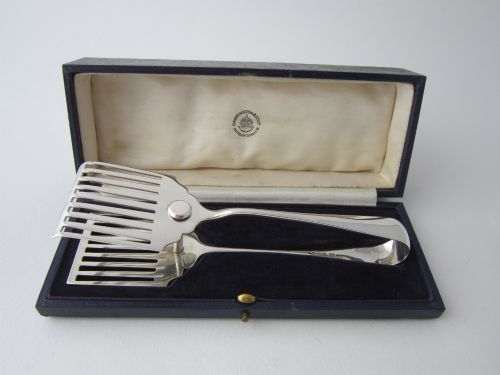
Design sophistication also separates the range, with custom metamorphic mechanisms, integrated cutlery storage, and sophisticated metal mounts marking out the superior items from simpler utilitarian versions.
Maurice Adams·Fortnum and Mason·Georg Jensen·Harry And Lou Epstein·Brille, Paris·Hille·Charles A. Richter
The Art Deco Serving Table Glossary
- Burr walnut
- A prized timber harvested from the tree's growth growths, showing intricate, swirling grain patterns. Cabinet makers utilised this veneer to create decorative focal points on tabletops and sideboards.
- Serving table
- A piece of furniture designed to hold food, drinks, or tableware during dining and entertaining. These items often stand against a wall or function as mobile trolleys.
- Silver plate
- A base metal coated with a thin layer of silver, commonly used for trays, baskets, and dish stands. This technique provided the lustrous appearance of solid silver at a different cost.
- Veneer
- A thin slice of superior wood applied over a sturdier secondary timber base. This method allowed craftsmen to display dramatic grain configurations without warping.
- Console table
- A table designed to be fixed against a wall, frequently used in entrance halls or dining rooms. Many examples double as serving surfaces.
- Trolley
- A mobile serving table mounted on wheels or castors for transporting food and drinks. Tiered versions allowed for greater capacity during hosting.
Art Deco Serving Table: Frequently Asked Questions
What is an art deco serving table?
An art deco serving table is a piece of furniture designed for hospitality during the interwar decades, featuring geometric lines and stylish materials like walnut and glass.
These items range from static console tables and sideboards to mobile trolleys and tiered stands built for entertaining.
How do I identify the period?
The periods are identified through a combination of materials, construction methods, and stylistic cues characteristic of the 1920s, 1930s, and 1940s. Elements like burr walnut veneer, mirrored glass, and silver-plated mounts point directly to these decades.
Maker stamps, hallmarks on silver elements, and documented workshop designs further help confirm the date.
Where were these tables made?
The pieces originate primarily from English and French workshops and prominent retail houses of the early twentieth century. Notable cabinet makers and retailers in London and Paris produced much of the surviving furniture.
Regional variations appear in the choice of woods, such as French macassar veneers compared to English walnut.