
Vintage Buffet Table
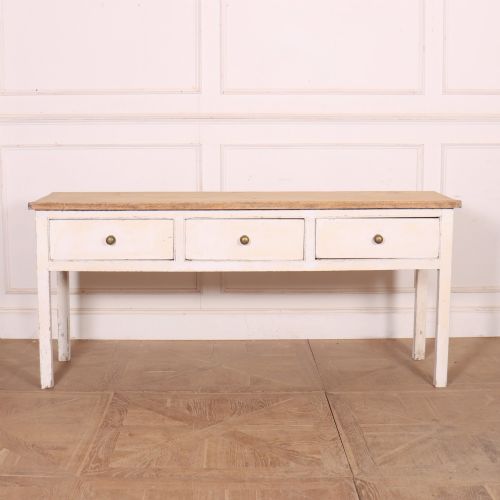
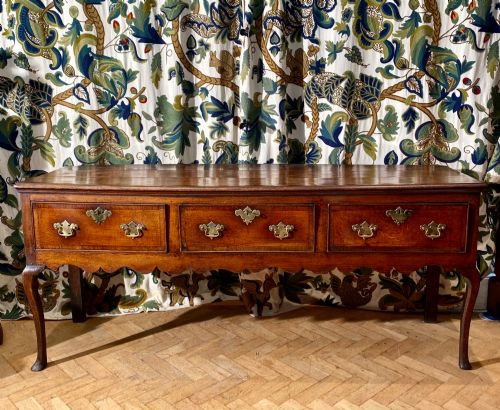
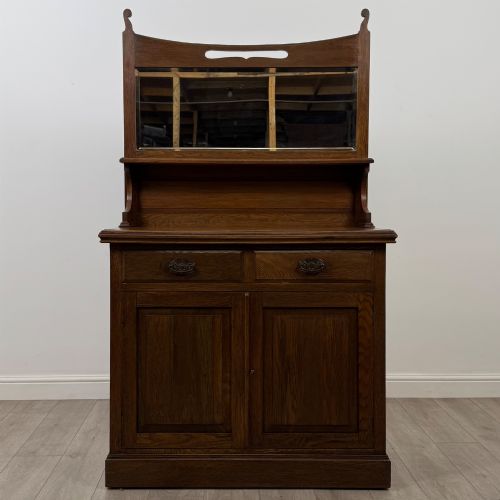
These vintage buffet table pieces span sideboards, dumb waiters, and dresser bases in mahogany, oak, and burr walnut, offering practical dining room storage with period character.
Vintage Buffet Table
A vintage buffet table serves as a functional dining room piece, encompassing sideboards, serving tables, dresser bases, and dumb waiters designed for holding food and tableware. When exploring this selection, buyers frequently encounter mahogany and oak forms spanning the Georgian, Victorian, and Edwardian periods.
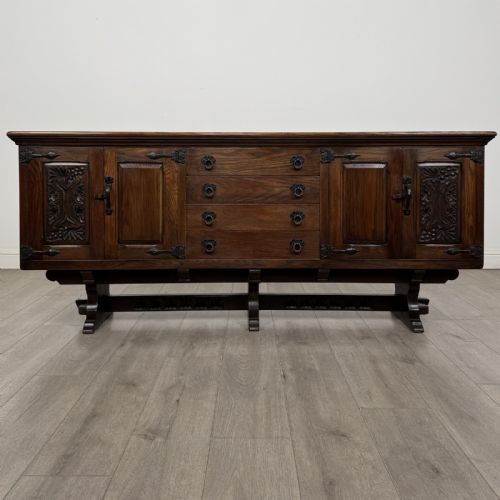
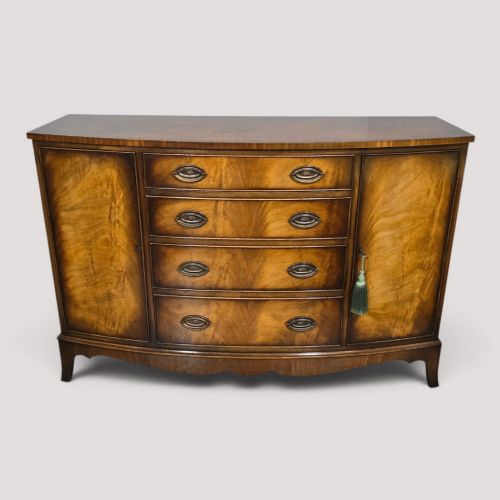
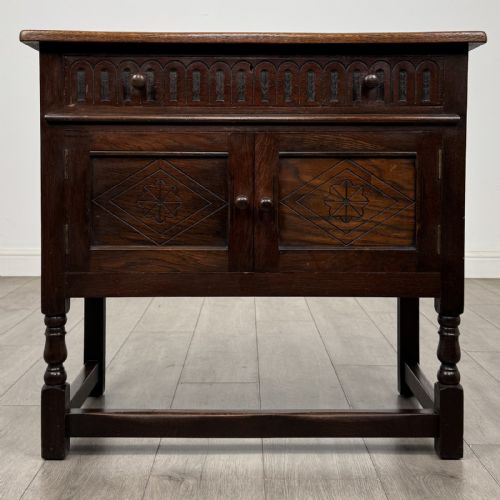
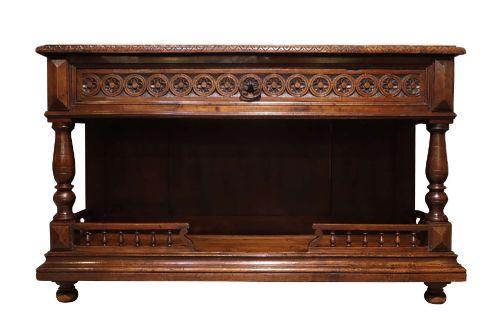
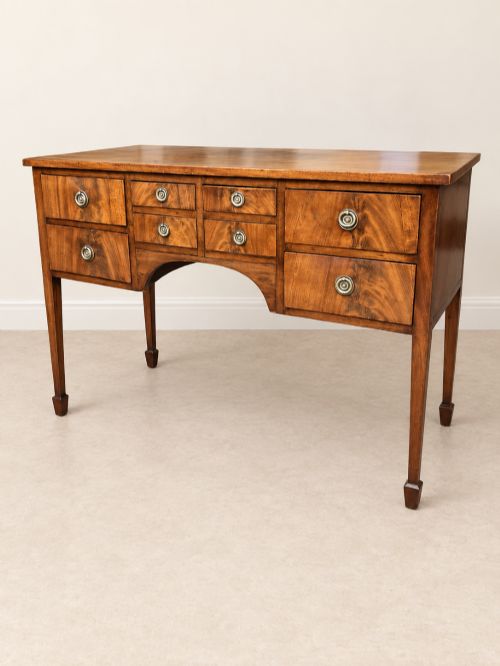
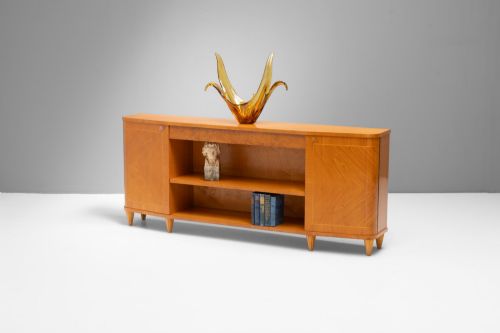
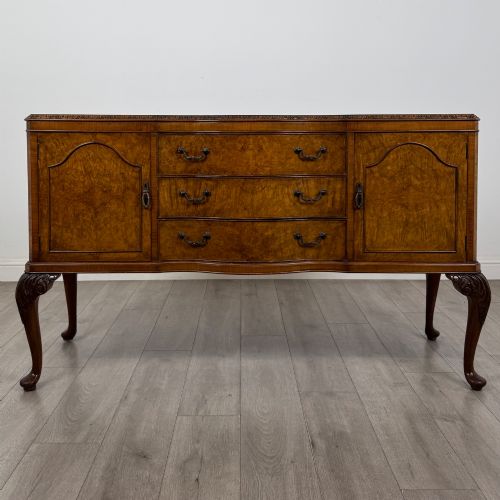
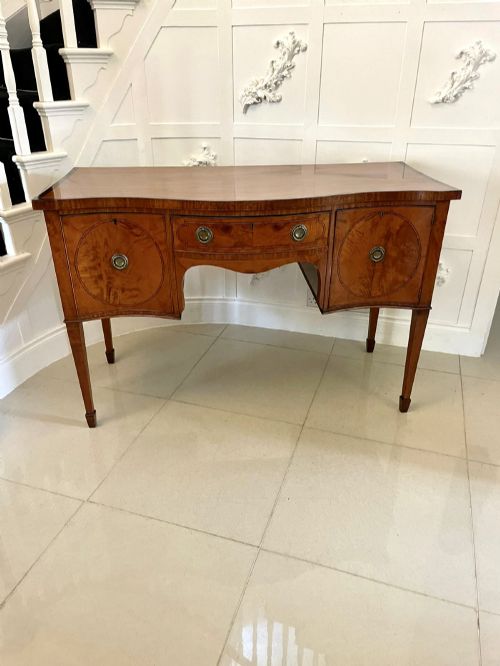
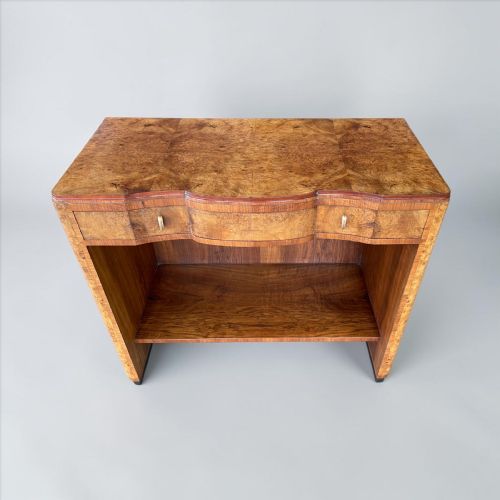
The assortment includes regional variations such as Dutch oak dresser bases alongside refined bow fronted and breakfront sideboards influenced by designers like George Hepplewhite. Pieces range from carved Jacobean revival cupboards to Art Deco walnut servers and French tramp art cabinets.
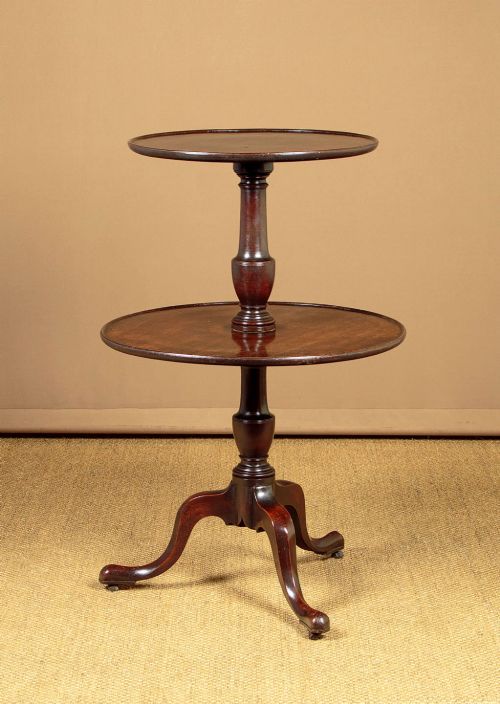
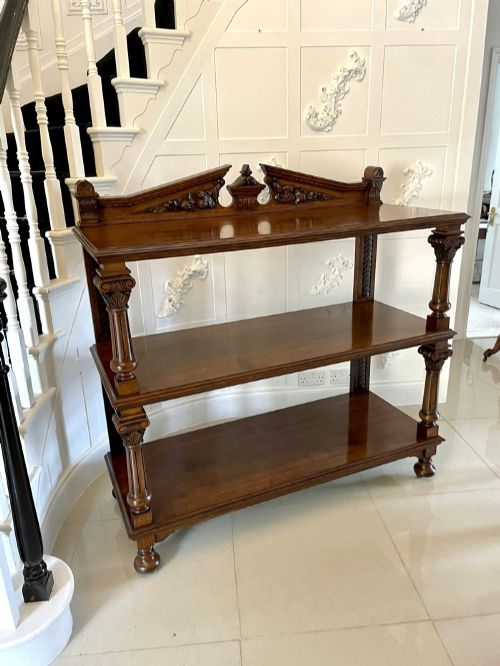
Dumb waiters and tiered trolley forms offer alternative serving options, featuring graduating wooden shelves or revolving tiers supported on columns. These diverse serving surfaces reflect the changing dining customs of the eighteenth, nineteenth, and early twentieth centuries.
How they were made
Cabinet makers utilised solid hardwoods such as mahogany and oak alongside decorative veneers including flame mahogany and burr walnut. Surfaces were shaped using hand tools to create serpentine, bow front, and breakfront profiles.
Joinery techniques relied on traditional mortise and tenon construction for structural stability, particularly in heavy oak dresser bases and cupboards. Veneers were carefully applied to primary wood cores, matching grain patterns across drawer fronts and cabinet doors.
Carving was executed by hand, displaying motifs ranging from Gothic tracery to simpler moulded edges on Georgian and Edwardian examples. Brass handles, hinges, and occasional ormolu mounts provided functional and decorative hardware.
What varies in quality
The choice of timber and veneer determines the visual impact of a piece, with figured flame mahogany and burr walnut sitting at the upper end of the scale. Subtleties in hand carving and the crispness of moulded details distinguish bespoke cabinet work from standard production.
Proportion and architectural balance define the finer examples, particularly in how drawers and cupboards integrate into breakfront or serpentine carcasses. Original brass hardware and well-executed secondary woods within drawer construction indicate higher workshop standards.
Maurice Adams·Edward Barnsley·M. D. Miller & Sons
The Vintage Buffet Table Glossary
- Breakfront
- A cabinet design where the central section projects forward from the flanking sections. This configuration creates architectural depth on large sideboards.
- Dumb waiter
- A tiered piece of freestanding furniture with revolving or fixed shelves used for serving food without servants. These typically feature two or three graduating wooden levels.
- Dresser base
- A low wooden storage unit featuring drawers and cupboards, often with an open potboard shelf beneath. These pieces originate largely from country oak traditions.
- Flame mahogany
- A veneer cut from the fork of the mahogany tree where the branches join the trunk. This produces a distinctive, fiery feather-like grain pattern.
- Serpentine
- A furniture front curved in a gentle wave shape with a convex centre flanked by concave curves. This contour requires skilled woodworking to shape solid timber or veneer.
Vintage Buffet Table: Frequently Asked Questions
What is the difference between a sideboard and a dresser base?
Sideboards are typically refined dining room furniture dating from the Georgian period onwards, often featuring mahogany veneers and sophisticated bow front or breakfront shapes.
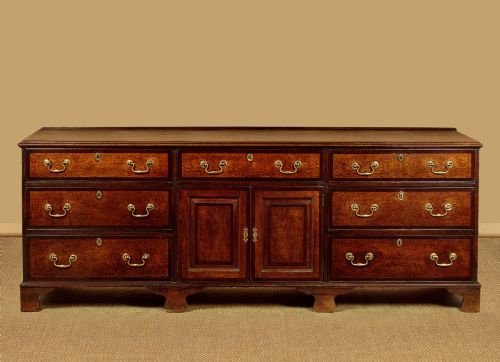
Dresser bases originate from earlier country traditions, constructed mainly in solid oak or pine with practical cupboards, drawers, and sometimes lower potboard shelves.
How do I use a dumb waiter in a modern dining room?
Dumb waiters provide tiered surface space for serving drinks, displaying tableware, or holding decorative items without taking up excessive floor area.
Their compact circular or multi-tiered designs fit easily beside a dining table or in the corner of a room.
Are these pieces made of solid wood?
Construction methods vary depending on the period and style, combining solid timbers with applied veneers over secondary wood foundations.
Oak and pine pieces are frequently built from solid planks, while fine Georgian and Edwardian sideboards utilise mahogany or walnut veneers over stable underlying woods.
How do I identify a Georgian sideboard?
Georgian sideboards are characterised by balanced classical proportions, straight or bow-shaped fronts, and refined tapering legs or enclosed cabinet bases.
They rely on the natural grain of mahogany, sometimes enhanced with subtle stringing or inlay, rather than heavy carved decoration.