

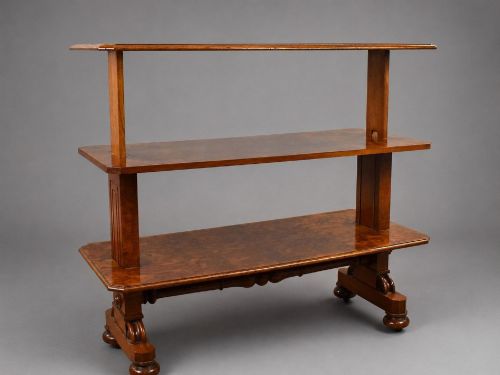


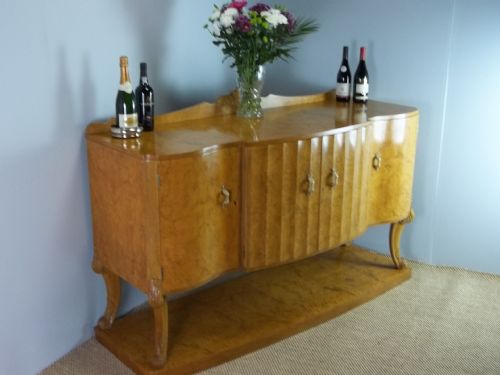
Burr Walnut Serving Table
A burr walnut serving table brings remarkable grain movement and practical surface space to a dining room or hallway.
Burr Walnut Serving Table
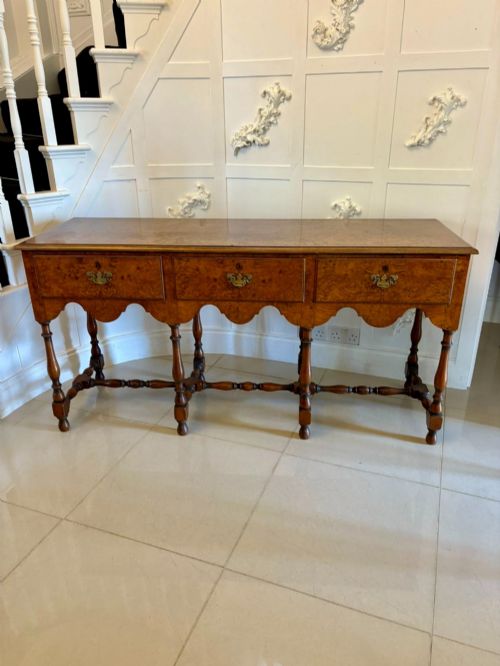
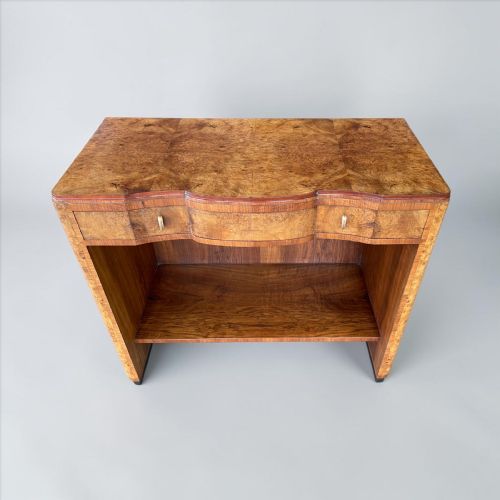
A burr walnut serving table combines deep timber figuring with a functional surface designed for entertaining and display. These pieces appear across several distinct eras, spanning the Victorian period, the Edwardian revival, and the Art Deco movement of the nineteen thirties.
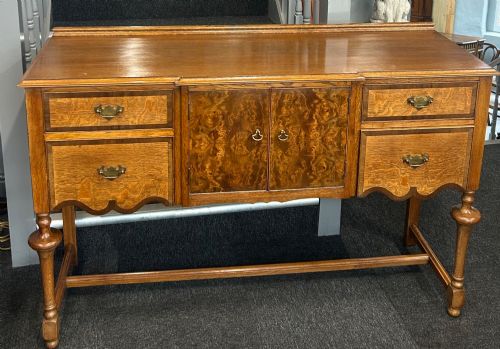
The form adapts to diverse interiors, taking shape as elongated sideboards, serpentine consoles, and compact pedestal tables. Walnut veneer and solid walnut form the primary carcasses, often paired with secondary timbers such as oak.
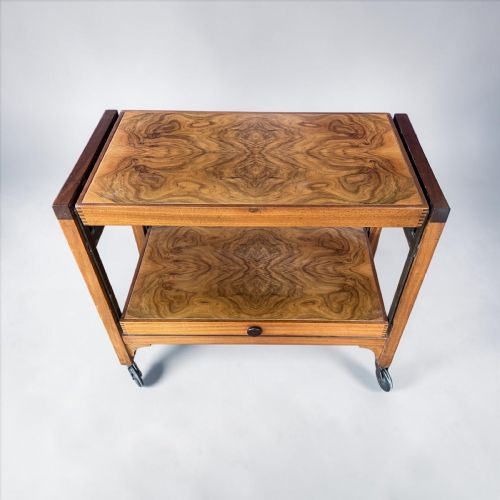
Makers utilised the distinctive swirling patterns of burr walnut to create striking visual depth on drawer fronts and top surfaces. Buyers encountering this selection will find examples ranging from late Regency pedestal designs to sleek modernist trolley forms.
Materials and construction
Cabinet makers applied thin slices of burr walnut veneer over stable carcass woods like oak and plain walnut to prevent warping while displaying dramatic grain. Brass handles, castors, and gallery rails frequently provide structural and decorative accents on these pieces.
Joinery methods vary by period, from nineteenth-century hand-cut dovetails in drawer construction to twentieth-century laminated curves found in Art Deco pieces. Polished shellac or varnish finishes protect the timber while intensifying the natural contrast of the burl growth.
Burr Walnut Serving Table Retail Price Guide 2026
Typical asking prices for burr walnut serving table among the pieces listed under this phrase on Sellingantiques today, from the lower quarter to the upper quarter. They describe what is for sale here now, not the wider market.
Several serving tables double as metamorphic drinks trolleys, ready to wheel out the gin at a moment's notice.
Distinctions in quality
The value of a burr walnut serving table rests heavily on the continuity and selection of the veneer matching across the main panels. Superior examples display balanced, symmetrical grain patterns that flow seamlessly across drawers and doors.
Substantial weight, solid secondary timbers like oak, and crisp carving or shaping separate workshop-built pieces from mass-produced alternatives. Original hardware, smooth drawer action, and well-preserved timber patination indicate careful historical maintenance.
Maurice Adams·Epstein·Maples and Co·Gillows of Lancaster
The Burr Walnut Serving Table Glossary
- Burr walnut
- A wood harvested from the wart-like growth on a walnut tree, yielding complex, swirling grain patterns. Cabinet makers prize this timber for high-status decorative surfaces.
- Veneer
- A thin layer of superior wood glued to a base timber of lesser quality. This technique allows craftsmen to display costly grain figures economically.
- Serpentine
- A curved furniture front featuring a convex centre flanked by concave curves. This contour requires precise joinery and adds visual movement to serving tables.
- Dumbwaiter
- A tiered serving piece designed to hold dishes or drinks without requiring servant attendance. These items often feature rotating or stacked circular trays on a central pedestal.
- Pedestal sideboard
- A large serving unit comprising two distinct pedestals connected by a central backboard or counter. These heavy pieces date primarily from the nineteenth century.
Burr Walnut Serving Table: Frequently Asked Questions
Where should I place a burr walnut serving table?
These tables suit dining rooms as functional sideboards for serving food or holding tableware during meals. They also work well in entrance halls and living spaces as decorative console surfaces.
Position the table away from direct sunlight and heat sources to protect the delicate walnut veneer from drying and cracking over time.
How do I identify an Art Deco burr walnut serving table?
Art Deco pieces from the nineteen twenties and thirties display streamlined silhouettes, geometric curves, and waterfalls of continuous burr veneer. They often incorporate functional elements like serving trays, cocktail compartments, and polished metal hardware.
Earlier Victorian or Regency versions rely on classical proportions, turned pedestal columns, and carved serpentine fronts rather than modernist symmetry.
How do I clean and maintain burr walnut veneer?
Dust the surface regularly with a soft, dry cloth to prevent abrasive particles from accumulating on the polished finish. Avoid using silicone sprays, harsh detergents, or excessive water.
Apply a quality beeswax periodically to nourish the wood and maintain a gentle, protective sheen across the figured grain.