





Walnut Serving Table
A walnut serving table brings warmth and dependable utility to a dining room, spanning periods from the seventeenth century through to Art Deco designs.

Walnut Serving Table
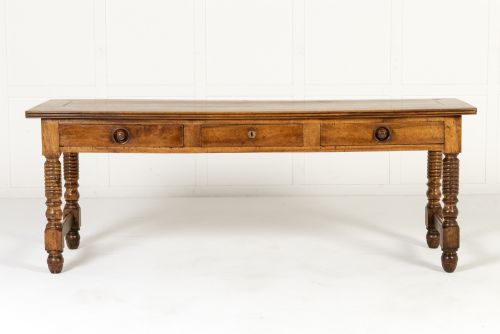
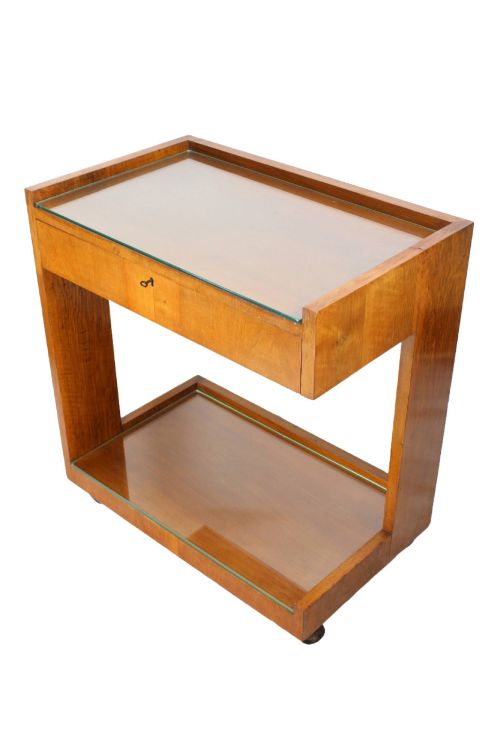
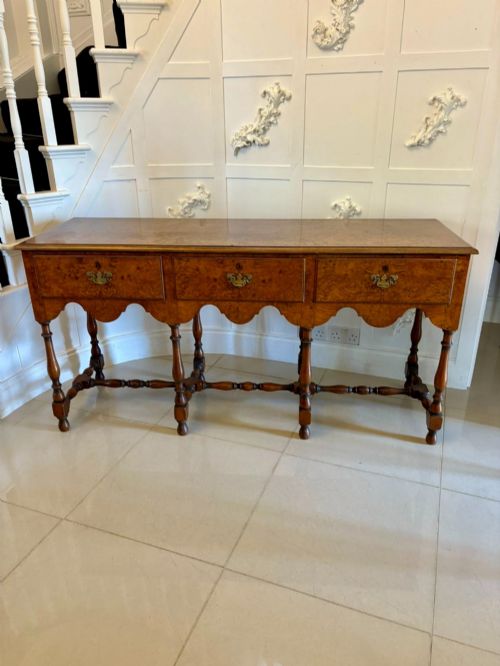
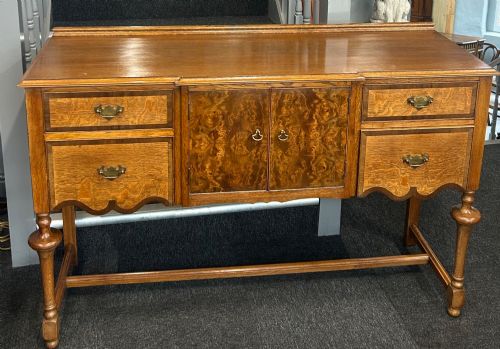
A walnut serving table serves as a functional surface for dining rooms and hallways, appearing in forms such as sideboards, buffets, console tables, and trolleys. The pieces available here range from austere seventeenth-century Spanish consoles and Georgian lowboys to ornate Victorian carved buffets and sleek Art Deco designs.
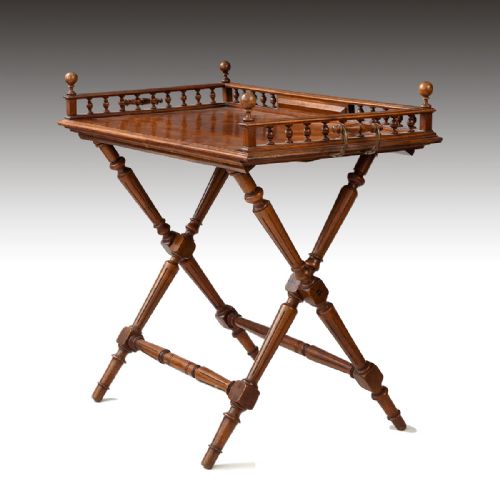
Origins stretch from English workshops to French provincial makers and Scottish firms, offering considerable variety in scale and ornamentation. Whether you need a compact butler tray on a stand or a large serpentine server, the selection reflects centuries of dining traditions.
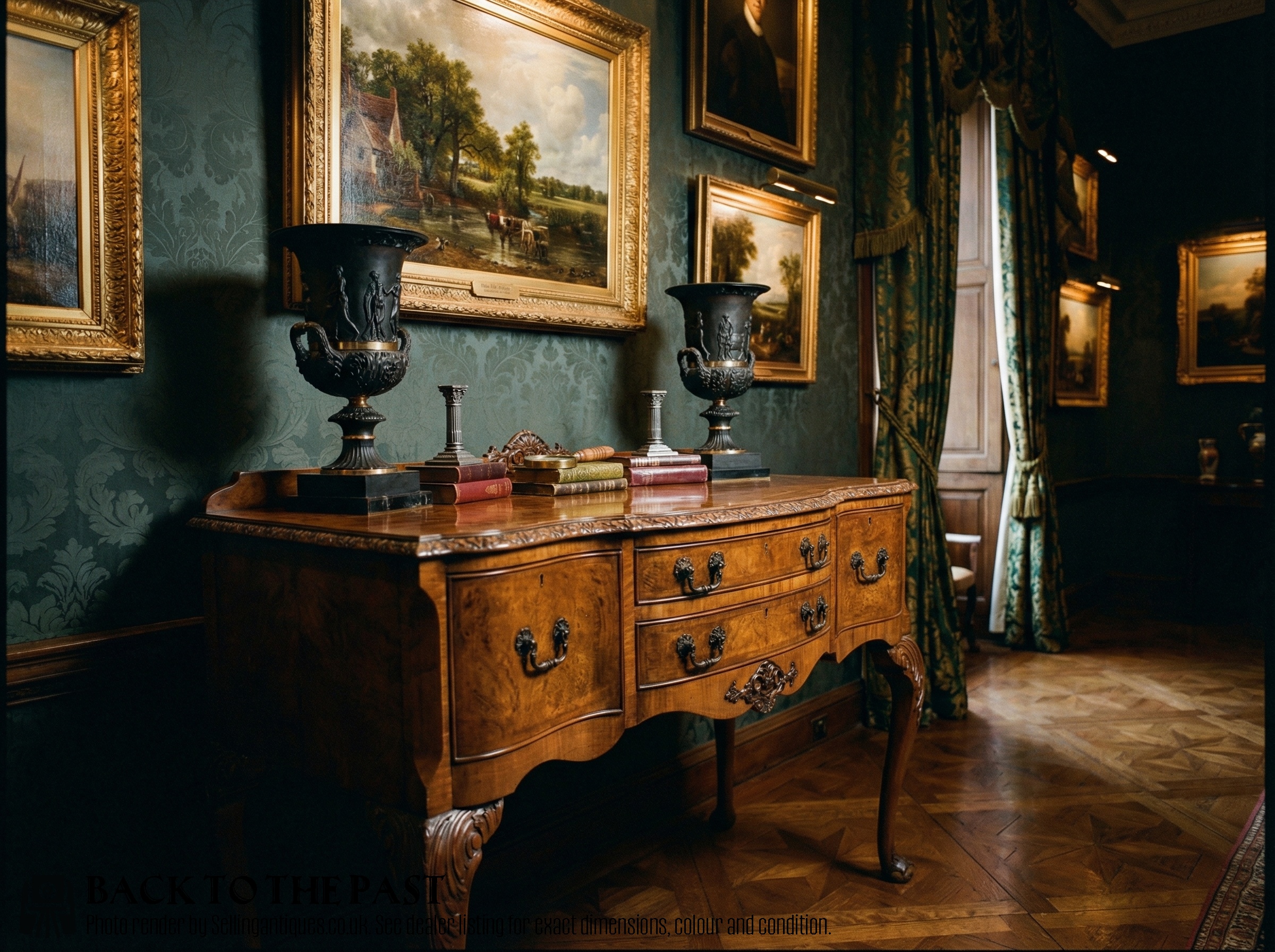
How They Were Made
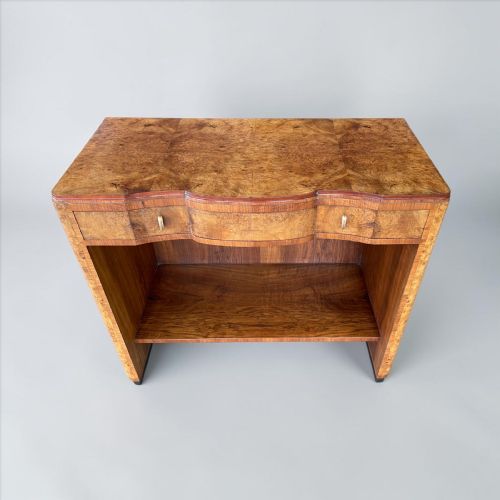
Cabinet makers utilised solid timber alongside figured walnut veneer and burr walnut to create striking grain patterns on drawer fronts and top surfaces. Structural frames frequently incorporate oak or secondary softwoods, while decorative highlights rely on hand carving and contrasting inlays.
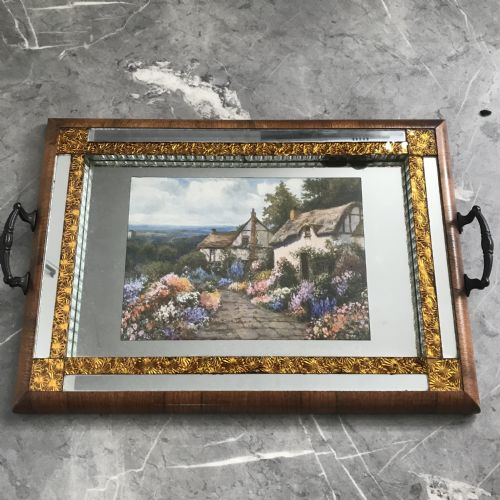
Hardware such as brass handles, gallery rails, and castors appear regularly on movable trolleys and dumb waiters. Marble tops and mirrored glass panels are also integrated into specific serving tables for added durability and decorative effect.
Walnut Serving Table Retail Price Guide 2026
Typical asking prices for walnut serving table among the pieces listed under this phrase on Sellingantiques today, from the lower quarter to the upper quarter. They describe what is for sale here now, not the wider market.
Listings feature walnut serving tables spanning the seventeenth century through to Art Deco periods, utilising burr walnut, oak, marble, and brass.
What Varies in Quality
Quality rests primarily in the selection of the timber and the depth of the grain figured into the walnut veneer. Finer examples display carefully matched veneers across expansive surfaces and intricate, hand-carved detailing rather than cast-moulded ornamentation.
Construction methods also dictate grade, distinguishing between straightforward utilitarian pieces and exhibition-standard furniture with secondary woods and sophisticated mechanical elements like telescopic actions or folding trays.
Maurice Adams·Whytock And Reid·Edward Barnsley·Harry And Lou Epstein
The Walnut Serving Table Glossary
- Burr Walnut
- A specialised wood grain obtained from the wart-like growths on walnut trees, prized for its swirling, intricate patterns. It is frequently applied as a veneer on high-end cabinet fronts.
- Dumb Waiter
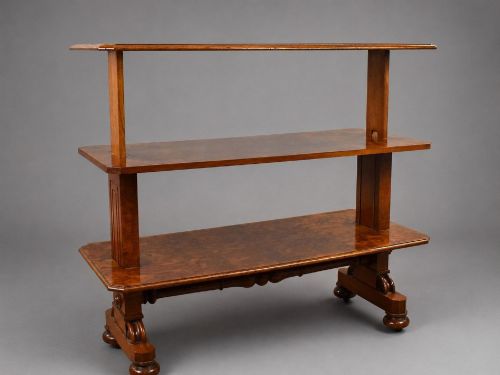
- A tiered serving stand or multi-shelved trolley designed to hold dishes and drinks near a dining table without requiring servant attendance. They often feature revolving trays or drop-down leaves.
- Lowboy
- A small seventeenth or eighteenth-century table with one or more rows of drawers, commonly used as a dressing table or a serving side table. These pieces typically stand on slender cabriole or straight legs.
- Serpentine
- A curved furniture front characterised by a convex centre flanked by concave ends. This shape requires considerable woodworking skill to execute properly in solid wood or veneer.
- Whatnot
- An open set of multi-tiered shelves used for displaying or serving items, frequently mounted on castors. Victorian examples in walnut combine functionality with slender turned supports.
Walnut Serving Table: Frequently Asked Questions
What is a walnut serving table used for?
These tables provide a secondary surface in dining rooms for holding dishes, glassware, and serving platters during meals. They also function as decorative console tables in hallways or as mobile drinks trolleys.
Many variants include drawers for cutlery storage or multiple tiers for organising dinner service essentials close at hand.
How do I distinguish between Victorian and Art Deco styles?
Victorian serving tables typically feature heavier proportions, dark solid walnut, and elaborate carving influenced by Gothic or Renaissance revivals. They often incorporate marble tops and turned legs.
Art Deco pieces from the 1920s and 1930s favour streamlined silhouettes, geometric symmetry, and high-gloss burr walnut veneers with minimal ornamentation.
Are these tables suitable for modern dining rooms?
Their compact footprints and functional designs make them practical additions to contemporary living spaces. Pieces with wheels or folding leaves offer flexible utility for modern entertaining.
They blend well with various interior aesthetics, adding warmth through natural wood grains and historical character.
What maintenance do antique walnut surfaces require?
Polishing with traditional beeswax helps nourish the wood and maintain a soft sheen without building up synthetic residues. Avoid placing them in direct sunlight or near heat sources to prevent the walnut veneer from drying out.
Using coasters and mats protects the polished top from moisture and heat marks during everyday use.