
Antique Walnut Console
These antique walnut console tables bring rich grain and classical proportion to a hallway or drawing room.
The antique walnut console table
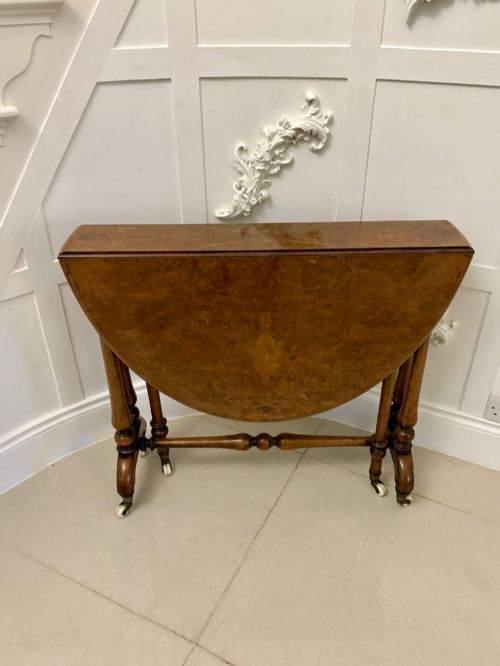
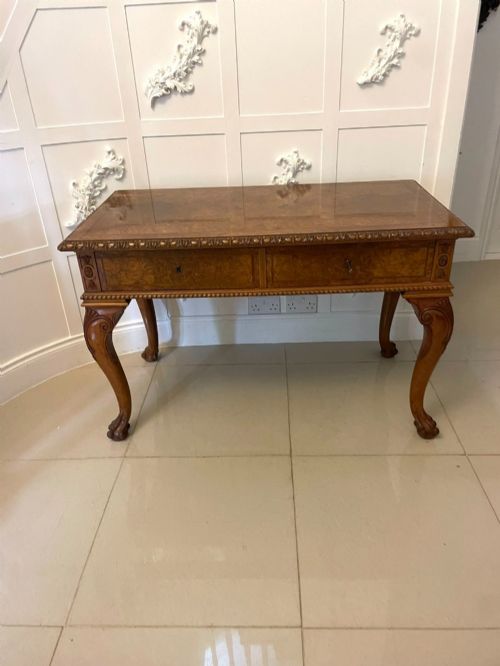
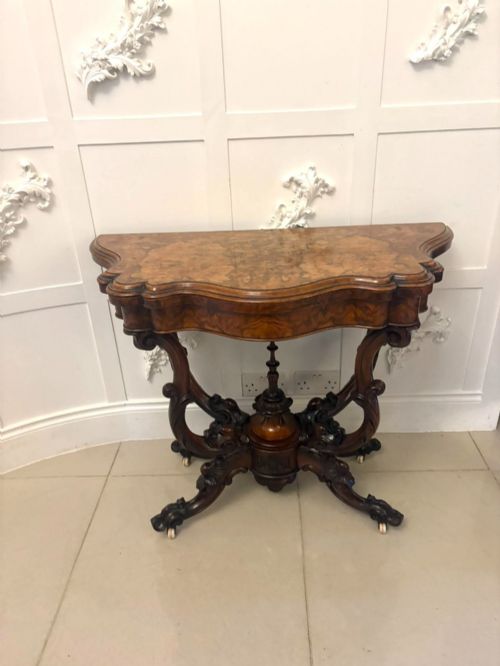
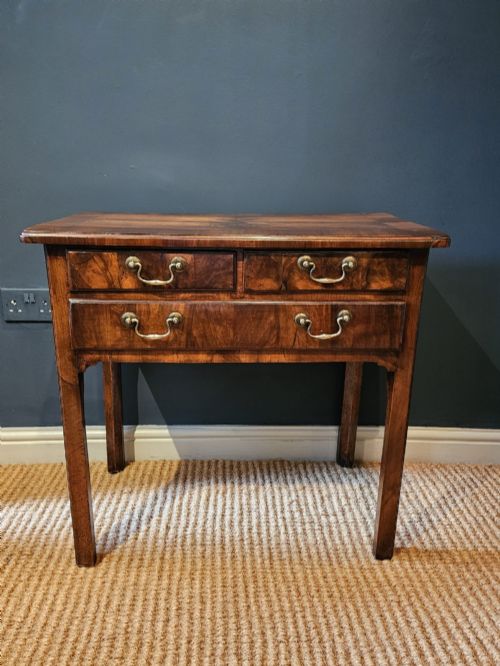
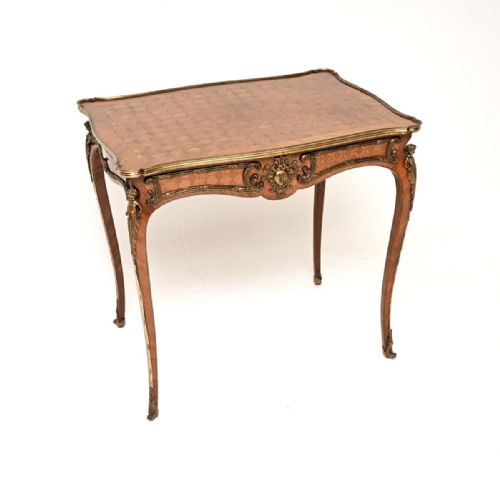
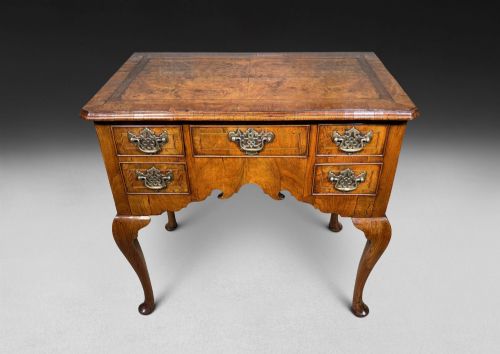
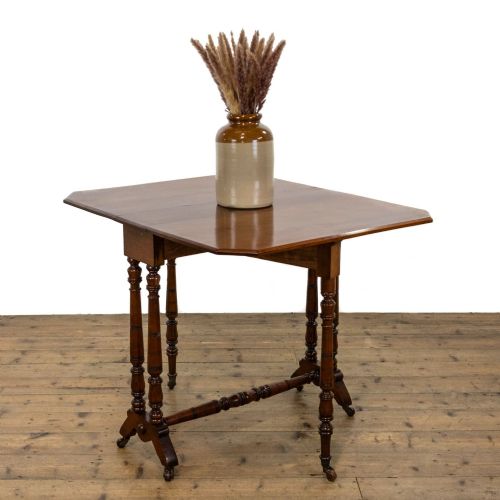
An antique walnut console table is typically designed to stand against a wall, frequently taking the form of side tables, lowboys, or fold-over card and games tables. The selection spans the eighteenth century through to the Victorian era and the nineteen-twenties, incorporating Georgian, Queen Anne, and Rococo Revival styles.
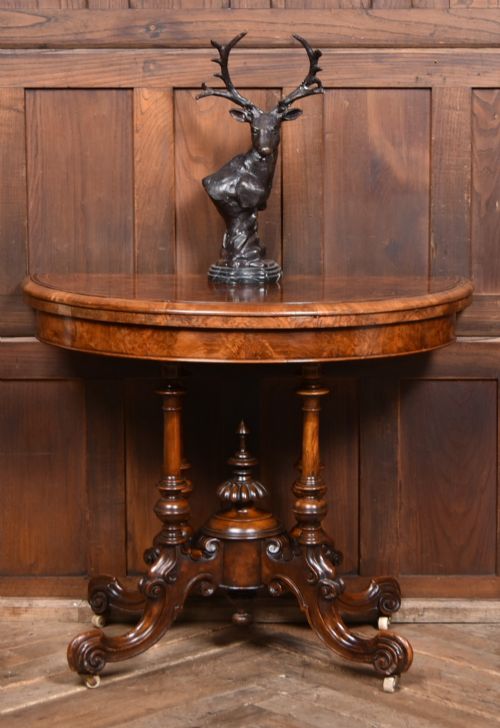
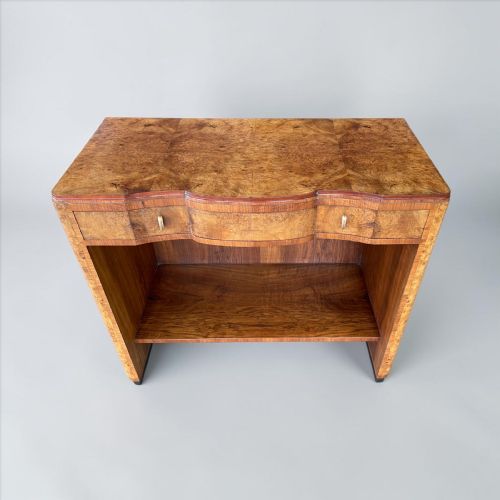
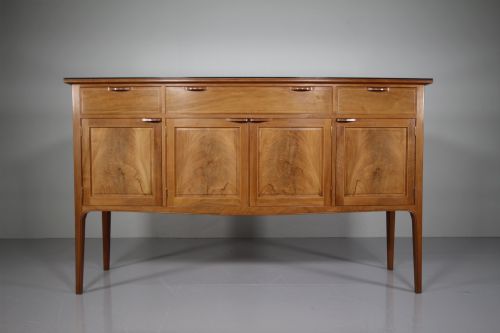
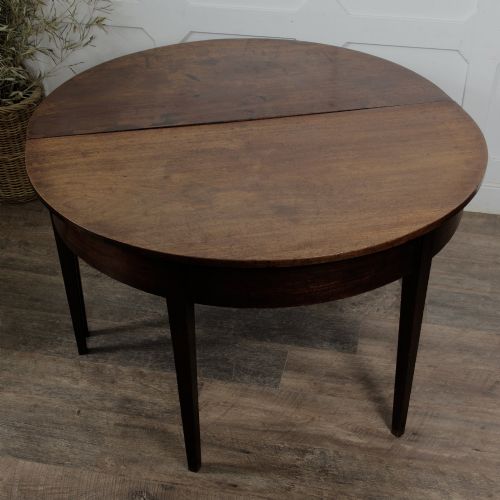
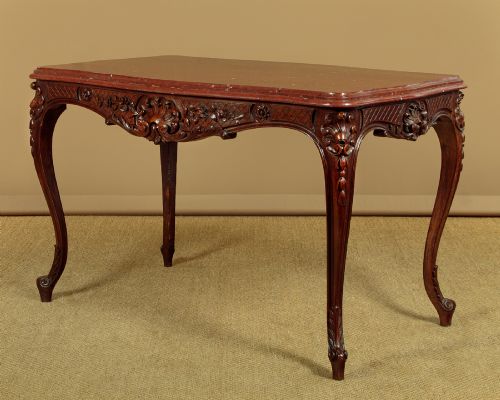
Buyers encounter numerous variations on this page, including burr walnut card tables, demi-lune tables, and marble-topped French examples. Sideboards, dressers, and kidney writing desks also appear under this designation, demonstrating the diverse functions these pieces served in historical interiors.
Materials and construction
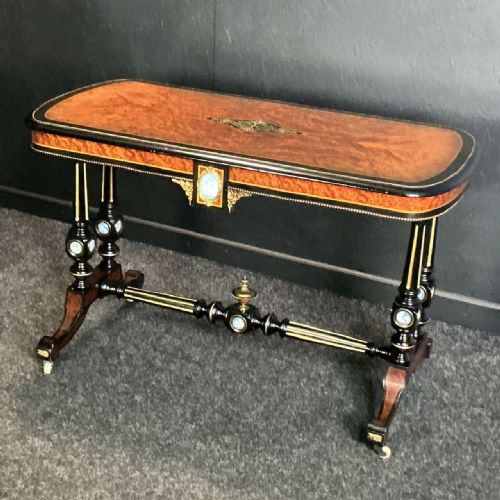
Cabinet makers utilised solid walnut and walnut veneer, frequently selecting burr walnut to create highly decorative, figured surfaces across tabletops and facades. Inlaid marquetry, brass fittings, and carved wooden bases further enhanced the structural and visual complexity of these furnishings.
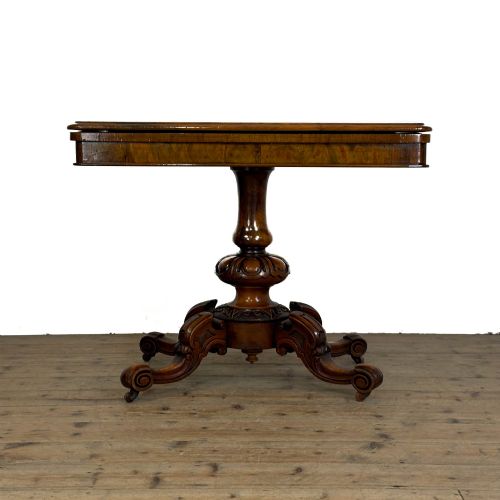
Tables were constructed with folding mechanisms, carved basket bases, or freestanding frames, depending on whether their primary purpose was dining, writing, or display.
Retail Price Guide 2026
Typical UK retail prices for walnut console, calculated from the Sellingantiques database of over a million retail prices indexed since 2003. This retail price guide relies exclusively on Sellingantiques data; no external sources or auction records are used, so the figures do not describe the wider market.
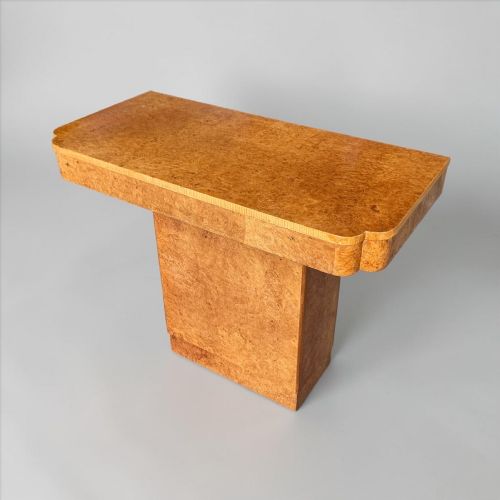
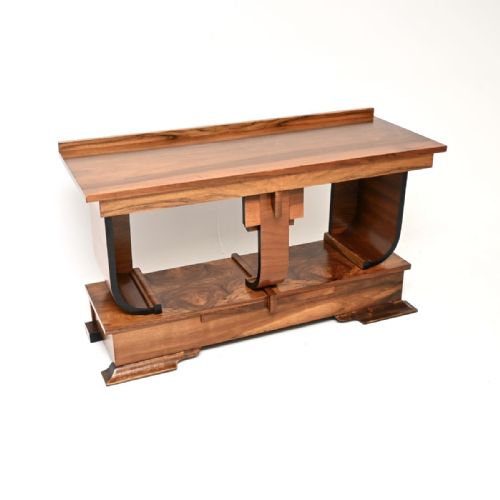
Several console tables incorporate subtle Egyptian stylistic influences alongside traditional British cabinet making.
Evaluating craftsmanship
Quality rests upon the selection and matching of the timber veneer, where expertly figured burr walnut grain creates a striking visual impact across the surface. Superior examples display meticulous marquetry inlay, refined carving on the wooden bases, and robust structural joinery that maintains stability.
The integration of secondary materials, such as polished marble tops or cast brass hardware, distinguishes standard production pieces from exceptionally executed commissions by prominent cabinet makers.
Maple & Co. of London
The Antique Walnut Console Glossary
- Burr walnut
- Timber taken from a growth on the walnut tree, prized for its swirling, highly figured grain pattern. Cabinet makers used veneers of this wood to adorn prominent surfaces.
- Lowboy
- A small side table with drawers, typically standing on four legs, originating in the eighteenth century. They frequently served as dressing tables or auxiliary serving surfaces.
- Marquetry
- The art of applying pieces of veneer to a structure to form decorative patterns and pictures. Floral and geometric motifs are common in this tradition.
- Demi-lune
- A half-moon shape used for the tops and frames of specific console and card tables. This design allows the furniture to sit flush against a wall.
- Fold-over table
- A table featuring a hinged top that unfolds to double the surface area, often utilised for card games or dining. The mechanism requires precise carpentry to ensure a level surface when opened.
Frequently Asked Questions
Where should I place a console table?
An antique walnut console table fits naturally in a hallway, entranceway, or living room against a flat wall. Their shallow depth allows them to occupy narrow spaces without obstructing movement.
Pairs of consoles work particularly well flanking a fireplace or positioned beneath a large mirror in a formal reception room.
How do I identify a Georgian walnut console?
Georgian pieces from the eighteenth century display restrained classical proportions, often featuring plain or figured walnut veneers without excessive ornamentation. Look for traditional joinery methods and cabinet work characteristic of the period.
Later pieces influenced by the Georgian style often incorporate more elaborate burr walnut or marquetry inlay that reflects Victorian or early twentieth-century tastes.
Can these tables be used for writing?
Certain examples on this page are explicitly designated as writing desks or kidney desks, designed specifically for seated tasks. Other console and side tables provide a flat surface suitable for lamps, books, and decorative objects rather than active writing.
Fold-over card tables offer a dual purpose, functioning as a slim console when closed and providing an expanded surface when opened.
What is the difference between a console and a lowboy?
A console table is primarily intended to stand against a wall as a decorative and functional surface, frequently featuring elaborate legs or a marble top. A lowboy is a specific form of low dressing or side table equipped with one or more rows of drawers beneath the surface.
Both pieces utilise walnut timber across the listed periods, but their internal framing and primary historical functions differ.