
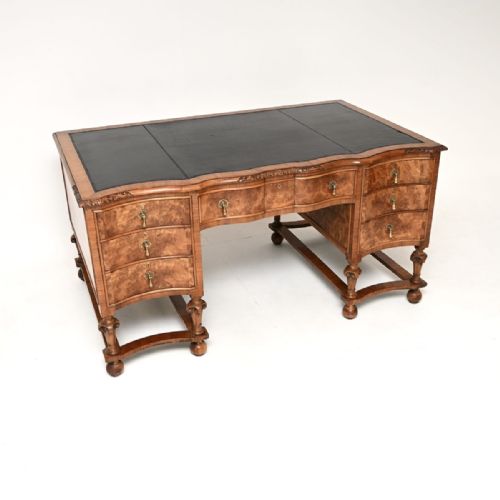
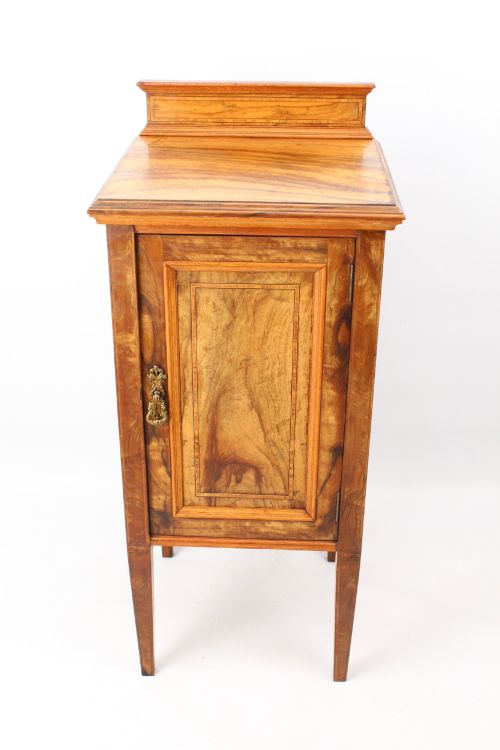
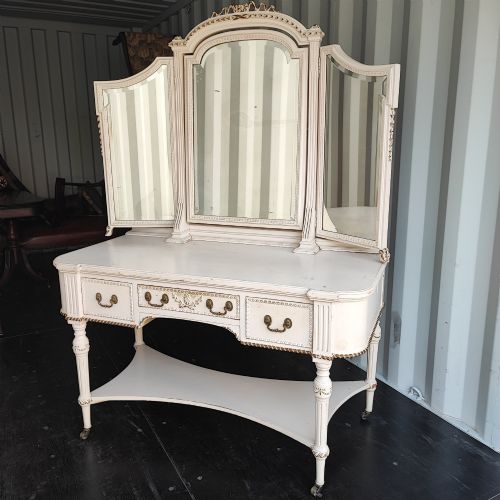
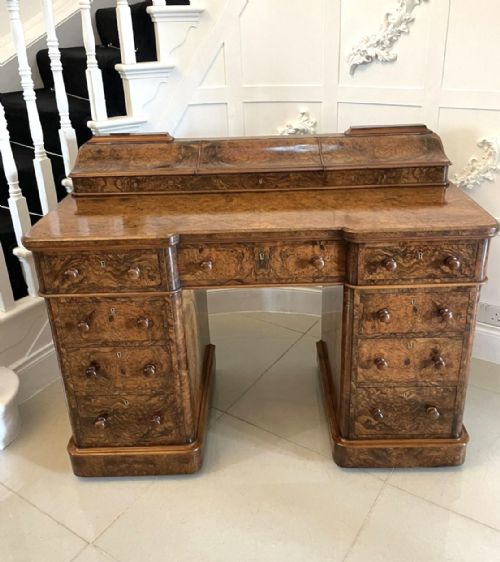




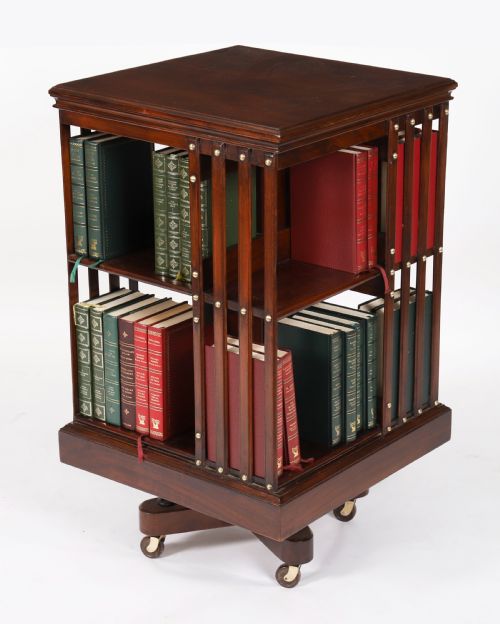


Maple and Co Table
These maple and co table items bring London cabinet-making directly into domestic rooms through fine woods and sturdy frames.
Forms and periods
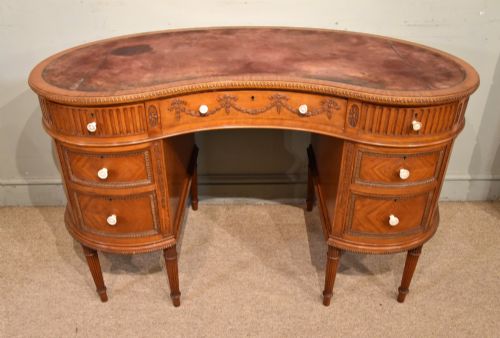
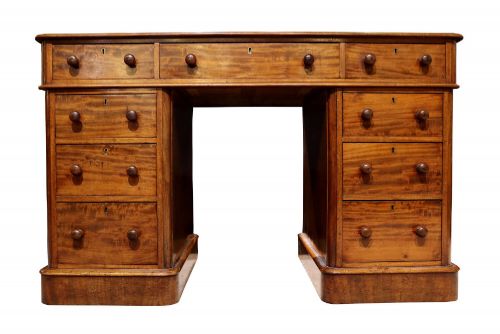
A maple and co table brings refined London craftsmanship into everyday domestic spaces through a broad selection of forms. Buyers searching this phrase encounter dining tables, side tables, console tables, games tables, card tables, and writing tables spanning the nineteenth century through the early twentieth century.
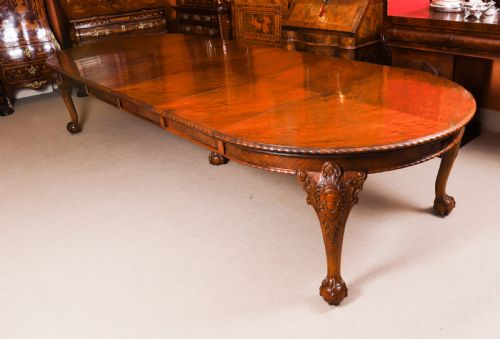
The pieces on this page lean heavily towards dining and console pieces alongside games tables. Victorian, Edwardian, and later revival styles dominate the selection, showing the firm's persistent reach across changing tastes.
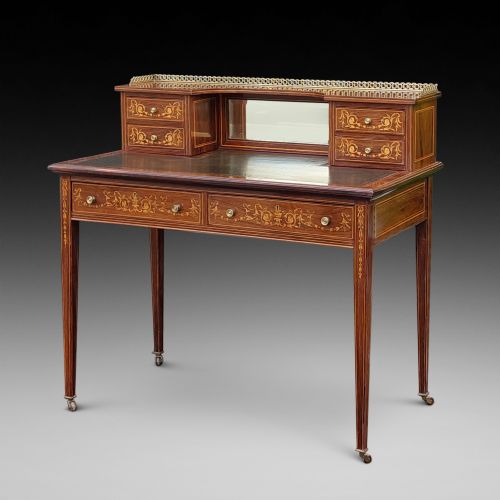
Makers working under this banner produced everything from formal extending dining furniture to compact tea tables. Walnut and burr walnut appear frequently alongside mahogany, oak, satinwood, and birds eye maple.
Judgement of quality
Quality rests on the depth of the timber figuring and the precision of the veneering across large surfaces like dining leaves and console tops. Finer examples display carefully matched grain patterns that wrap seamlessly around edges and aprons.
Construction methods distinguish standard utility pieces from high-end commissions, particularly in the smoothness of extending dining mechanisms and the tightness of drawer dovetails in writing tables. The choice of secondary woods and the crispness of carved details on legs further separate the workshop grades.
Retail Price Guide 2026
Typical UK retail prices for maple and co table, calculated from the Sellingantiques database of over a million retail prices indexed since 2003. This retail price guide relies exclusively on Sellingantiques data; no external sources or auction records are used, so the figures do not describe the wider market.
Queen Anne revival and Edwardian styles appear alongside Victorian production, reflecting shifting domestic fashions in London workshops.

Maple and Co·Maples of London
The Maple and Co Table Glossary
- Burr walnut
- A prized timber harvested from walnut tree growths, featuring swirling, mottled grain patterns used extensively for decorative veneers.
- Satinwood
- A luminous, hard timber with a yellowish sheen, frequently utilised for inlaid Edwardian writing and tea tables.
- Extending table
- A dining table designed with internal leaves and a central mechanism to pull apart and lengthen the top.
- Console table
- A wall-mounted or freestanding table designed to sit flat against a room boundary, often paired with a marble top.
- Card table
- A folding table with a hinged top that opens to reveal a baize-lined surface for evening games.
Frequently Asked Questions
How do I date a maple and co table?
Dating relies on combining the timber choice with the prevailing stylistic revival and construction methods. Victorian pieces often use solid mahogany or heavy burr walnut, while Edwardian examples favour lighter satinwood and simpler inlays.
Makers marks, stamps, or paper labels found inside drawers provide the most reliable chronological anchors. Comparing the leg profiles against known Queen Anne or Rococo revival patterns helps narrow the decade further.
Were these tables made in London?
The firm operated massive production facilities and showrooms based primarily in London, supplying high-end furniture across Britain and abroad. Their workshops employed skilled cabinet-makers who turned out both bespoke commissions and standardised catalogue lines.
While the primary retail hub sat in the capital, the influence of their designs reached provincial homes through extensive commercial distribution. Pieces stamped with the London address reflect the heart of this manufacturing network.
How do I care for a burr walnut top?
Burr walnut requires protection from direct sunlight and excessive humidity to prevent the delicate veneer from drying or cracking. Regular dusting with a soft, dry cloth preserves the polished finish without building up greasy residue.
Avoid placing hot cups or damp items directly onto the wood surface to prevent permanent staining of the polish. Occasional application of appropriate wax feeds the timber and maintains its natural depth.
Can I use an antique card table daily?
Card tables function well for occasional dining or display, but their folding hinges and folding tops demand gentle handling. Opening the mechanism requires supporting the swinging leg properly to avoid putting undue stress on the rear pivots.
Daily heavy use can strain the antique joints and wear down the delicate veneers along the folding edges. Treating the mechanism with care ensures the structural integrity remains sound for years.