
Vintage Card Table
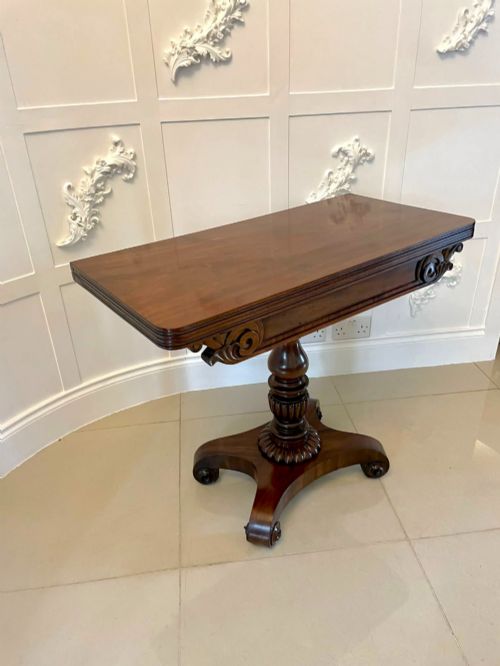
A vintage card table brings adaptable surfaces and concealed folding mechanisms into a room, serving equally well for games or as an occasional display piece.
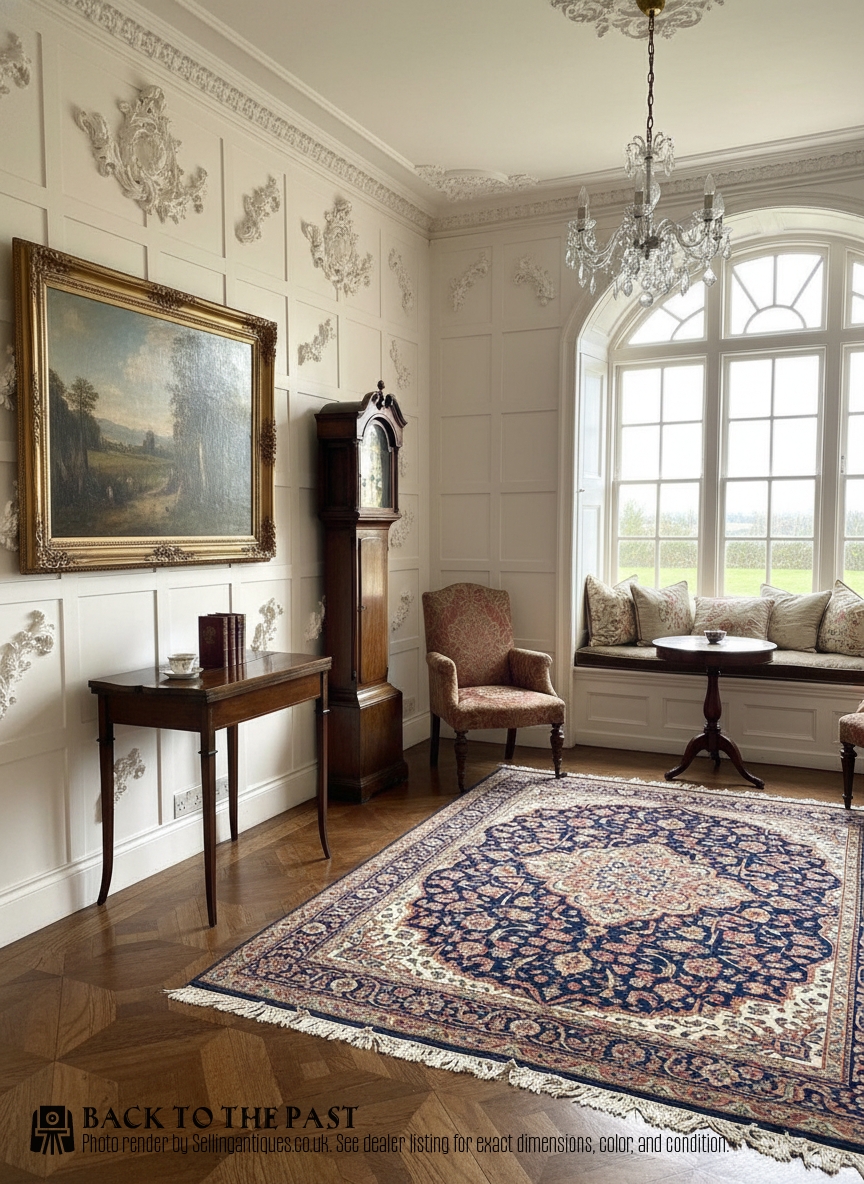
Vintage Card Table
When you search for a vintage card table, you encounter folding and pivoting surfaces designed for evening entertainment and domestic utility across multiple decades. The evidence shows these pieces span the 18th century through the mid 20th century, drawing on Edwardian, Victorian, and Georgian traditions.
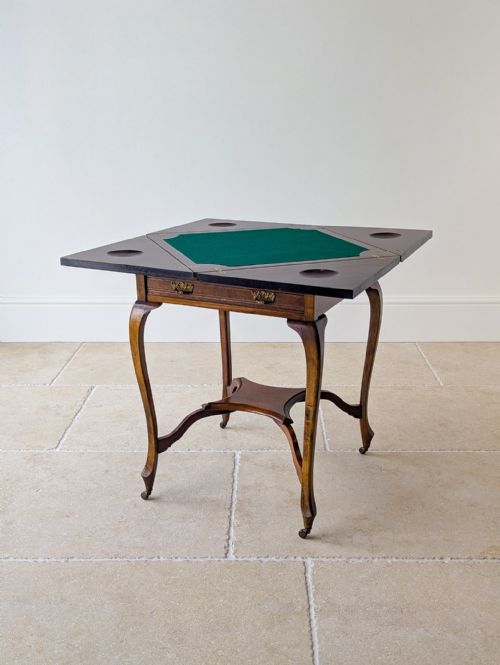
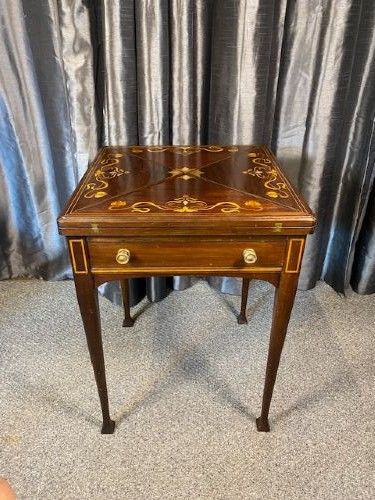
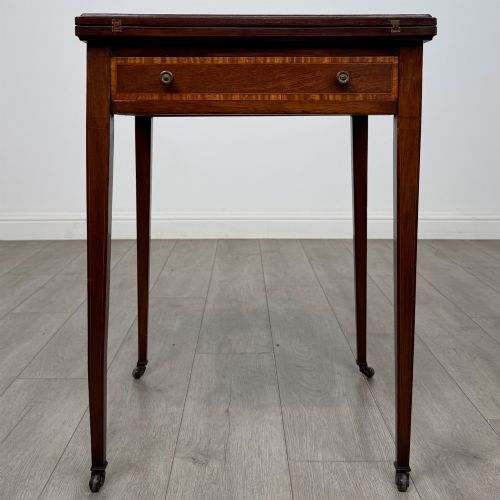
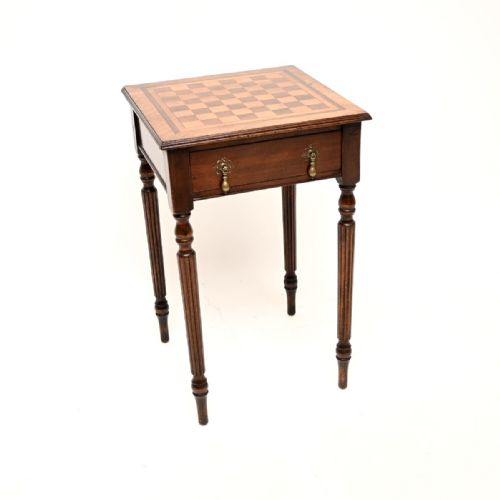
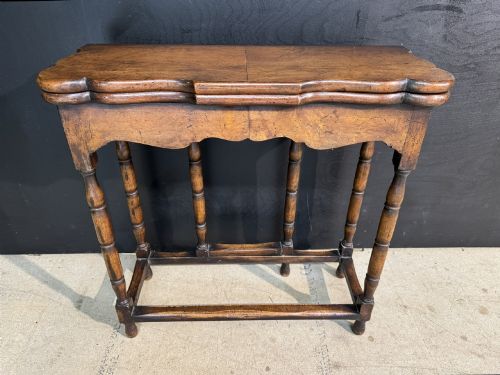
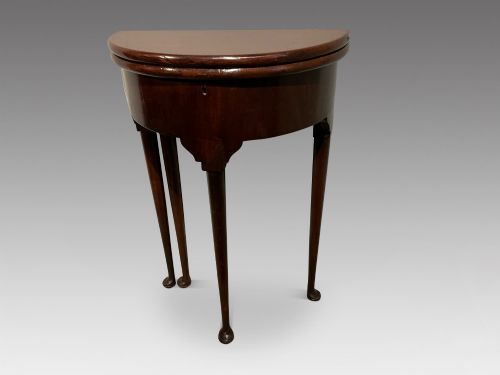
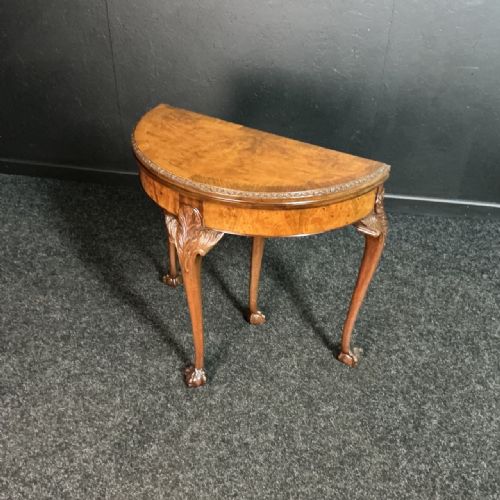
The most prevalent forms on this page include envelope card tables that open on diagonal pivots, alongside demi-lune folding designs and combined chess and games tables. Makers utilised mahogany, walnut, and burr walnut, frequently incorporating inlaid timbers to define the playing surface.
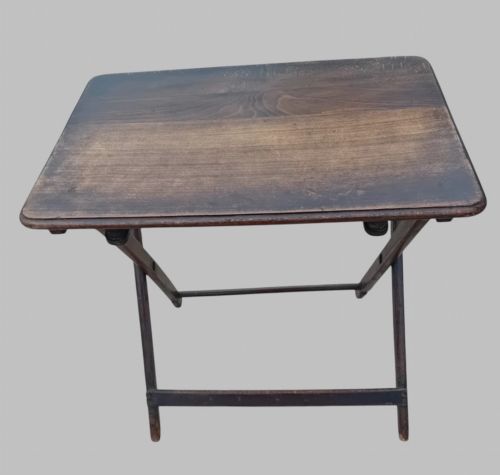
Beyond standard card tables, the records show related tea, console, and occasional tables fulfilling similar functions in period interiors. These objects demonstrate how domestic furniture adapted to changing social habits by concealing specialised compartments or folding tops.
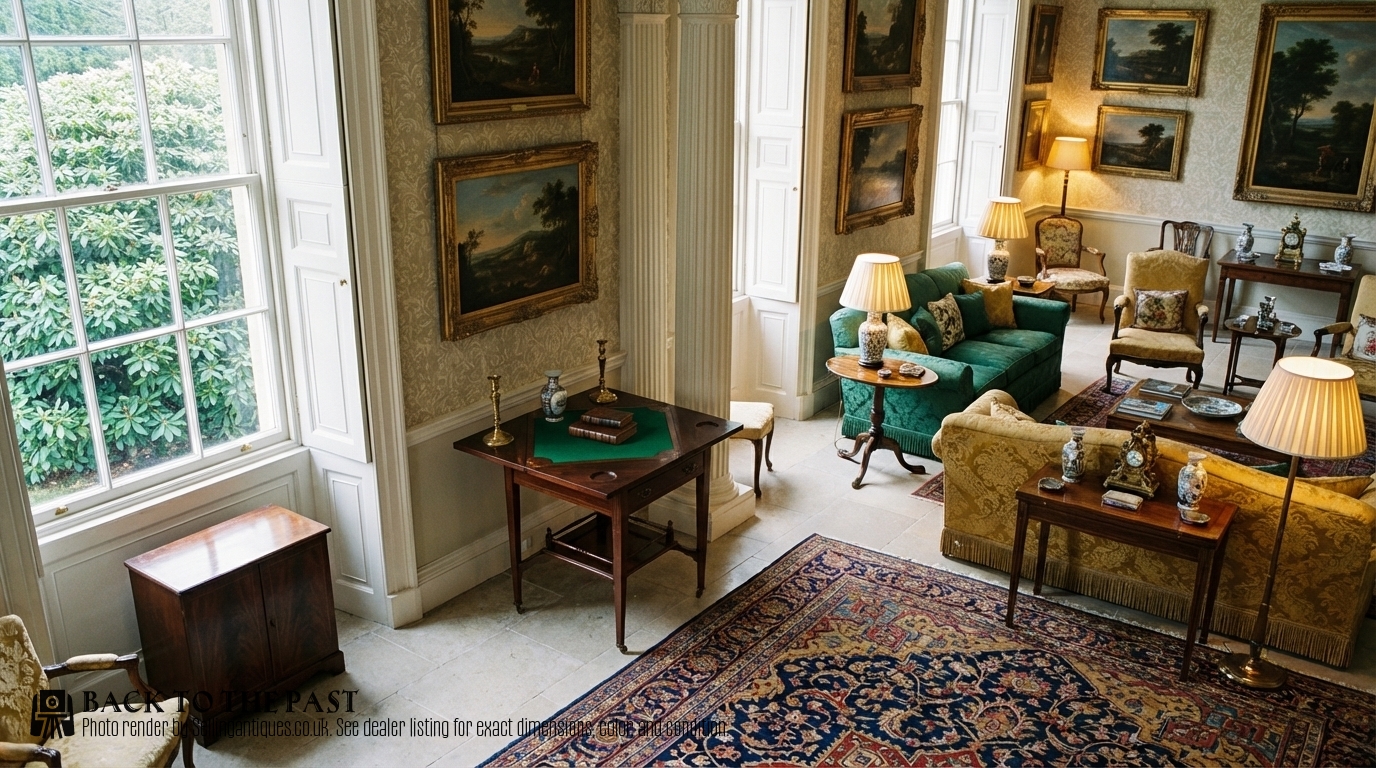
Markers of quality
Quality in these tables rests upon the precision of the joinery in the folding leaves and the stability of the pivoting mechanism. Superior examples maintain alignment when closed and operate smoothly without sagging when extended.
The choice of timber grain, particularly matched burr walnut or finely figured mahogany veneers, dictates the visual distinction between standard production and exceptional workshop output. Hand-cut inlay work and well-preserved original textile inserts further elevate the standing of an individual piece.
Vintage Card Table Retail Price Guide 2026
Typical asking prices for vintage card table among the pieces listed under this phrase on Sellingantiques today, from the lower quarter to the upper quarter. They describe what is for sale here now, not the wider market.
Listings incorporate pieces spanning from the 18th century through the 1960s, utilising mahogany, walnut, brass, and baize.
Levi and Salaman·William Hutton and Sons·A Wilcox·Sampson Mordan
The Vintage Card Table Glossary
- Envelope table
- A square card table with four triangular flaps that rotate and fold open simultaneously to reveal a baize-lined surface. This clever mechanism became popular during the Edwardian period.
- Demi-lune
- A half-moon shape used for console and folding tables designed to sit flat against a wall when closed. When unfolded, the top forms a full circle or semicircle for play.
- Marquetry
- Decorative patterns formed by fitting together thin veneers of various woods, metals, or shells onto a solid carcass. It often decorates the top surface of French and revival tables.
- Baize
- A coarse woollen fabric, traditionally green, used to cover gaming surfaces because it dampens sound and allows cards to slide smoothly. It remains a defining feature of period card tables.
- Cross banding
- A narrow strip of veneer applied to the border of a table top with the grain running perpendicular to the centre panel. This technique creates a neat framing effect.
Vintage Card Table: Frequently Asked Questions
How do envelope card tables open?
Envelope card tables operate through a pivoting mechanism where each of the four triangular flaps rotates towards the centre to reveal the playing surface.
As one flap lifts and turns, the supporting structure often shifts underneath to lock the leaves into position.
What woods were used for these tables?
Cabinet makers predominantly used mahogany, walnut, and burr walnut for the primary structure and decorative surface veneers.
Inlaid details frequently incorporate lighter satinwood or fruitwoods to create contrasting borders and geometric patterns.
How do I care for the baize top?
Baize requires gentle brushing and protection from direct sunlight to prevent fading and wear over time.
Avoid using liquid cleaners on the fabric, relying instead on dry vacuum attachments with low suction for routine maintenance.
Can these tables double as writing desks?
Many folding tables with flat baize interiors easily serve alternative functions such as writing desks or display surfaces during the day.
Their compact closed dimensions make them particularly suitable for smaller rooms requiring flexible furniture arrangements.