
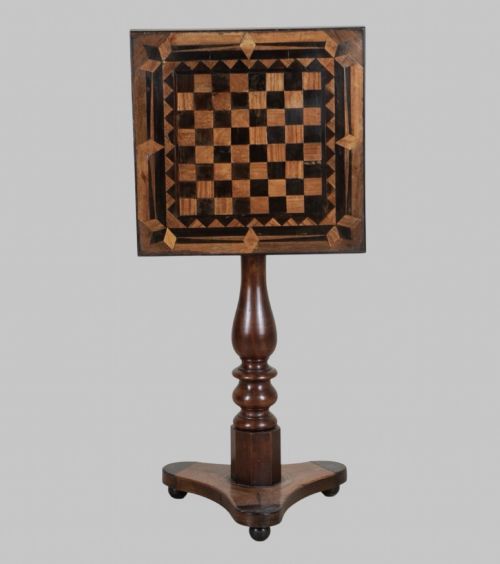
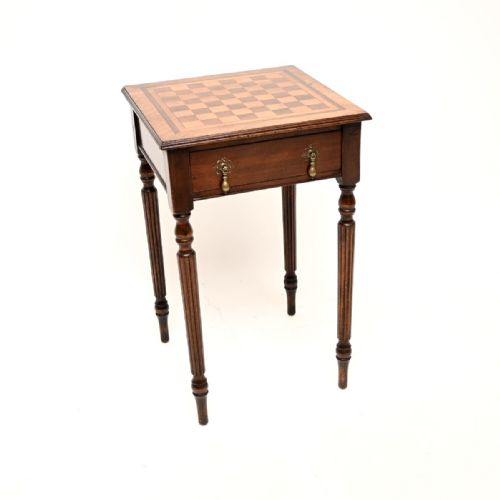
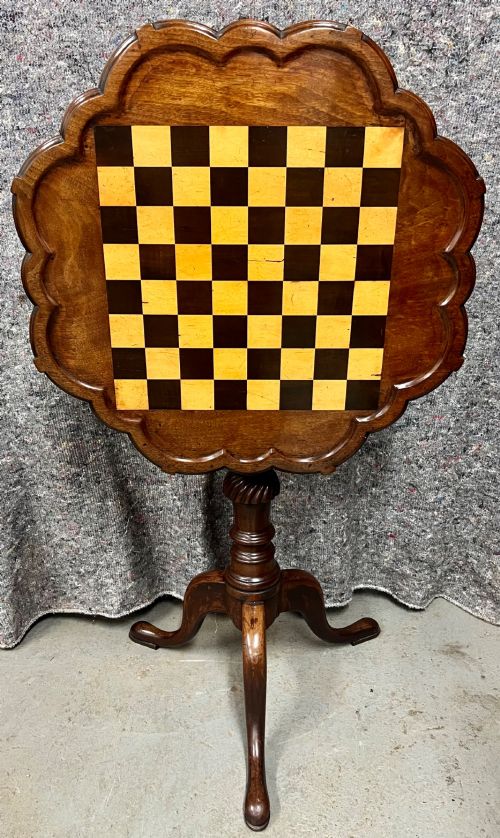
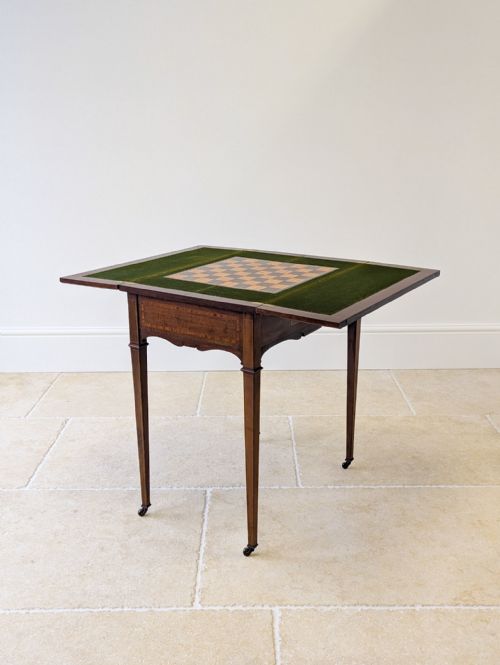
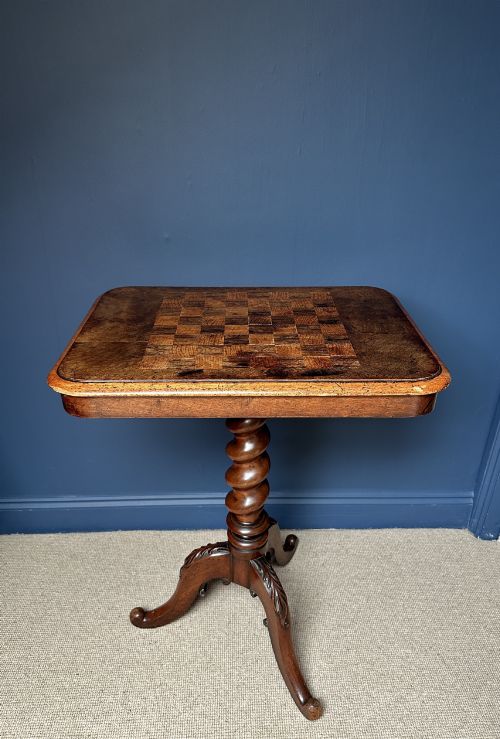


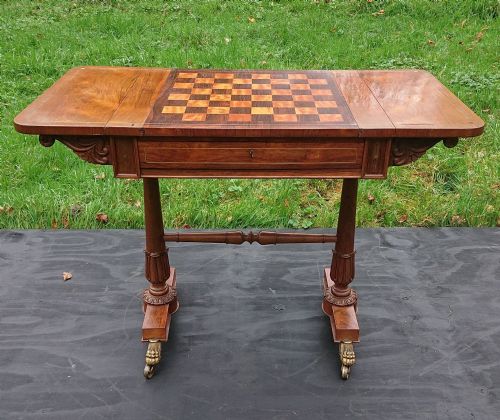


Mahogany Chess Table
Mahogany chess table pieces bring tactile charm to any room, offering dual-purpose surfaces for play and display.
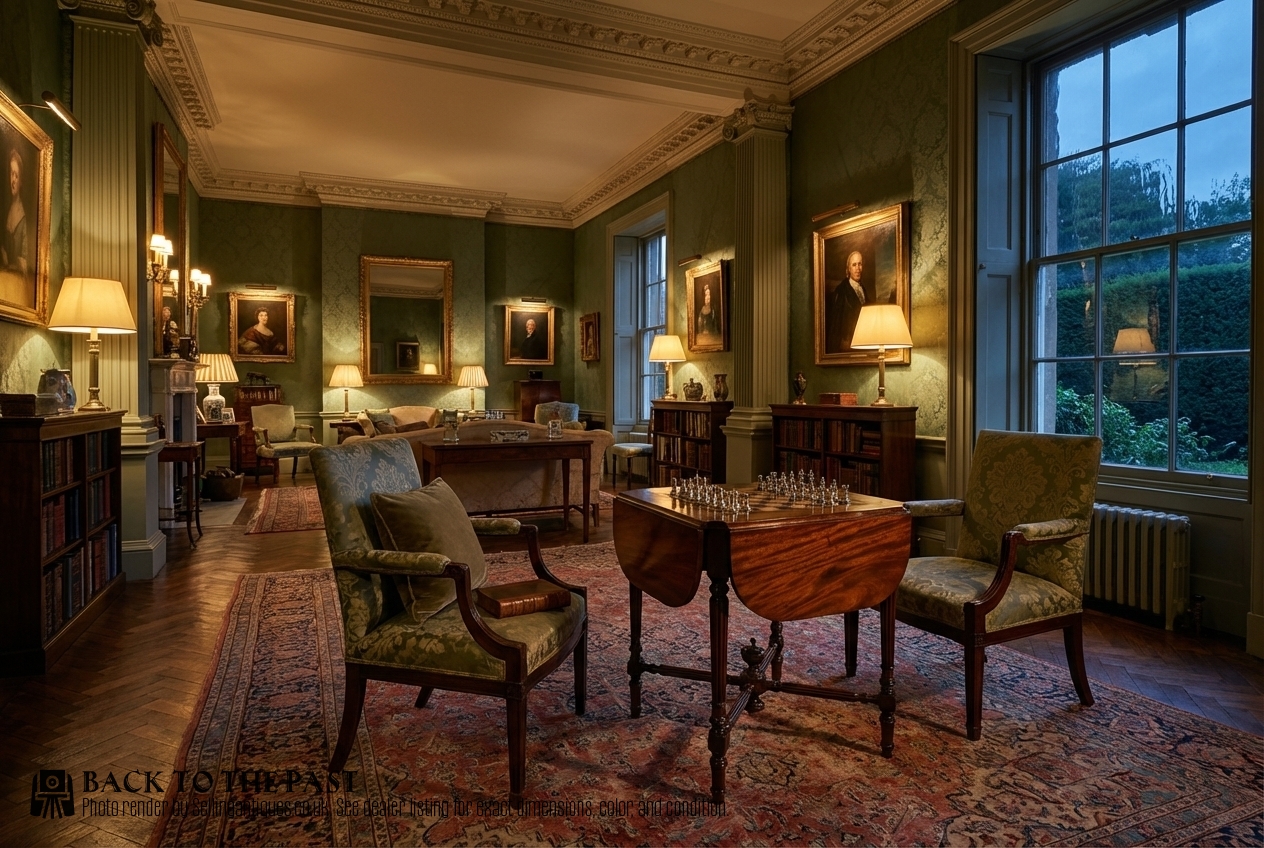
Mahogany Chess Table
A mahogany chess table is primarily designed for leisure, featuring integrated playing surfaces for strategy and card games. Pieces span George III, Regency, William IV, Victorian, and Edwardian periods, alongside specific dates such as 1850 and 1920.
The versions most likely to appear on this page include occasional tables, tripod tables, and multifunctional games tables with removable or inlaid boards. Some iterations double as lamp tables, work stations, or multi-game furniture.
Makers and workshops of the era produced these forms in mahogany, frequently combining them with walnut, burr walnut, rosewood, and maple for contrasting board squares.
Materials and Construction
Cabinet makers utilised solid mahogany and flame mahogany veneers over secondary timbers, shaping tripod bases, turned columns, and carved supports. Surfaces incorporated precision wood inlay and marquetry to map out contrasting squares for chess and backgammon.
Interiors and game compartments often integrated green baize linings, while specific examples featured brass fittings, marble inserts, or removable wooden boards and matching chess sets.
Retail Price Guide 2026
Typical UK retail prices for mahogany chess table, calculated from the Sellingantiques database of over a million retail prices indexed since 2003. This retail price guide relies exclusively on Sellingantiques data; no external sources or auction records are used, so the figures do not describe the wider market.
Listings show these tables appearing in occasional, lamp, and tripod forms across Victorian and Edwardian periods.
Factors of Quality
The hierarchy of these tables rests on the crispness of the timber selection, such as richly figured flame mahogany and balanced wood inlay for the board squares. Structural integrity in the tripod legs and the precision of fitted removable boards distinguish finer examples.
Versatility also plays a role, with multi-use tables incorporating card and backgammon functions displaying more complex internal joinery and secondary woods like rosewood and burr walnut.
Gillows
The Mahogany Chess Table Glossary
- Tripod table
- A freestanding table supported by a central pillar resting on three legs. This form allows stability on uneven floors.
- Green baize
- A coarse woollen fabric used to line gaming surfaces and card wells. It provides a soft texture for moving pieces quietly.
- Flame mahogany
- A veneer cut from timber fork where branches meet the trunk, creating a distinctive wave-like grain pattern. Cabinet makers used it to create striking visual movement on table tops.
- Marquetry
- The art of applying pieces of veneer to a structure to form decorative patterns. Craftsmen utilised this technique to delineate individual squares on the playing surface.
- Backgammon
- A board game frequently accommodated alongside chess in multi-use tables. Tables often house removable boards to switch between pastimes.
Frequently Asked Questions
What periods do these tables come from?
The pieces span the Georgian, Regency, William IV, Victorian, and Edwardian eras, with specific examples dated around 1850 and 1920.
Stylistic shifts reflect changing domestic tastes, moving from simple tripod bases to multifunctional furniture.
Are the chess boards removable?
Certain examples feature removable chess and backgammon boards that lift out to reveal storage wells or alternative playing surfaces.
Other variants have the board permanently inlaid directly into the mahogany table top.
What other games do these tables support?
Many designs incorporate multiple pastimes, functioning as card and games tables alongside chess.
Some incorporate backgammon boards or workstation compartments for sewing and writing.
What woods are used besides mahogany?
Cabinet makers combined mahogany with rosewood, walnut, burr walnut, and maple to create contrasting squares on the playing surface.
Secondary additions include brass hardware, marble inserts, and green baize linings.