


Victorian Gaming Table
These nineteenth-century pieces designed for parlour entertainment and card play bring social history directly into a modern home.
Victorian Gaming Table
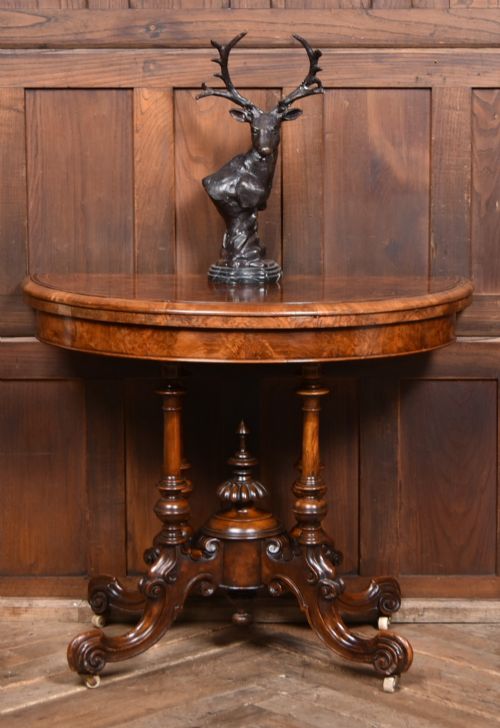
A victorian gaming table serves as a functional piece of furniture engineered for pastimes such as cards, chess, and backgammon. Buyers searching this phrase most frequently encounter fold-over card tables and swivel-top varieties designed to save space in nineteenth-century drawing rooms.
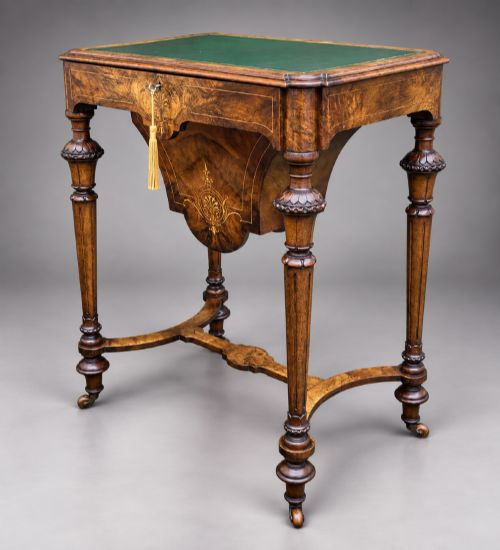
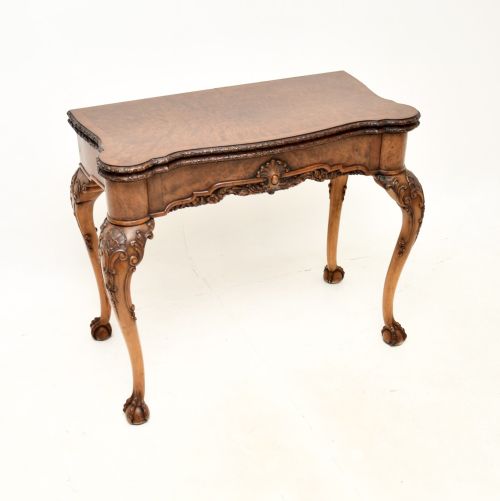
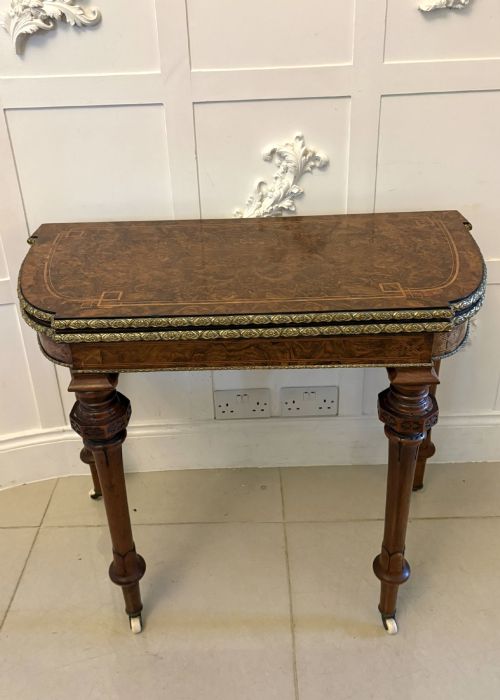
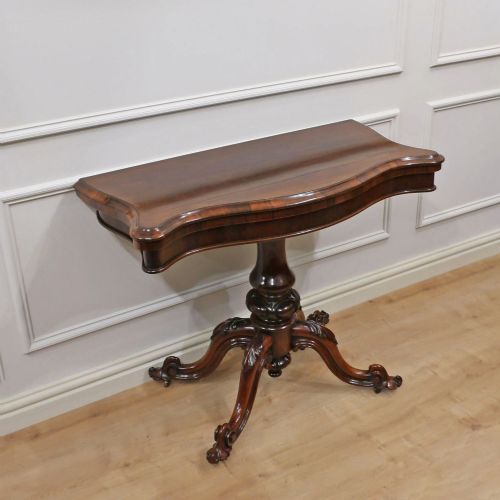
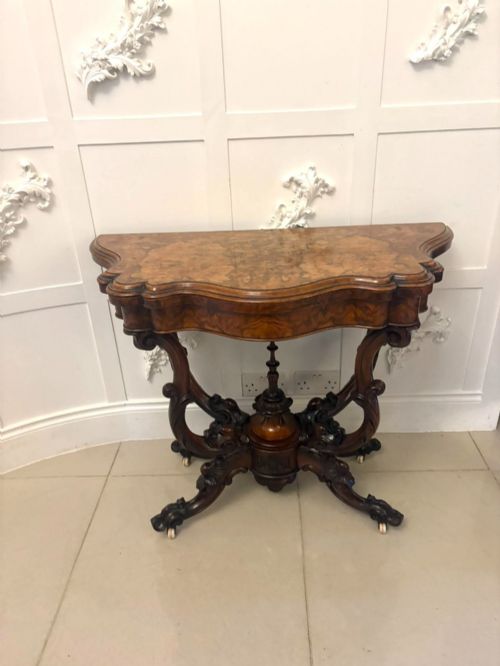
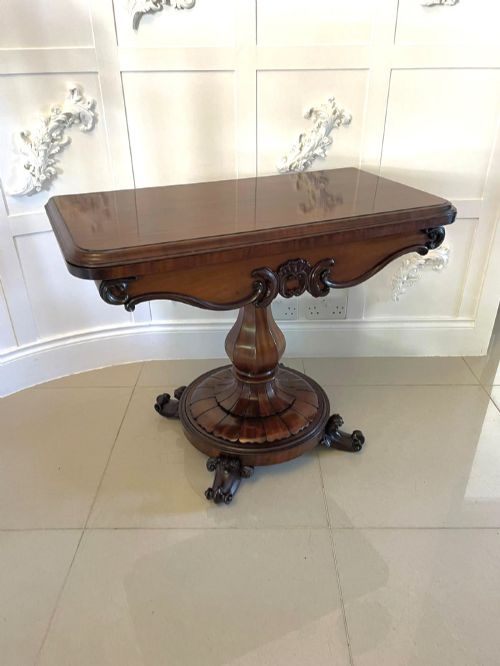
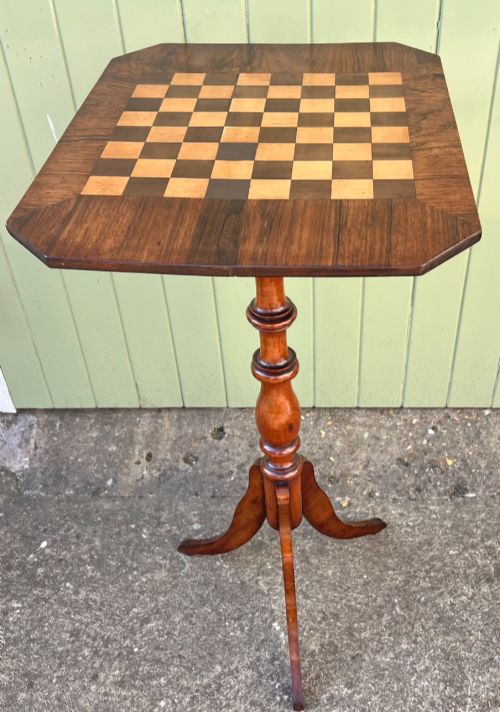
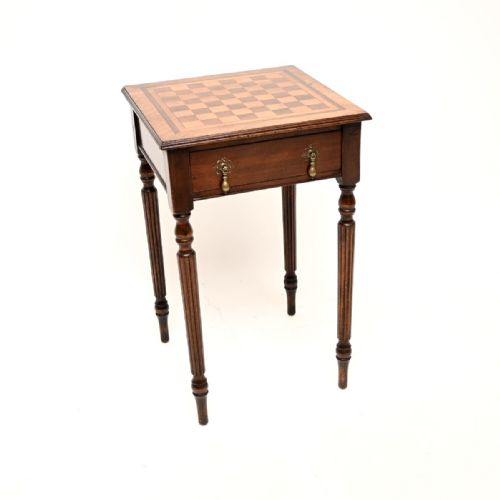
The form appears in various configurations, ranging from burr walnut console tables to rosewood chess boards and mahogany occasional pieces. Many examples double as tea or work tables when closed, adapting easily to domestic routines.
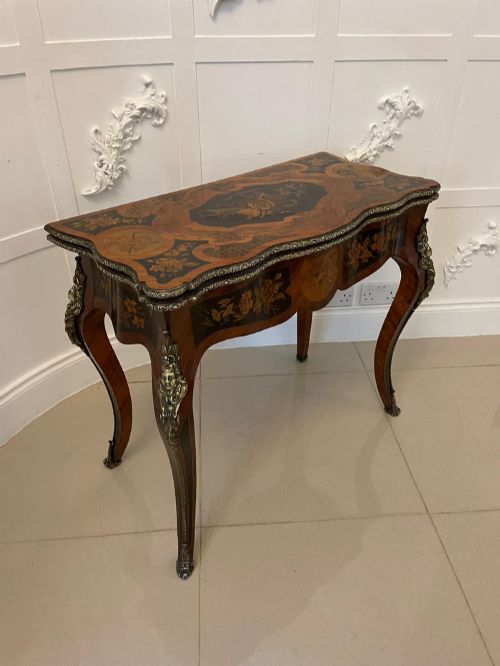
Dating primarily from the Victorian period through the late nineteenth century, these objects reflect changing social habits and interior design tastes. Makers adopted styles spanning from straightforward vernacular timber builds to elaborate French Louis XV revivals.
Materials and construction
Cabinetmakers utilised rich timber veneers, primarily burr walnut, rosewood, and mahogany, applied over solid secondary woods. Highly figured grains were chosen for the main surfaces to catch the light during evening gatherings.
Intricate wood inlay, brass mounts, and ormolu decoration embellish many examples, alongside hand-carved supports and basket bases. Specialist techniques like marquetry and pyrography appear on top-tier surfaces dedicated to chess or backgammon.
Hinged mechanisms and swivel actions allow the timber tops to rotate and unfold smoothly, often revealing concealed storage compartments lined for game pieces or sewing supplies.
Victorian Gaming Table Retail Price Guide 2026
Typical asking prices for victorian gaming table among the pieces listed under this phrase on Sellingantiques today, from the lower quarter to the upper quarter. They describe what is for sale here now, not the wider market.
Listings feature walnut, rosewood, mahogany, and satinwood alongside brass, ormolu, and detailed wood inlay.
Judging quality and execution
Quality rests upon the selection of timber veneers and the precision of the cabinetwork in the folding mechanisms. Superior examples exhibit seamless joints and matching grain patterns across the fold-over sections.
The refinement of carved details on the pedestals and the crispness of any ormolu mounts or wood inlay distinguish ambitious workshop output from standard production. Well-executed pieces retain stable frames that support the weight of the top without sagging.
James Shoolbred and Co·G T Morant
The Victorian Gaming Table Glossary
- Burr walnut
- A prized timber harvested from walnut tree growths, displaying swirling, knotty patterns that create decorative surfaces on Victorian table tops.
- Ormolu
- Gilded bronze mounts applied to furniture edges and legs, commonly seen on revivalist pieces from the mid-nineteenth century.
- Marquetry
- The art of applying decorative pieces of veneer to a structure to form intricate geometric or floral designs.
- Turnover top
- A hinged table top design that rotates and folds out to double the surface area for card playing or dining.
Victorian Gaming Table: Frequently Asked Questions
How do these tables work?
Most models feature a swivel or hinged mechanism that allows the top leaf to turn ninety degrees and unfold over an open framework. This action uncovers a baize-lined playing surface or internal storage compartments.
When closed, the furniture functions as a standard console, side, or tea table against a wall or in the centre of a room.
What woods were commonly used?
Makers relied heavily on burr walnut, rosewood, and mahogany for their rich colour and stable grain properties. Kingwood and satinwood also appear alongside decorative wood inlay and marquetry.
Secondary timbers provide internal structural support beneath the decorative outer veneers.
Were they only for cards?
While card playing drove much of the production, many surfaces feature inlaid chess or backgammon boards. Some dual-purpose examples incorporate sewing drawers or convertible compartments for multiple pastimes.
Occasional variations accommodated tea drinking and general parlour use alongside gaming.
How do I spot a later style?
Pieces attributed to the Aesthetic Movement or Anglo-Indian traditions often show distinct decorative motifs compared to standard Victorian Rococo Revival forms. Louis XV revival pieces utilise distinct kingwood veneers and ormolu mounts.
Construction details and timber ageing help distinguish mid-nineteenth-century originals from later nineteenth-century interpretations.