


Victorian Envelope Table
A victorian envelope table is a clever folding games piece that transforms from a compact side stand into a baize-lined surface for cards.
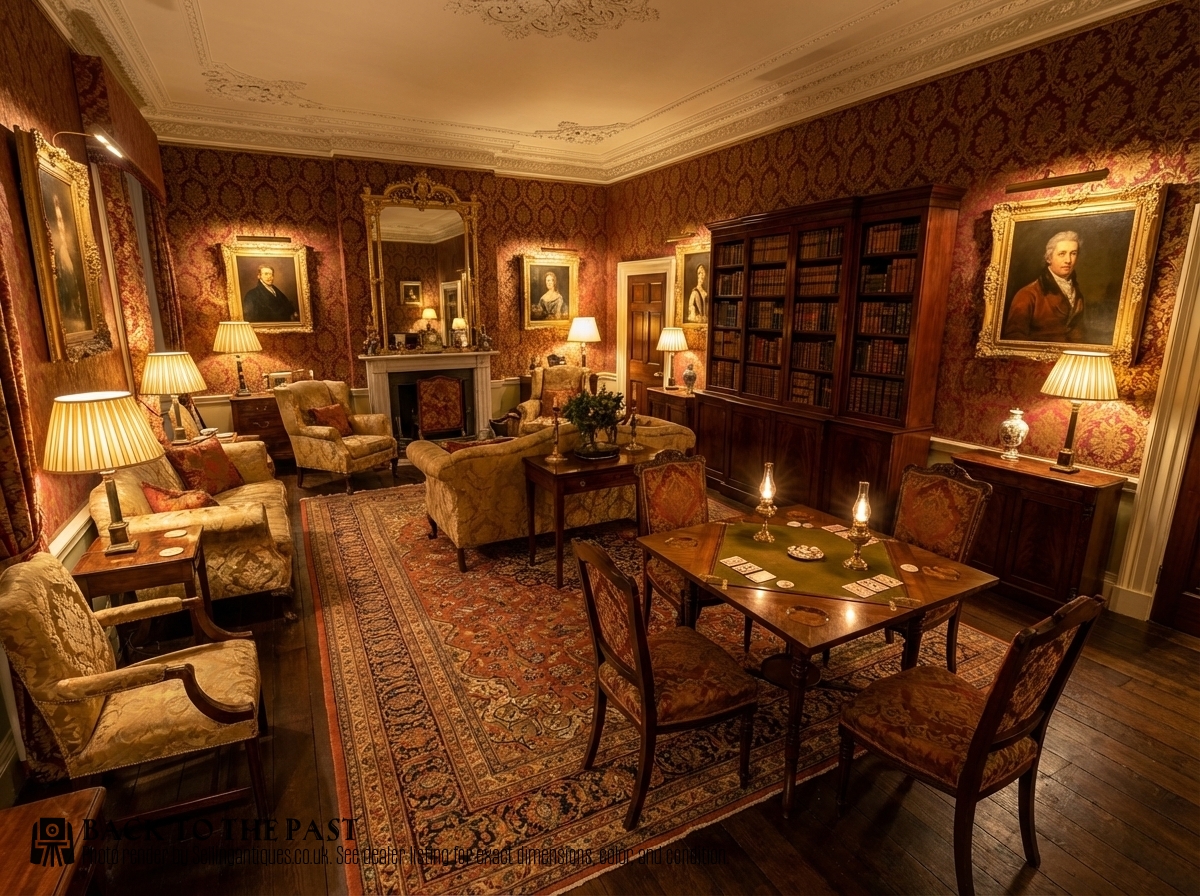
Victorian Envelope Table
When you search for a victorian envelope table, you are looking at nineteenth-century and early twentieth-century folding furniture designed primarily for parlour games and card playing. These pieces most commonly appear in rosewood or mahogany, often bearing marquetry inlay and satinwood banding.
The defining mechanical feature is the rotating top that opens like an envelope by pivoting diagonally, causing four triangular flaps to fold outwards simultaneously. Beneath this clever folding action, makers integrated internal gaming wells to hold counters and cards during play.
Beyond dedicated card and games tables, the form doubles successfully as an occasional table or side table when closed. The historical range spans from mid-Victorian examples through to late Victorian and Edwardian iterations, occasionally touching upon Aesthetic Movement and Louis XV Revival styles.
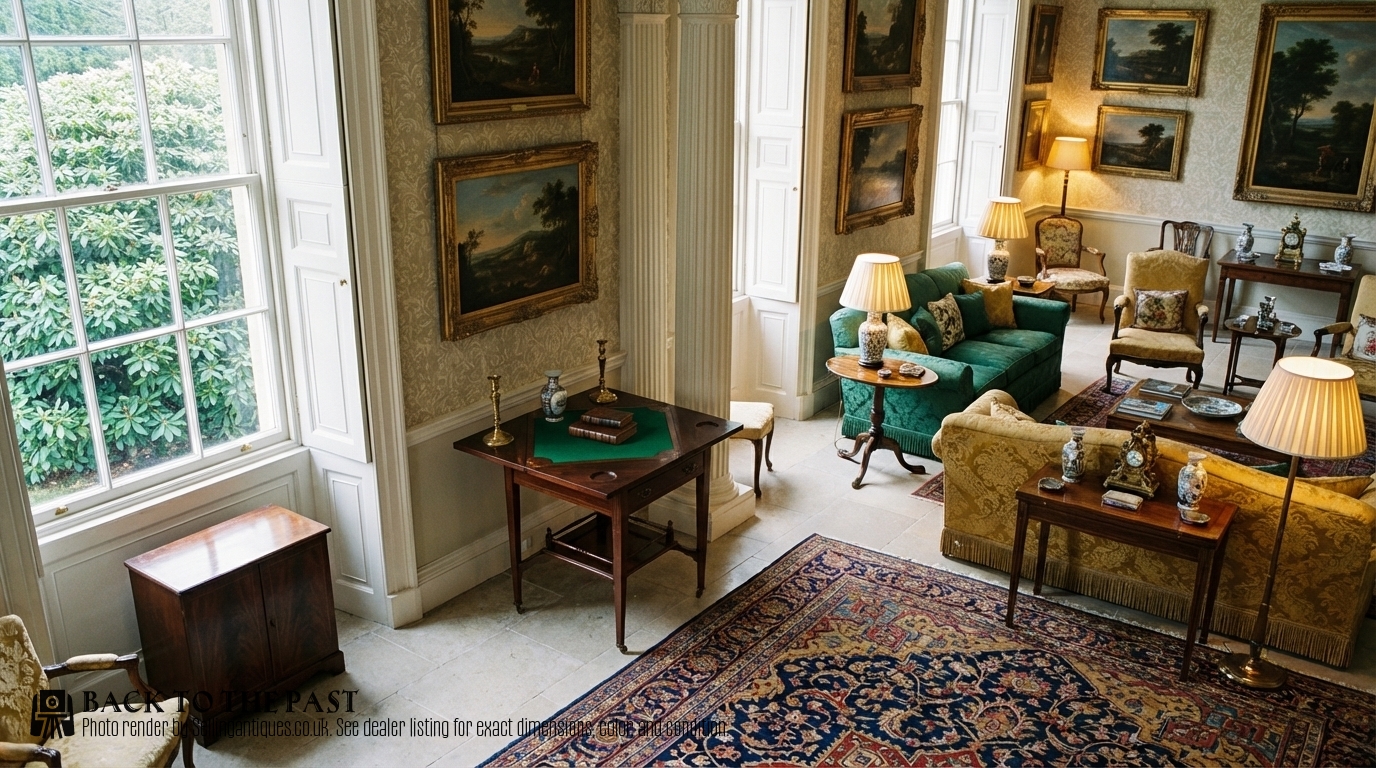
Materials and construction methods
Cabinet makers utilised rich timbers including rosewood, mahogany, walnut, and burr walnut as the primary carcase materials, frequently enhancing the surfaces with marquetry. Satinwood inlay and boxwood stringing provided crisp geometric contrast against the darker woods of the top and frieze.
Brass fittings appear in the form of hinges, castors, and occasionally ormolu mounts that embellish the corners and frieze. The folding mechanism relies on precision woodwork and metal pivots concealed beneath the rotating surface to ensure the four flaps open in unison.
Victorian players relied on these clever folding leaves to quickly hide their hand when someone knocked on the drawing room door.
Assessing quality and execution
The distinction between standard production and finer examples rests upon the crispness of the marquetry and the choice of timber veneer. Rosewood with elaborate satinwood inlay and ormolu mounts represents the upper tier of execution compared to plain mahogany models.
Mechanical precision dictates the success of the piece, as superior examples maintain a perfectly level surface when all four triangular leaves unfold. The presence of fitted drawers and original castors further separates workshop-standard pieces from finer retailer-commissioned items.
Maple & Co.
The Victorian Envelope Table Glossary
- Envelope table
- A square table with a revolving top that opens diagonally to reveal four triangular flaps folding outwards. This clever mechanism creates a larger surface lined with baize for card playing.
- Marquetry
- Decorative veneer work forming pictures or geometric patterns using various coloured woods. It frequently adorns the tops of rosewood and walnut games tables.
- Frieze
- The horizontal band situated directly beneath the tabletop, which often houses a small pull-out drawer for storing cards and counters.
- Gaming wells
- Small recessed compartments built into the corners of the table surface beneath the folded flaps. They held counters, coins, or markers securely during a game.
- Ormolu
- Gilt bronze mounts applied to furniture for decorative effect. They appear on the more ornate nineteenth-century examples in this selection.
Victorian Envelope Table: Frequently Asked Questions
How does the envelope mechanism work?
The tabletop pivots diagonally on its central axis, turning forty-five degrees relative to the base. As the top rotates, internal linkage arms cause the four triangular flaps to unfold smoothly into a flat square.
Once fully opened, the flaps lock gently into position to provide a stable baize-lined playing area. Closing the table reverses the sequence, returning the piece to a compact square side table.
Were these tables used only for cards?
While primarily built as card and games tables featuring baize surfaces and counters wells, their closed form served as standard occasional furniture. Victorian households utilised them in drawing rooms as lamp tables or side tables when entertaining was finished.
The dual functionality made them popular space-saving items in nineteenth-century parlours where room layouts needed to adapt quickly for social gatherings.
How do I date a Victorian envelope table?
Dating relies on timber choices, stylistic markers, and construction details recorded across the nineteenth century. Mid-Victorian examples often feature heavy mahogany or figured walnut, while late Victorian and Edwardian pieces frequently showcase rosewood with intricate marquetry and satinwood inlay.
Arts and Crafts or Aesthetic Movement iterations display simpler geometric lines and alternative decorative treatments. Hardware such as brass castors can also help narrow down the period of manufacture.
What are gaming wells?
Gaming wells are small, shallow compartments recessed into the corners of the table beneath the folding leaves. They were designed to hold bone counters, mother-of-pearl fish, or coins used during card games.
When the table is closed, these compartments remain entirely hidden beneath the sealed envelope top. Opening the leaves instantly reveals the wells ready for play.