

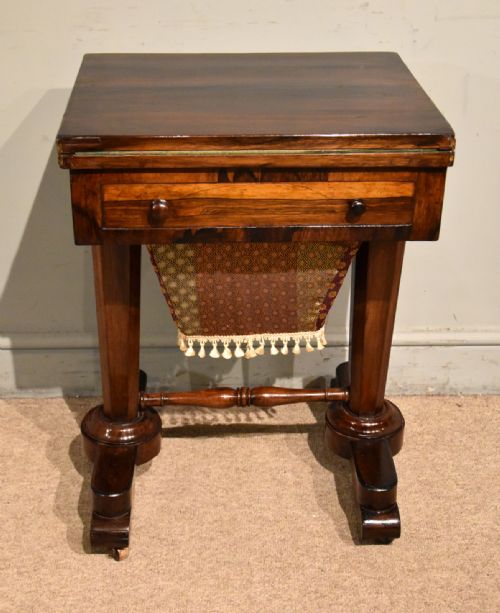


William IV Games Table
A william iv games table brings sculptural pedestals and rich timber into the entertaining spaces of the nineteenth century.
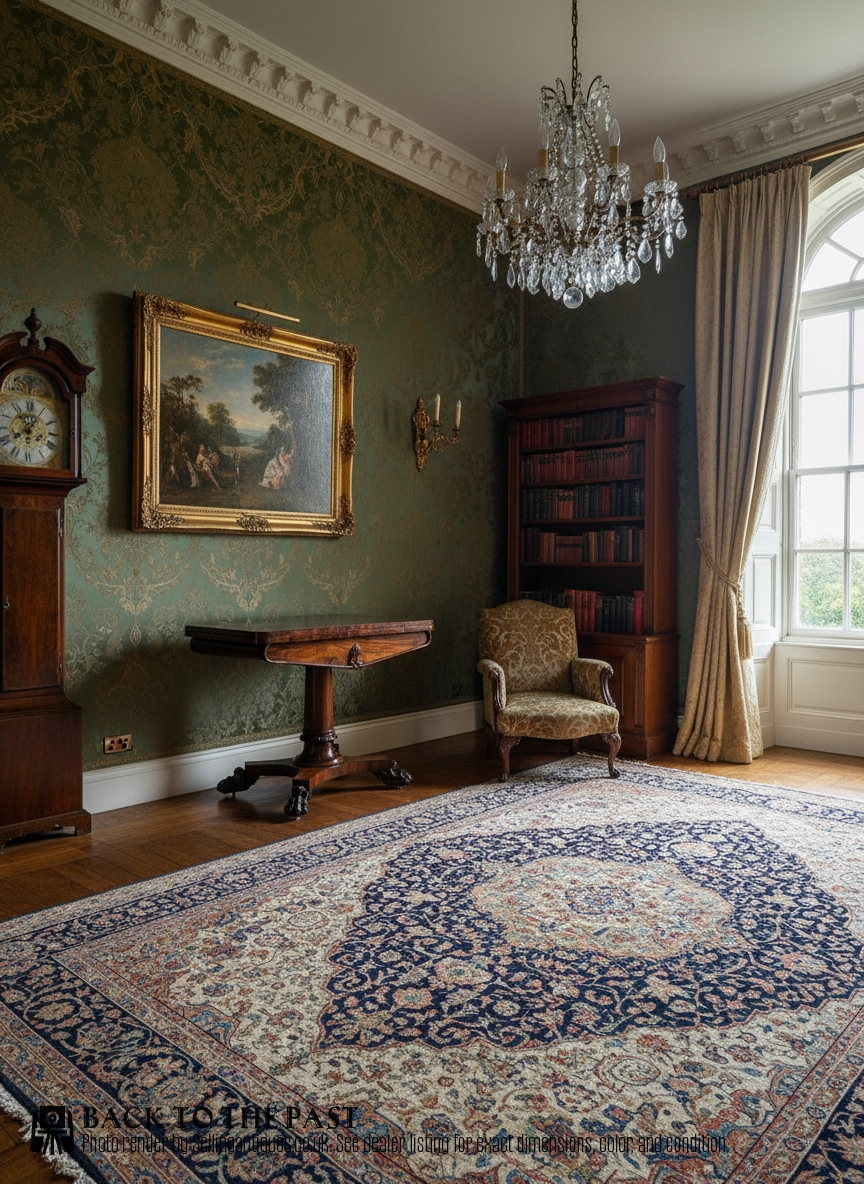
William IV Games Table
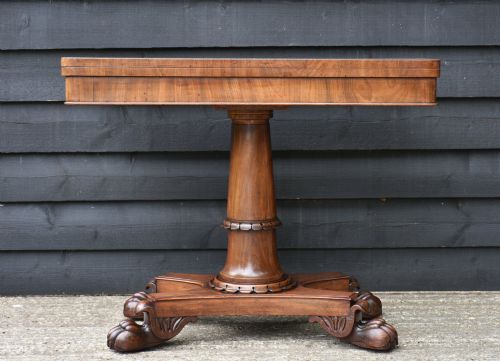
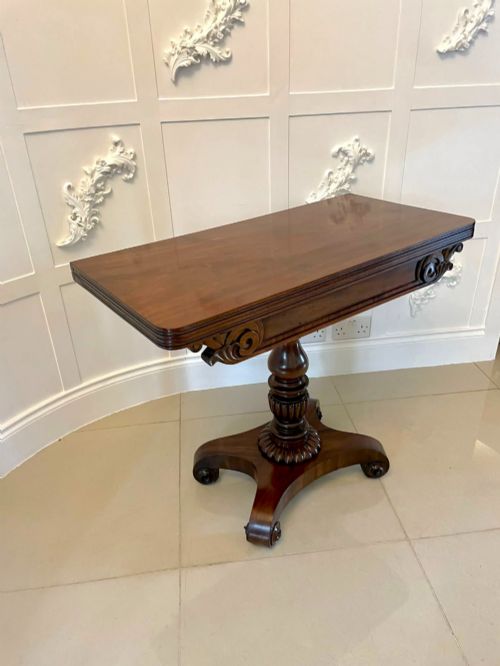
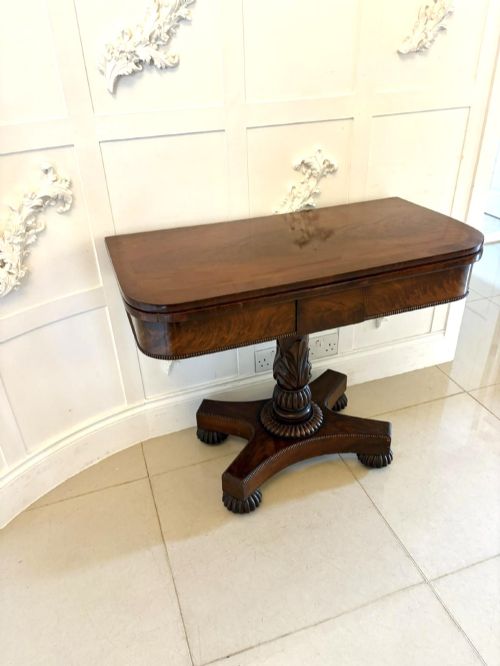
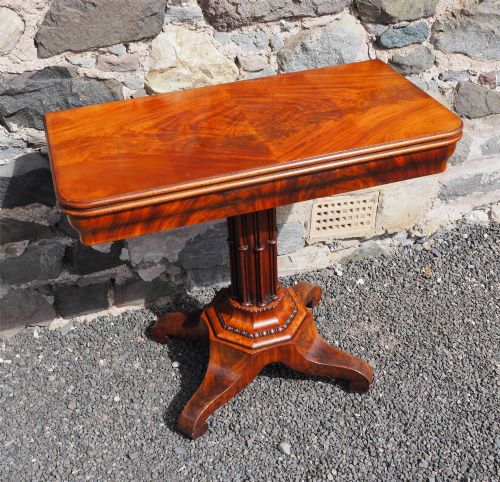
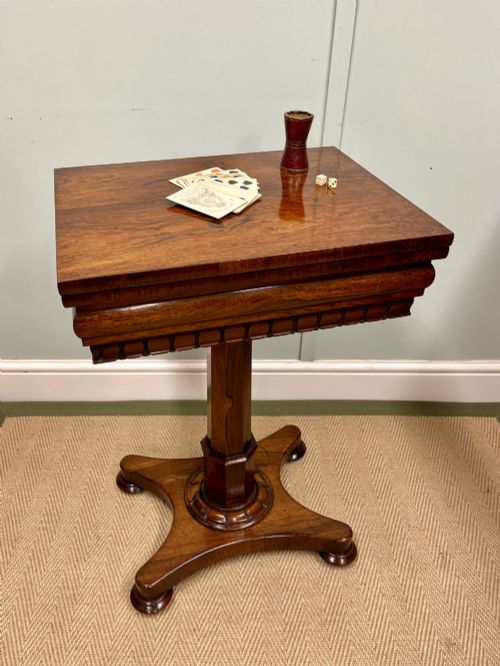
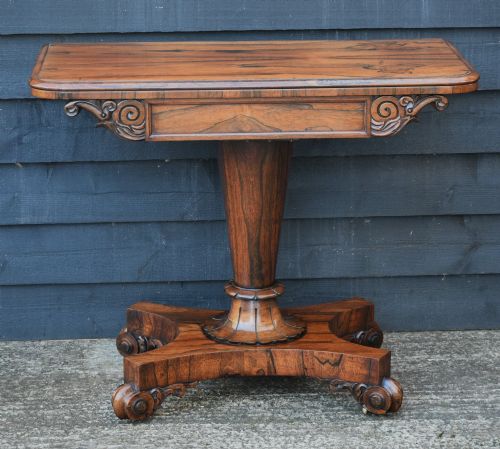
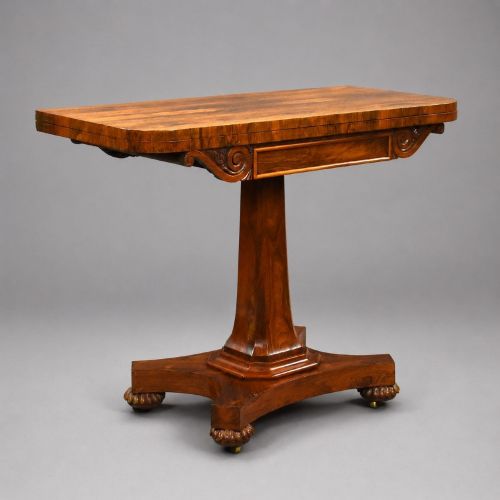
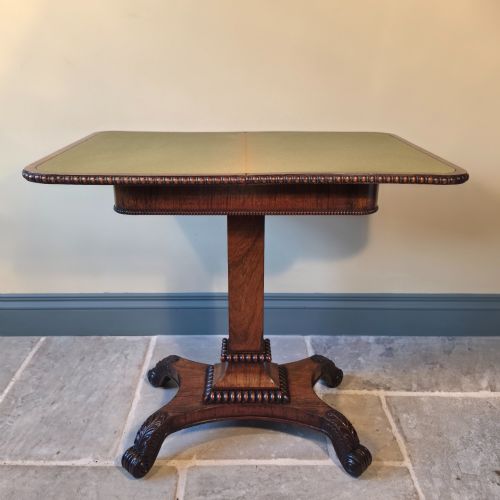
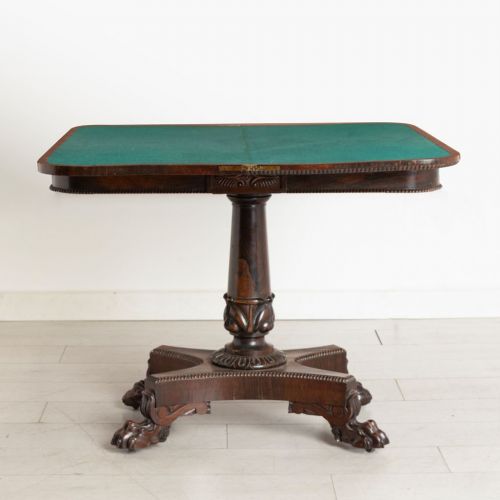
A william iv games table is typically encountered as a fold-over card table, a swivel-top games surface, or a combined games and worktable originating from the nineteenth century. These pieces bridge the late Georgian and early Victorian eras, uniting classical proportions with heavier, architectural carving.
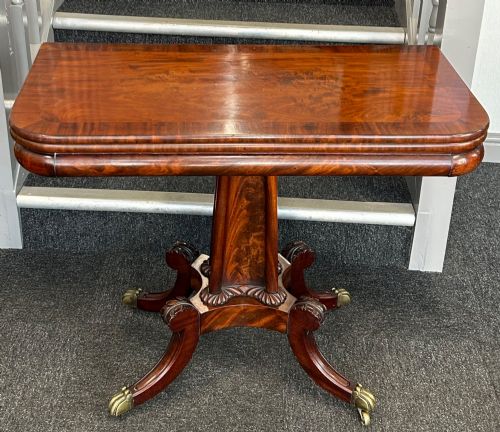
The dominant timbers on this page are rosewood and mahogany, frequently selected for striking grain patterns such as flame mahogany and figured veneers. Tables often feature pivoting tops that conceal a lined playing surface or a shallow compartment for sewing and writing.
Materials and Construction
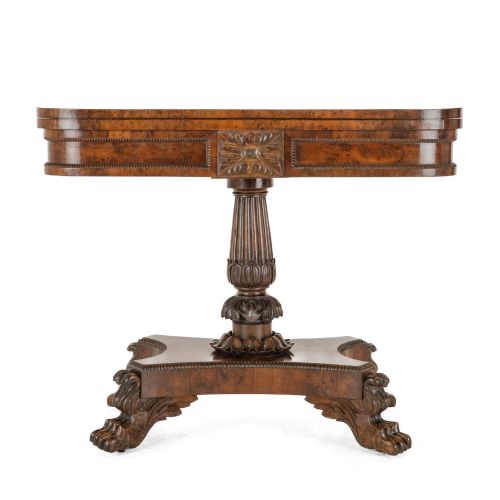
Cabinet makers utilised solid timbers alongside carefully applied veneers like flame mahogany, rosewood, and burr yew wood to create rich visual depth on the top surfaces. Secondary woods provide structural stability inside the friezes and internal compartments.
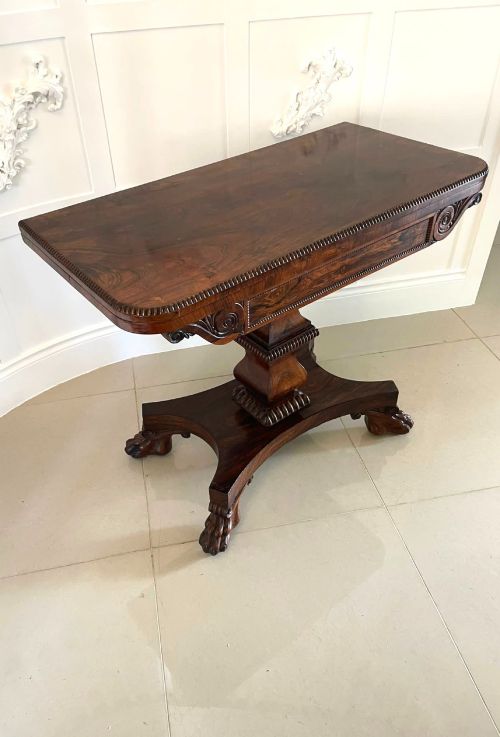
Pedestal bases frequently rest on platform plummets supported by carved paw feet, occasionally incorporating brass castors for manoeuvrability. Surfaces intended for play are lined with baize or fabric to provide a traditional texture for cards and chess.
William IV Games Table Retail Price Guide 2026
Typical asking prices for william iv games table among the pieces listed under this phrase on Sellingantiques today, from the lower quarter to the upper quarter. They describe what is for sale here now, not the wider market.
Assessing Quality
Quality rests upon the selection of timber figures and the crispness of the architectural carving on the pillar and base. Tables displaying figured mahogany or rich rosewood with well-matched veneers command attention for their visual cohesion.
The engineering of the swivel mechanism and the tightness of the fold-over joints determine how gracefully the piece transitions from a side console to a functioning table. Substantial proportions and balanced pedestal supports separate standard production from finer cabinet work.
Gillows·William Trotter
The William IV Games Table Glossary
- Fold-over table
- A table featuring a hinged top that opens to double the surface area for card games or dining. When closed, it functions as a side or console table against a wall.
- Flame mahogany
- A veneer cut from timber where the branch meets the main trunk, producing a distinctive flickering flame pattern. Cabinet makers prized this figure for prominent table tops.
- Baize
- A coarse woolen fabric traditionally used to line the playing surfaces of card and games tables. It offers a soft texture that protects counters and playing pieces.
- Worktable
- A small multi-purpose table incorporating drawers, drop leaves, or fabric bags for sewing and needlework. Many examples combine these storage compartments with chess or game boards.
William IV Games Table: Frequently Asked Questions
What is a william iv games table used for?
These pieces served as versatile furniture for domestic entertainment, functioning primarily as card tables for whist or chess during the evening. When not in use for games, the folded top allowed the piece to stand against a wall as a console or side table.
Many examples also doubled as worktables or sewing stations, incorporating internal compartments for textiles and writing materials. This multi-purpose design made them central fixtures in nineteenth-century drawing rooms.
What is the difference between mahogany and rosewood tables?
Mahogany tables display a reddish-brown warmth, frequently enhanced by flame veneers that create dramatic grain patterns across the top. They tend to offer a traditional, architectural presence in a room.
Rosewood versions exhibit a darker, deeply grained surface with contrasting natural dark streaks and purplish hues. Rosewood was particularly favoured for high-status tables during the 1830s.
Can I use a games table daily?
These tables are robust enough for gentle everyday use as side surfaces or occasional writing desks. The folding mechanisms and hinges require careful handling to preserve the original structural integrity of the pivoting top.
Historic baize or fabric linings on the playing surface benefit from protection against heavy items or moisture. Placing the table away from direct sunlight preserves the rich tones of the rosewood or mahogany veneer.