
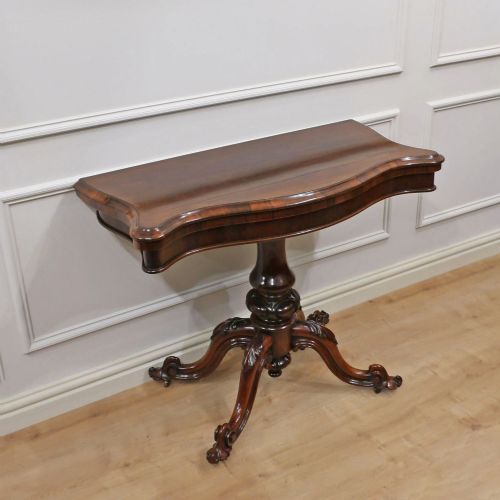
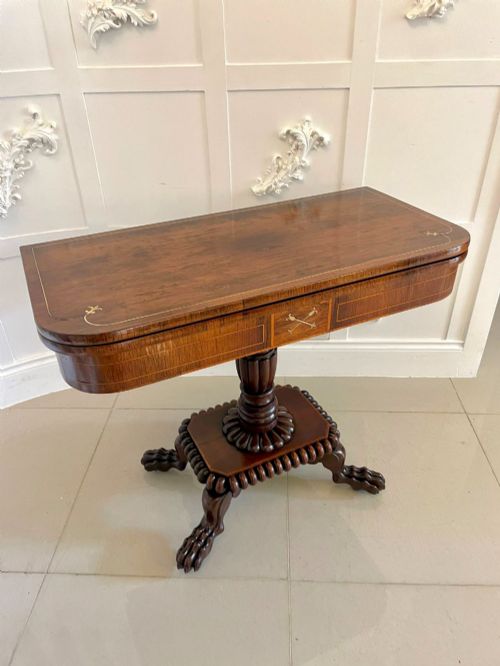
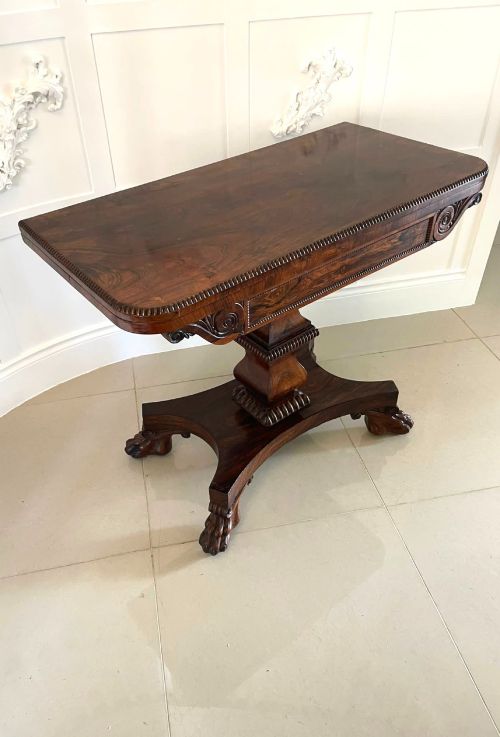
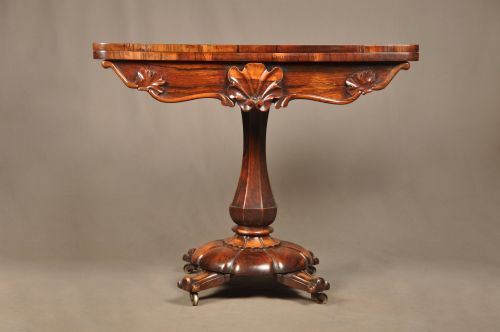
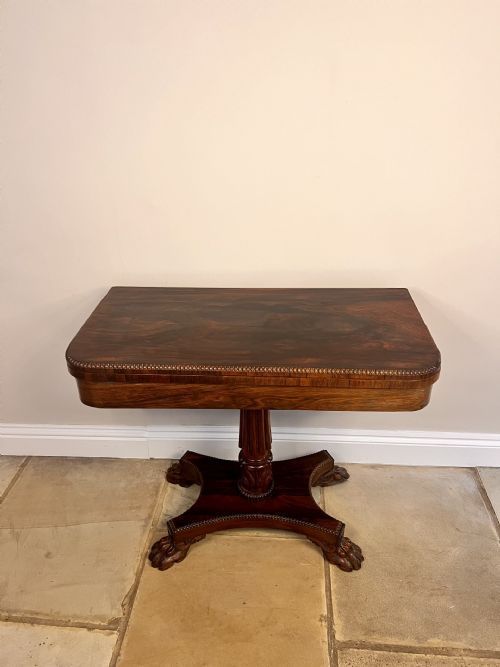
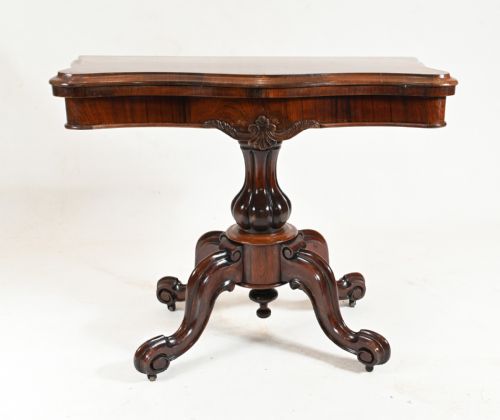


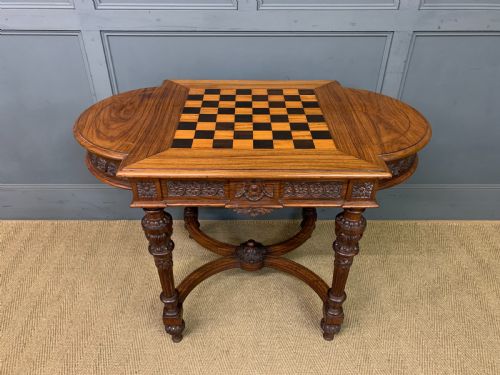


Carved Rosewood Games Table
A carved rosewood games table brings rich grain and ingenious folding tops together, offering a centrepiece designed for entertainment.
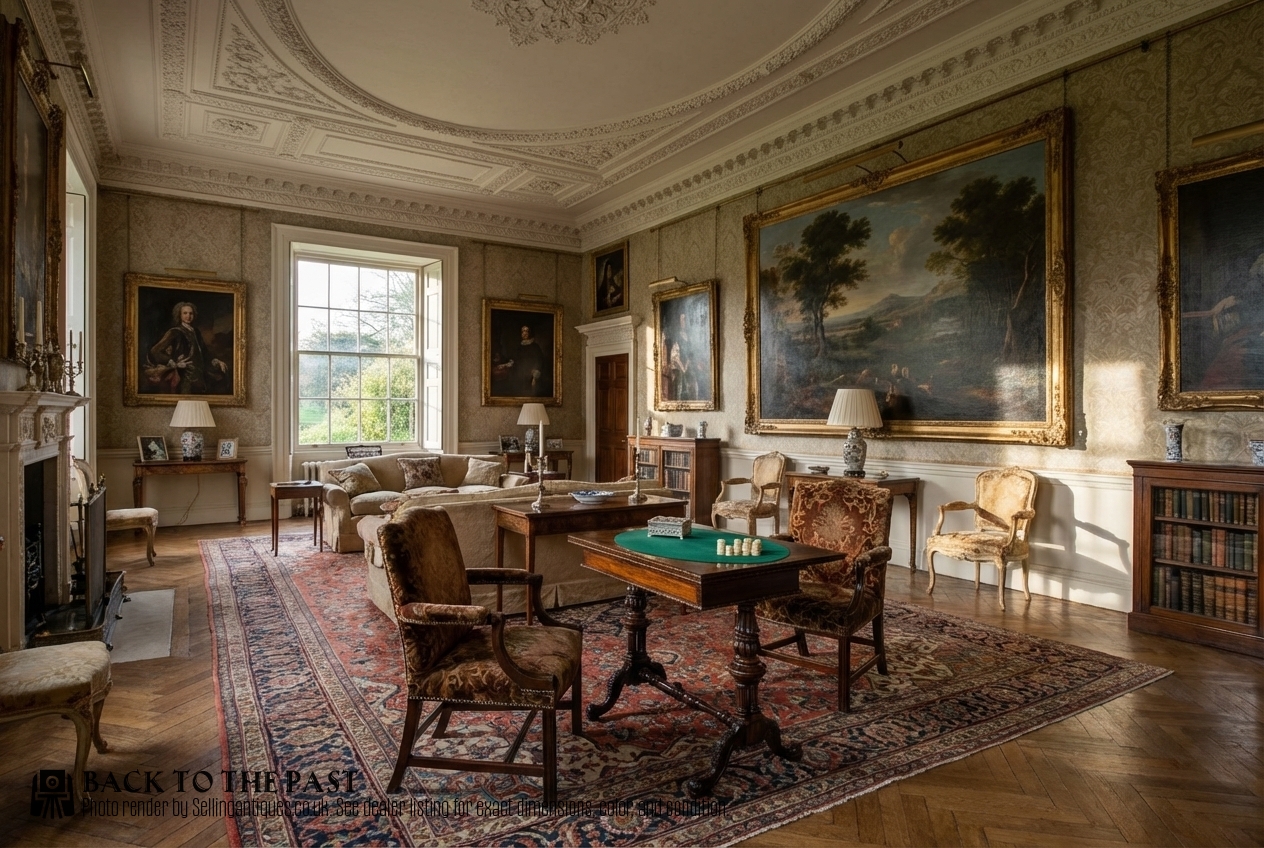
Carved Rosewood Games Table
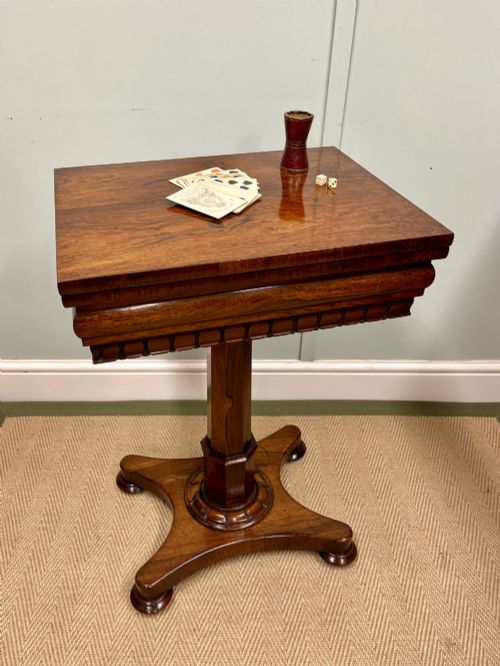
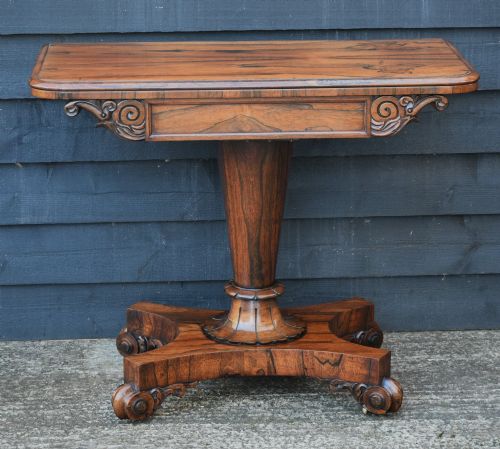
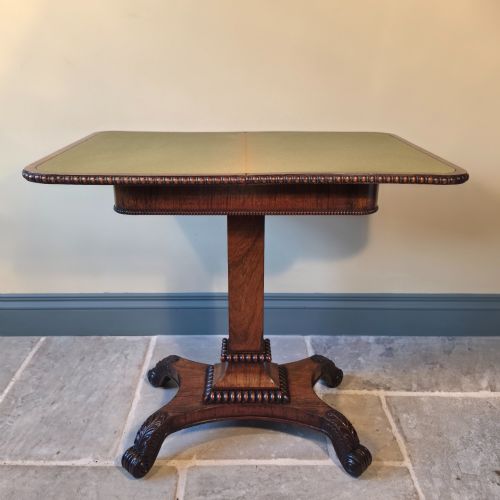
A carved rosewood games table is a versatile piece of furniture designed for leisure, frequently appearing in forms that convert from a side or tea table into a surface for cards and board games. These pieces span periods from the Regency and William IV eras into the Victorian period, reflecting evolving domestic habits throughout the nineteenth century.
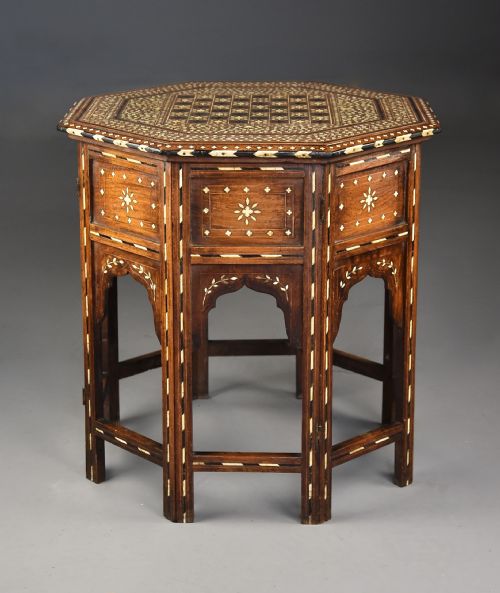
The versions most commonly met on this page include fold-over card tables and games tables featuring pedestal bases, often incorporating swivel tops that conceal storage compartments beneath. Alongside standard card tables, listings include occasional tables, tea tables, and specialised Anglo-Indian chess top variants.
Originating across the nineteenth century, these tables utilise dense tropical hardwoods and decorative inlays to suit formal drawing rooms and sitting rooms. The selection ranges from strict Regency designs with carved dolphin bases to elaborate Victorian and Anglo-Indian examples showcasing intricate bone or satinwood work.
How they were made
Cabinet makers constructed these tables primarily using solid rosewood and rosewood veneers applied to secondary timbers, utilising the distinct dark grain and natural oiliness of the wood for a polished finish. Brass inlay, satinwood, and boxwood frequently accent the surfaces, while materials like baize line the playing interiors.
Structural joinery supported heavy fold-over mechanisms and pedestal mounts, often featuring carved pillars, platform bases, or distinctive supports such as carved dolphins. Hand carving defined the decorative mouldings and borders, executed with chisels to create crisp relief work along the friezes and pedestals.
Carved Rosewood Games Table Retail Price Guide 2026
Typical asking prices for carved rosewood games table among the pieces listed under this phrase on Sellingantiques today, from the lower quarter to the upper quarter. They describe what is for sale here now, not the wider market.
Materials recorded across the inventory include rosewood, satinwood, brass, ebony, baize, and bone inlay.
What varies in quality
The standard of timber selection and veneer matching dictates much of the visual distinction between pieces, with superior examples displaying continuous, richly figured grain across the fold-over leaves. Cabinet makers who invested time in selecting symmetrical rosewood planks produced surfaces with deep optical movement.
Carving definition and the precision of brass or satinwood inlay separate standard production from exceptional work, particularly in architectural mounts and pedestal bases. The engineering of the pivoting and folding mechanisms also varies, where tighter joints and smoother swivel actions denote higher grade workshop assembly.
Gillows·William Trotter
The Carved Rosewood Games Table Glossary
- Rosewood
- A dense, heavily figured tropical hardwood prized for its dark grain and capability to take a high polish. It served as the primary material for high-status nineteenth-century cabinet work.
- Fold-Over
- A table construction featuring a hinged top that doubles the surface area when opened. This mechanism frequently conceals a lined well or playing surface underneath.
- Baize
- A coarse woolen fabric used to line the interior playing surfaces of card and games tables. It provided a soft, non-slip texture for dealing cards.
- Palisander
- A historical trade term often applied to dark, richly grained rosewoods utilised in fine cabinet making. It describes timber with pronounced purplish-brown streaking.
- Demi-Lune
- A half-moon shape adopted by certain console and tea tables designed to stand flat against a wall. These pieces often feature pivoting tops supported on swinging gate legs.
Carved Rosewood Games Table: Frequently Asked Questions
What is a carved rosewood games table used for?
These tables served primarily as dual-purpose furniture for domestic entertaining and formal reception rooms. Owners utilised the folding tops to transition the room from tea service or general display to card games and chess.
Inside the pivoting top, compartments held playing pieces, cards, and markers. When closed, the tables functioned as side, console, or tea tables against the wall.
How do I identify a Regency games table?
Regency examples typically display classical architectural restraint combined with bold decorative elements like carved dolphin bases or brass inlay. The proportions lean towards classical revival styles popular in the early nineteenth century.
Cabinet work from this period often emphasises dark rosewood veneers paired with subtle geometric brass stringing. Pedestal supports resting on platform bases with paw feet are characteristic.
What is the difference between a tea table and a games table?
Tea tables were designed principally for serving tea, featuring flat tops that often fold over to reveal polished wood surfaces suited for china and silver. Games tables incorporate specialised interiors, frequently lined with baize or inlaid for chess.
While both utilise fold-over mechanisms, games tables prioritize interior depth to accommodate gaming equipment and secret wells. Many nineteenth-century examples bridged both functions depending on the day's requirements.
How do I care for antique rosewood furniture?
Antique rosewood requires stable environmental conditions away from direct sunlight and rapid humidity fluctuations to prevent veneer cracking. Regular dusting with a dry, soft cloth preserves the polished finish.
Harsh chemical polishes should be avoided in favour of traditional microcrystalline waxes applied sparingly. Maintaining consistent room temperature protects the structural integrity of the nineteenth-century glue and timber.