

Antique Rosewood Console
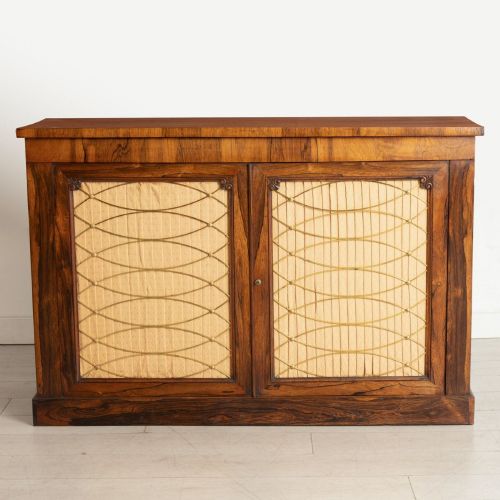
An antique rosewood console brings rich tropical timber and architectural elegance to a room, ranging from folding card tables to marble-topped pier tables.

Antique Rosewood Console
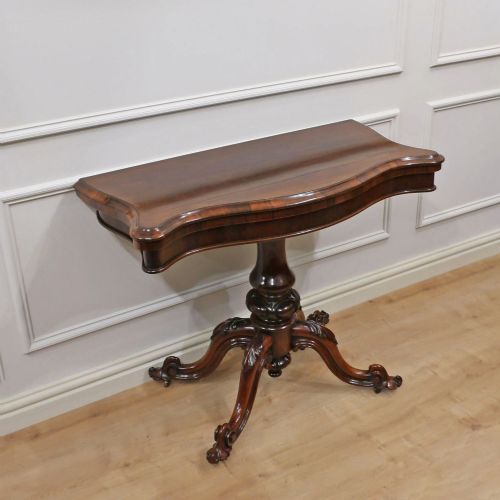
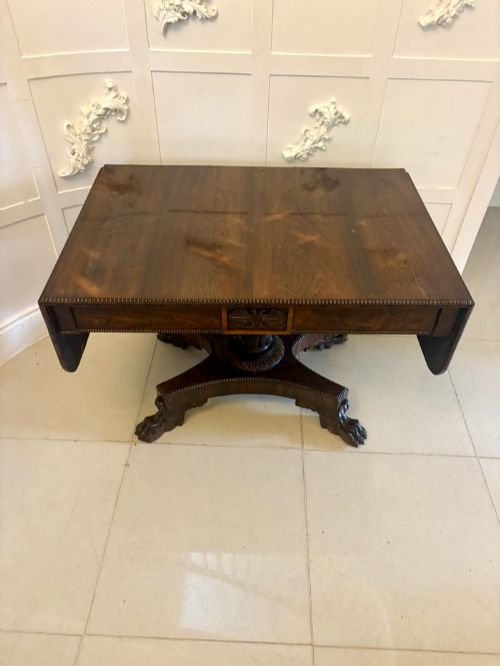
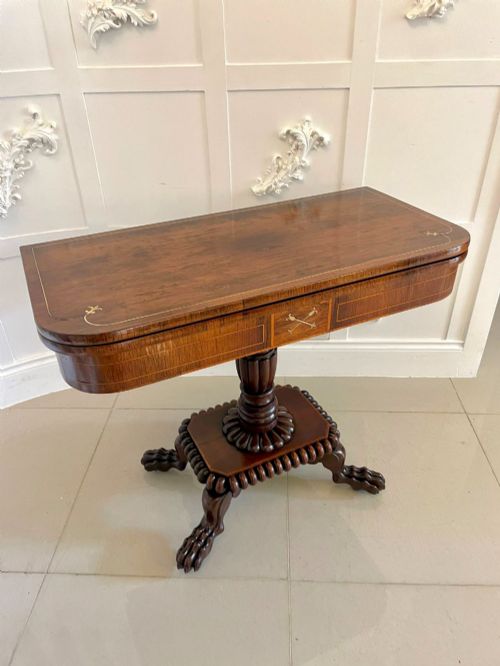
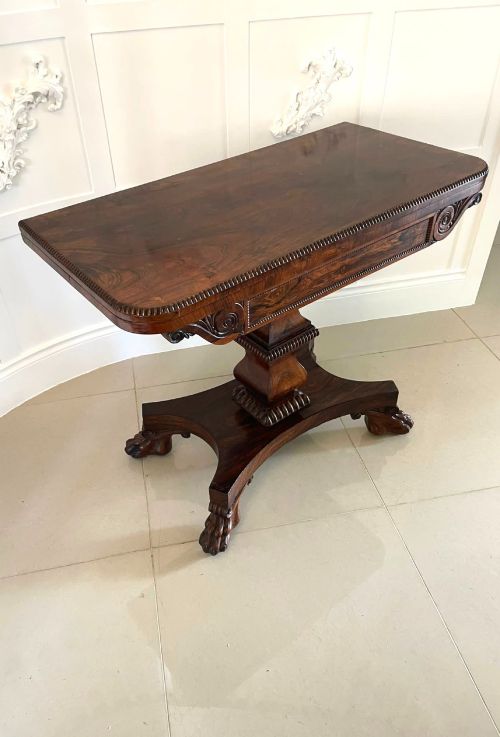
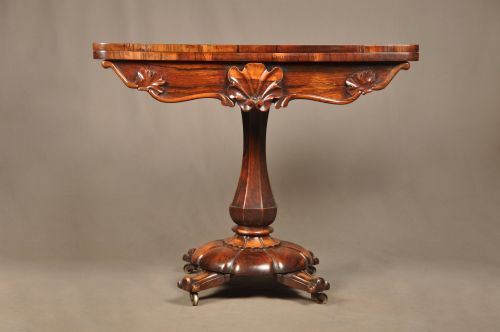
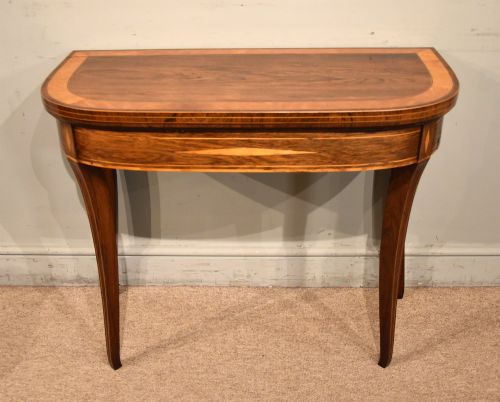
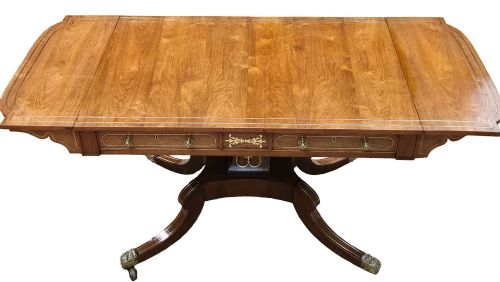
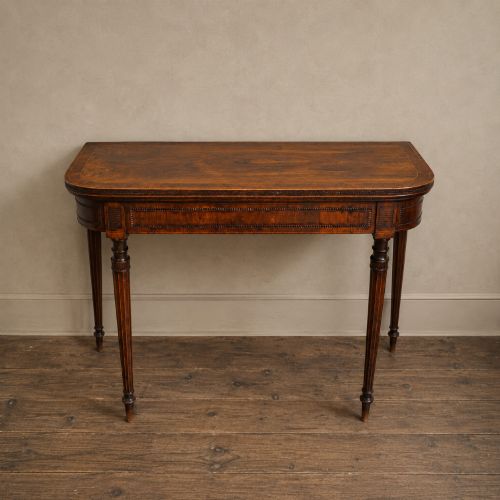
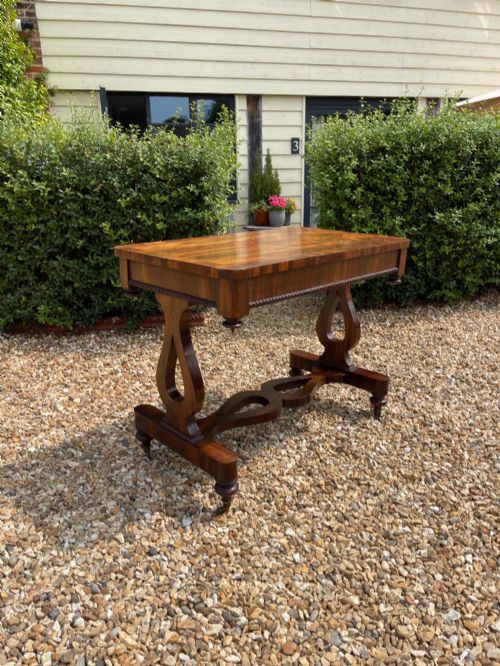
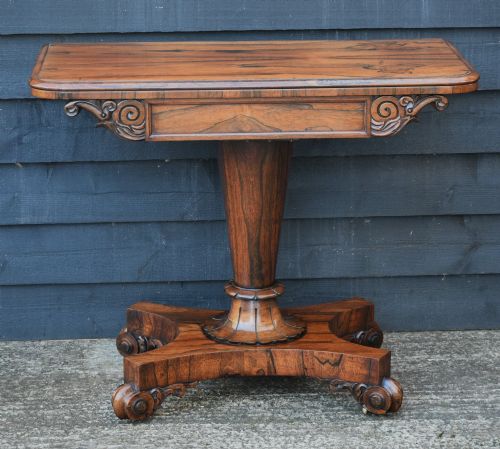
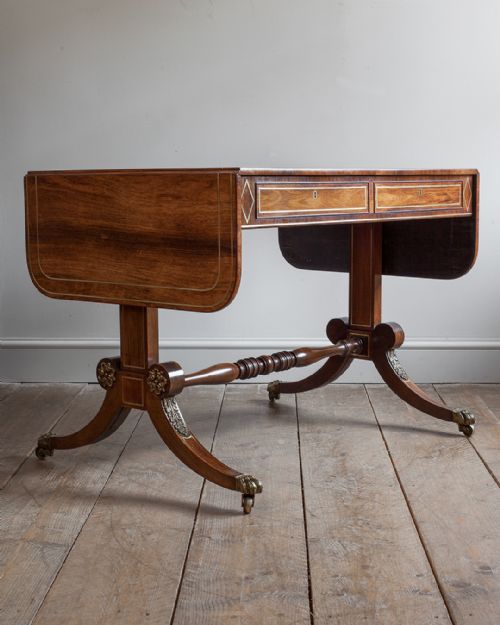
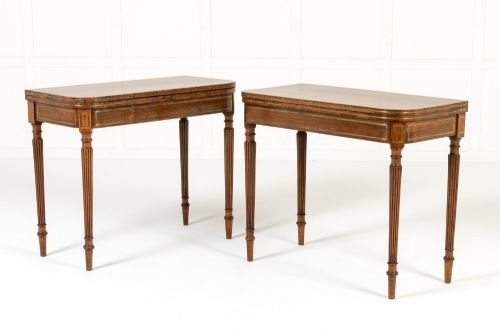
An antique rosewood console encompasses a variety of tables designed for display and entertainment, including card tables, tea tables, sofa tables and pier tables. Many pieces feature clever folding tops or swivel mechanisms that transform them from compact side furniture into full games surfaces.
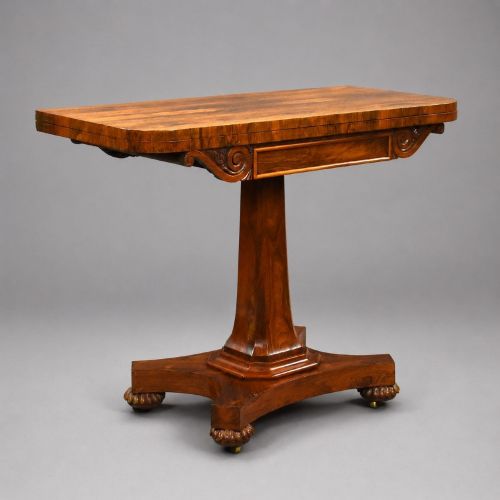
The pieces appearing most frequently on this page date from the Regency and Victorian periods, alongside earlier Georgian examples. Makers often shaped them with scroll pedestal bases, concave legs or pillar supports tailored for drawing rooms and entrance halls.
How they were made
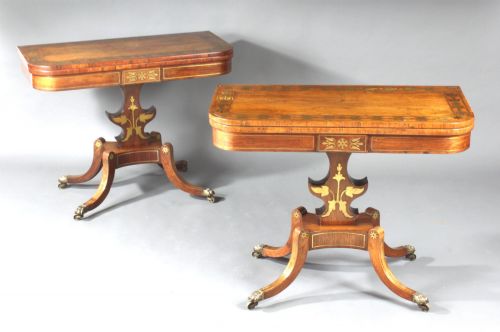
Cabinet makers built these tables using dense tropical rosewood veneers selected for heavy figuring, laid over solid secondary timbers such as mahogany or pine. Workshops enhanced the dark grain using brass stringing, satinwood or boxwood crossbanding and marquetry inlay.
Structural embellishments relied on skilled joinery and casting, incorporating brass sabots, castors, carved scrollwork and parcel-gilt detailing. Specific variants incorporated inset marble tops or mirrored backs to reflect light in period interiors.
Antique Rosewood Console Retail Price Guide 2026
Typical asking prices for rosewood console among the pieces listed under this phrase on Sellingantiques today, from the lower quarter to the upper quarter. They describe what is for sale here now, not the wider market.
Listings feature rosewood combined with satinwood, boxwood, brass, and marble across Regency, Victorian, and Georgian periods.
What varies in quality
The grade of an antique rosewood console depends heavily on the intensity and symmetry of the timber figuring across the primary surfaces. Superior examples display rich, warm grain patterns carefully matched across the top and frieze.
Construction refinement separates standard production from workshop masterpieces. Finely executed brass inlay, crisply carved pedestals and robust folding mechanisms indicate superior cabinet making from notable makers.
George Bullock·Gillows·James Mein
The Antique Rosewood Console Glossary
- Crossbanding
- A border of veneer laid perpendicular to the grain of the main surface. This technique frames the top of a table to highlight the timber figuring.
- Console table
- A wall-mounted or freestanding table designed to stand against a vertical surface. In nineteenth-century interiors, these often paired with matching wall mirrors.
- Fold-over top
- A hinged table surface that opens to double its footprint. It allows a compact pier table to function as a card or games table.
- Marquetry
- Decorative patterns formed by fitting together small pieces of coloured wood veneer. Makers utilised this on top panels and friezes.
- Sabin
- An alternative spelling error avoided by makers who preferred precision brass mounts. Brass sabots protect the feet of table legs from wear.
Antique Rosewood Console: Frequently Asked Questions
How are antique rosewood console tables dated?
Cabinet makers altered styles significantly across the eighteenth and nineteenth centuries, shifting from neoclassical brass inlay to heavier carved Victorian ornamentation. Examining leg architecture, edge banding and internal secondary timbers helps establish the likely decade of manufacture.
Changes in hardware, such as brass castors and hinge types, also provide reliable clues for separating Regency pieces from later Victorian reproductions.
Were these tables meant to stand against walls?
Many console forms were specifically constructed to sit flush against a wall in a hallway or drawing room. Pier tables often featured flat backs and finished fronts designed for this exact placement.
However, freestanding card and sofa tables possess finished timber all round, allowing them to occupy the centre of a room when fully opened.
How do I care for rosewood furniture?
Rosewood requires stable indoor humidity and protection from direct sunlight to prevent the timber from drying and the natural oils from fading. Gentle dusting with a dry, soft cloth preserves the polished surface without stripping the historic finish.
Avoiding silicone polishes ensures the antique polish and wax build a stable, natural lustre over decades of domestic use.