

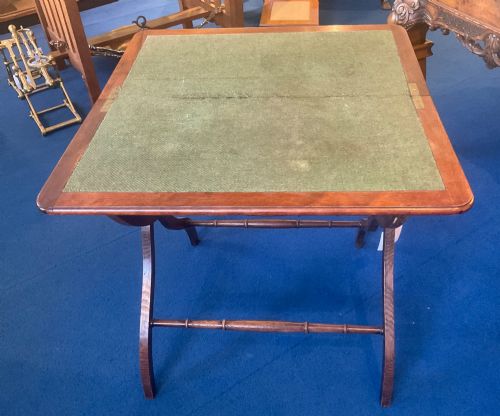
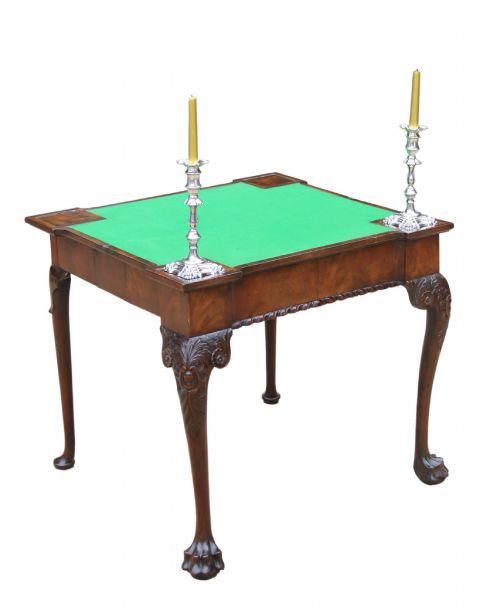
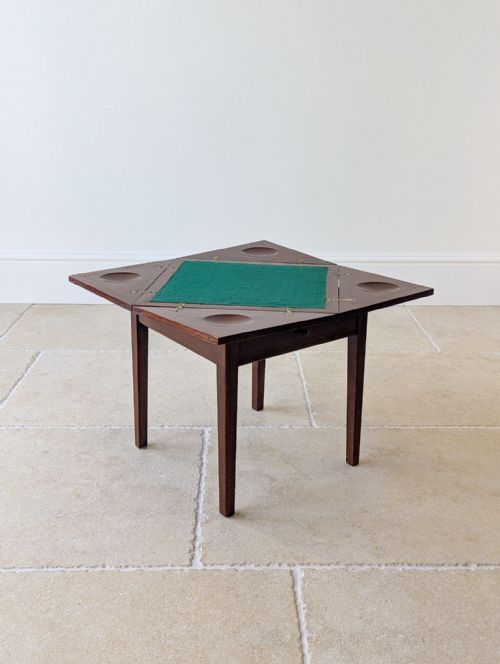
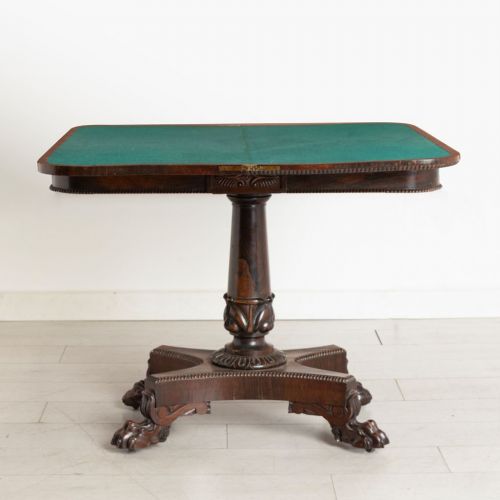



Green Baize Table
A green baize table is a specialised piece for card games and leisure, prized for its tactile wool playing surface and traditional folding design.
What a green baize table is
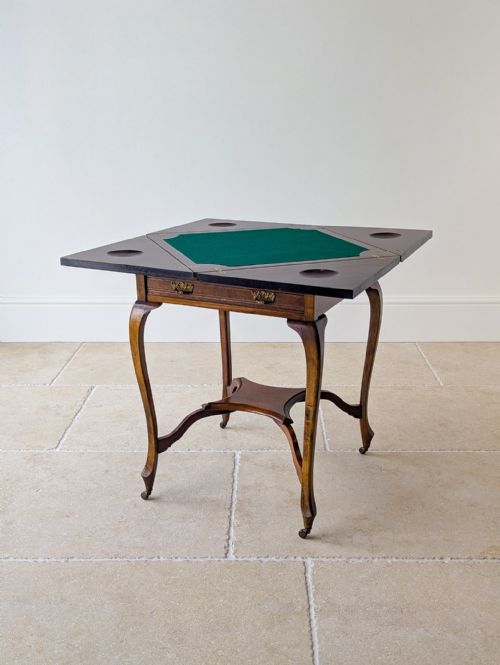
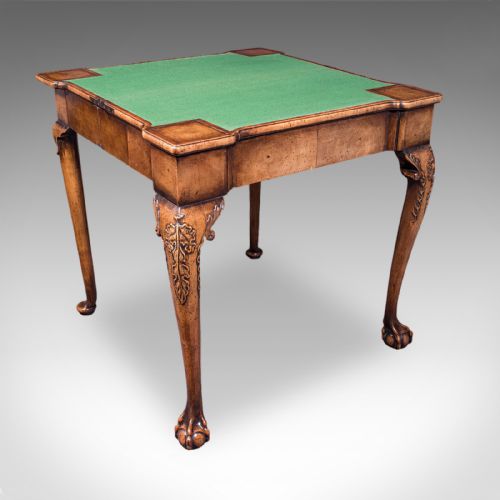
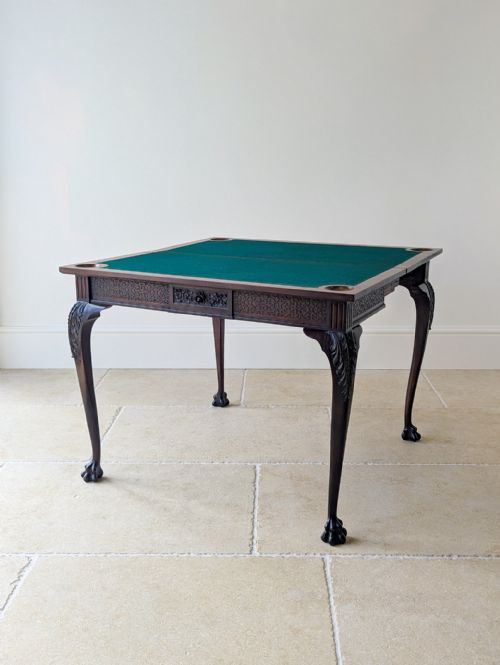
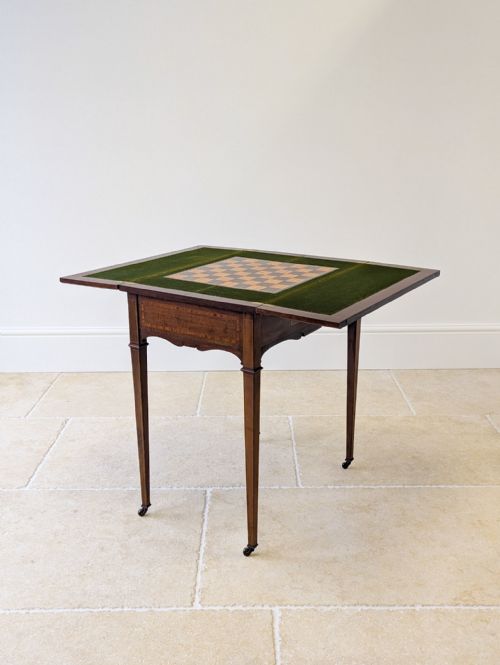
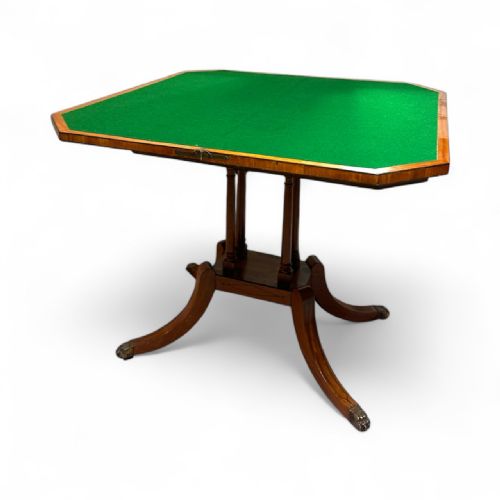
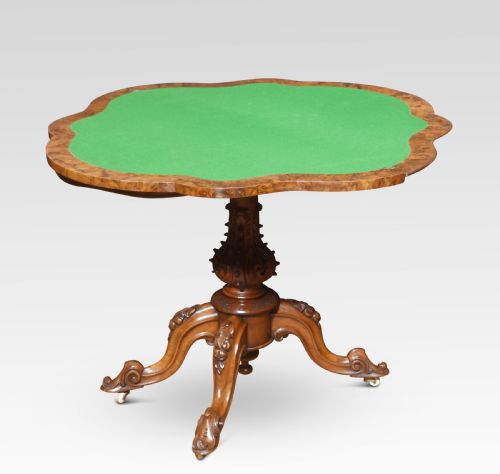
The surviving examples range from George III serpentine fronts to Victorian Chippendale Revival styles and pieces bearing maker stamps. Their construction reflects the shifting domestic fashions of the eighteenth and nineteenth centuries, moving from rich mahogany and satinwood into burr walnut and elaborate inlay. Each piece serves the dual purpose of a console or pier table when closed and a dedicated gaming surface when opened.
How they were made
Cabinetmakers constructed these tables using solid timbers and decorative veneers like rosewood and satinwood, supported by brass hinges and hardware. The defining feature, the wool baize, was stretched tightly across the interior playing surface to provide a durable and tactile cloth for card games.
Joinery techniques varied from the precise serpentine shaping of the George III period to the intricate inlay work seen on Victorian burr walnut examples. Folding mechanisms relied on pivoting or swing legs to support the opened leaf securely.
Retail Price Guide 2026
Typical UK retail prices for green baize table, calculated from the Sellingantiques database of over a million retail prices indexed since 2003. This retail price guide relies exclusively on Sellingantiques data; no external sources or auction records are used, so the figures do not describe the wider market.
Every green baize table secretly yearns for a round of whist and a politely concealed losing hand.
What varies in quality
The distinction between standard production and exceptional quality lies in the selection of timber veneers, such as figured mahogany, burr walnut, and contrasting satinwood banding. Finer examples display meticulous cabinetmaking in their serpentine fronts, crisp edge moulding, and the integration of maker signatures.
James Shoolbred and Co
The Green Baize Table Glossary
- Baize
- A coarse woolen fabric, traditionally coloured green, used as a durable playing surface for card and gaming tables.
- Fold-Over
- A table top design featuring a hinged leaf that opens outward to double the surface area for games.
- Serpentine Front
- A convex and concave undulating front edge characteristic of finer eighteenth-century case furniture and tables.
- Inlay
- A technique of inserting contrasting woods, such as satinwood and rosewood, flush into the primary timber surface to create decorative patterns.
Frequently Asked Questions
What is a green baize table used for?
These pieces were built primarily to host card games and social pastimes in domestic drawing rooms. The textile surface provided a soft, non-slip area that protected both the playing cards and the wooden counter.
When closed, the tables functioned as side or console furniture against a wall. This dual capability made them versatile additions to period homes.
How do I identify a Georgian table?
Georgian examples often feature timbers like mahogany or rosewood, sometimes with serpentine fronts and crisp proportions. They date from the eighteenth and early nineteenth centuries.
Construction details such as hand-cut joinery and simpler, classical lines separate these earlier items from later nineteenth-century revivals.
What woods were used for these tables?
Cabinetmakers utilised a variety of native and exotic timbers depending on the period of manufacture. Common materials include mahogany, walnut, rosewood, and satinwood.
Finer pieces often incorporated burr walnut veneers or contrasting inlay work to enhance the visual appeal of the closed top.
How do fold-over mechanisms work?
The upper leaf rotates or folds out on brass hinges to rest upon a swing leg or a pivoting framework. This movement reveals the concealed green baize interior.
When closed, the top leaf folds back flat over the base to create a standard surface. The supporting leg tucks neatly into the apron.