

Antique Console Card Table
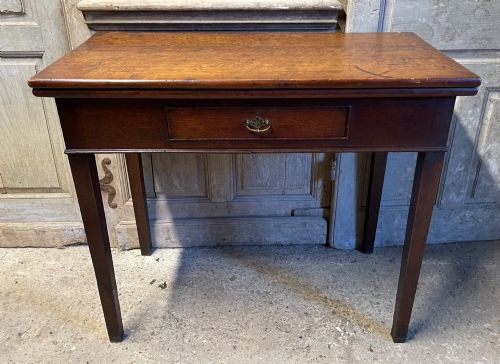
An antique console card table combines dual-purpose engineering with formal elegance, offering a hinged top that opens from a compact pier piece into a green baize gaming surface.
Antique Console Card Table
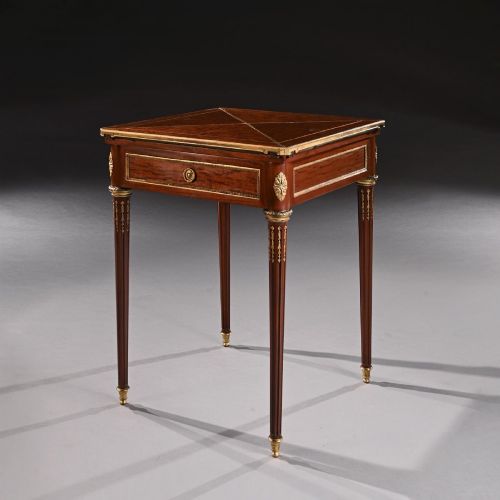
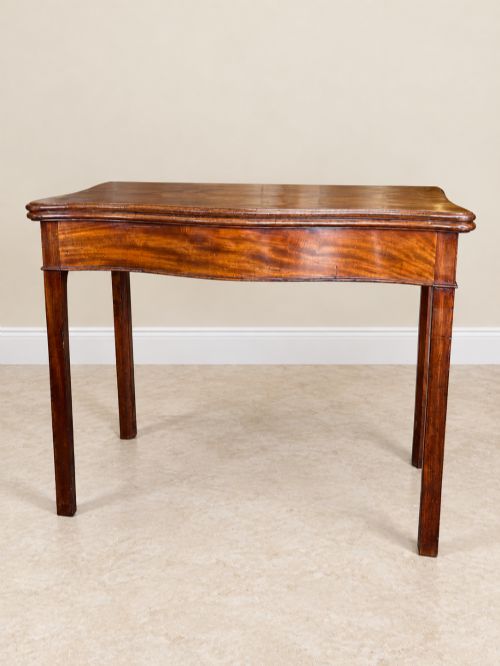
The antique console card table bridges the gap between wall furniture and dual-purpose gaming surfaces, frequently appearing across this selection as fold-over top examples that double as side or tea tables.
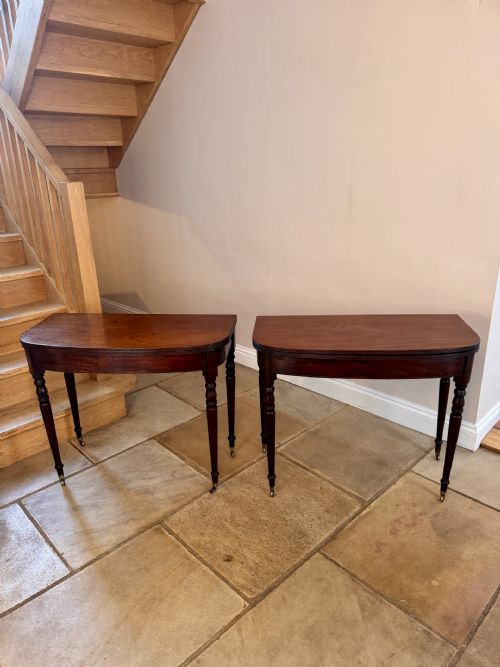
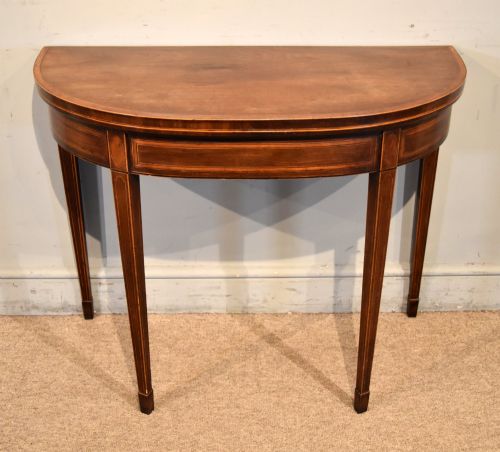
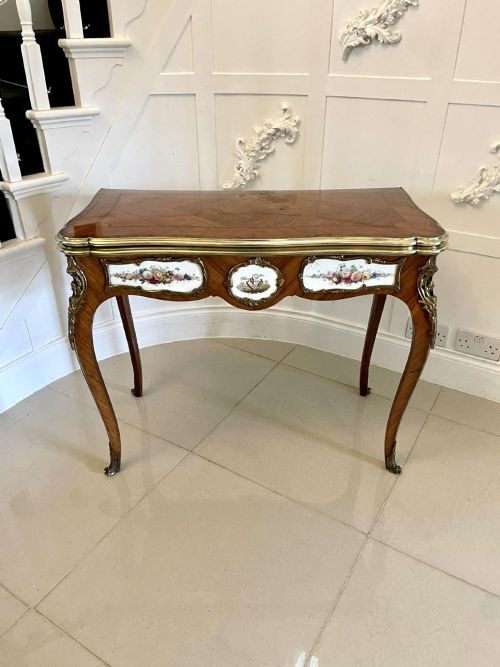
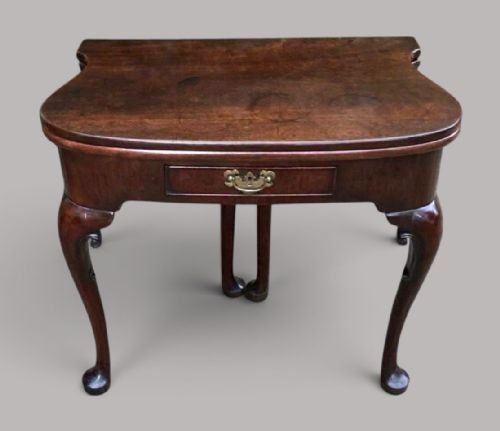
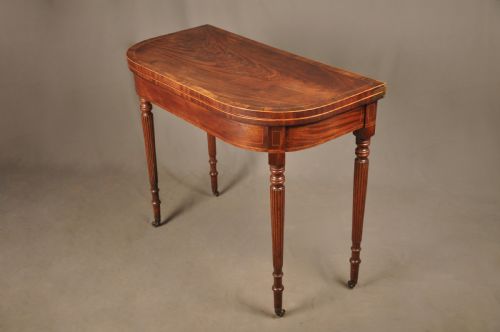
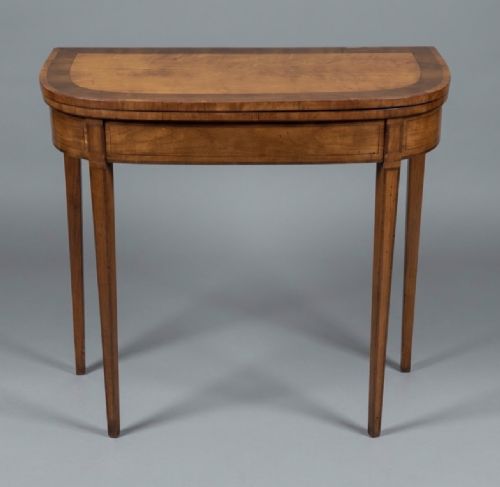
Makers designed these items across the eighteenth and nineteenth centuries, spanning Georgian, Regency, and Victorian periods with distinctive forms ranging from rectangular fold-over tops to demi-lune shapes.
Buyers will encounter variations that served multiple functions in period drawing rooms, often categorised in records as card and games tables, tea tables, or console tables.
Materials and Construction
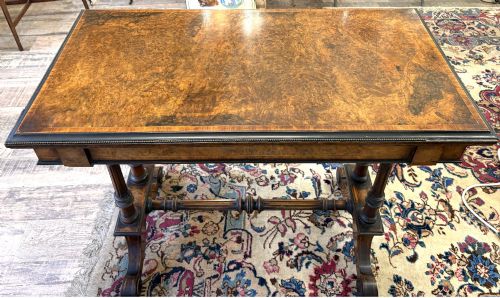
Cabinetmakers utilised dense timbers such as mahogany, rosewood, and walnut for the primary structure, frequently applying figured veneers like flame mahogany, burr walnut, and satinwood to the folding tops.
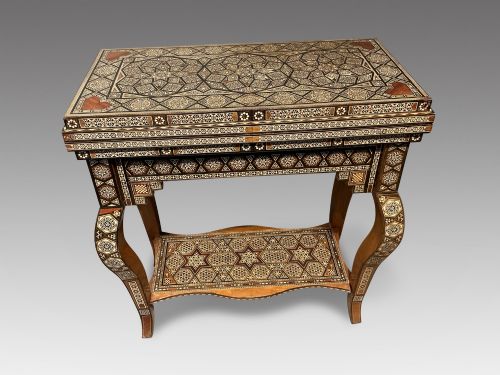
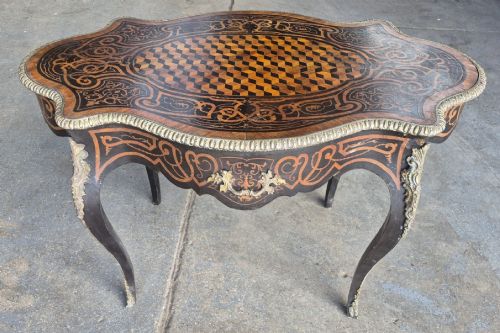
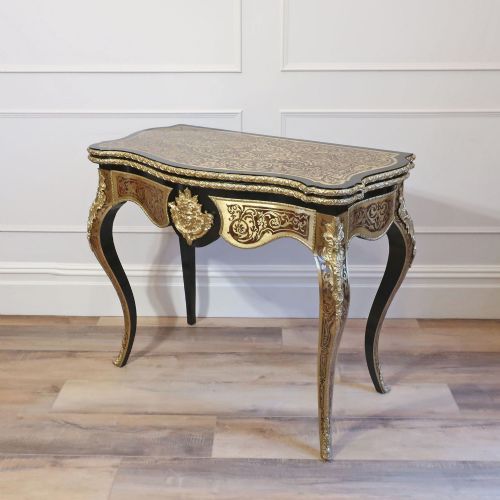
Inlaid brass stringing, boxwood banding, and marquetry floral motifs decorate the primary surfaces of Regency and Victorian examples, while ormolu mounts appear on French-influenced pieces.
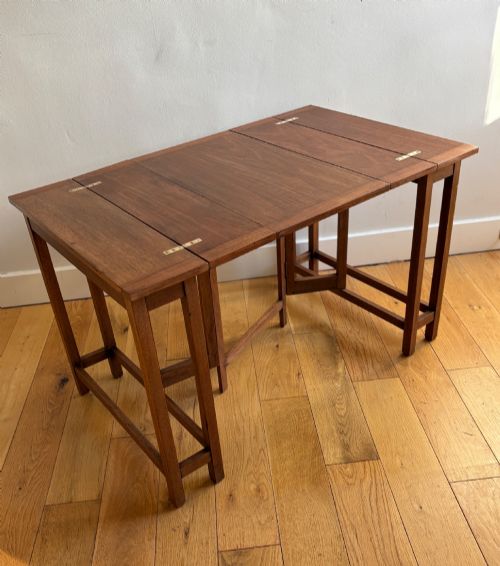
The pivoting and concertina actions require precise joinery to support the extended leaf without straining the rear gate legs or pivot framework.
Antique Console Card Table Retail Price Guide 2026
Typical asking prices for console card table among the pieces listed under this phrase on Sellingantiques today, from the lower quarter to the upper quarter. They describe what is for sale here now, not the wider market.
Listings span the eighteenth, nineteenth, and early twentieth centuries, featuring woods such as mahogany, rosewood, walnut, satinwood, and burr yew.
Assessing Craftsmanship
The distinction between standard examples and superior ones rests on the choice of timber veneer, evident in the symmetry of matched flame mahogany or rich burr walnut grains across the fold-over leaves.
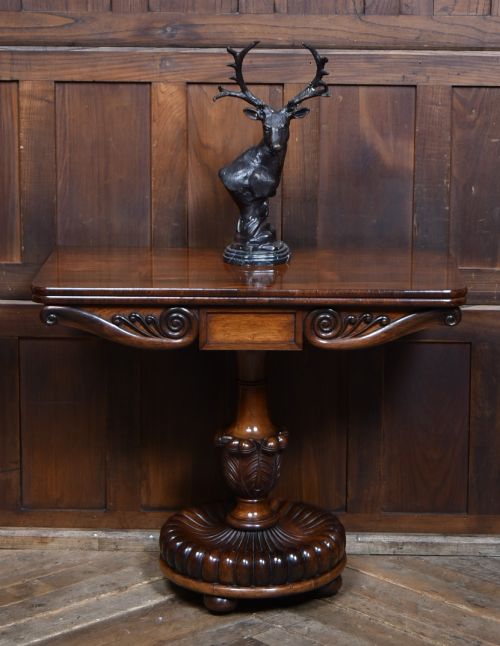
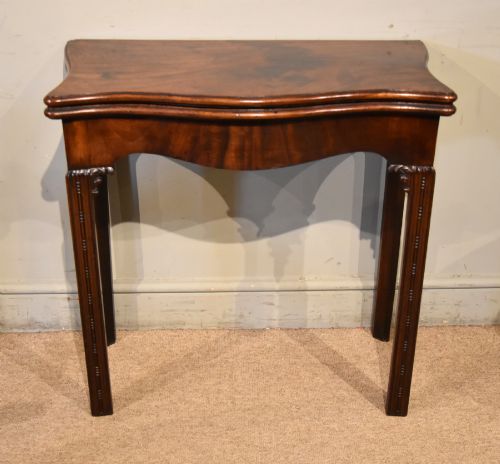
Carved details such as pedestal baskets, reeded legs, and sabre supports reflect the hand of skilled artisans rather than standard production workshops.
The integrity of the pivoting mechanism and the exact alignment of the top when closed separate high-tier cabinet work from utilitarian alternatives.
George Bullock·Giles Grendey
The Antique Console Card Table Glossary
- Concertina action
- An extending frame mechanism that expands on a hinged framework to support all four sides of a fold-over top equally.
- Demi-lune
- A half-moon shape characteristic of tables designed to sit flat against a wall when closed.
- Crossbanding
- A border of veneer laid around the edge of a table top with the grain running perpendicular to the central panel.
- Marquetry
- Decorative patterns formed by fitting together contrasting pieces of wood veneer and other materials into a surface.
- Baize
- A coarse woollen fabric used historically to line the interior playing surface of gaming tables.
Antique Console Card Table: Frequently Asked Questions
How do I use a card table daily?
These tables function well as console or side pieces against a wall when the top is folded shut.
Opening the leaf reveals a surface suitable for writing or games when entertaining guests.
How can I tell a Regency table from a Victorian one?
Regency pieces often display brass inlay, rosewood veneers, and sabre legs influenced by classical antiquity.
Victorian items tend to feature heavier proportions, burr walnut timber, and elaborate carved pedestal bases.
What is a concertina action?
A concertina action allows the frame of the table to pull out symmetrically, creating a stable square support for the unfolded top.
This method conceals the folding framework neatly within the apron when the table is closed.
Did these tables only serve for cards?
While designed primarily for card games like whist or ombre, many served interchangeably as tea tables or general pier tables.
The unpolished interior of the folded leaf often remained plain until opened.