


Inlaid Tea Table
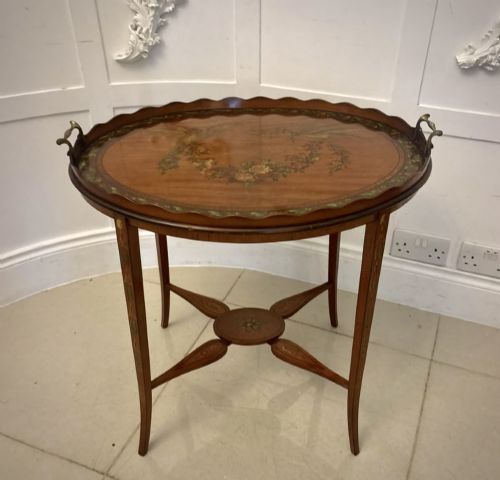
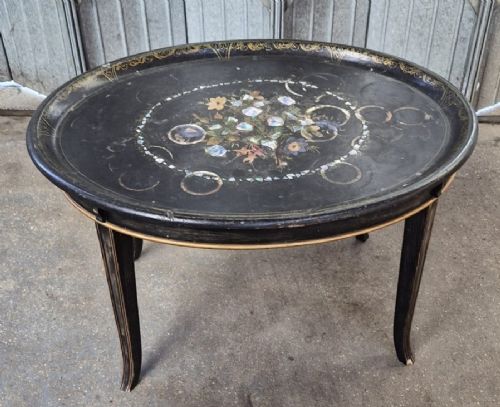
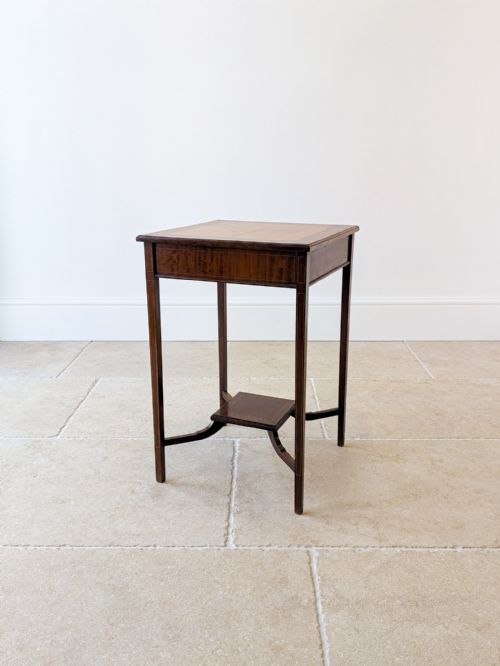
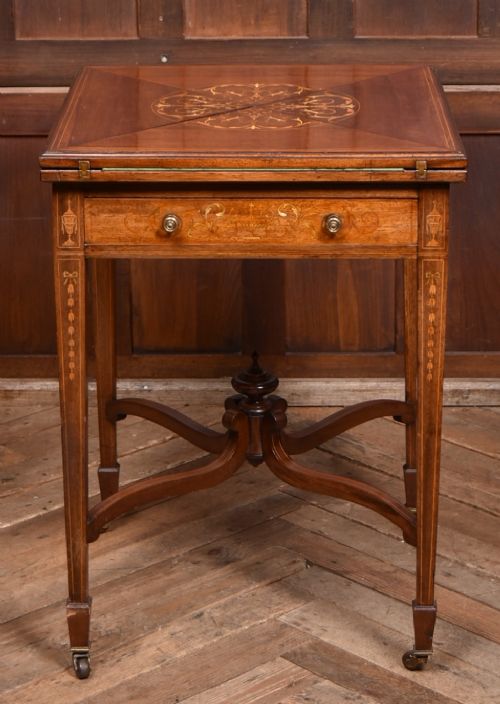
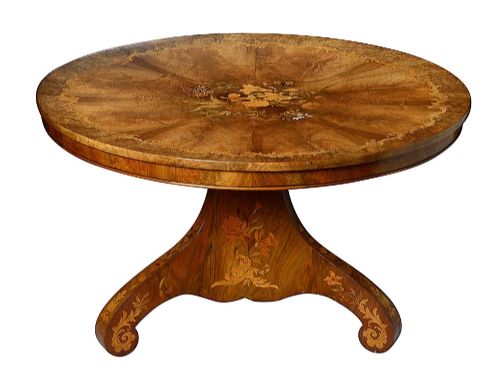
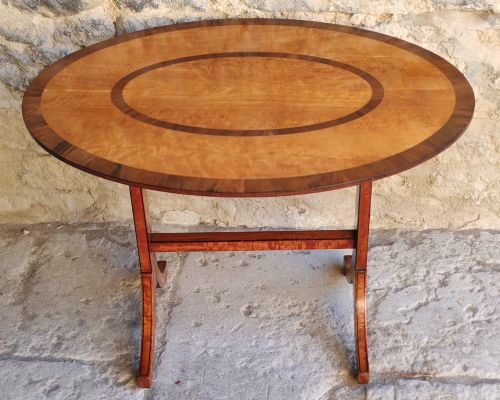
When you look for an inlaid tea table, you seek a folding or occasional surface whose top carries decorative wood, metal or bone details set flush into the primary timber.
Inlaid Tea Table
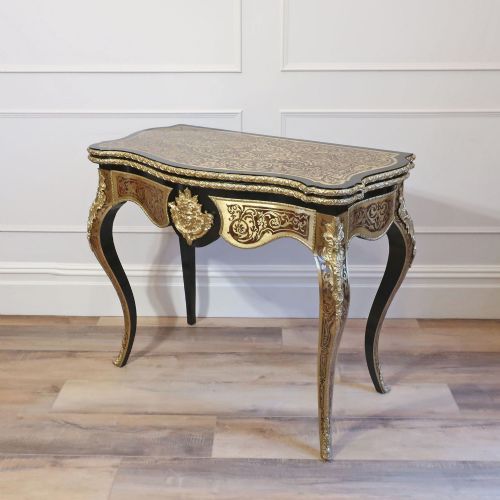
An inlaid tea table serves as a folding console, card table or drop-leaf surface designed originally for tea service and general entertaining. The search phrase covers pieces originating from Georgian cabinetmakers, Regency workshops, Victorian drawing rooms and Edwardian parlours, alongside distinct regional traditions from India.
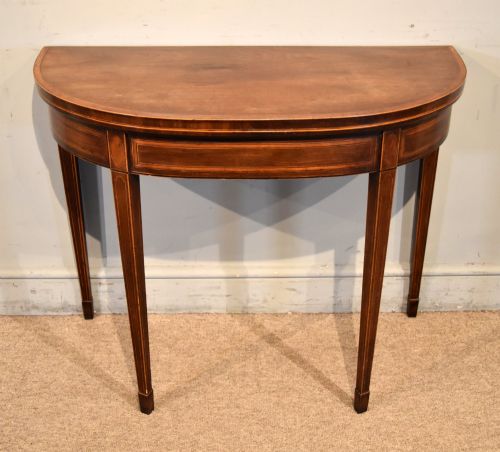
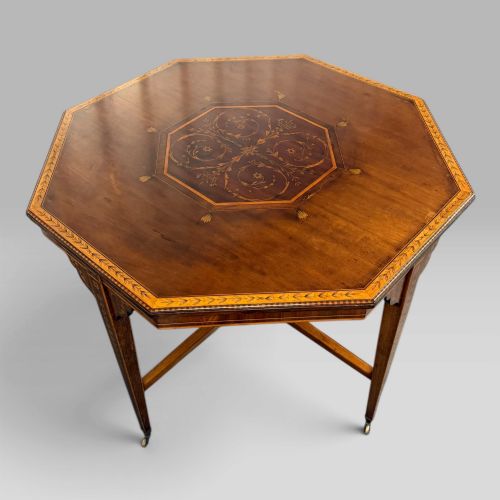
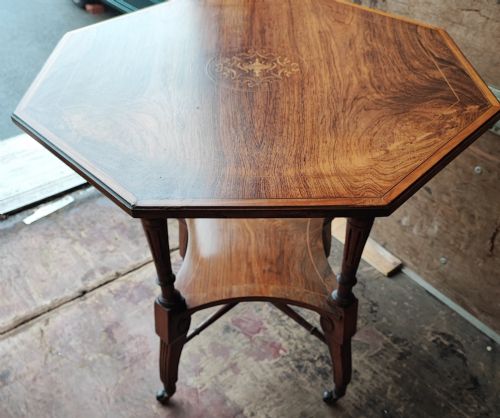
The most common examples encountered on this page date from the Georgian period through to the Edwardian era, constructed primarily in mahogany, rosewood or walnut. These range from semicircular demilune tables that swivel and fold against a wall to occasional trays and octagonal occasional forms.
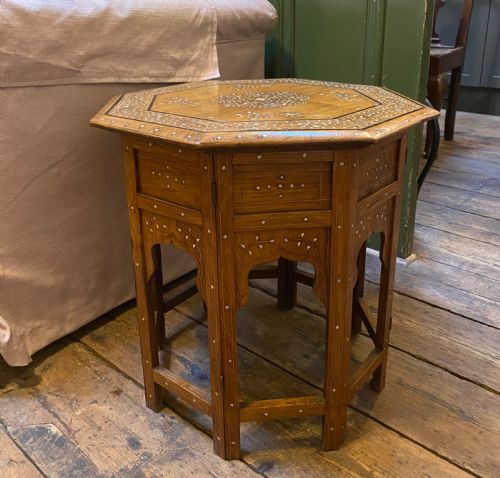
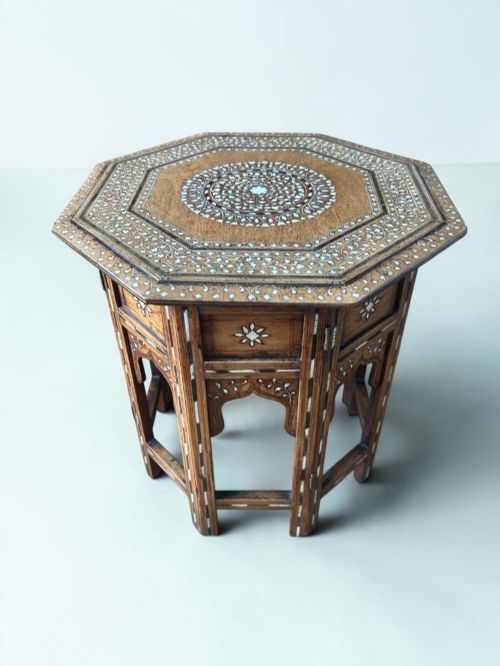
Makers and workshops varied widely, from regional English cabinetmakers applying delicate boxwood stringing to specialised international makers producing brass and bone inlaid teak tables in Hoshiarpur.
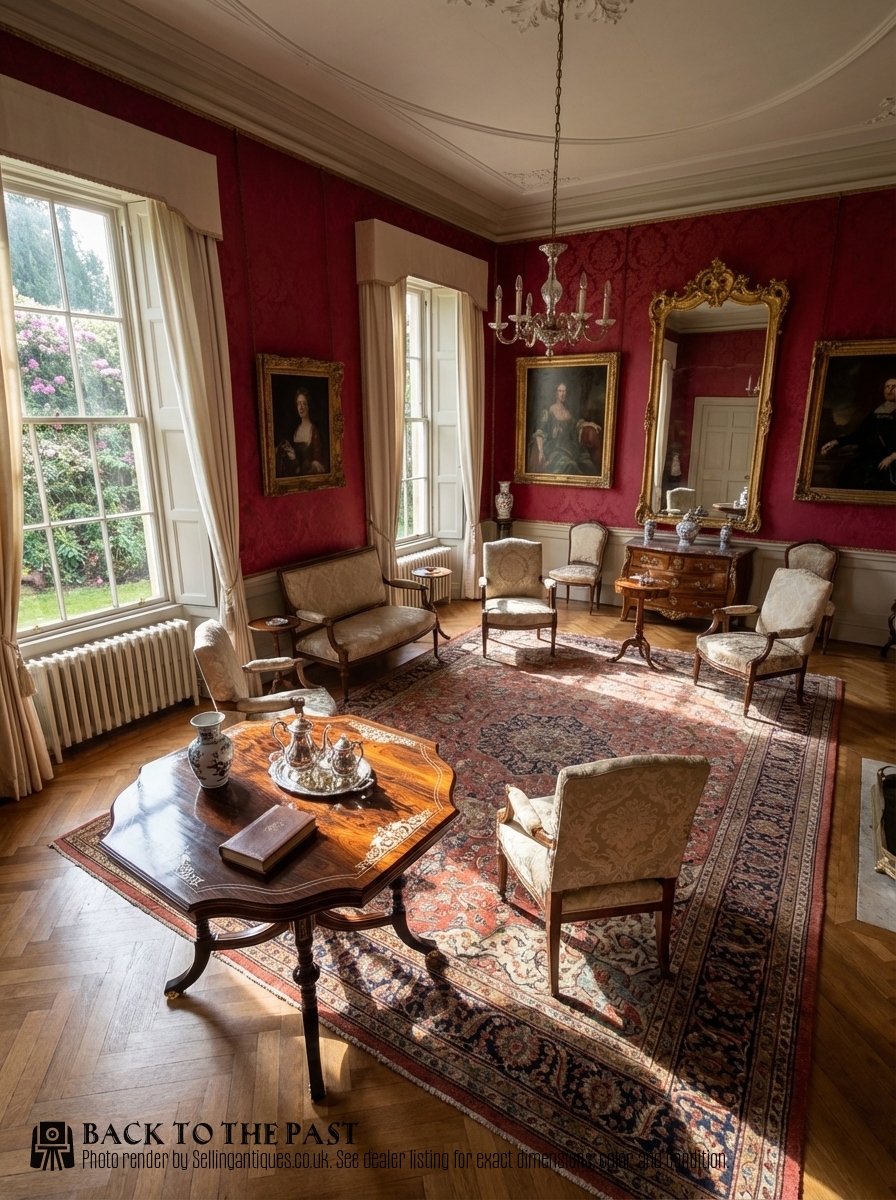
How They Were Made
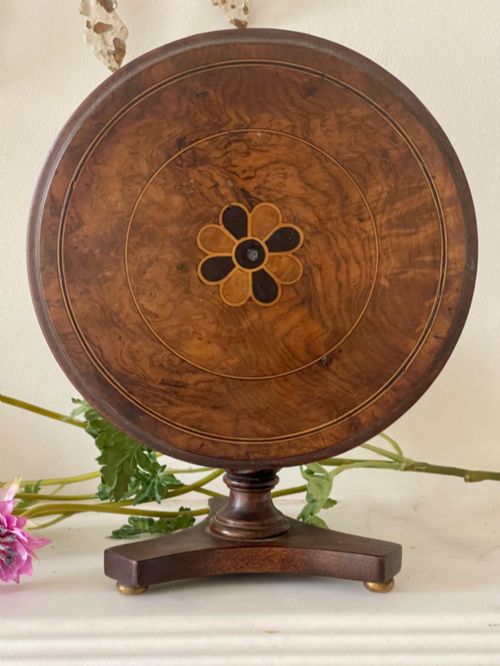
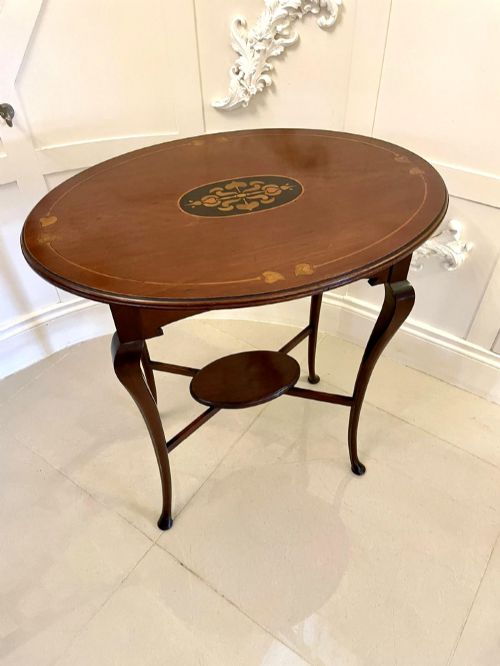
Cabinetmakers constructed the main carcase using solid timbers and decorative veneers such as mahogany, burr walnut, satinwood and rosewood. Sections of contrasting wood, brass, boxwood or bone were then carefully set into hand-cut recesses across the top and borders.
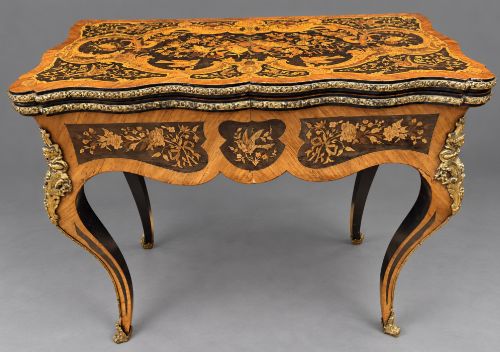
Marquetry and parquetry techniques involved cutting thin slices of diverse woods to form pictorial floral arrangements or geometric patterns. These decorative motifs were glued into place, smoothed level with the surrounding timber, and finished with polish to highlight the natural grain.
Inlaid Tea Table Retail Price Guide 2026
Typical asking prices for inlaid tea table among the pieces listed under this phrase on Sellingantiques today, from the lower quarter to the upper quarter. They describe what is for sale here now, not the wider market.
Listings feature brass, mahogany, satinwood, rosewood, walnut, boxwood and burr walnut across multiple centuries.
What Varies in Quality
Quality rests in the crispness of the timber selection and the precision of the inlay work. Finer examples display tight, figured grains such as burr walnut or figured mahogany combined with meticulously fitted contrasting stringing, whereas simpler pieces rely on basic painted motifs or loose-fitting veneers.
The structural integrity of the folding mechanisms and the quality of the secondary timbers dictate long-term durability. Superior pieces retain original hinges, well-fitted swivel tops and stable leg assemblies without excessive timber shrinkage or warping around the inlaid borders.
Trevor Page And Co·George Bullock·Bombay Furniture Company
The Inlaid Tea Table Glossary
- Marquetry
- The art of creating decorative patterns on furniture using thin veneers of various woods. It allows for complex pictorial designs across table tops.
- Stringing
- Thin strips of contrasting wood or light-coloured inlay set into channels around table edges. This technique frames the primary timber surface.
- Demilune
- A half-moon shape characteristic of many folding tea tables. These tables stood flush against a wall when closed.
- Crossbanding
- A border of veneer laid around the perimeter of a table top with the grain running perpendicular to the centre. It creates a neat visual frame.
- Parquetry
- Geometric patterns formed by small pieces of wood fitted together across a surface. It differs from marquetry through its strict geometric repetition.
Inlaid Tea Table: Frequently Asked Questions
What is an inlaid tea table?
An inlaid tea table is a folding or occasional piece of furniture featuring decorative wood, brass, or bone details set flush into the surface. They were built to serve tea or hold objects in formal rooms.
Over the centuries, these tables evolved from Georgian card and tea combinations into Edwardian occasional trays and complex regional tables. The surface decoration remains the defining characteristic across all periods.
How were they used historically?
These tables stayed folded against a wall or stood as side furniture until needed for evening tea or social gatherings. The top leaf then unfolded to double the surface area.
Some versions included compartments for cards or work materials, making them versatile furniture for the drawing room. When not in use, their decorative tops added visual interest to the interior.
How do I identify a Georgian tea table?
Georgian examples often feature solid mahogany or figured veneers with understated boxwood stringing and elegant tapering legs. Their fold-over tops rely on precise joinery rather than complex mechanical hinges.
Look for hand-cut dovetails in the framing and rich, untreated timber patination that develops over centuries of use. The proportions remain restrained compared to later Victorian revivals.
Where were Hoshiarpur tables made?
Hoshiarpur tables originated in the Punjab region of India and gained popularity during the late nineteenth and early twentieth centuries. They feature dense carving alongside intricate bone, brass and copper inlay.
These pieces typically use teak as a primary wood and often incorporate folding or knockdown bases for transport. Their distinct aesthetic reflects international trade and colonial design exchange.
How should I care for inlaid wood?
Keep inlaid furniture away from direct sunlight and heat sources to prevent the wood from drying and the delicate veneers from lifting. Regular dusting with a dry cloth protects the polished finish.
Apply a traditional wax polish sparingly to maintain the moisture of the timber and enhance the contrast of the inlay work. Avoid excess moisture during cleaning.