

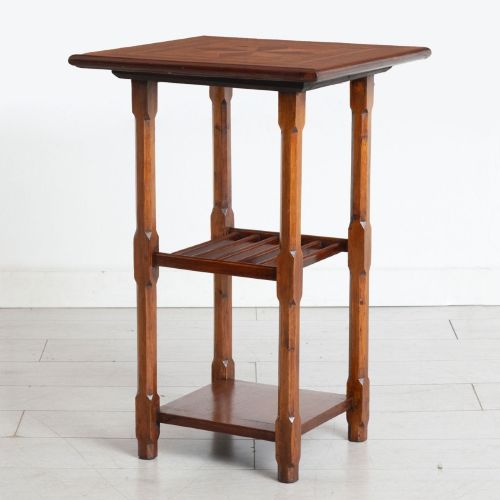
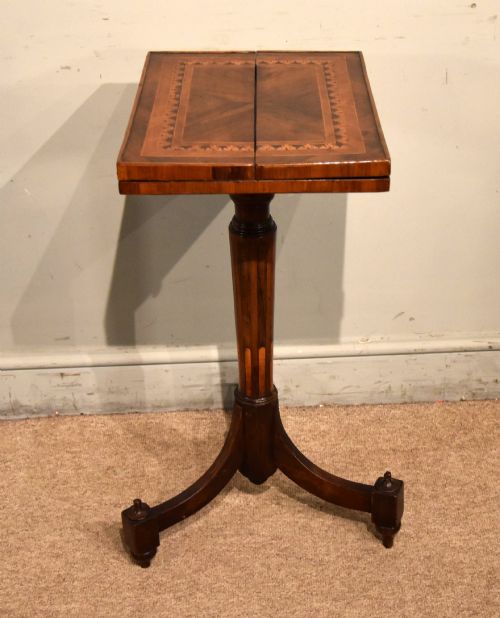
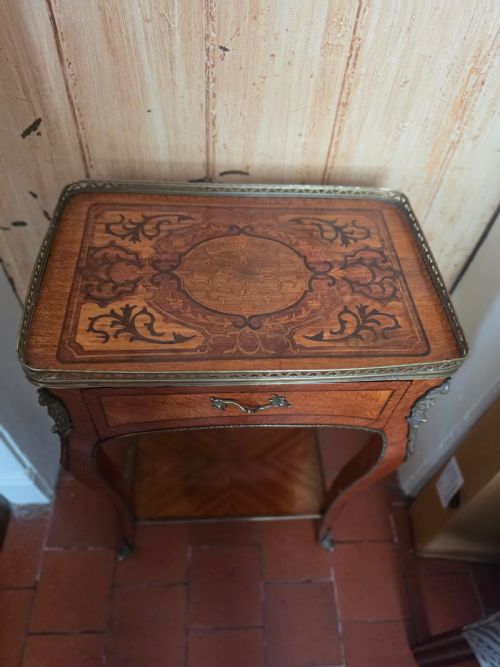
Marquetry Accent Table
A marquetry accent table brings intricate floral and geometric wood-inlay patterns into a room, serving as a functional surface with distinct decorative depth.
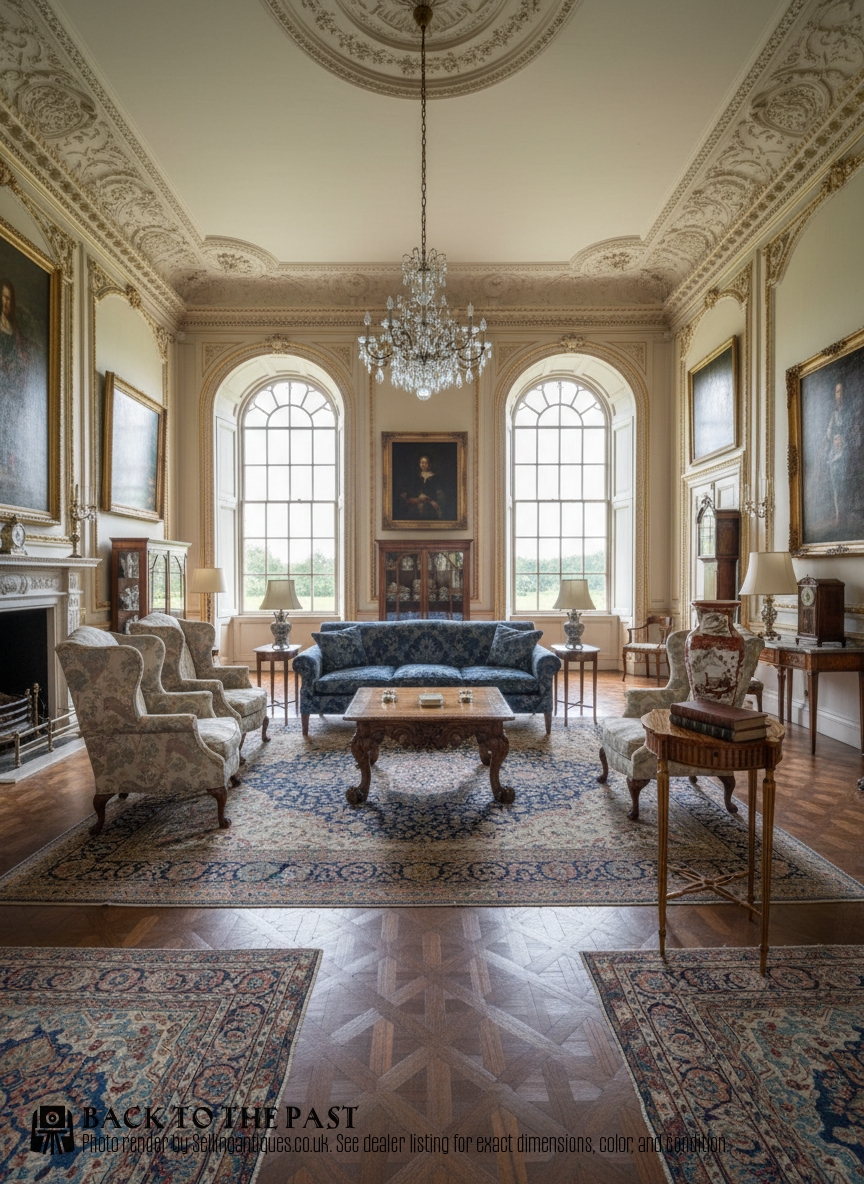
Marquetry Accent Table
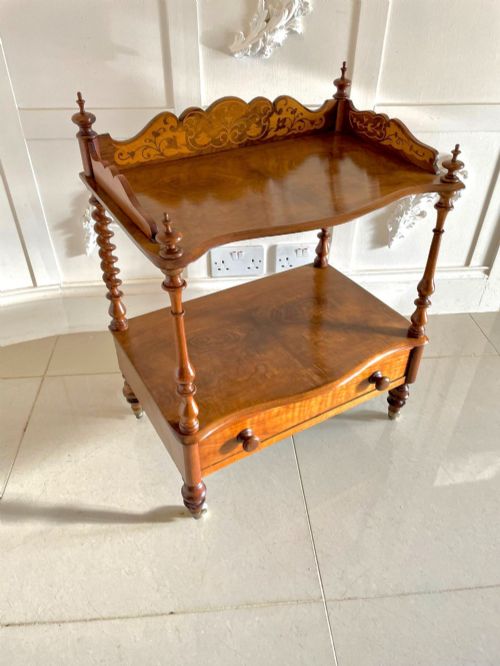
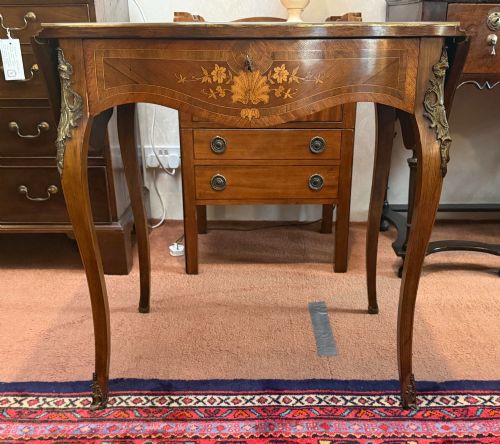
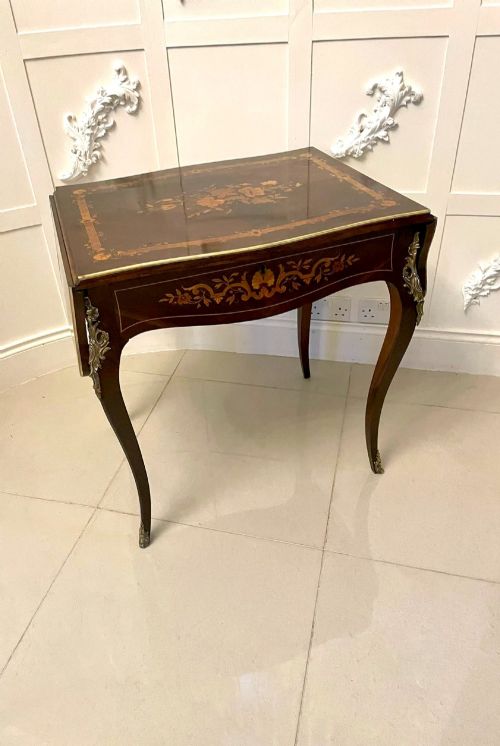
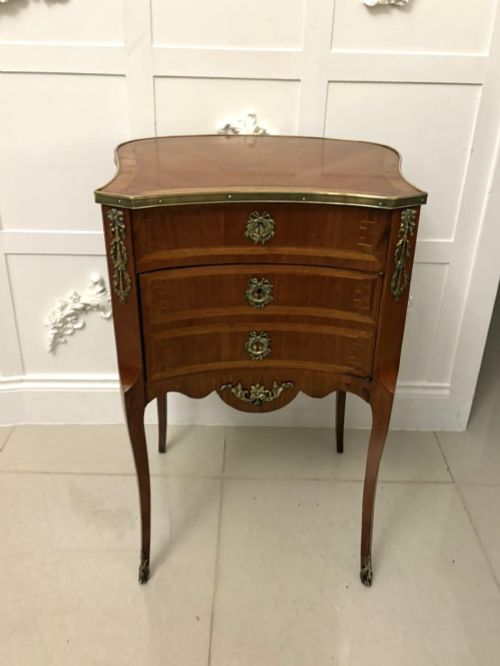
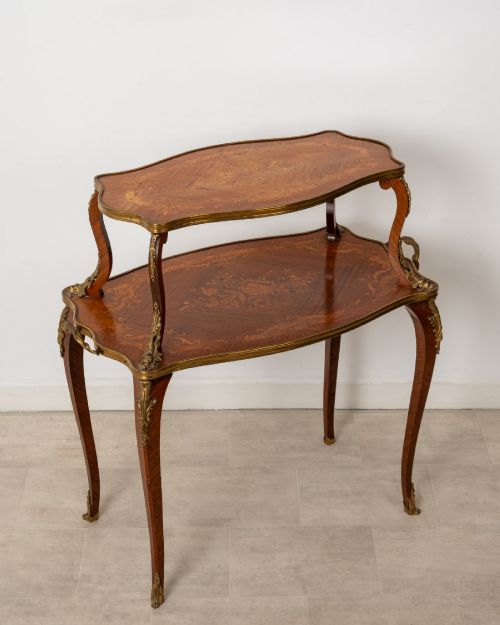
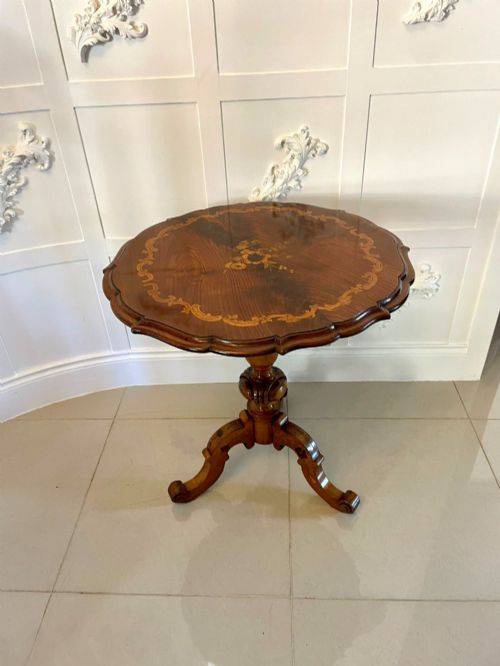
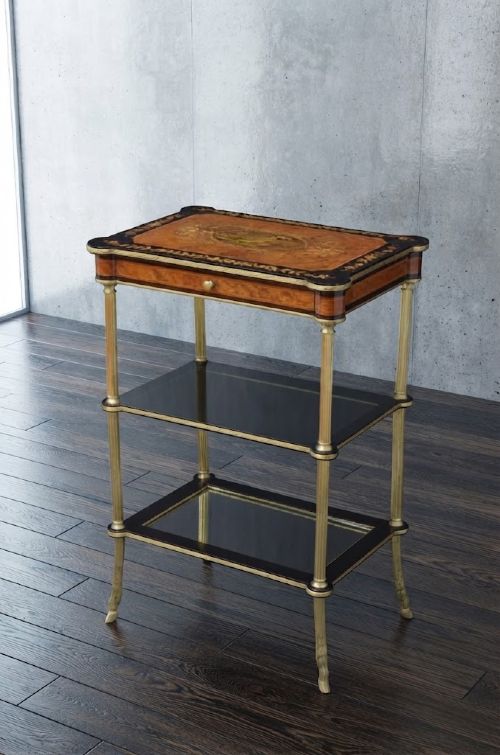
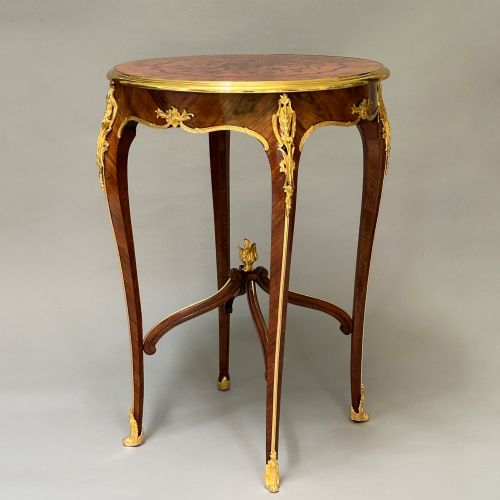
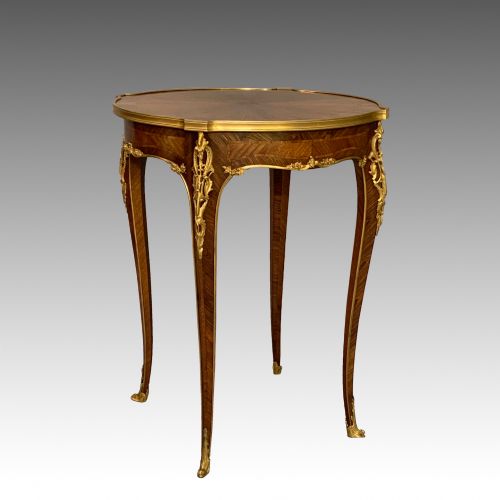
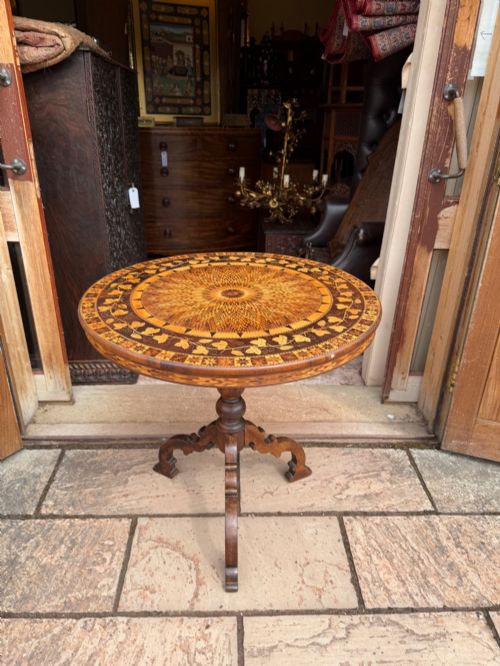
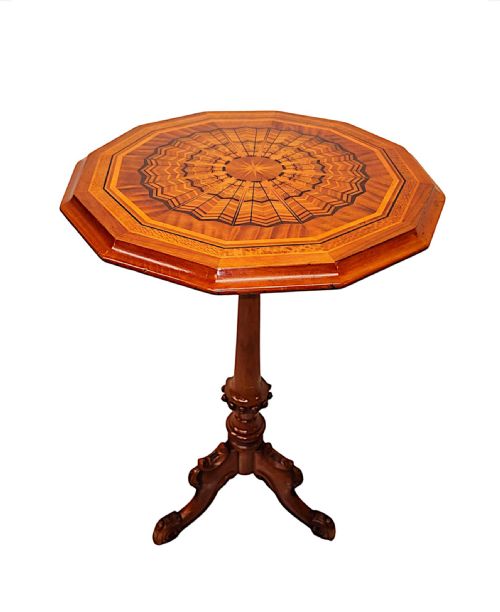
A marquetry accent table is typically encountered in formats such as occasional tables, lamp tables, centre tables, and side tables designed for domestic use. The pieces span periods from the eighteenth century through the Edwardian era and the nineteenth century, reflecting diverse craftsmanship across English, French, Dutch, and Italian workshops. Standard forms include oval, kidney-shaped, and octagonal surfaces, frequently supported by slender legs or tiered structures like étagères.
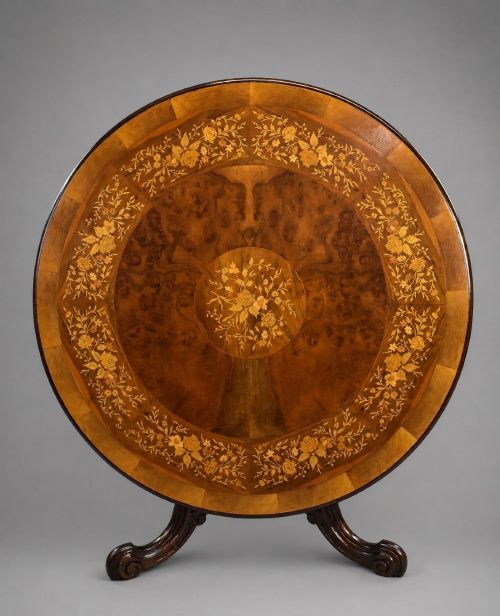
The aesthetic vocabulary draws heavily from French Louis XV styles, Georgian traditions, and Victorian interpretations, uniting utilitarian surfaces with elaborate veneered decoration. Buyers navigating this selection encounter both freestanding centrepieces and smaller lamp or corner tables scaled for intimate interior spaces. These tables often utilise contrasting timbers to create pictorial table tops that function simultaneously as furniture and decorative art.
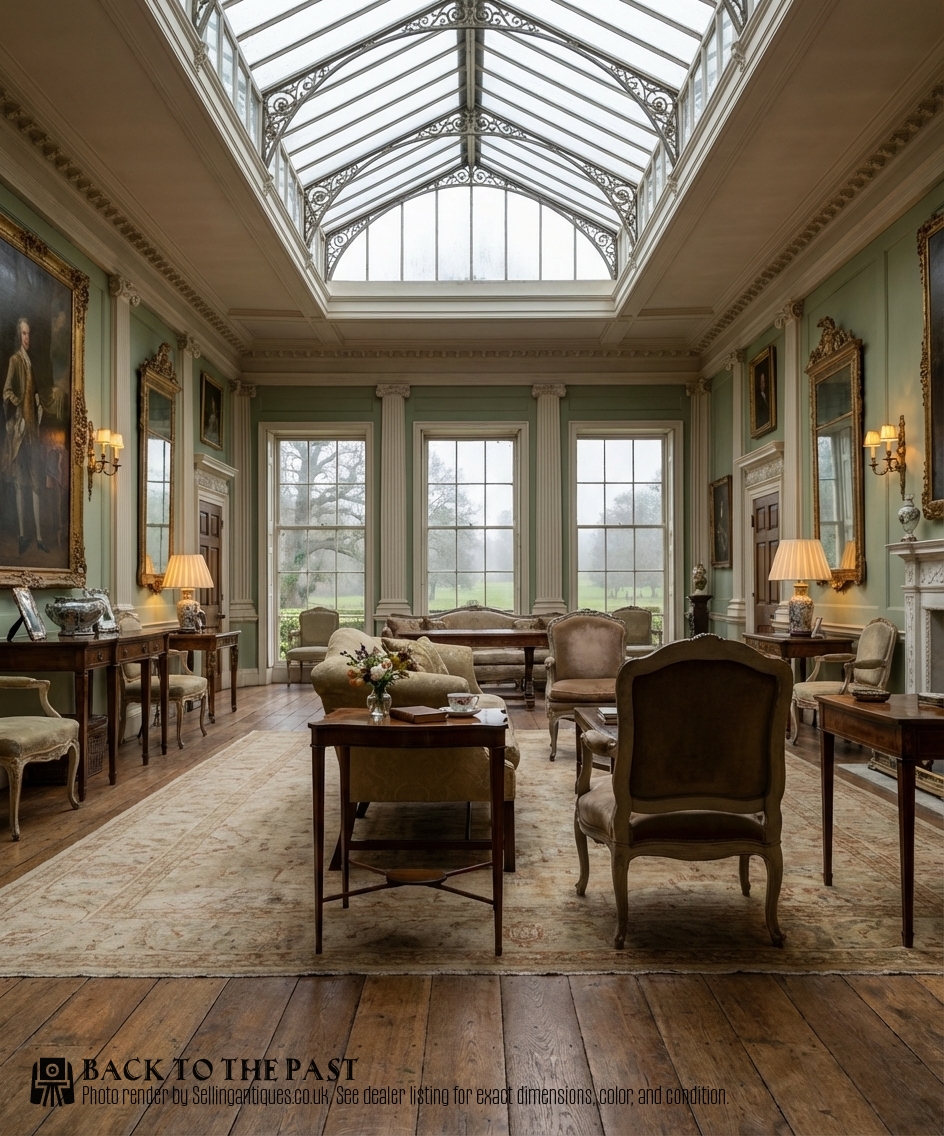
Evaluating the Workmanship
The distinction between ordinary production and top-tier output rests upon the precision of the veneer cutting and the complexity of the timber selection. Finer examples display seamless integration of disparate wood types where individual pieces fit tightly without visible gaps or excessive use of filler, creating crisp lines within the floral or pictorial imagery.
Structural harmony also separates superior examples, visible in the balance between the decorative top and the supporting mounts, legs, or tiers. High-grade items incorporate higher-quality ormolu mounts and carefully chosen burr or figured timbers that wrap harmoniously around the edges and curves of the carcase.
Marquetry Accent Table Retail Price Guide 2026
Typical asking prices for marquetry accent table among the pieces listed under this phrase on Sellingantiques today, from the lower quarter to the upper quarter. They describe what is for sale here now, not the wider market.
Listings for this marquetry accent table selection encompass periods from the 17th century through the Art Deco era, featuring walnut, mahogany, satinwood, and ormolu.
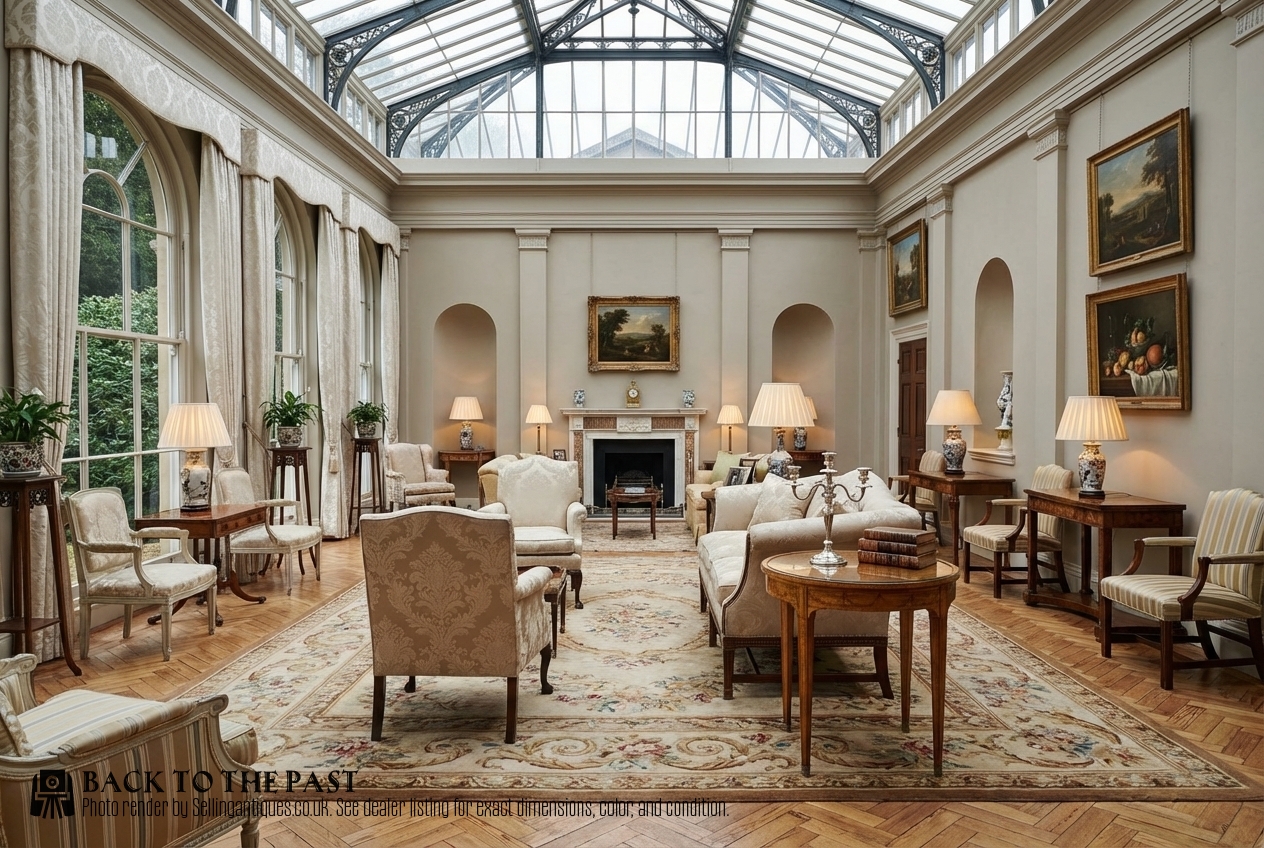
Joseph-Emmanuel Zwiener·Gillows·Liberty and Co·Anton Seuffert·Émile Gallé·François Linke·George Bullock·Millet
The Marquetry Accent Table Glossary
- Marquetry
- The decorative craft of applying small pieces of veneer to a structural carcase to form pictorial or geometric designs. This technique distinguishes ornamental table tops from plain veneered or solid wood surfaces.
- Ormolu
- Gilded bronze used for decorative mounts, handles, and gallery rails on fine furniture. The material adds metallic contrast to wood-veneered surfaces, particularly on French nineteenth-century pieces.
- Kingwood
- A dense, heavily figured exotic timber with dark violet and brown striping, utilised extensively in eighteenth and nineteenth-century cabinet making. Its striking grain made it a primary choice for high-status veneered tables.
- Pembroke table
- A small rectangular table featuring two hinged drop leaves on opposing sides, often equipped with a single drawer. This form emerged in the eighteenth century as a versatile piece for breakfast or writing.
- Étagère
- A set of open shelves or tiered display surfaces supported by slender uprights or columns. These tiered pieces provide elevated display space while maintaining a light visual footprint in a room.
Marquetry Accent Table: Frequently Asked Questions
What is a marquetry accent table?
A marquetry accent table is a small decorative surface decorated with precise wood-veneer patterns depicting floral, scrollwork, or geometric designs. These pieces function as occasional, lamp, or side tables in sitting rooms.
Craftsmen utilised contrasting timbers such as satinwood, kingwood, and walnut to create detailed ornamental panels across the top and sides of the furniture.
How were these tables used originally?
Historically, these small tables served multiple domestic purposes, including holding small lamps, displaying decorative objects, or supporting card games and needlework. Their portable nature allowed servants or residents to move them easily about the drawing room.
Specific variants like Pembroke tables or étagères offered drop leaves or multiple tiers to accommodate temporary writing tasks or tiered displays of porcelain and books.
How do I care for wood veneer?
Maintaining antique veneer requires keeping the table away from direct sunlight, heating vents, and extreme humidity shifts that cause the timber to expand, contract, or lift. Regular dusting with a dry, soft cloth prevents particulate buildup without risking moisture damage to the polished finish.
Occasional application of appropriate furniture wax helps nourish the old polish, though heavy chemical cleaning should be avoided to preserve the integrity of the original surface.
How do I distinguish 19th-century pieces?
Nineteenth-century pieces often display revival styles such as Louis XV or Rococo motifs, utilising exotic woods like kingwood and rosewood combined with cast ormolu mounts. Examining the construction methods underneath, the type of secondary wood used, and the style of the hand-cut veneer offers clues to the era of manufacture.
Maker signatures, stamps, or specific regional characteristics also help anchor the piece to a particular decade or workshop tradition.