


Inlaid Centre Table
An inlaid centre table anchors a room by offering decorative marquetry and functional surface space from the Victorian, Regency, and French revival periods.
Inlaid Centre Table
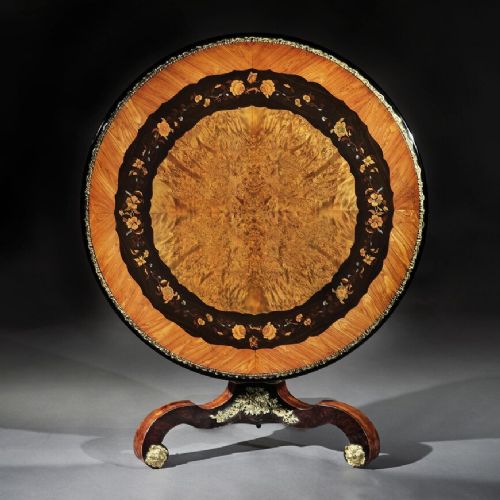
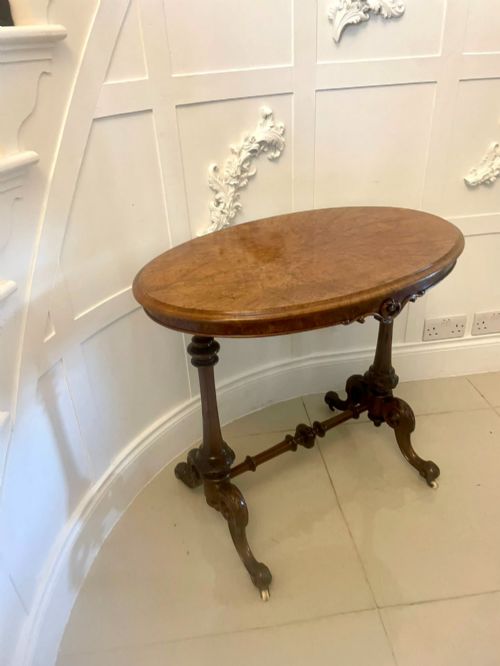
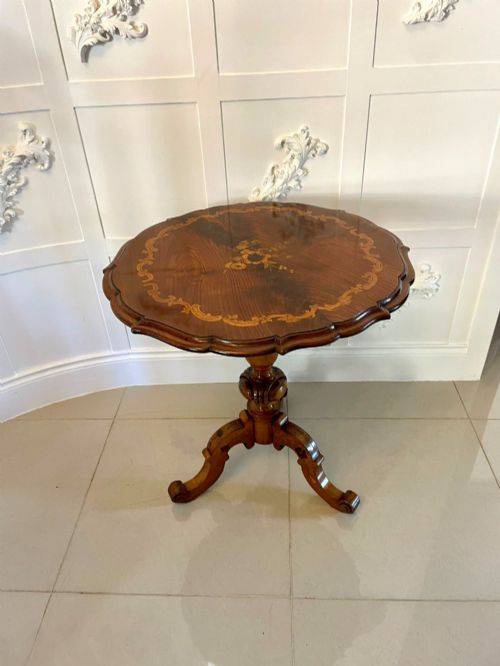
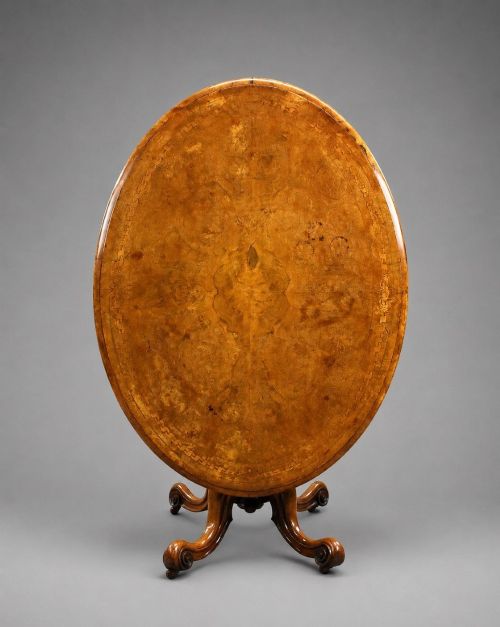
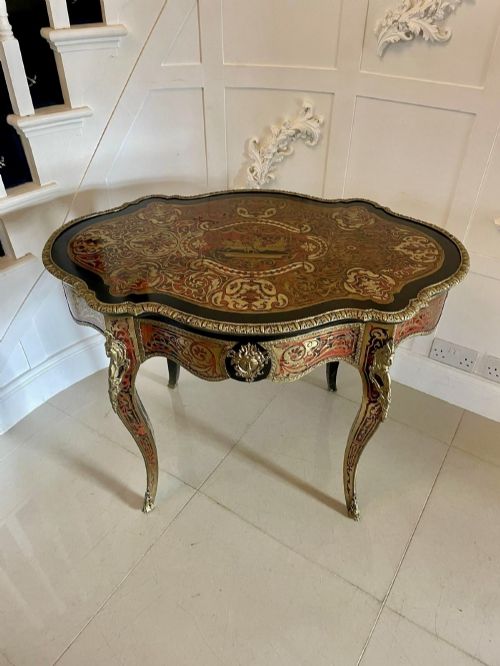
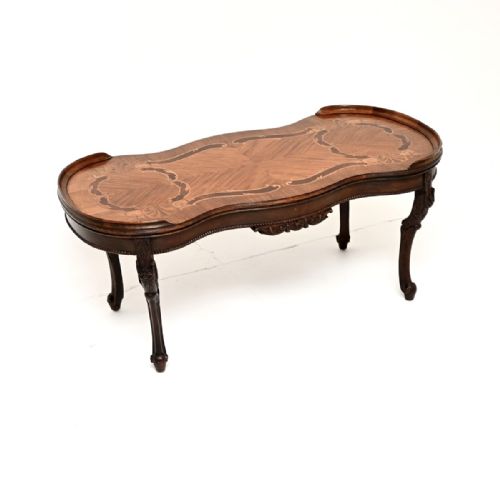
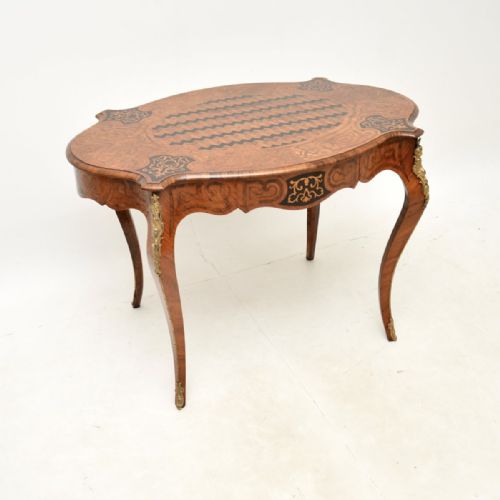
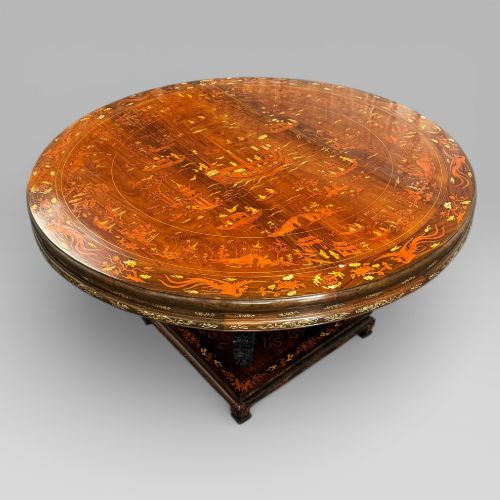
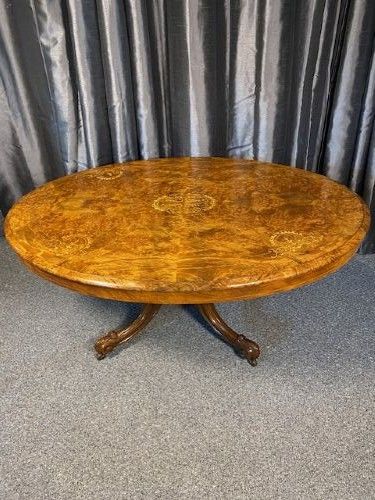
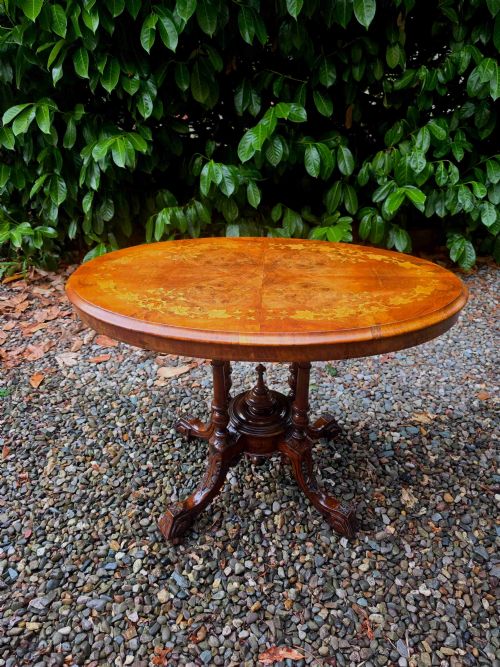
An inlaid centre table is a freestanding piece designed to be viewed from all sides, commonly appearing in Victorian burr walnut, French rosewood, and Regency mahogany. The typical form encountered here is the Victorian oval or circular table, often featuring elaborate marquetry or parquetry across the top.
Beyond standard domestic uses, these tables appear in forms ranging from lamp tables and breakfast tables to library desks and coffee tables. Makers adapted the freestanding format for diverse interiors, utilising shapes from octagonal surfaces to tilt-top mechanisms.
Origins span English workshops, French ateliers, and broader continental and colonial production including Chinese export and Ceylonese hardwoods. The unifying element across these varied geographies is the presence of contrasting wood inlays and decorative surface work.
Materials and Construction
Cabinet makers constructed the foundational carcass using dense timbers like mahogany, oak, or walnut, upon which finely figured veneers of burr walnut, satinwood, or rosewood were applied. These primary surfaces provide the contrasting dark and light tones necessary to frame the central inlay.
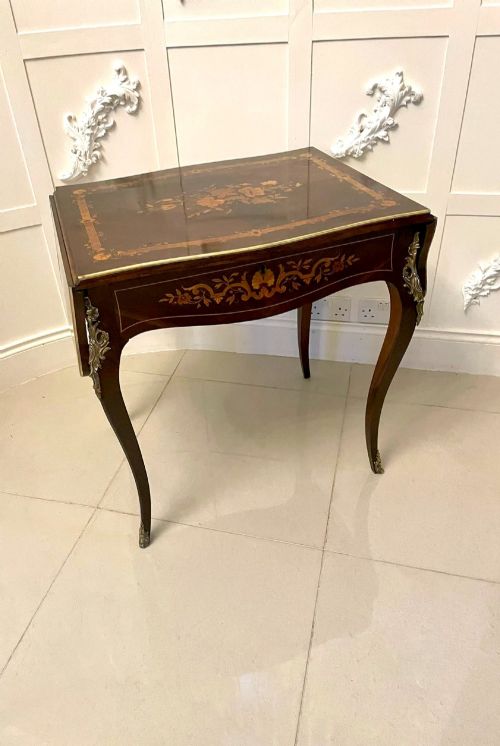
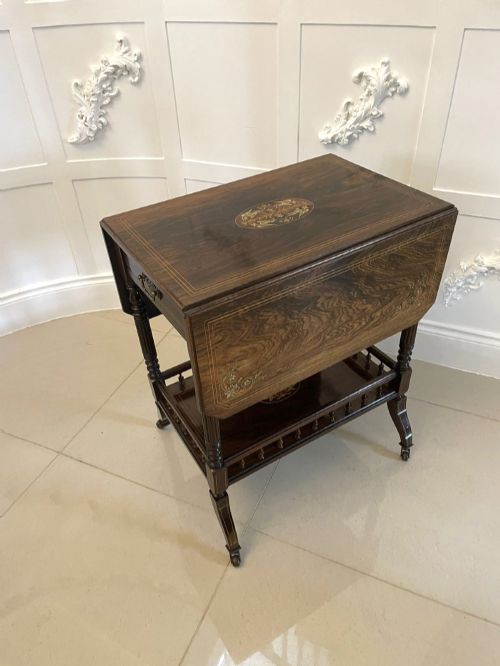
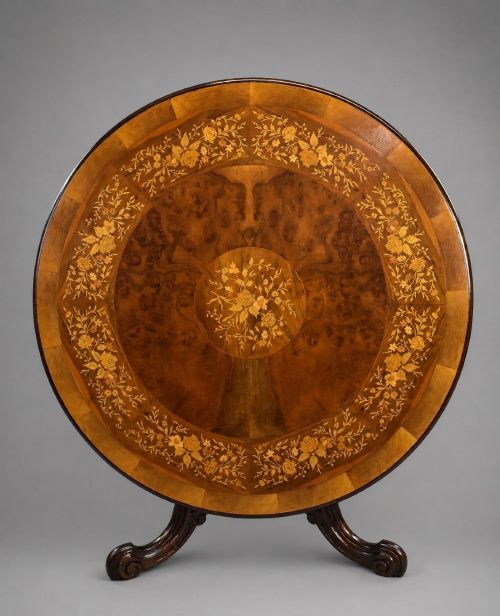
The characteristic ornamentation relies on marquetry and parquetry, cutting contrasting woods, brass, mother-of-pearl, or ivory into precise pictorial or geometric patterns. These decorative elements are set directly into the surface veneer and secured with animal glues.
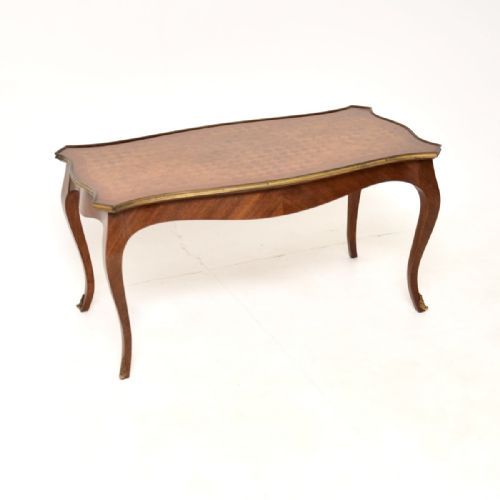
Structural stability in freestanding tables often involves turned pedestals, tripod legs, or carved cabriole supports reinforced with internal blocks. Ormolu mounts and brass stringing are frequently integrated to edge the tops and highlight structural joints.
Some Victorian tables include built-in chess boards within the inlaid top, ready for a sudden mid-afternoon match.
Craftsmanship and Detail
The distinction between standard examples and top-tier pieces rests on the complexity and execution of the marquetry. Superior tables display intricate, multi-wood pictorial designs with tight, seamless joins between the inlaid elements and the background veneer.
Secondary framing details, such as the precision of cast ormolu mounts, the presence of secondary timbers like oak in the drawer linings, and the crispness of hand-carved pedestals, separate workshop-standard furniture from pieces produced by notable makers.
Edward Holmes Baldock·Edwards and Roberts·Amleto Bertoni
The Inlaid Centre Table Glossary
- Marquetry
- Decorative veneer work forming pictorial patterns using various coloured woods, metals, or shells. This technique covers the entire top surface of high-status tables.
- Parquetry
- Geometric mosaic woodwork arranged in regular patterns like cubes or chequers. It creates structured, repeating textures across the table surface.
- Ormolu
- Gilded bronze used for mounts, feet, and edge trim. French and Victorian makers applied it to accent structural contours.
- Burr walnut
- Timber taken from walnut tree growths, producing swirling, highly figured grain patterns. It serves as the primary background veneer for many Victorian pieces.
- Stringing
- Thin lines of contrasting wood inlaid into channels cut into the table surface. This technique outlines borders and geometric divisions.
Inlaid Centre Table: Frequently Asked Questions
Where should I place an inlaid centre table?
Because these tables are finished on all sides to stand freely in a room, they work best positioned in the middle of a drawing room or spacious hallway. Their decorative tops are designed to be seen from standing height rather than pushed against a wall.
Ensure the piece sits away from direct heat sources and strong sunlight to protect delicate veneers and animal glues from drying out over time.
How do I clean an antique veneered surface?
Dust the surface regularly with a soft, dry lint-free cloth to prevent grit from scratching the polished wood and inlay. Avoid using modern silicone sprays or multi-purpose household cleaners, which can penetrate hairline cracks in old finishes.
Apply a traditional beeswax polish sparingly once or twice a year to nourish the timber and maintain the sheen of the French polish or wax coating.
Can I use an antique centre table for dining?
Some larger Victorian examples served dual purposes as breakfast or dining tables, constructed with sturdy pedestals to support daily use. However, delicate marquetry and satinwood inlays are susceptible to staining from liquids and heat damage from plates.
Protect the surface with padded table mats if dining, or reserve the piece for occasional display and seating use.
How do I distinguish French and English styles?
French tables frequently incorporate Louis XV or Louis XVI revival motifs, featuring shaped cabriole legs, extensive ormolu mounts, and floral marquetry on rosewood or kingwood. English Victorian and Regency versions often rely on solid walnut or mahogany with geometric stringing and simpler pedestal bases.
Examining the secondary timbers inside drawers or beneath the top often confirms the workshop origin of the piece.