

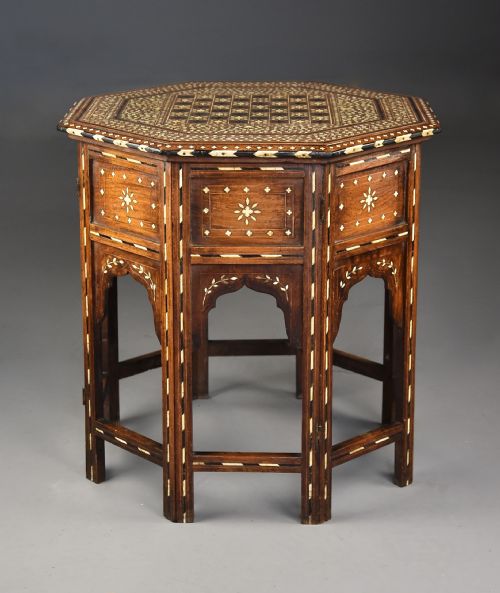
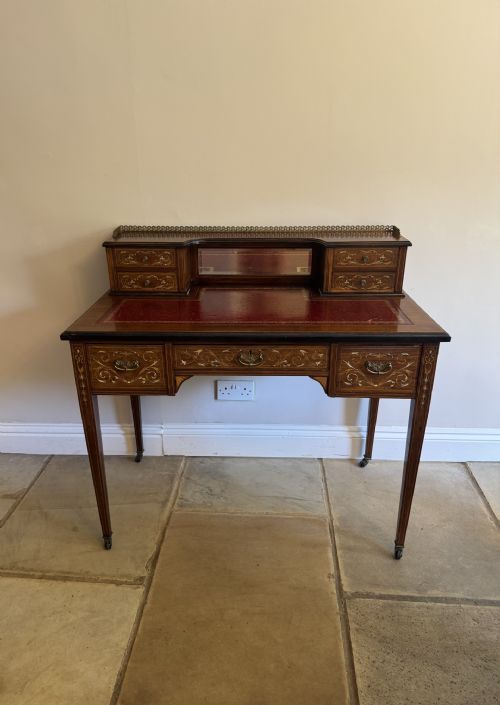

Edwardian Inlaid Rosewood Table
When you look for an edwardian inlaid rosewood table, you seek the refined domestic furniture of the late nineteenth and early twentieth centuries.
Edwardian Inlaid Rosewood Table
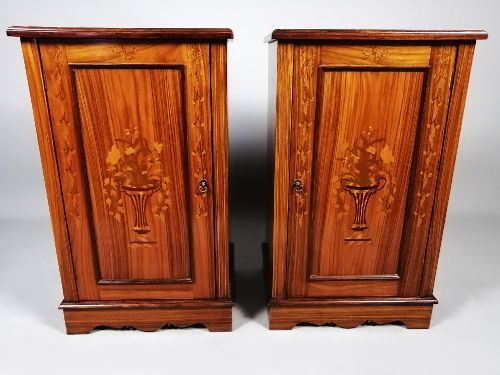
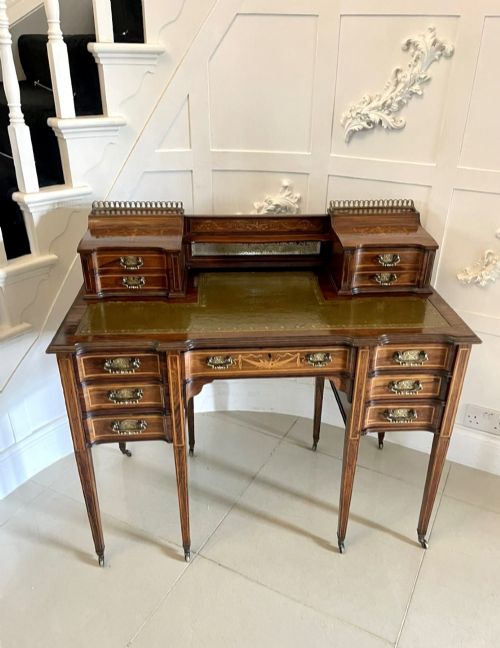
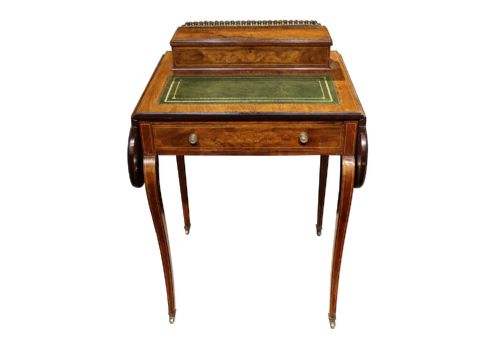
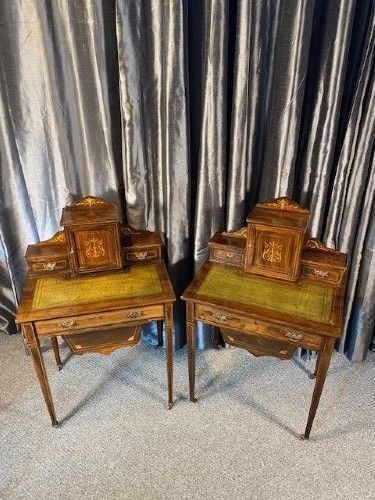
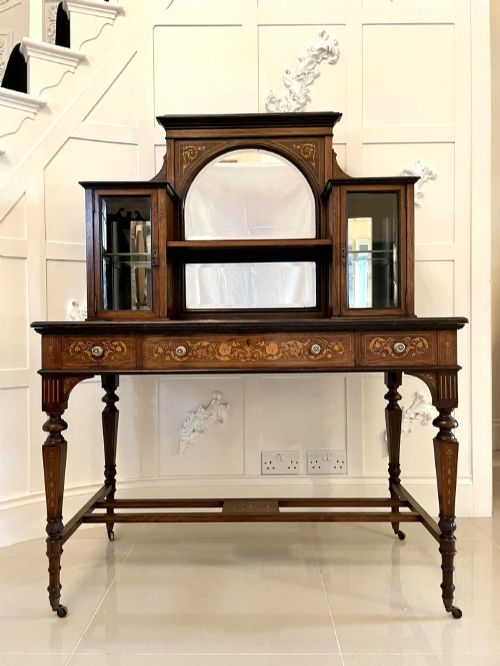
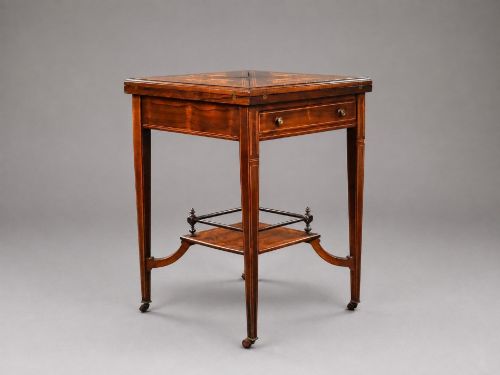
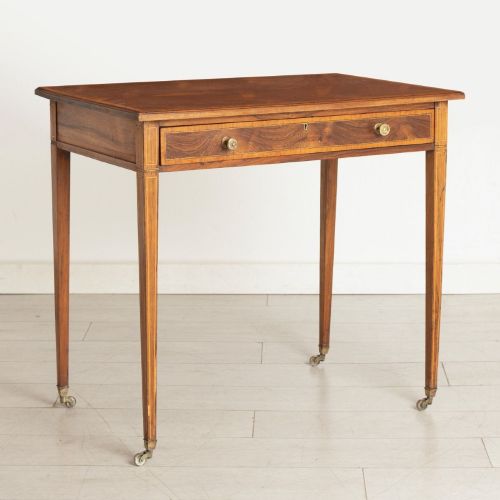
An edwardian inlaid rosewood table brings together rich dark timbers and delicate contrasting stringing for parlour or drawing room use. These pieces include envelope card tables, writing desks, and small occasional stands designed for decorative display.
Most examples originate from the Edwardian period and the late Victorian era, reflecting a Victorian revival of Sheraton taste. They serve practical functions whilst maintaining a light profile distinct from heavier mahogany or oak furniture of earlier decades.
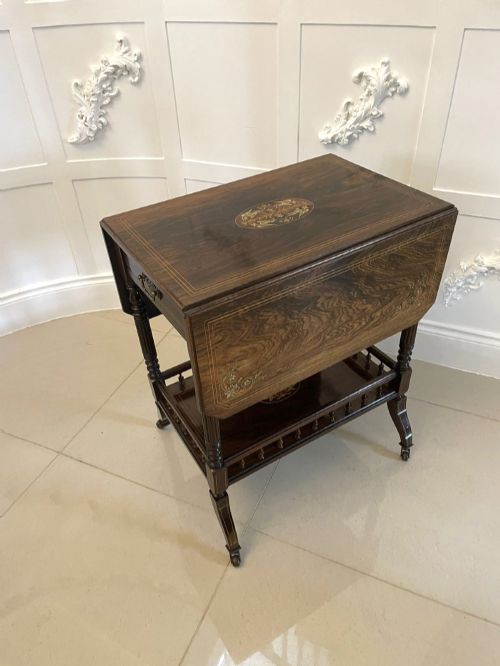
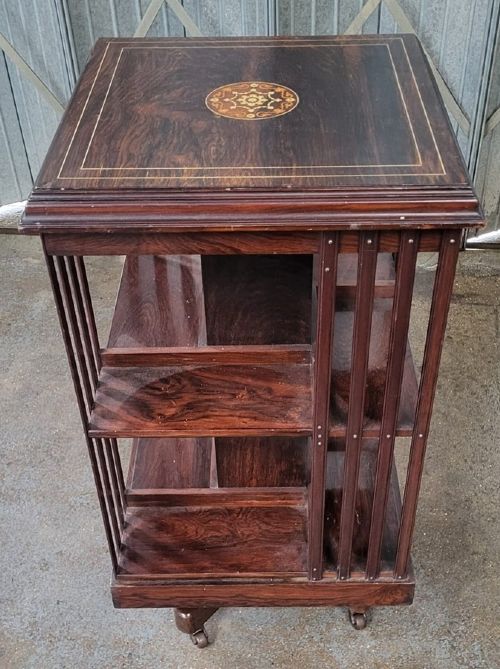
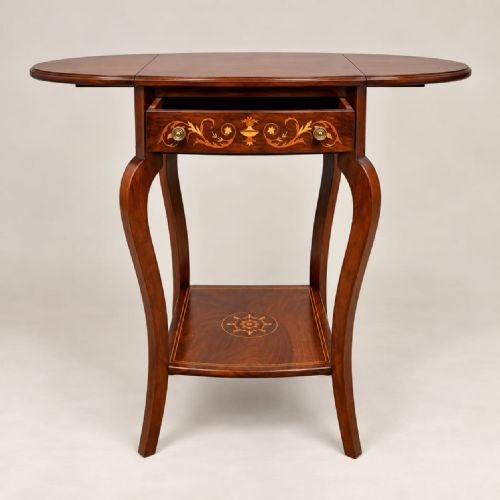
Common forms found on this page comprise drop-leaf lamp tables, revolving bookcases, and games tables with folding tops. Makers utilised the natural grain of the timber to provide a dark backdrop for lighter botanical or geometric motifs.
Materials and Construction
Cabinet makers built these pieces using solid rosewood or applied veneers over secondary timbers like mahogany, incorporating satinwood, boxwood, and brass for detailing. The contrasting stringing and marquetry panels required precise hand-cutting to fit flush into recessed channels within the primary surface.
Surfaces often received a French polish finish to deepen the colour and protect the delicate inlay work from moisture and wear. Folding mechanisms on card tables and drop-leaf supports relied on brass hinges and clever pivoting joints concealed beneath the table top.
Listings feature rosewood, satinwood, and boxwood materials across Victorian and Edwardian periods.
Judgement of Quality
The standard of a piece rests upon the crispness of the boxwood inlay and the depth of the rosewood grain rather than elaborate carving alone. Superior examples display tightly balanced floral motifs and secure joints that show minimal movement over decades of use.
Workshop origin significantly influences value, with documented pieces by notable firms exhibiting superior timber selection and finer interior fittings. Lesser pieces often rely on printed decoration or simple painted lines rather than genuine individual wood veneers.
Maple and Co.·Collinson and Lock·Liberty and Co
The Edwardian Inlaid Rosewood Table Glossary
- Rosewood
- A dense, dark timber featuring characteristic black veining and a heavy oily lustre. It provides the primary dark background for contrasting lighter inlays.
- Envelope Table
- A card table featuring four triangular flaps that fold over each other in the manner of an envelope. Opening one flap causes the others to lift simultaneously.
- Marquetry
- Decorative woodwork where pieces of veneer are assembled to form pictorial or geometric patterns. Artisans inlay these motifs directly into the surface of the table top.
- Stringing
- Thin strips of contrasting wood inlaid into channels around table borders and drawers. This technique defines the edges and panels of Edwardian furniture.
- Sutherland Table
- A narrow drop-leaf table with hinged flaps supported by pivoting gate legs. When folded down, the leaves hang almost vertically to save floor space.
Edwardian Inlaid Rosewood Table: Frequently Asked Questions
How do I care for an edwardian inlaid rosewood table?
Keep the timber away from direct sunlight and strong heat sources to prevent the rosewood from fading and the veneer from lifting. Apply a quality beeswax occasionally to nourish the French polished surface.
Avoid using silicone-based polishes or damp cloths which can damage the delicate boxwood stringing and finish. Gentle dusting with a dry microfibre cloth maintains the natural lustre of the grain.
Were envelope tables used for dining?
Envelope tables were designed specifically for card games, writing, and social pastimes rather than formal meals. The folding mechanism provides a stable baize-lined playing surface for bridge or whist.
Placing heavy items or serving hot dishes on these delicate tops risks damaging the veneer and internal pivoting joints. They function best as occasional display surfaces or lamp tables in a sitting room.
How can I distinguish Edwardian pieces from Victorian ones?
Edwardian furniture generally exhibits lighter proportions and simpler neoclassical revival motifs compared to heavier Victorian designs. The transition from the late nineteenth century to 1900 saw a preference for airier parlour furniture.
Cabinet construction methods shifted slightly over this period, though many workshops continued traditional techniques. Consulting secondary woods and interior drawer linings often helps clarify the manufacturing era.
What is Anglo-Indian inlay work?
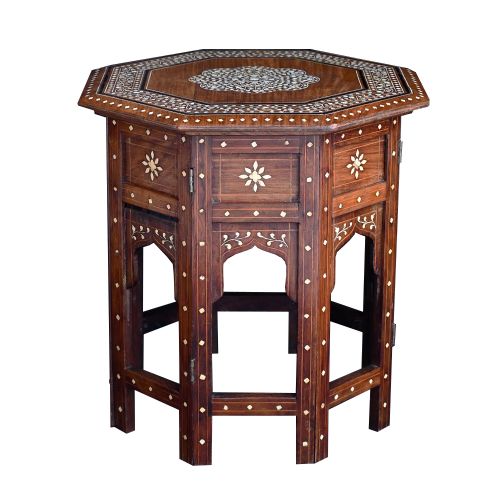
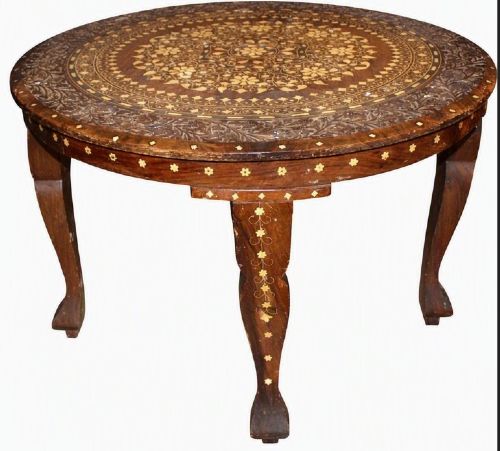
Anglo-Indian pieces incorporate traditional craft techniques from the Indian subcontinent applied to European furniture forms. They frequently feature intricate bone or ivory inlay alongside carved floral borders.
These occasional tables were imported by firms like Liberty and Co to satisfy late Victorian and Edwardian taste for exotic decoration. The distinctive construction utilises native timbers combined with traditional regional joinery.