

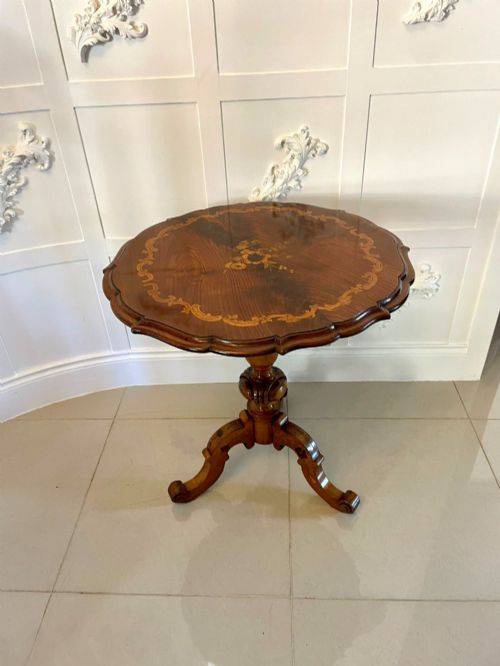
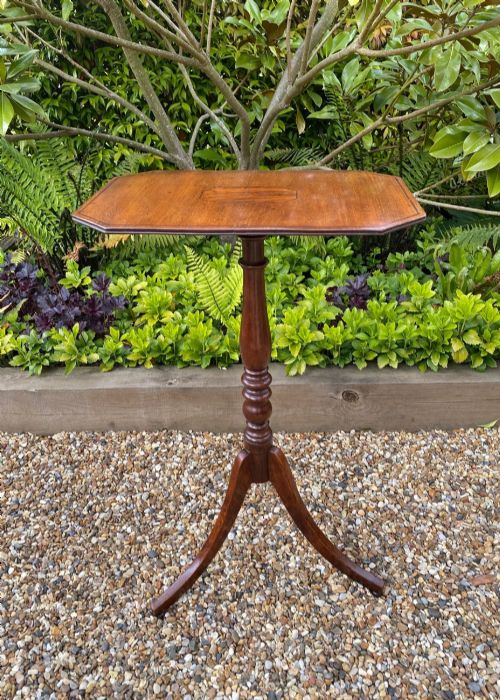
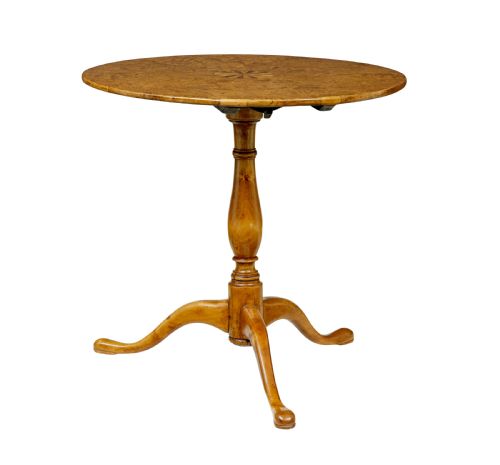
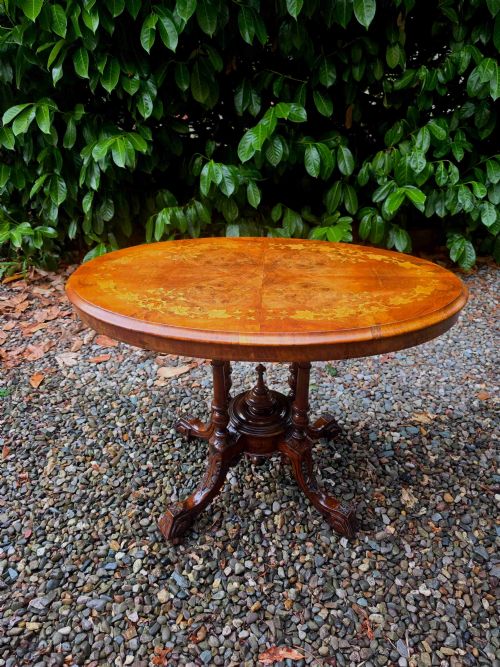
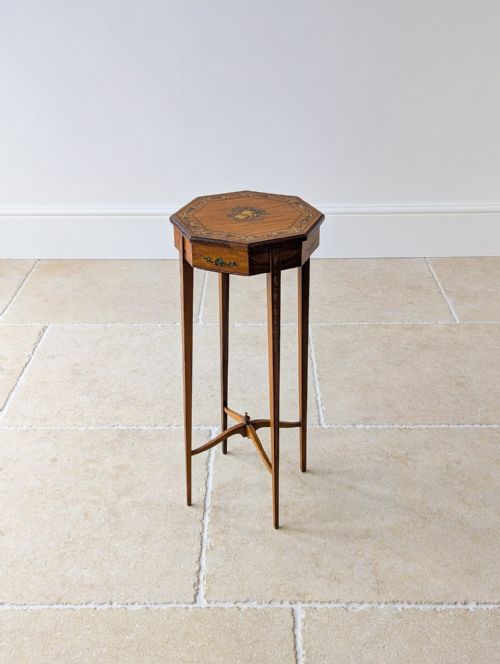
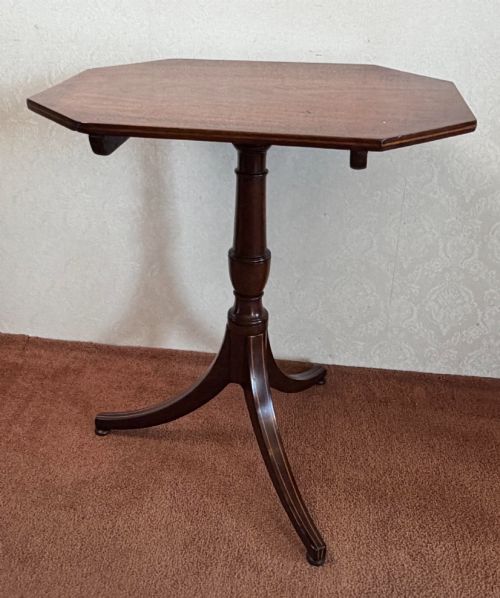
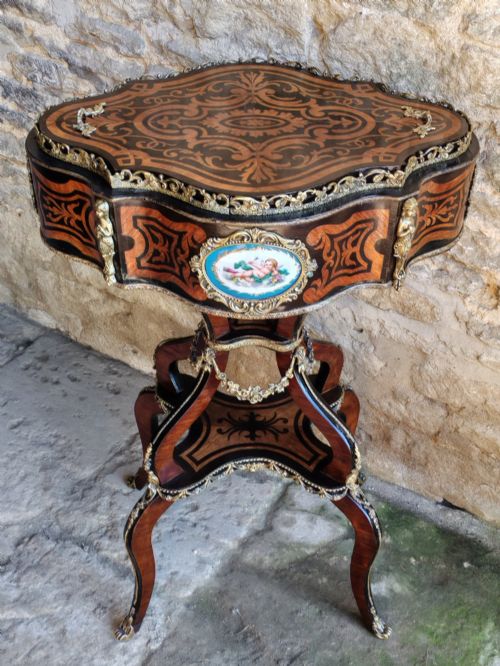
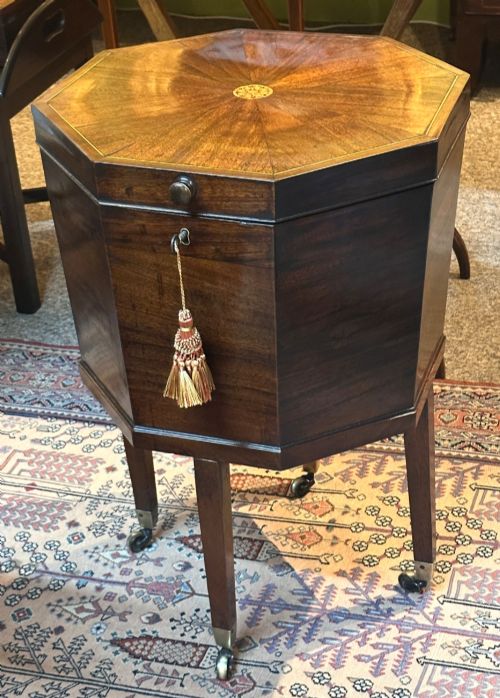
Inlaid Wine Table
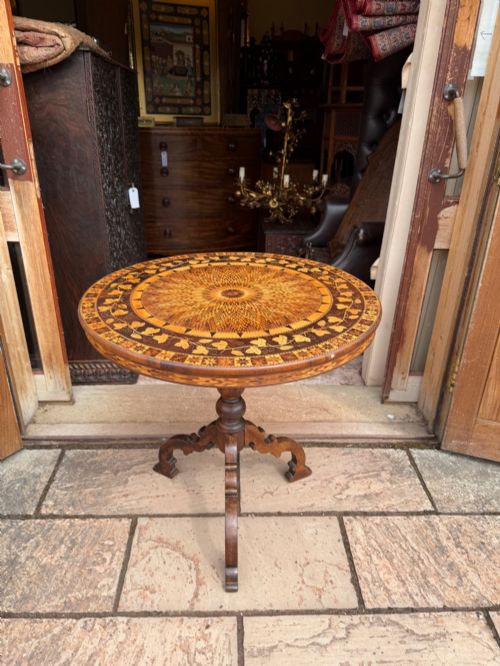
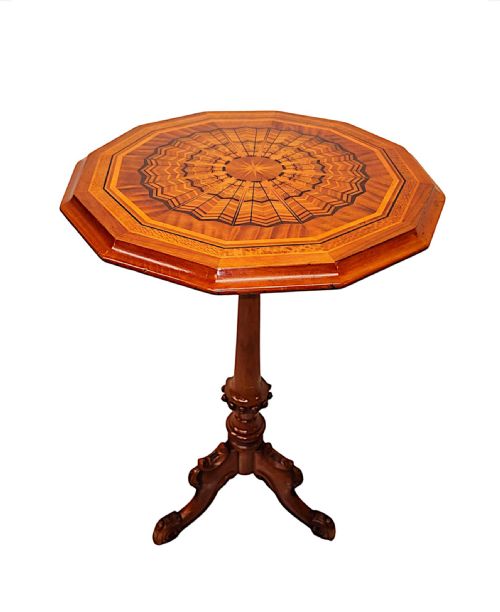
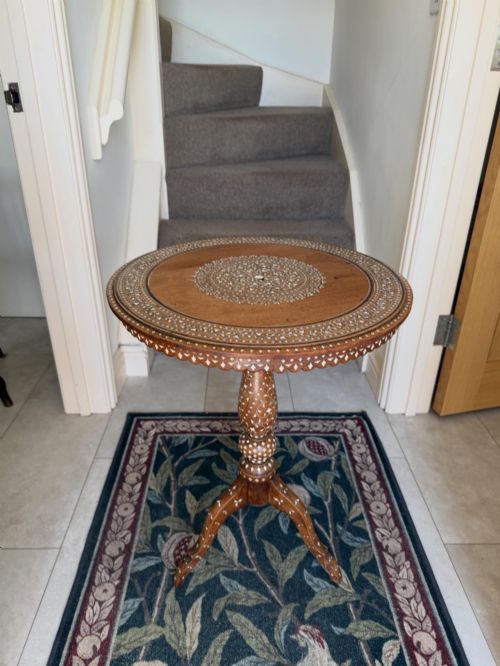
An inlaid wine table brings compact utility and refined surface detail to a room, offering a stable resting place for glasses while displaying fine timber work.
Identifying your inlaid wine table
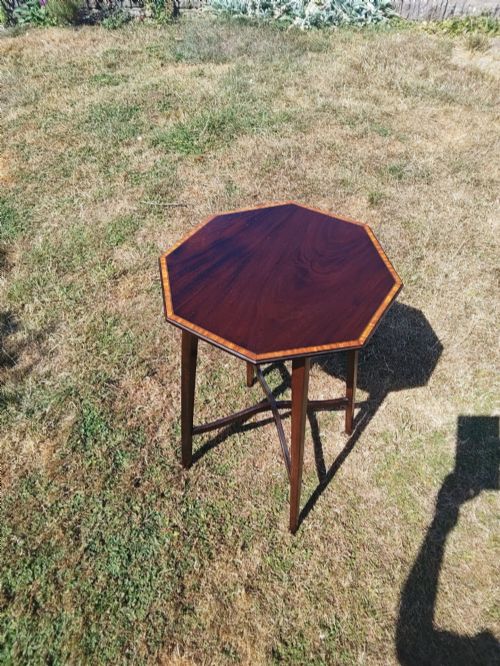
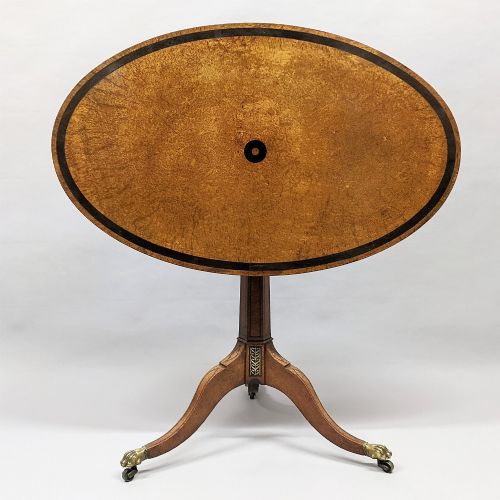
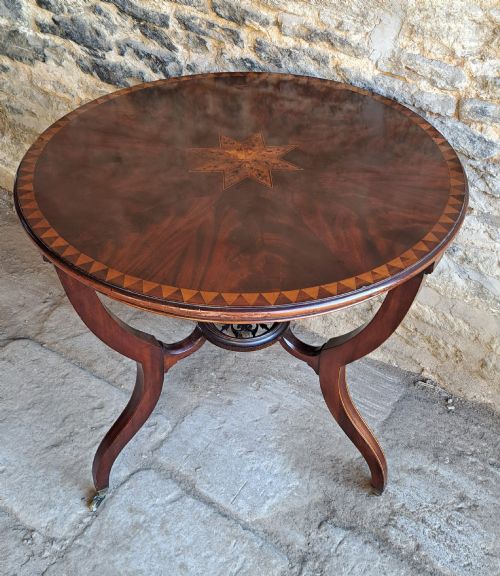
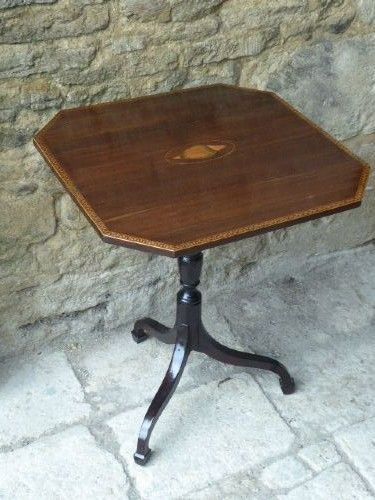
When searching for an inlaid wine table, buyers encounter a variety of nineteenth and early twentieth-century examples spanning the Victorian, Edwardian, and Regency periods.
The form typically manifests as a tripod table or pedestal base supporting a round, oval, or octagonal top, frequently utilised historically for holding glassware.
Mahogany and walnut dominate the surviving pieces, often enhanced by contrasting timbers such as satinwood, boxwood, and rosewood.
Construction and materials
Cabinet makers utilised solid timbers and veneers applied to a stable core, combining mahogany or walnut bases with intricate marquetry and line inlay.
Decorative surface patterns incorporate satinwood and boxwood inlay, whilst structural elements like tripod legs occasionally receive delicate contrasting stringing.
Retail Price Guide 2026
Typical UK retail prices for inlaid wine table, calculated from the Sellingantiques database of over a million retail prices indexed since 2003. This retail price guide relies exclusively on Sellingantiques data; no external sources or auction records are used, so the figures do not describe the wider market.
Listings demonstrate a strong prevalence of Edwardian mahogany and Victorian walnut examples, frequently featuring satinwood or boxwood inlay.
Assessing quality and craftsmanship
Quality reveals itself in the precision of the marquetry and the crispness of the boxwood or satinwood inlay, where tighter junctions distinguish superior workshop output.
The choice of timber grain, such as burr walnut or figured mahogany, together with the stability of the central pedestal and tripod base, determines the lasting merit of the piece.
The Inlaid Wine Table Glossary
- Marquetry
- Decorative veneer work arranged in pictorial or geometric patterns on the table surface. Craftsmen cut different coloured woods to fit precisely together before gluing.
- Tripod table
- A small freestanding table supported by three legs radiating from a central pillar. This configuration ensures stability on uneven floors.
- Tilt top
- A hinged mechanism allowing the table top to pivot into a vertical position for storage against a wall. Many nineteenth-century examples incorporate this practical feature.
- Stringing
- A narrow strip of contrasting wood inlaid into a channel on the surface or legs. It creates a fine border that outlines the shape of the table top.
Frequently Asked Questions
What were inlaid wine tables used for?
These pieces served primarily to hold bottles and glasses during evening gatherings in reception rooms. Their compact proportions allowed servants to move them easily around seated company.
Over time, owners also utilised them as lamp stands or decorative occasional surfaces. Today, they function well beside armchairs or in smaller corners.
How do I date an inlaid wine table?
Dating relies on examining the timber selection, secondary woods, and the style of the inlay work. Regency and Georgian examples generally feature simpler linear stringing and heavier pedestals.
Victorian and Edwardian versions often display more complex marquetry, lighter mahogany or walnut frames, and occasionally satinwood highlights.
Are these tables stable enough for daily use?
Most tripod designs offer dependable support for everyday items like books or cups when placed on level flooring. The three-legged construction naturally prevents rocking on uneven surfaces.
Care should be taken not to overload the edges of tilt-top variants where the hinge mechanism bears the weight.
What is the difference between veneer and solid wood?
Solid wood utilises a single timber throughout the structural component, whereas veneer applies a thin slice of figured wood over a stable secondary base. Marquetry is almost exclusively executed using veneers to combine diverse timbers without warping.
High-grade nineteenth-century pieces frequently employed burr walnut or mahogany veneers to display rich grain patterns.