
Georgian Style Tripod Table
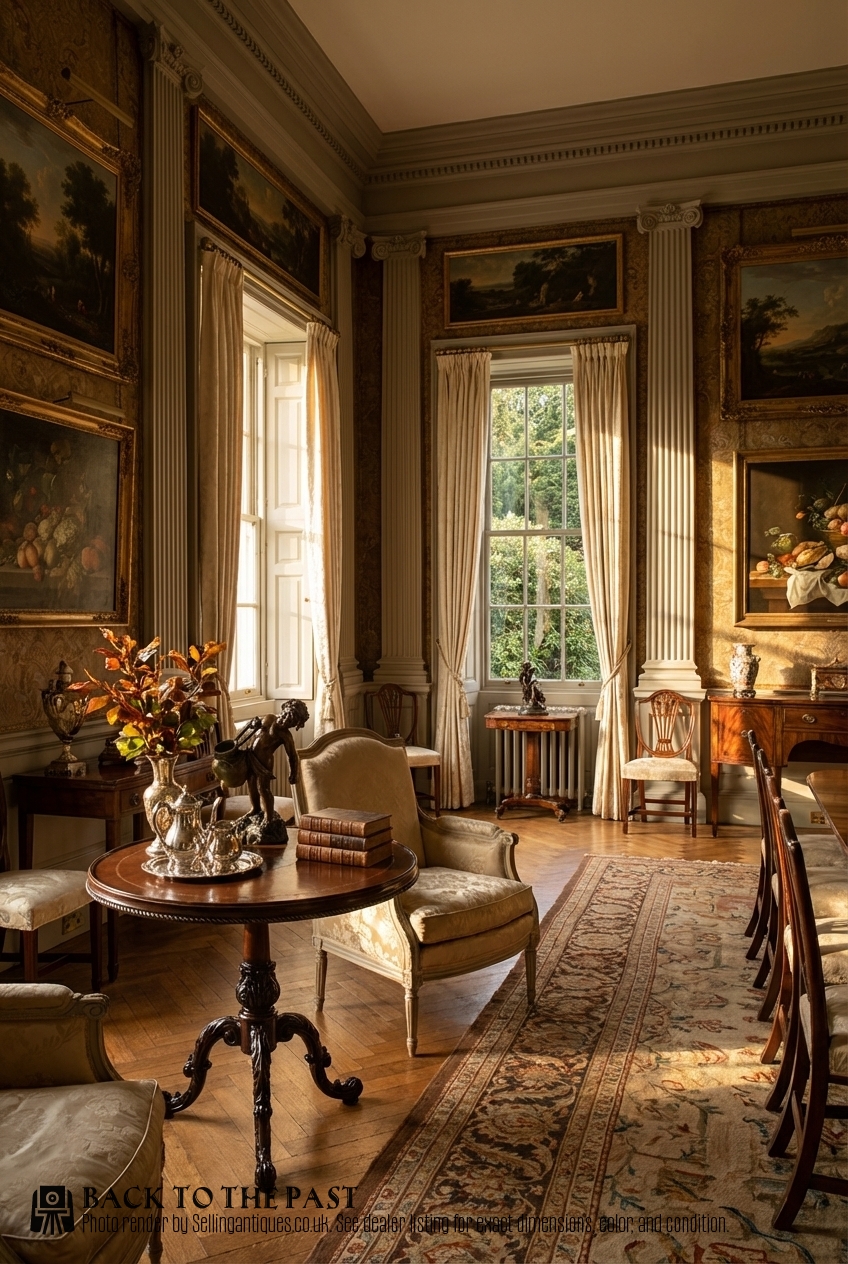
A georgian style tripod table brings versatile elegance to a room, offering a stable three-legged pedestal base paired with a circular or tilt-top surface.
Georgian Style Tripod Table
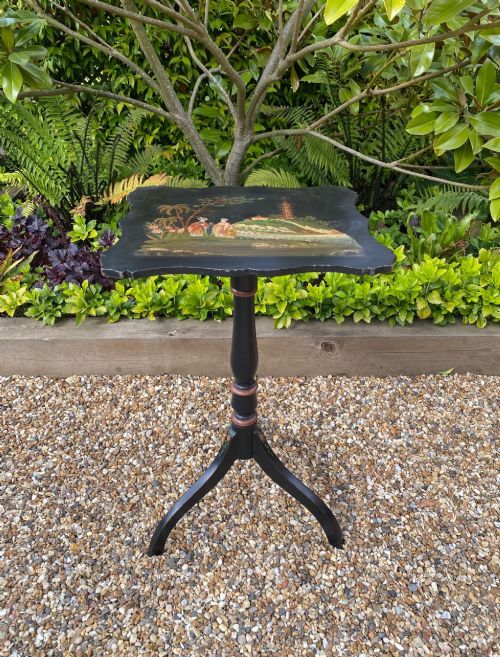
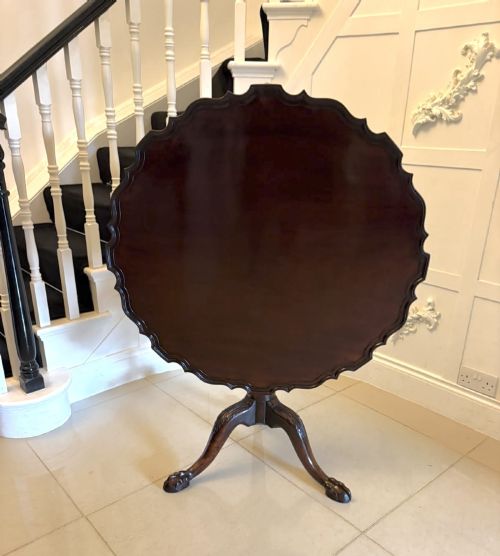
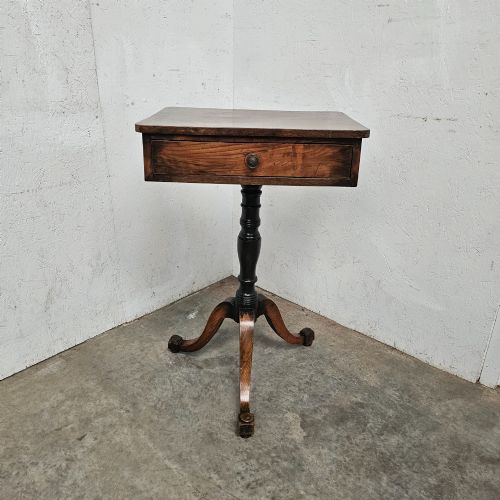
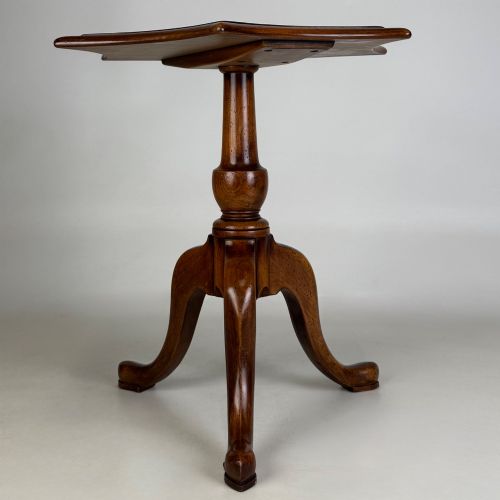
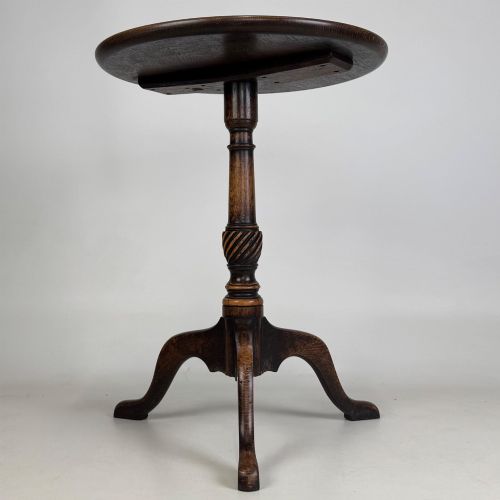
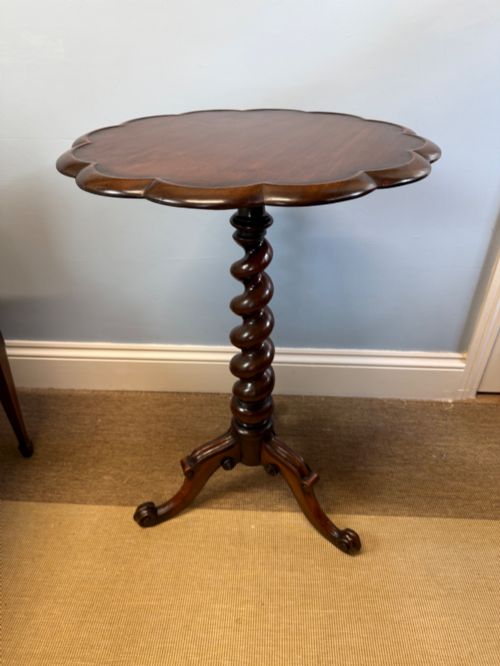
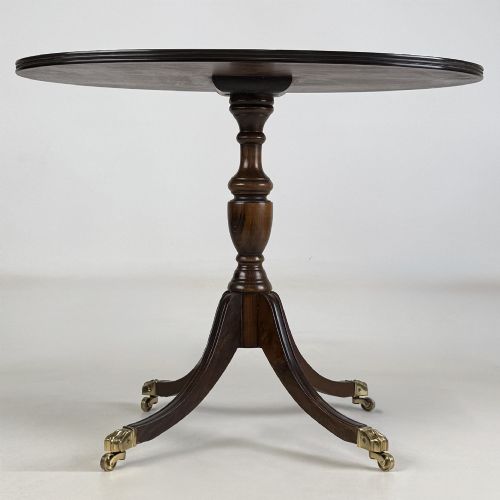
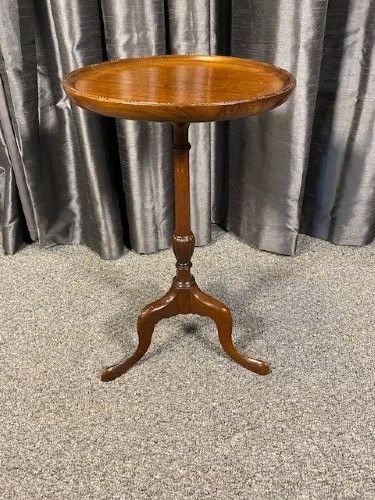
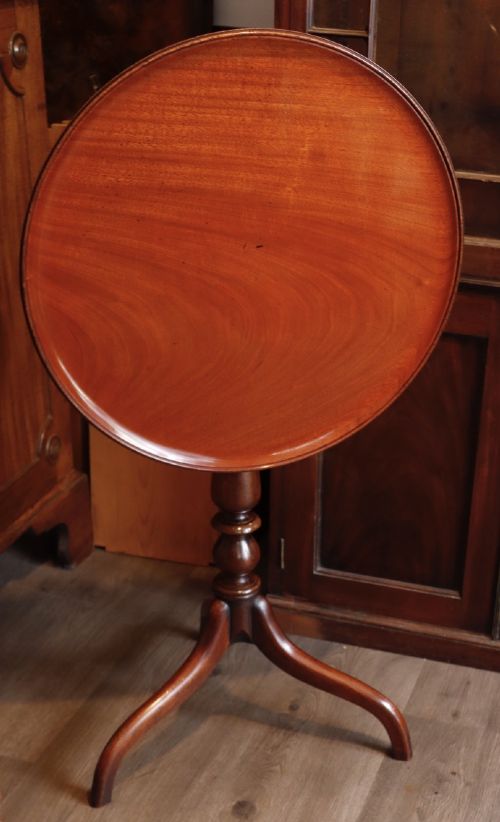
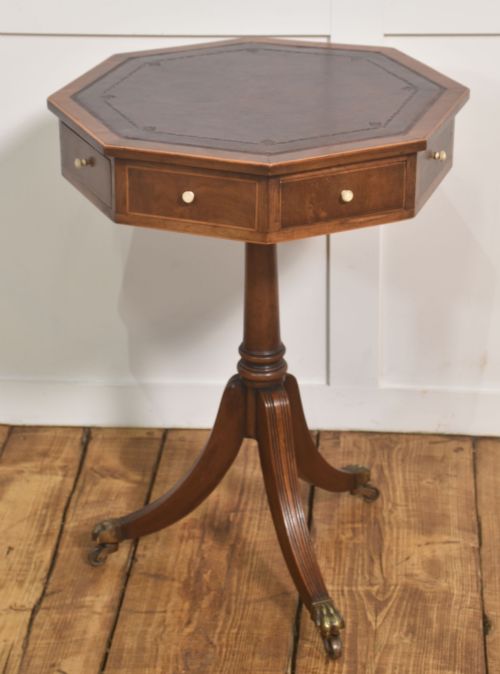
A georgian style tripod table stands on a central pillar supported by three splayed legs, designed originally for tea, wine, or occasional use in formal interiors. The forms seen here range from small wine tables and lamp stands to larger tilt-top dining centre pieces and tiered dumb waiters.
Most examples encountered on this page date from the nineteenth and early twentieth centuries, spanning periods from original eighteenth-century Georgian and George III production through Victorian and Edwardian revivals up to the 1930s. Mahogany is the predominant wood, accompanied by walnut, oak, and occasional elm or burr oak variations.
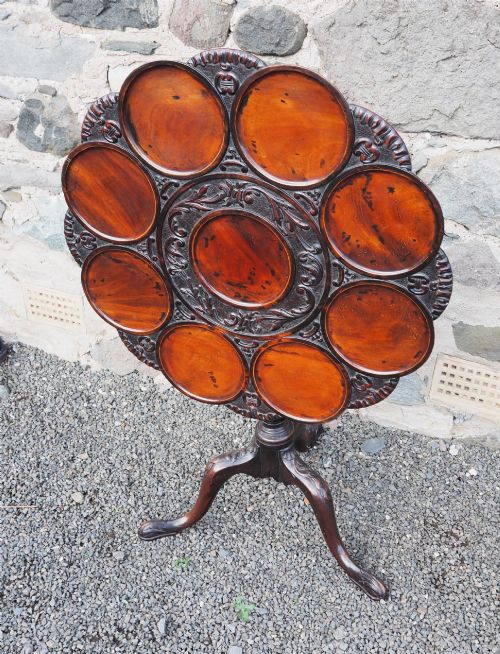
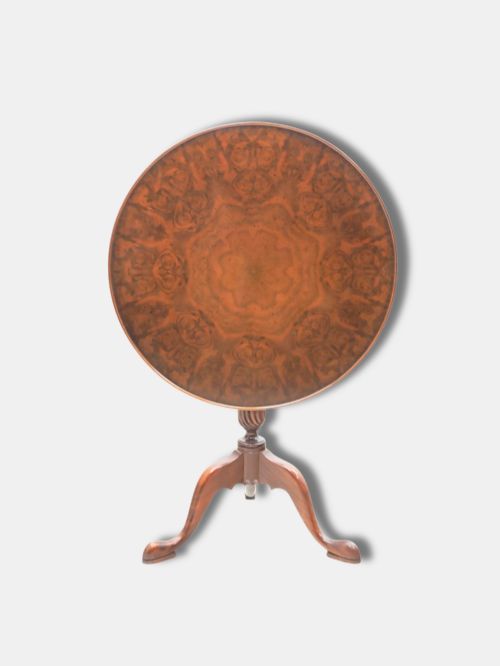
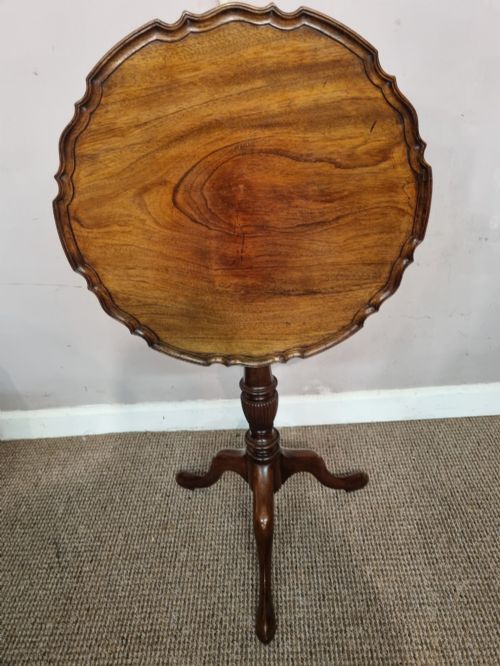
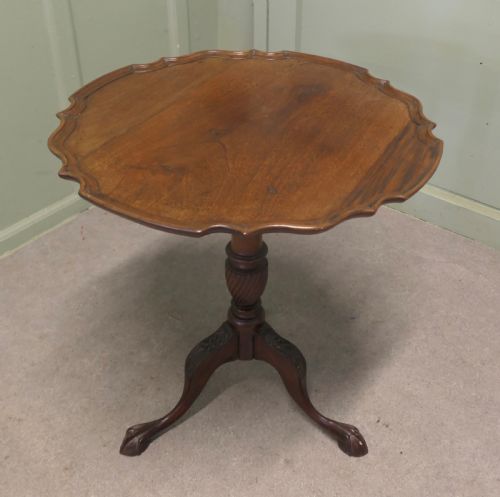
Buyers select these pieces for their compact footprints and adaptable surfaces, utilising them beside seating or as display points in sitting rooms and hallways. The selection encompasses plain circular tops, piecrust edges, dish tops, and intricate birdcage mechanisms that allow the surface to pivot and tilt.
How They Were Made
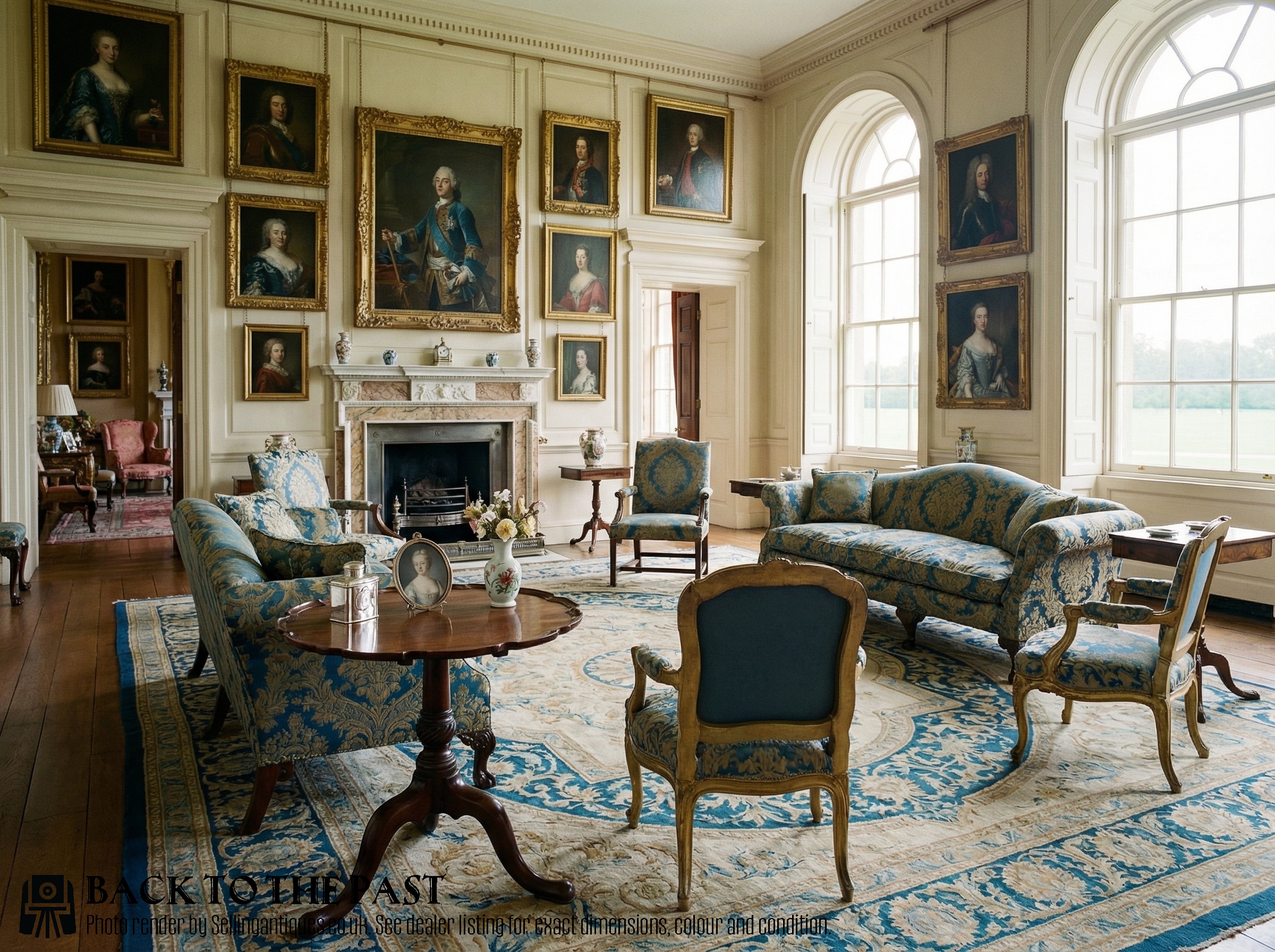
Cabinetmakers constructed these tables primarily in solid and veneered mahogany, alongside walnut and oak, often incorporating secondary woods like pine on base components. Tops were frequently turned from single boards or formed with raised piecrust and dish rims carved directly from the solid timber.
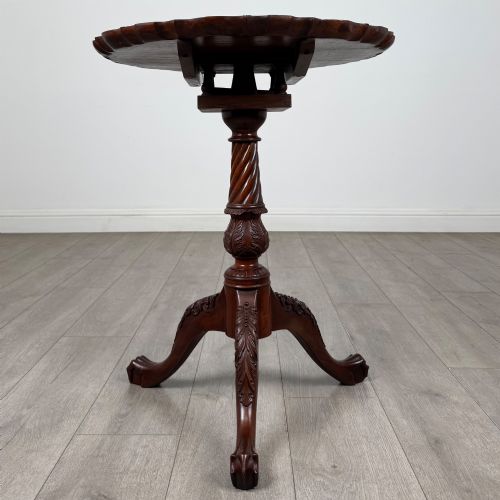
Mechanisms such as the birdcage allowed the tabletop to rotate and tilt vertically against the central pillar through a hinged block and catch system. The three-legged bases were joined to the turned pedestal using dovetail or tenon joints, terminating in pad, claw and ball, or plain pointed feet.
Georgian Style Tripod Table Retail Price Guide 2026
Typical asking prices for georgian style tripod table among the pieces listed under this phrase on Sellingantiques today, from the lower quarter to the upper quarter. They describe what is for sale here now, not the wider market.
Listings feature pieces spanning the eighteenth, nineteenth, and twentieth centuries, including George III, Victorian, Edwardian, and Regency revival periods.
What Varies in Quality
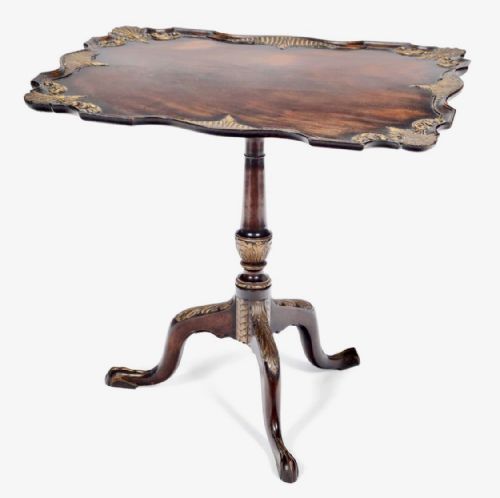
The sophistication of the carving on the knees, pillars, and claw feet separates standard production from finer cabinetwork, where crisp acanthus leaves and gadrooning appear. The precision of the birdcage mechanism and the fluidity of the tilt-top action indicate the care taken during initial construction.
Timber selection governs visual depth, with dense, finely figured mahogany or burr walnut marking the upper tiers of quality compared to plainer domestic woods. The integrity of the joints where the three legs meet the central column dictates the stability and balance of the standing structure.
The Georgian Style Tripod Table Glossary
- Birdcage
- A revolving wooden framework beneath the tabletop that allows the surface to tilt and turn independently of the pedestal column. This assembly uses small spindles housed between two parallel plates.
- Tilt-top
- A hinged tabletop construction enabling the surface to fold vertical when not in use, saving space in smaller rooms. Early versions utilise the birdcage mechanism for this movement.
- Piecrust edge
- A raised, scalloped tabletop border carved into undulating curves resembling pastry work. This decorative edge is typically found on finer eighteenth-century and revival dining or tea tables.
- Tripod base
- A support structure comprising three splayed legs radiating from a central turned pedestal. This design maintains stability on uneven floors.
- Dumb waiter
- A tiered stand featuring multiple revolving circular trays on a single central shaft. These pieces were used historically for serving food or holding tableware without servant assistance.
Georgian Style Tripod Table: Frequently Asked Questions
What is a georgian style tripod table used for?
These tables function primarily as occasional furniture for holding lamps, drinks, or books beside seating areas. Historical variants served specialised purposes such as tea pouring or wine service during formal gatherings.
Today, their compact proportions make them suitable as bedside stands, hallway accents, or display surfaces in restricted spaces. The tilt-top feature also allows them to sit flat against a wall as decorative elements.
How do I identify a tilt-top mechanism?
A tilt-top table incorporates a hinged block beneath the surface or a complex birdcage assembly connecting the tabletop to the central column. Lifting a small wooden catch releases the top so it can pivot upright.
This functional adaptation allowed eighteenth-century households to store tables against room perimeters when floor space was required for other activities. The pivot point typically uses brass or wooden pins.
Are these tables eighteenth century or later?
While the design originates in the Georgian period of the eighteenth century, many examples found today date from nineteenth-century Victorian or early twentieth-century revival periods. Cabinetmakers continued reproducing these popular forms through the Edwardian era and up to the 1930s.
Distinguishing between eras relies on examining timber patination, construction marks, and tool use beneath the top and around the leg joints. Revival pieces often display machine-cut elements or different secondary woods compared to their eighteenth-century predecessors.
What is a birdcage action?
The birdcage is a rotating box-like wooden frame fitted between the underside of the table and the top of the pedestal. It permits the surface to spin horizontally while simultaneously allowing it to tilt vertically.
This mechanism represents a hallmark of finer Georgian and revival tables, requiring precise joinery to ensure smooth movement without excessive wobble. Miniature turned columns form the corners of the cage structure.