
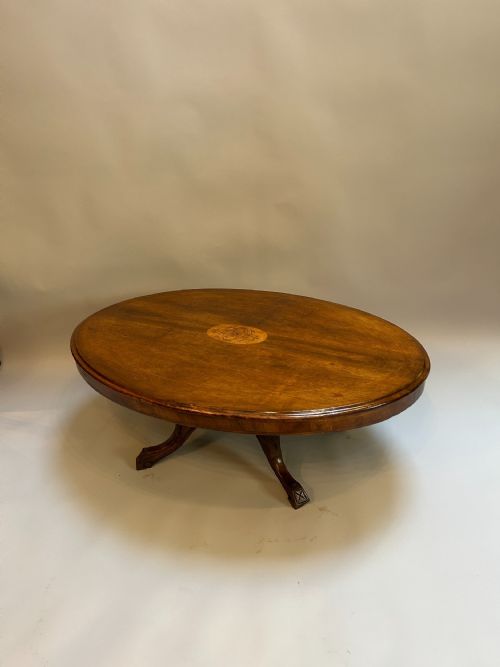


Marquetry Tripod Table
A marquetry tripod table brings patterned wood surfaces and single central pillars into rooms as functional display and occasional furniture.
Marquetry Tripod Table
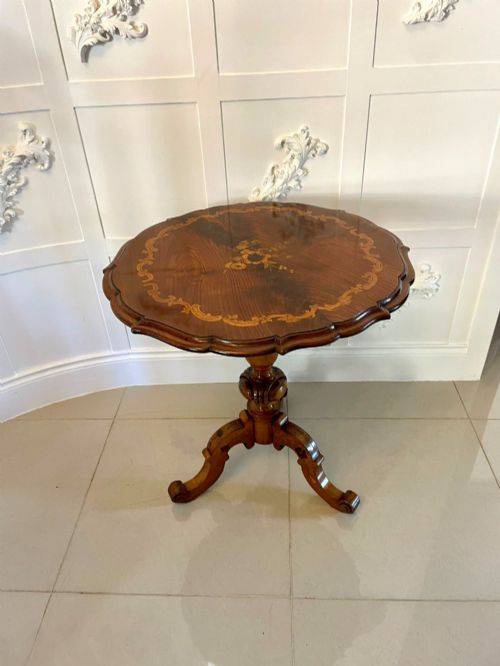
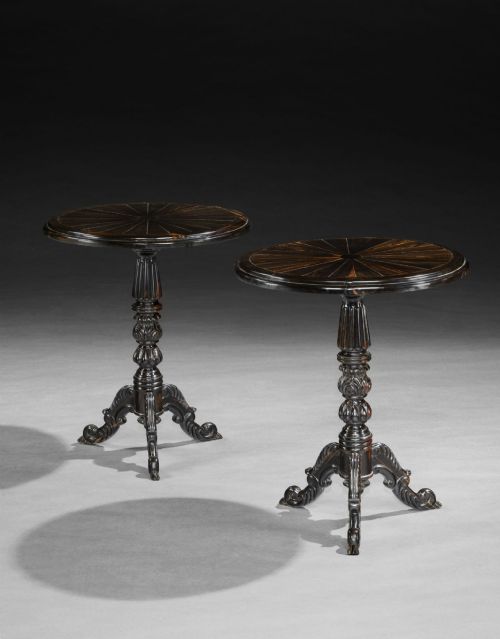
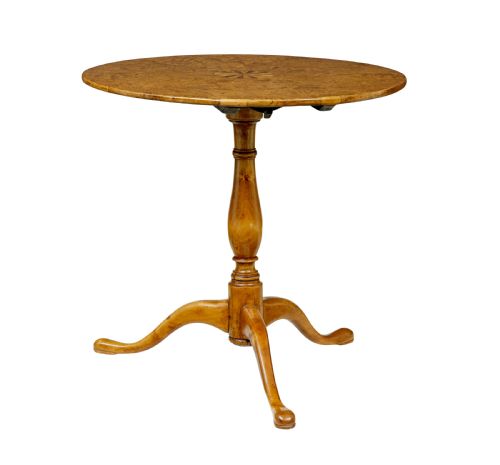
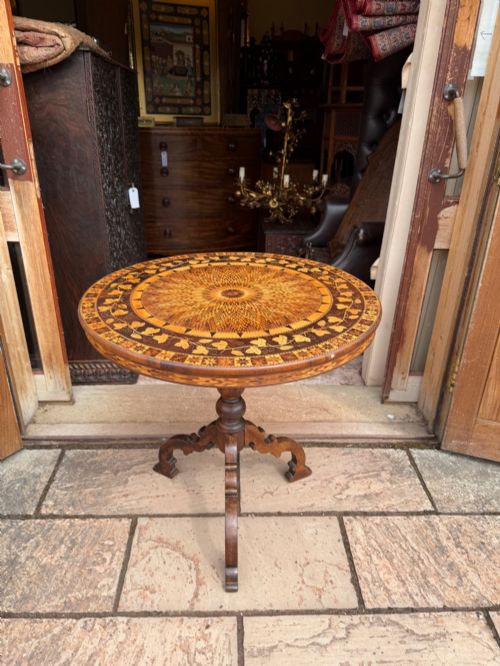
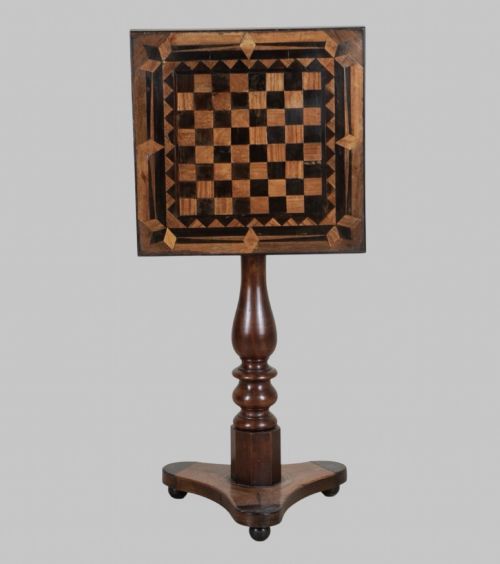
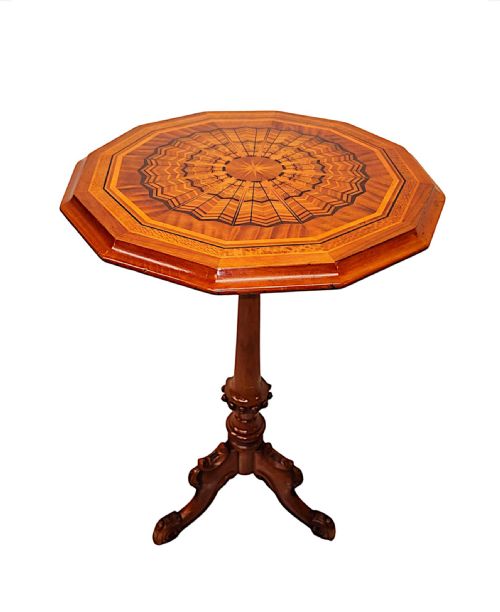
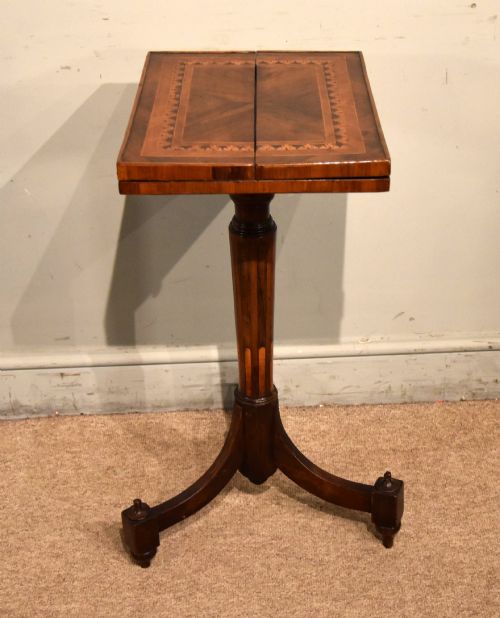
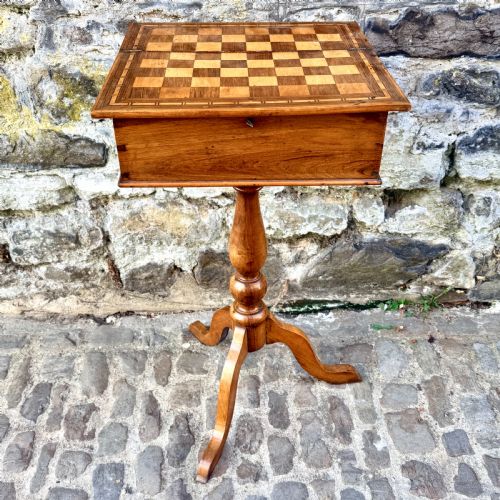
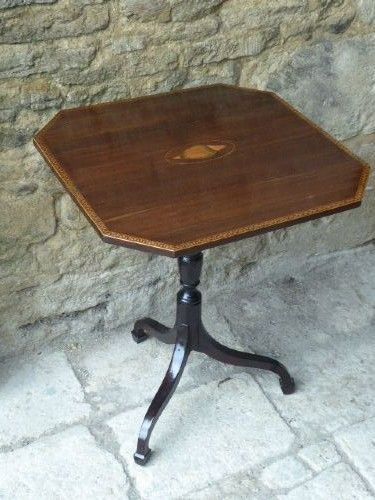
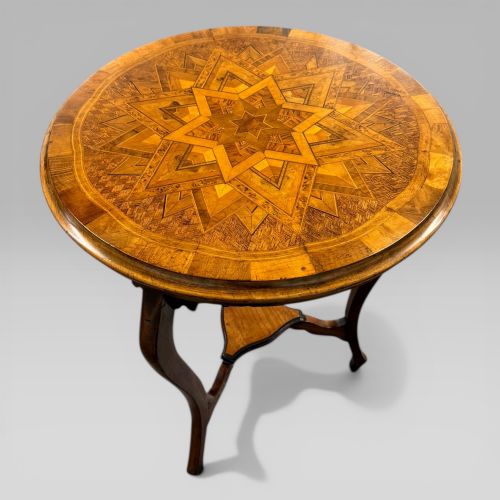
A marquetry tripod table is a small stand supported by three legs beneath a central pedestal, carrying an inlaid wooden top. These pieces appear frequently in Victorian, Georgian, and nineteenth-century variations, taking the form of occasional, wine, and games tables.
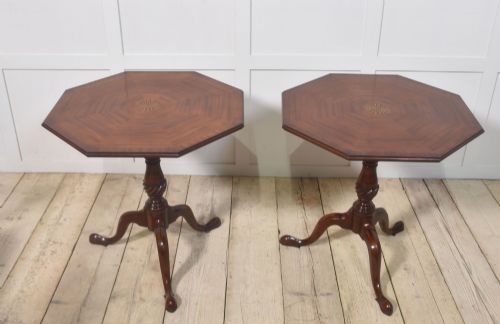
Makers produced these stands in round, oval, hexagonal, and tilt-top formats designed for flexible placement beside seating or in hallways. Walnut, rosewood, and mahogany provide the primary timber foundations for the patterned surfaces.
Geographic origins span domestic British workshops to continental centres like Sorrento and Sweden, alongside colonial pieces from New Zealand and Ceylon. The selection ranges from simple candle stands to exhibition pieces with complex wood inlay.
How They Were Made
Craftsmen built these tables using solid timber frames for the tripod bases and pillars, applying fine wood veneers to the table tops. Marquetry and parquetry patterns utilised contrasting timbers such as satinwood, boxwood, fruitwood, and olive wood set into darker carcases of walnut, rosewood, or mahogany.
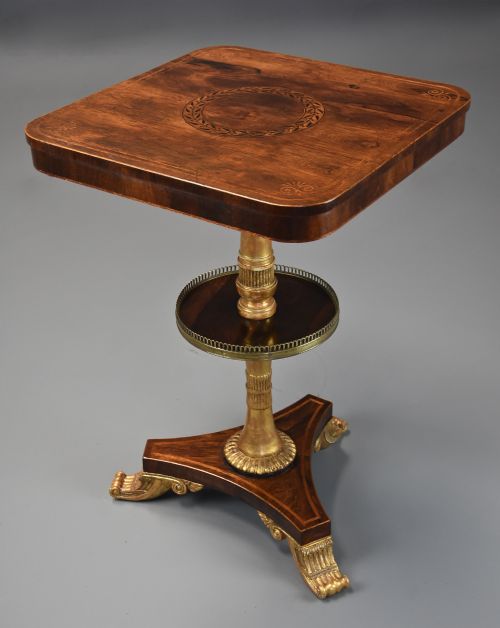
Specialised sawing techniques created thin veneer sheets for intricate floral, geometric, and pictorial designs. Metal mounts in brass or ormolu occasionally reinforced the structure or decorated the edges and bases.
Marquetry Tripod Table Retail Price Guide 2026
Typical asking prices for marquetry tripod table among the pieces listed under this phrase on Sellingantiques today, from the lower quarter to the upper quarter. They describe what is for sale here now, not the wider market.
Some nineteenth-century travellers brought home New Zealand specimen tables made from native timbers, turning local botany into parlor conversation pieces.
What Varies in Quality
The timber selection for the underlying structure and the turning of the central pedestal columns also reflect the maker's skill. Tables with sophisticated mechanisms, such as tipping tops or fitted games interiors, demonstrate higher manufacturing ambition.
Gillows·Anton Seuffert·George Bullock
The Marquetry Tripod Table Glossary
- Marquetry
- Decorative veneer work forming pictures or patterns by fitting together small pieces of wood, shell, or ivory. This technique defines the patterned surfaces seen on the top of these tables.
- Tripod base
- A furniture support consisting of three legs radiating from a central pillar. This design allows the table to stand stable on uneven floors.
- Tilt top
- A hinged table top that rotates to a vertical position when not in use. This mechanism saved space in nineteenth-century rooms.
- Specimen wood
- Timbers chosen for their specific natural colour, grain, or rarity rather than general structural utility. Makers arranged these pieces to display diverse botanical origins.
- Parquetry
- Geometric mosaic woodwork used for flooring or furniture decoration. It differs from marquetry by using strictly geometric tiles rather than pictorial motifs.
Marquetry Tripod Table: Frequently Asked Questions
What were marquetry tripod tables used for?
These tables served multiple domestic functions in period interiors, acting as moveable stands for lamps, tea service, or wine decanters. Many incorporated specialised surfaces for chess, cards, or needlework.
Their lightweight construction allowed servants or residents to reposition them easily around reception rooms as social needs shifted throughout the day.
How do I identify a Victorian tripod table?
Victorian examples frequently employ burr walnut or rosewood with dense, dark grain patterns paired with heavy central pillars. The floral inlay on these pieces often feels richer and more exuberant than earlier Georgian work.
Turned tripod legs on Victorian tables frequently terminate in scrolled feet or plain pad bases, sometimes accompanied by tilt-top mechanisms.
Where were Sorrento tables made?
Sorrento tables originated in the coastal town of Sorrento in southern Italy, renowned for its local wood-carving and marquetry tradition. Workshops there specialised in pictorial inlay depicting local scenes, musical instruments, and floral arrangements.
These Italian pieces reached British buyers through nineteenth-century trade and Grand Tour travel, prized for their bright olive and satinwood veneers.
How should I care for a veneer top?
Keep these tables away from direct sunlight and heat sources to prevent the underlying wood from shrinking and the historic veneer from lifting. Maintain a stable room temperature and humidity level.
Dust the marquetry gently with a dry, soft cloth and avoid applying modern liquid polishes that can seep into the fine joints of the inlay.