55,334  PAGES BROWSED TODAY PAGES TODAY • 214 ANTIQUES UPLOADED TODAYNEW ARRIVALS
GIFTS
214 ITEMS ADDED TODAY
Sort Order
Items Per Page
Browse Categories
Sort order
Relevant Links
Items per page
ID #SA1243675
FOR SALE
£1,375
Email Phone
Save
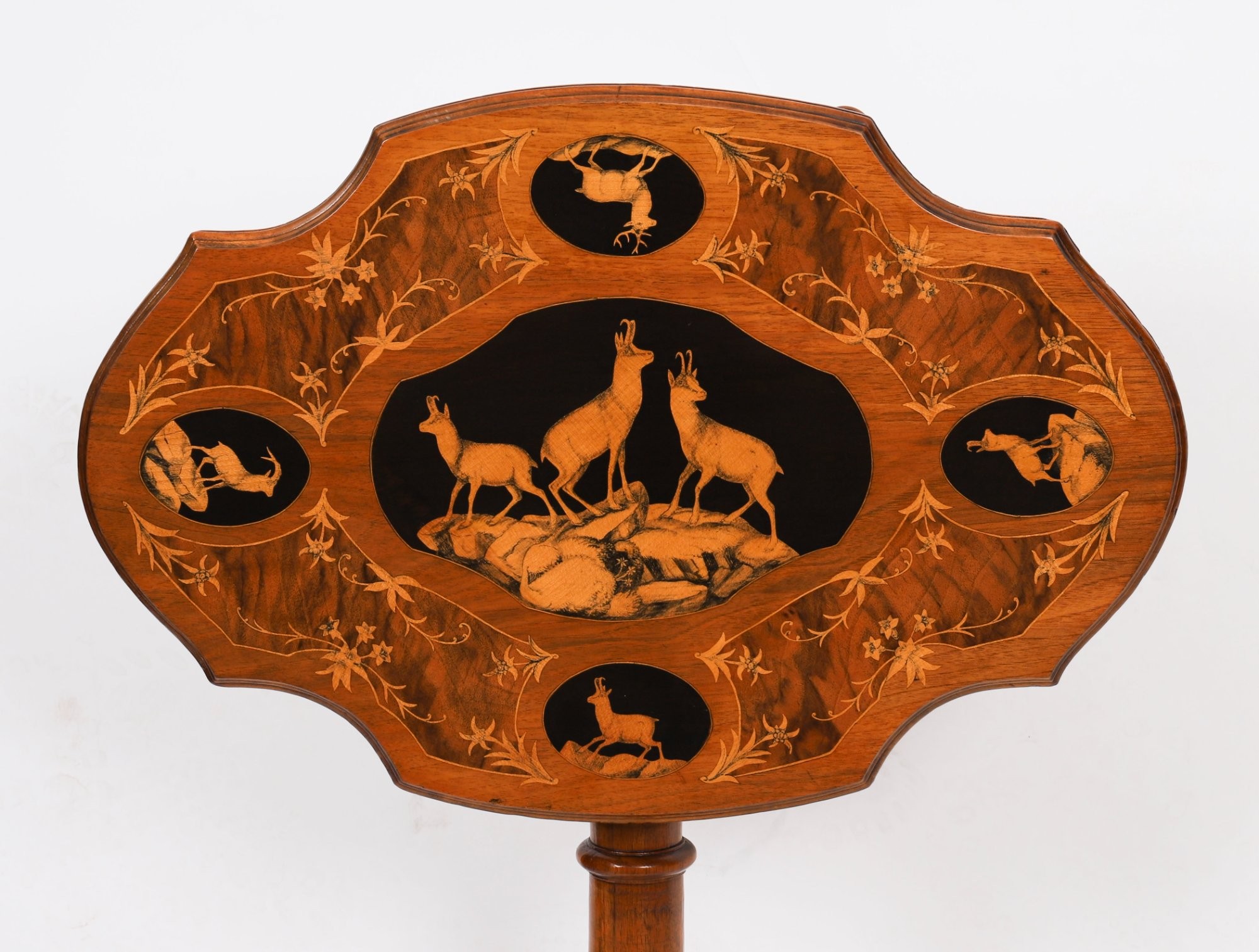
Antique Swiss Walnut Marquetry Occasional Table 19th C
For sale by Regent Antiques
for sale €1,609     $1,746
£1,375
Regent Antiques

Regent Antiques

Sellingantiques Verified Since Sep 2016
Browse dealers 653 items
  • About Us
    We specialise in english and continental furniture, silver, porcelain and decorative items.
  • Trade Associations
    Regent Antiques is a registered member of LAPADA  CINOA
↓ Relevant Links
Id #SA1243675
PDF SHARE
SAVE

Antique Swiss Walnut Marquetry Occasional Table 19th C

19th century
For Sale by Regent Antiques
Description

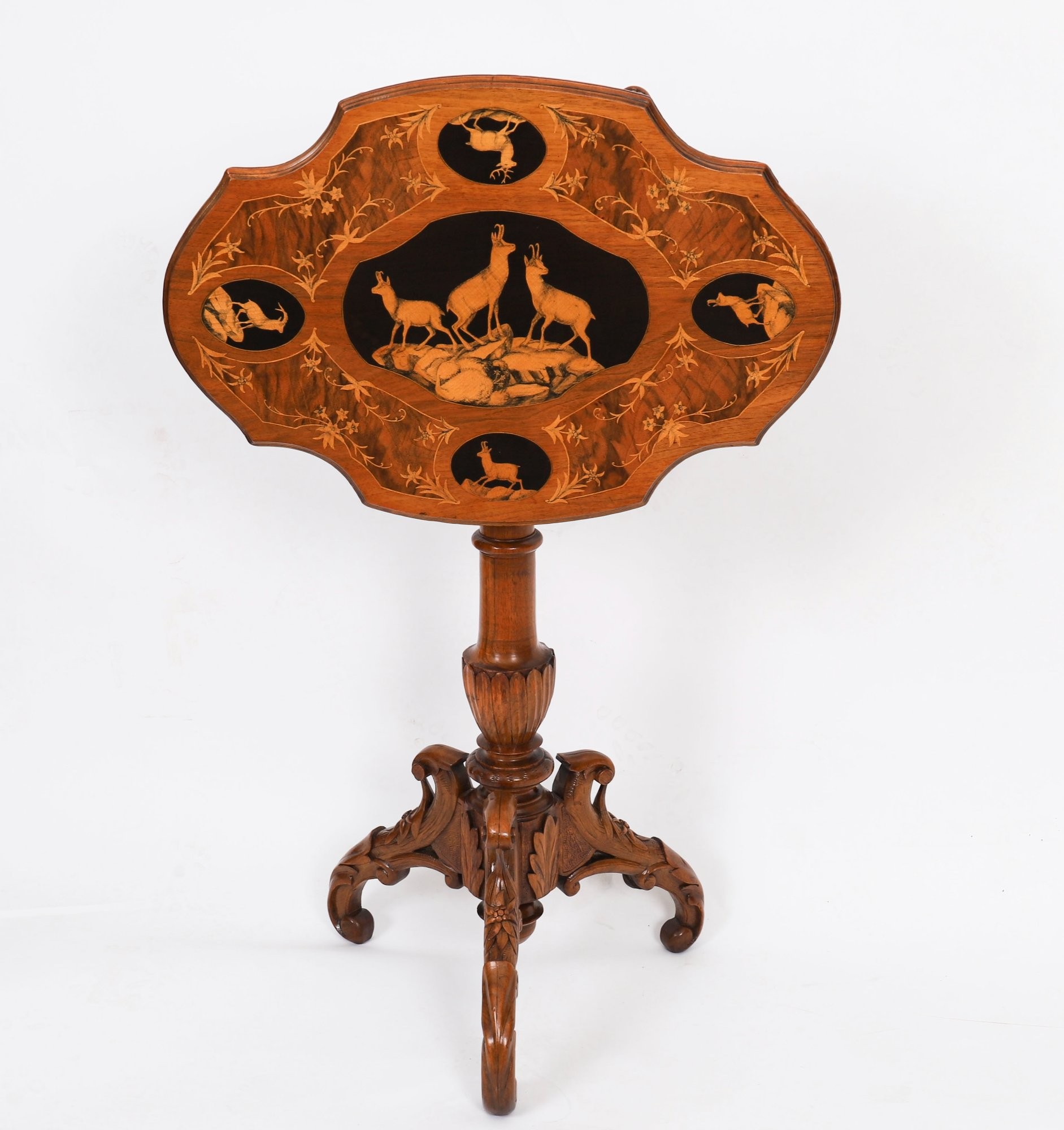
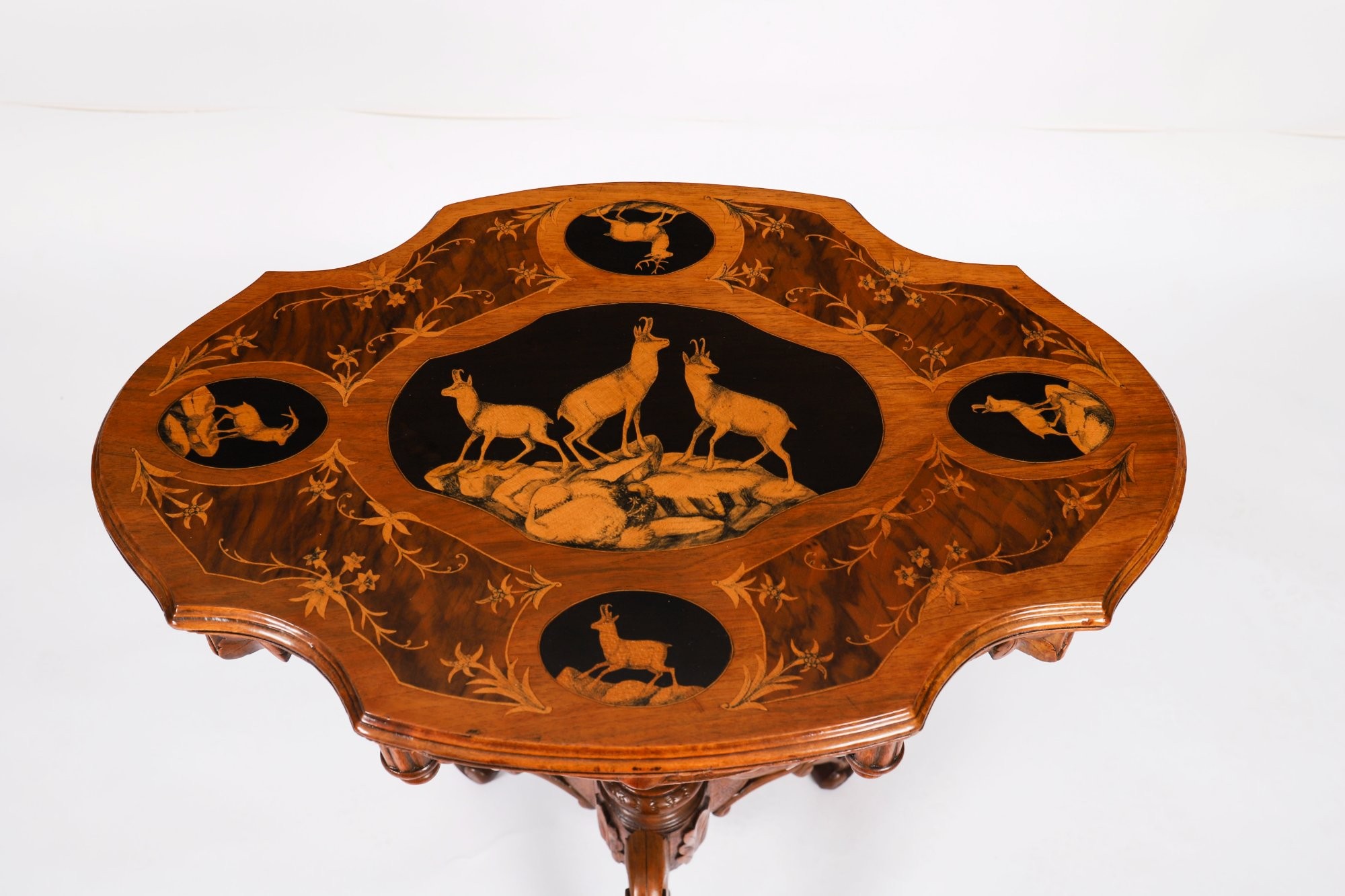
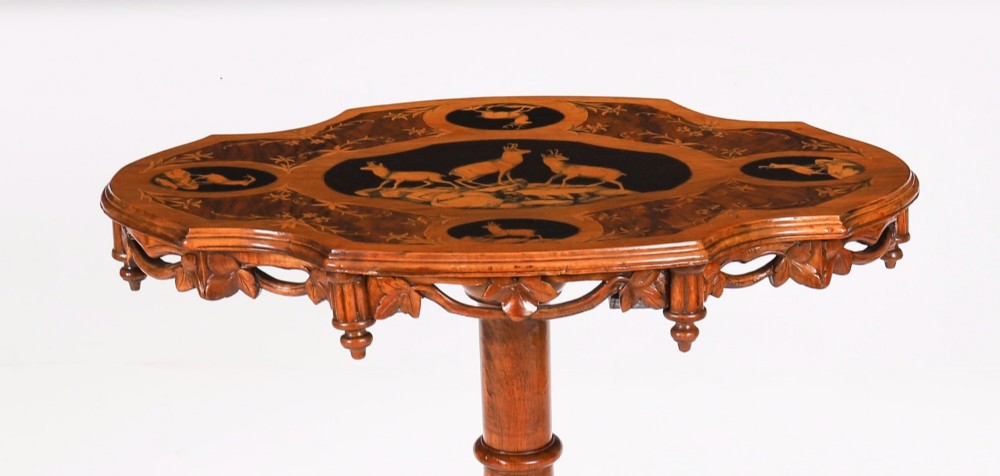
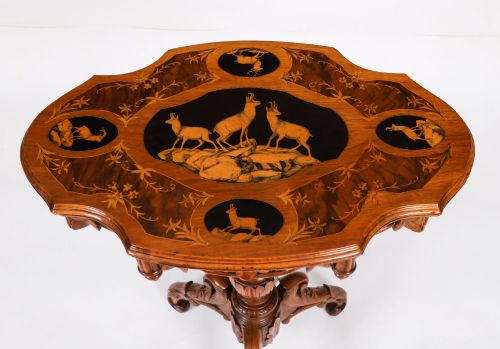
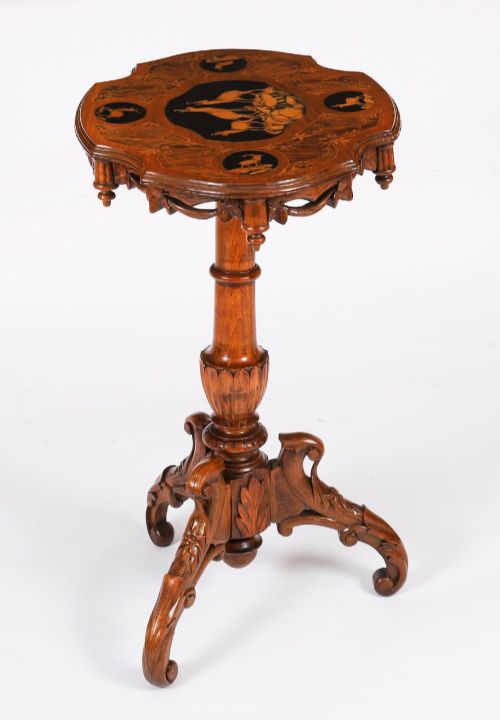
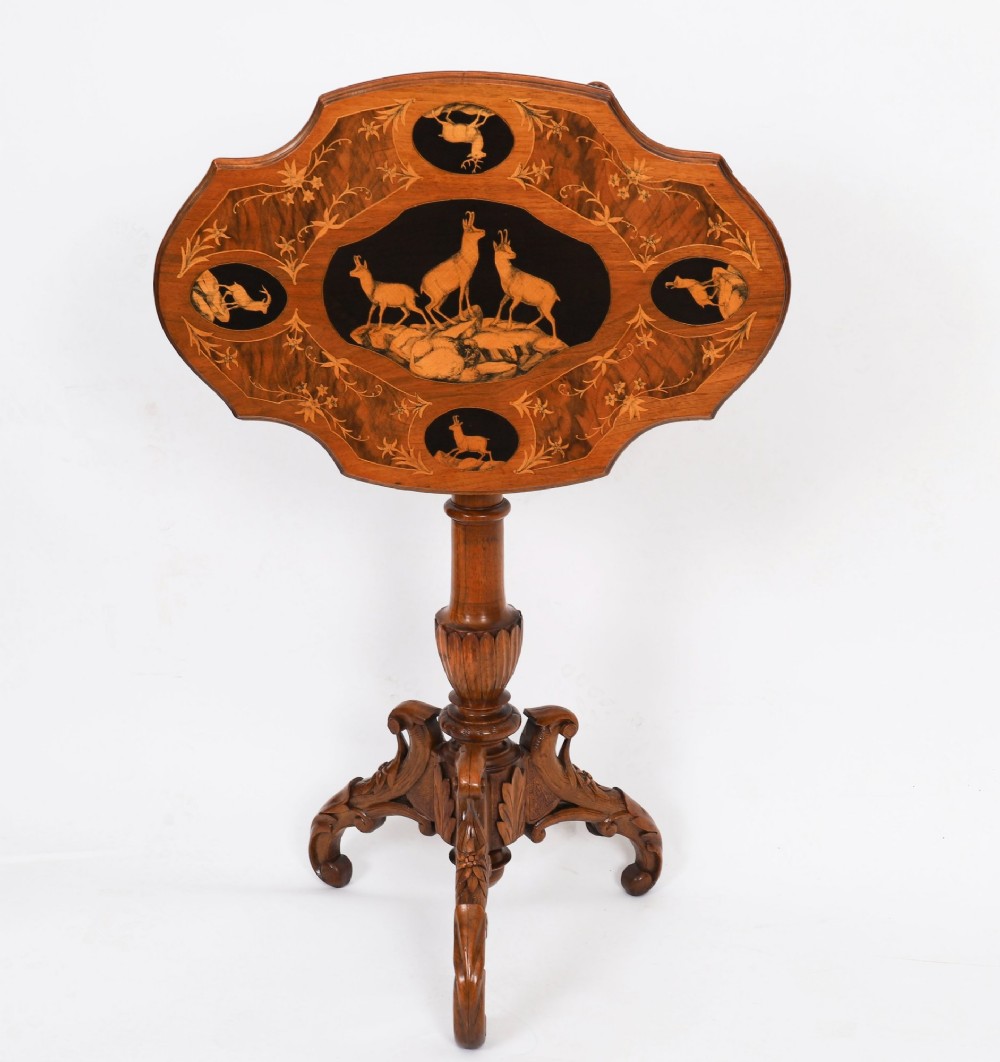
This is a superb antique Swiss Black Forest carved walnut and marquetry inlaid centre table, circa 1870 in date.

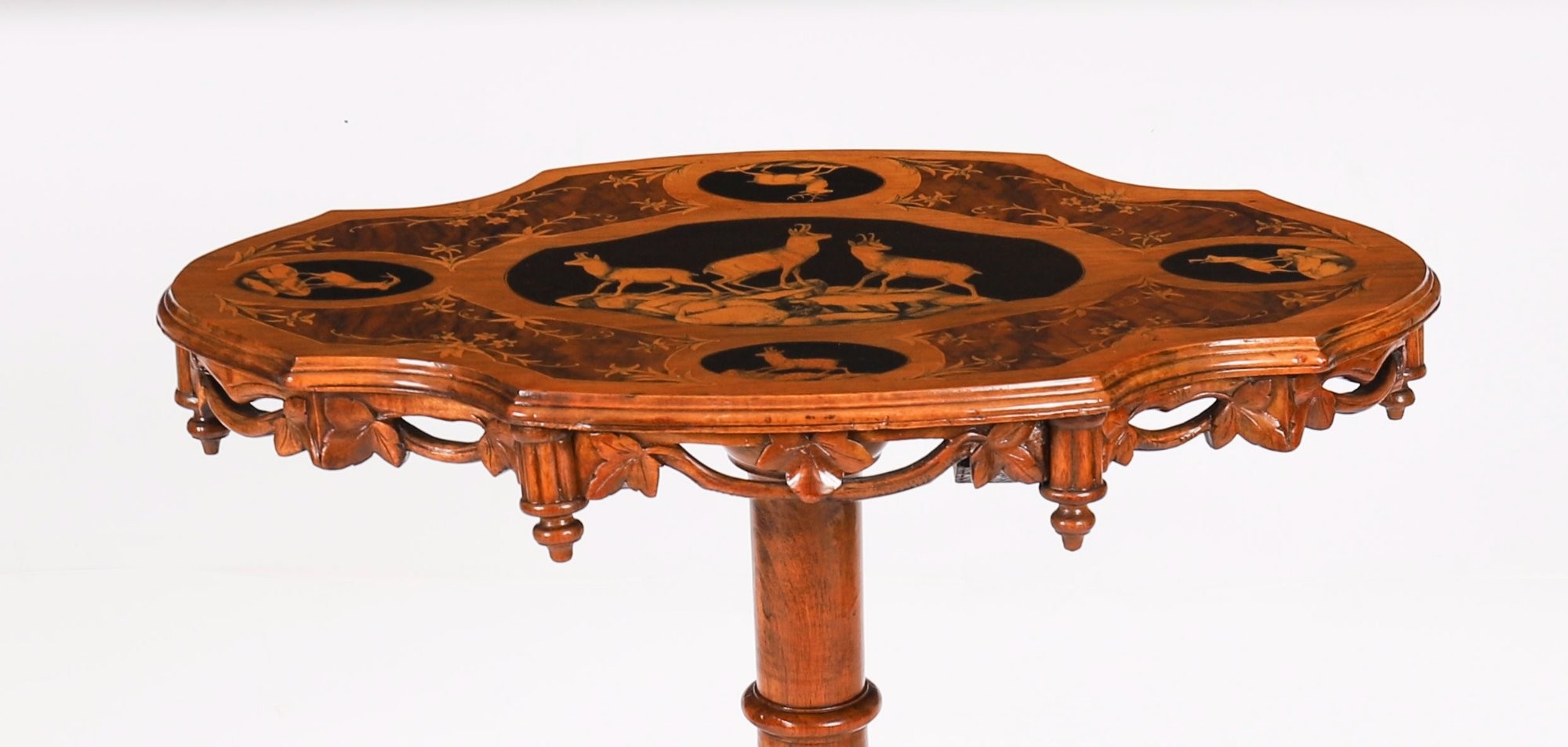
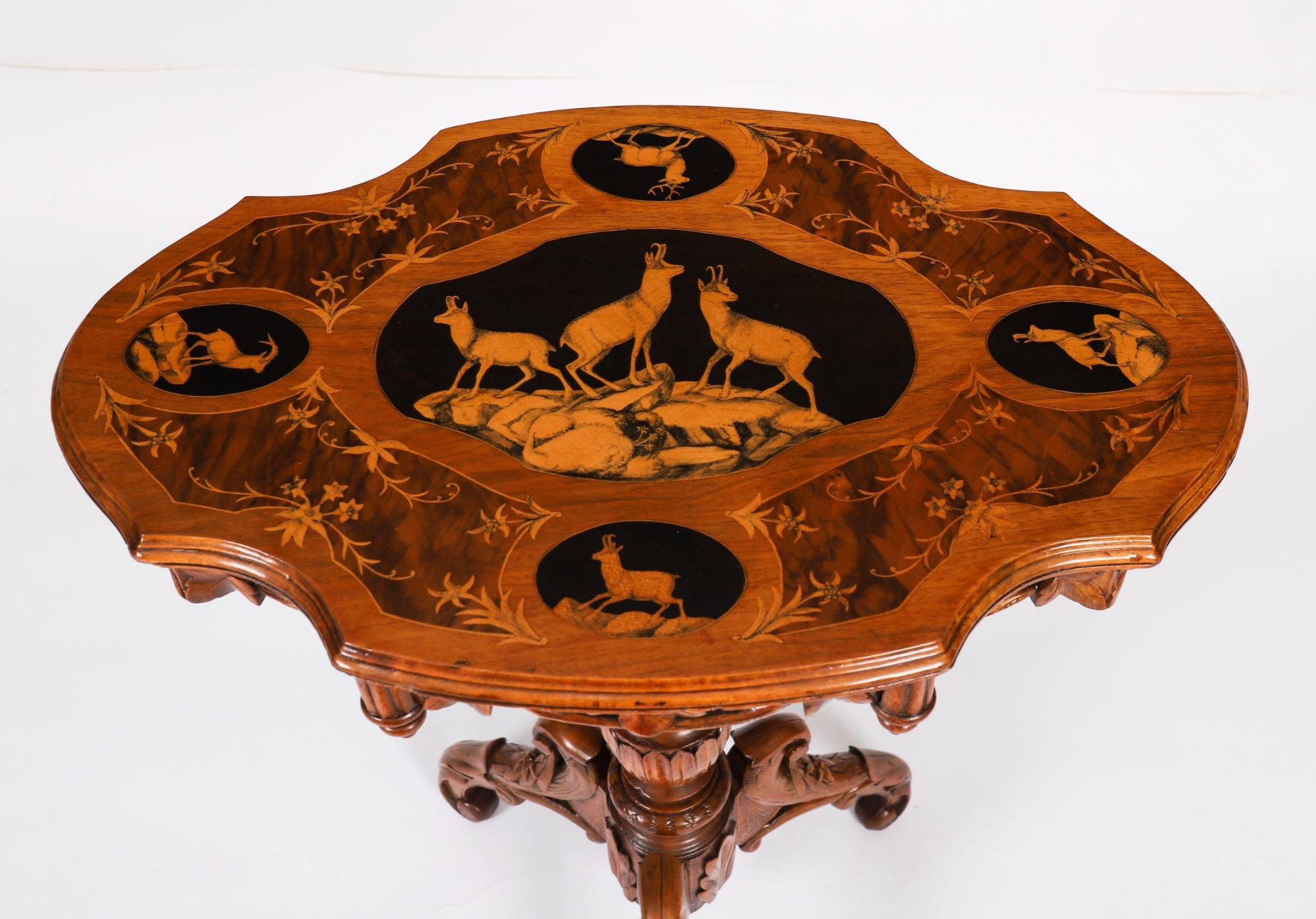
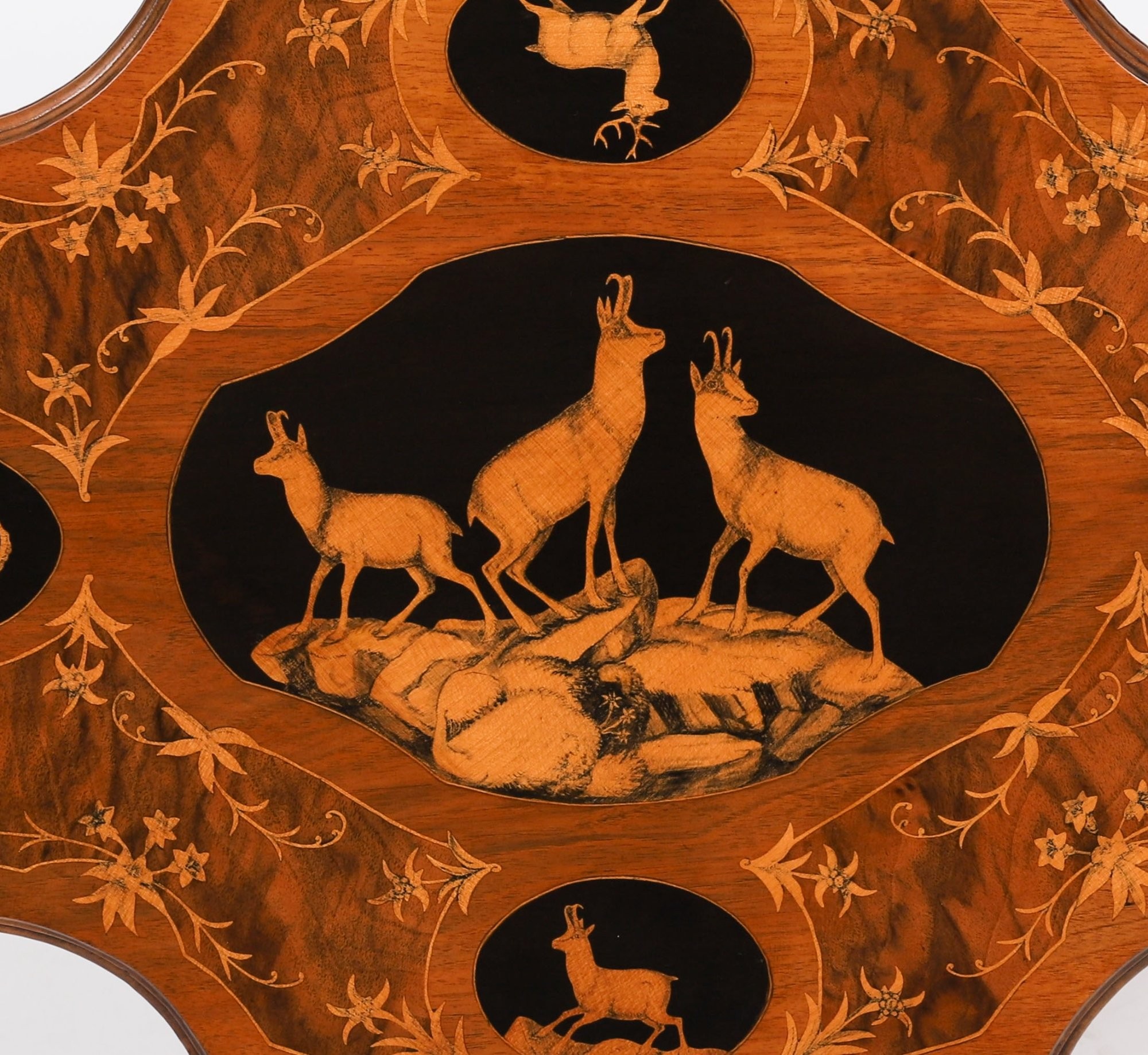
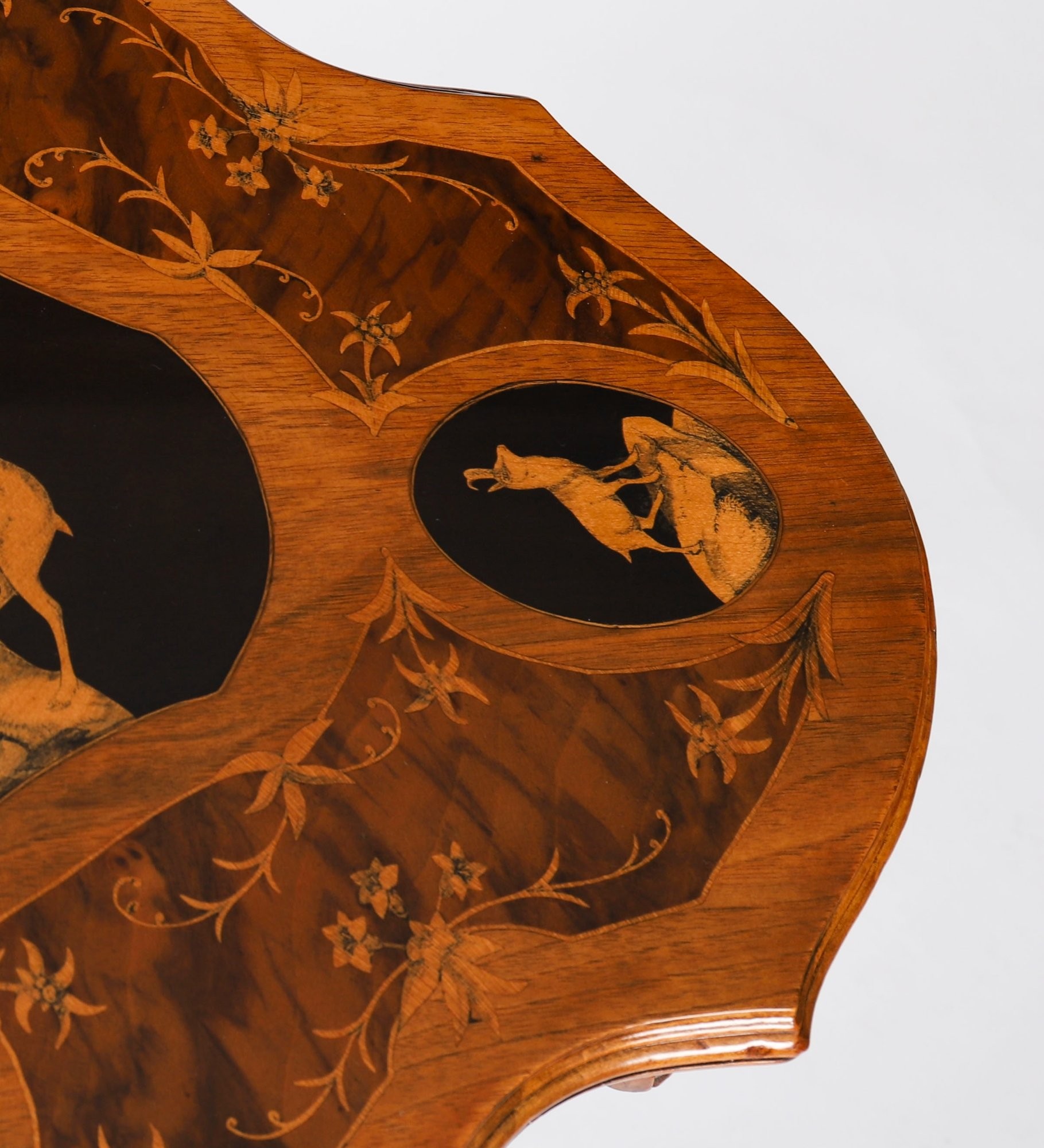
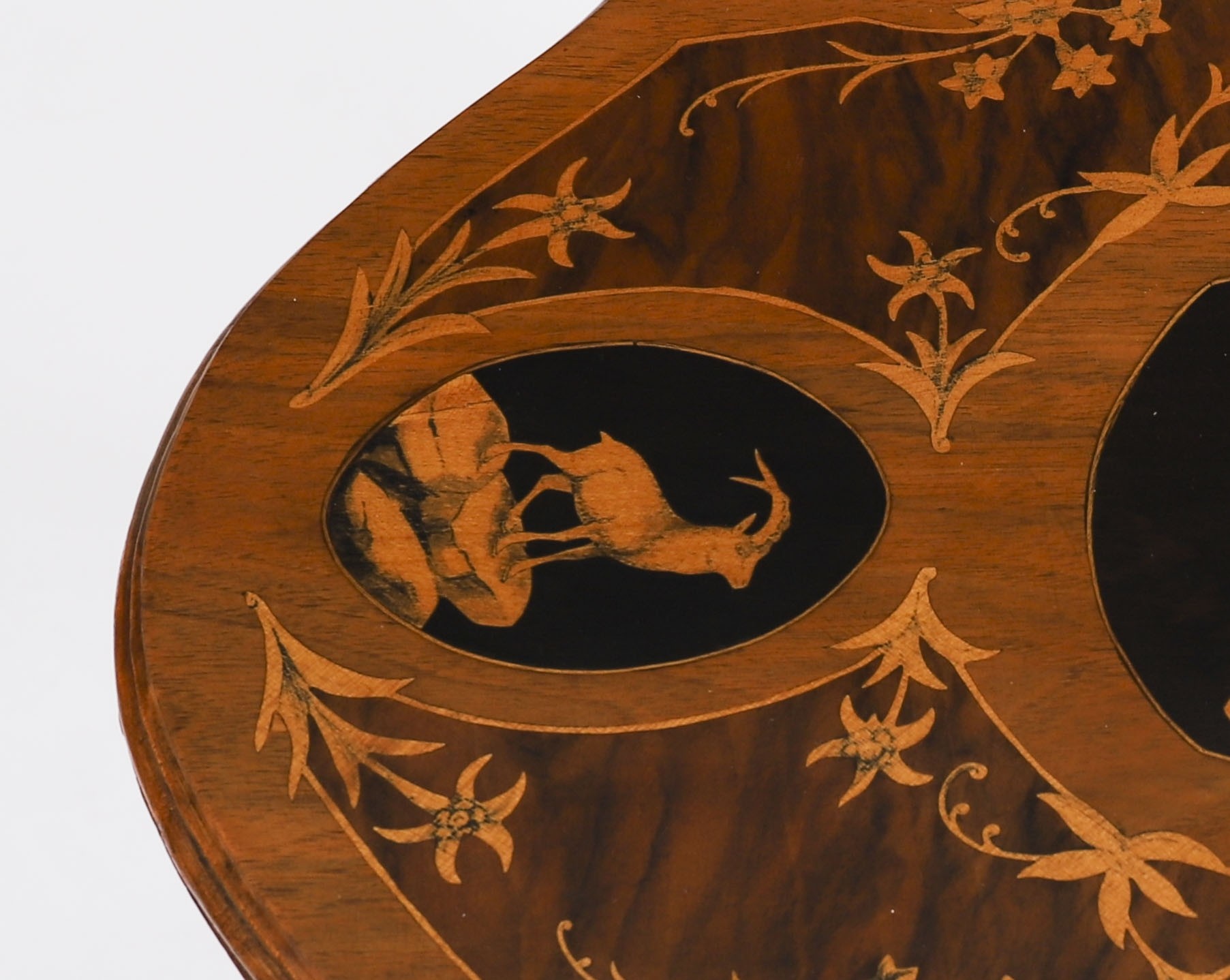
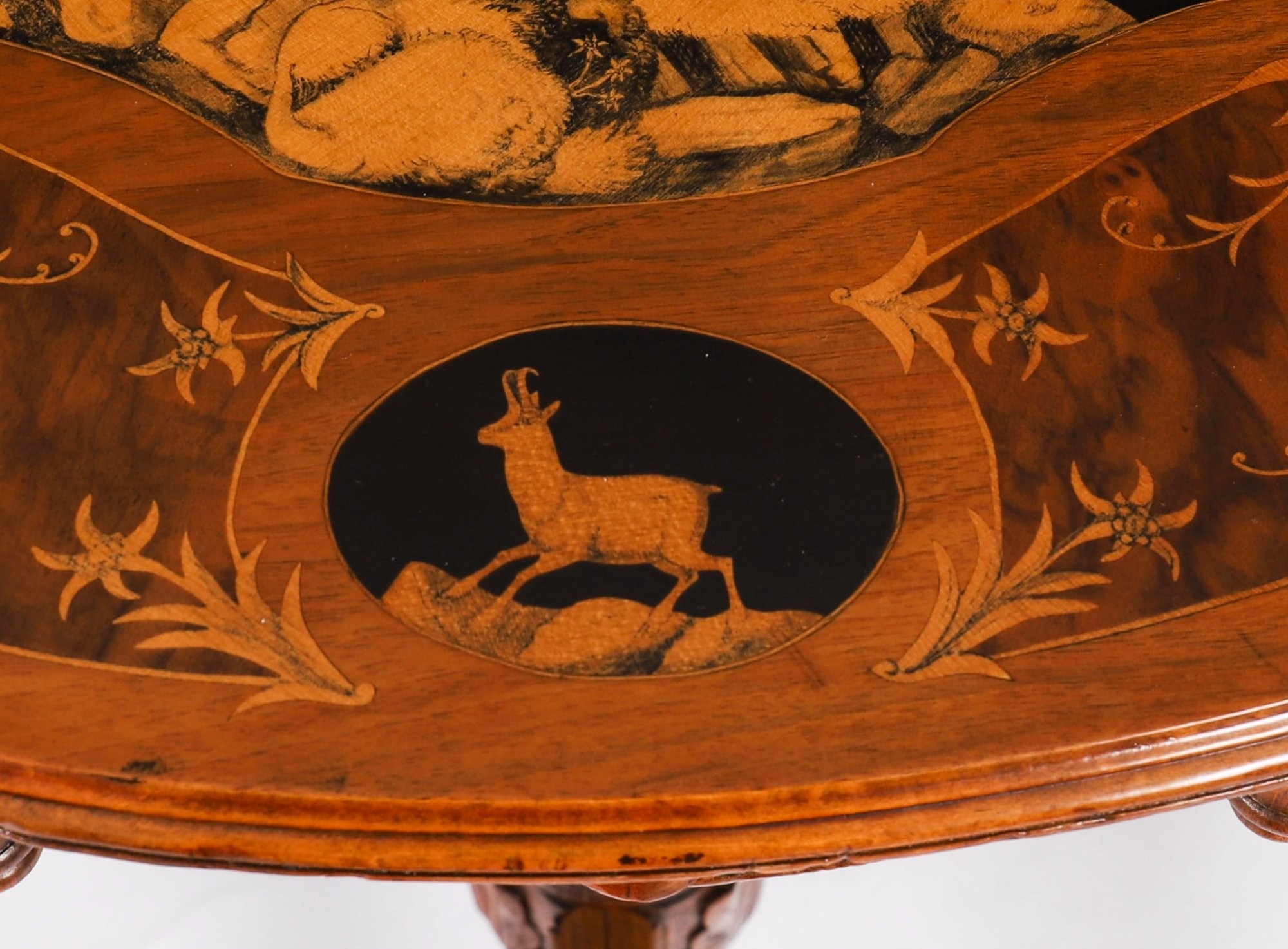
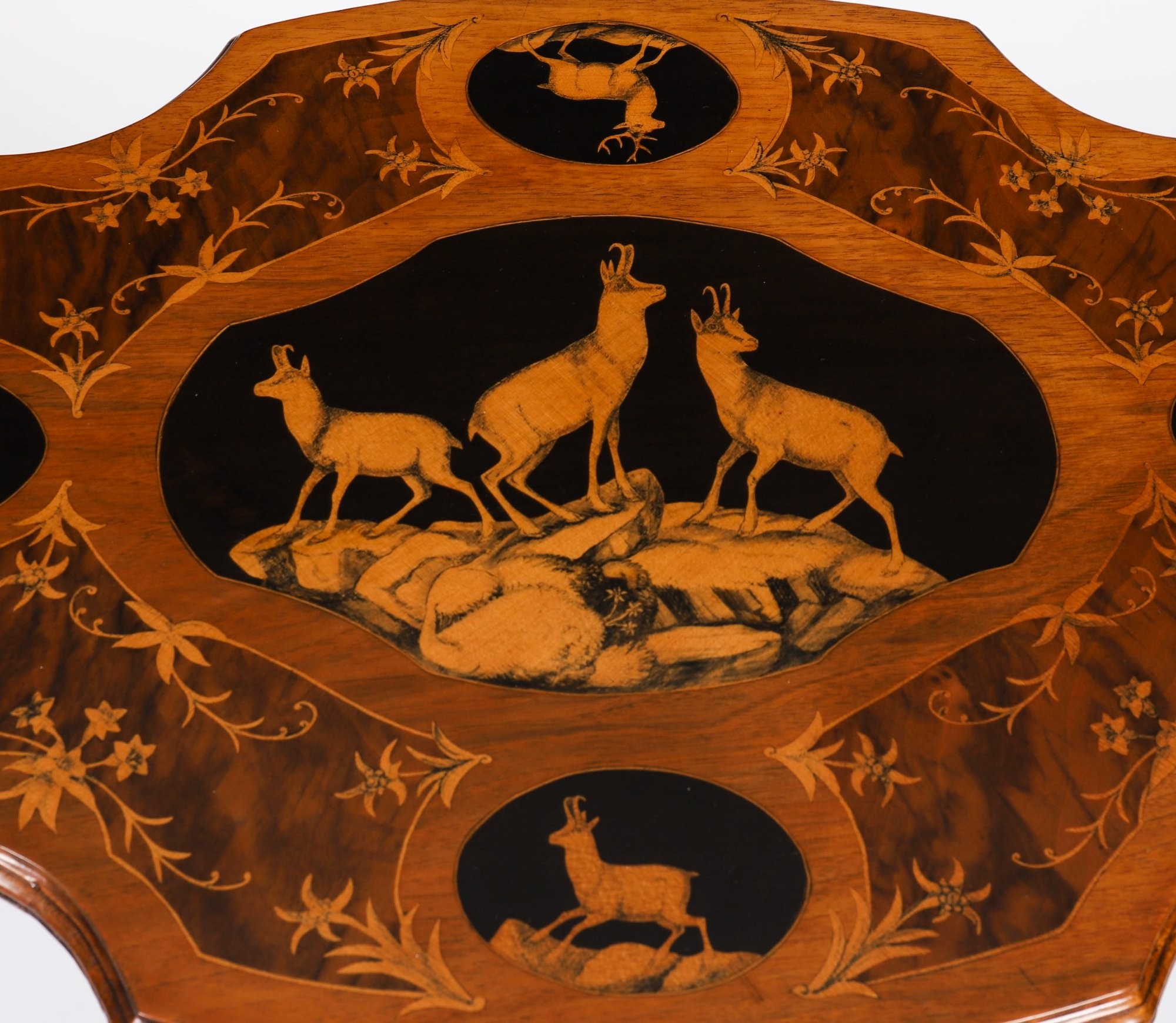
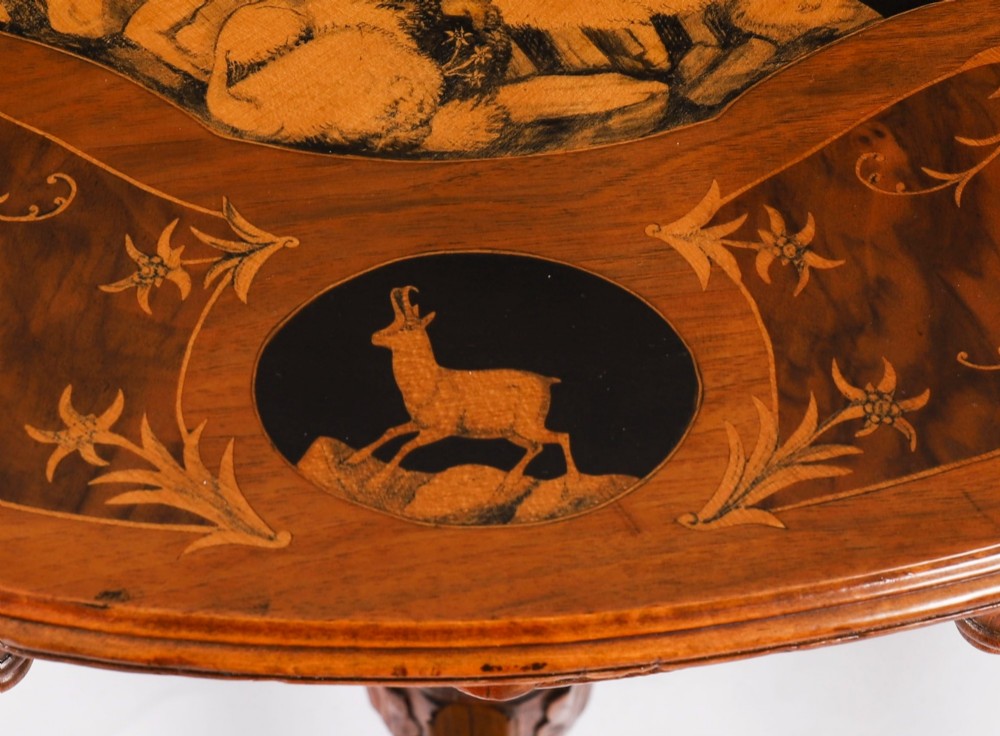
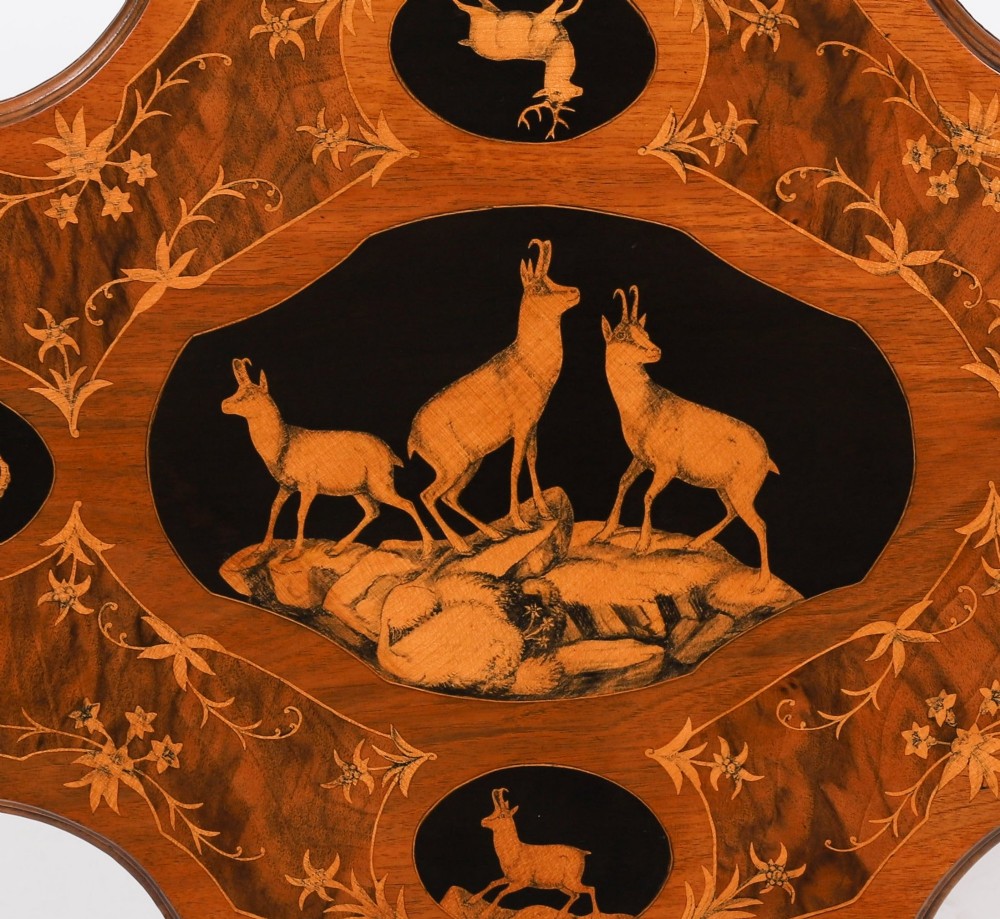
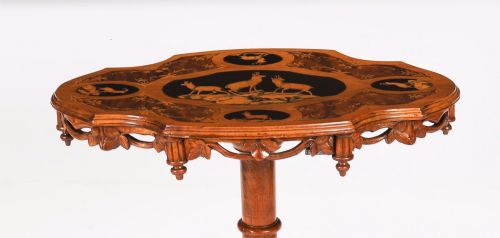
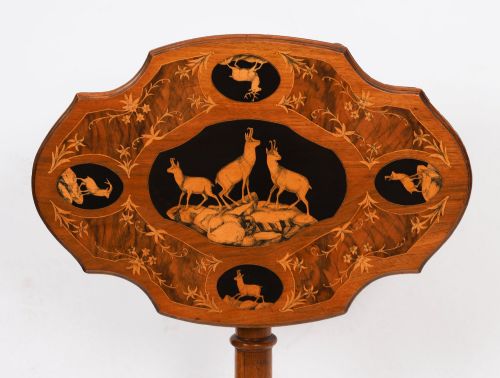
It features a shaped oval tilt top with a central cartouche depicting a chamois on an ebonised ground, and the surround with smaller panels depicting ibex and red stag alternating with floral burr walnut panels.
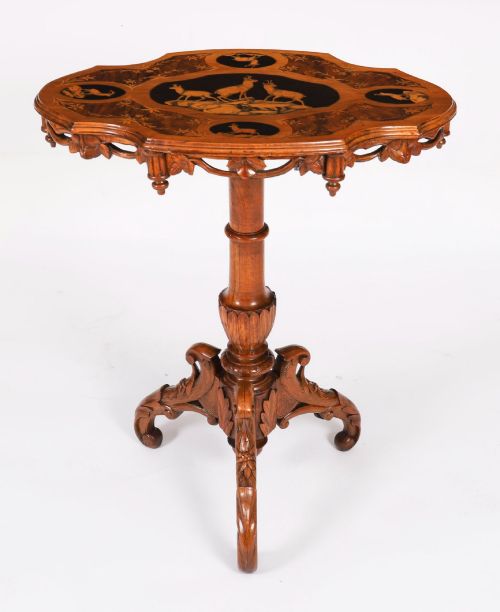
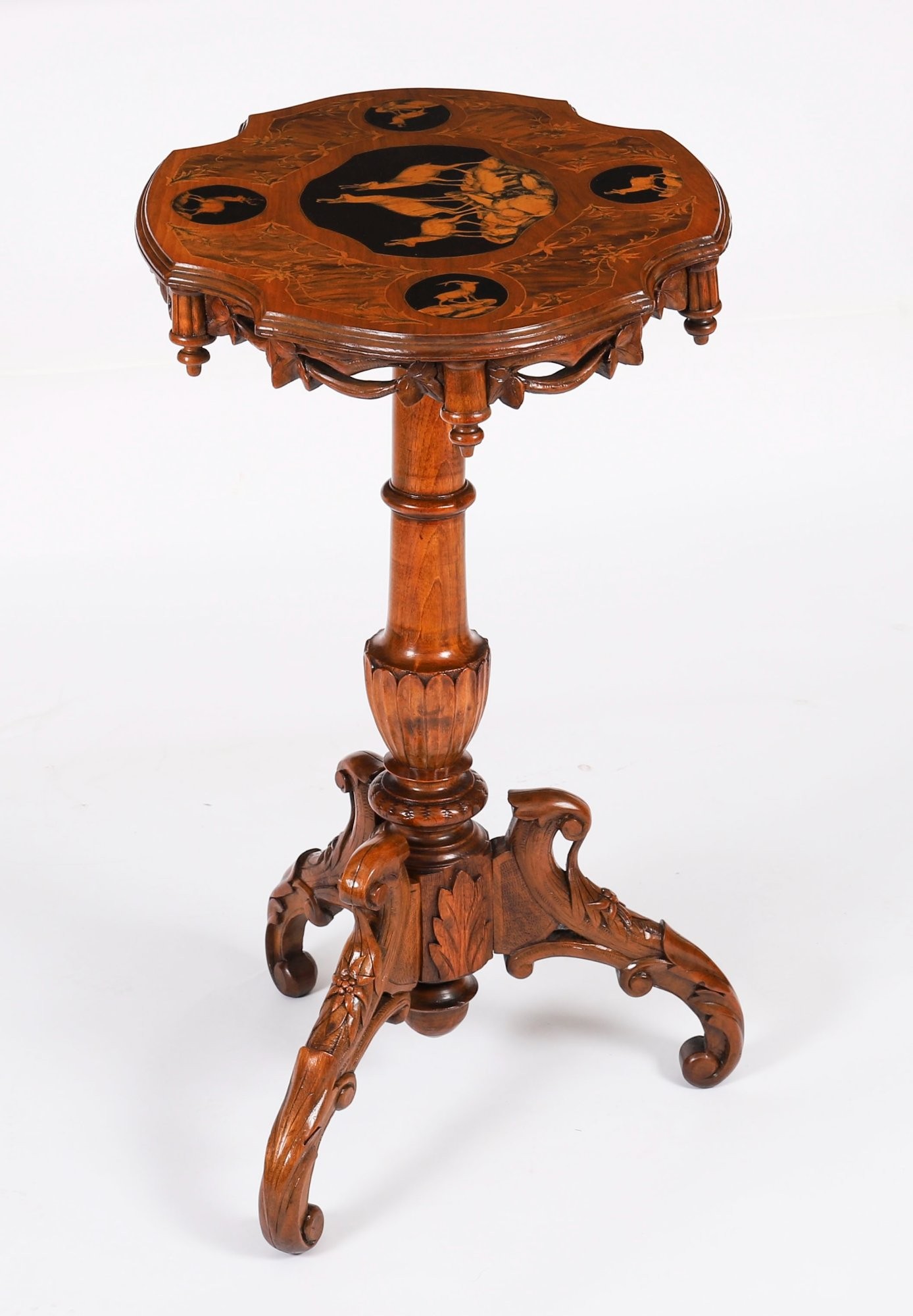
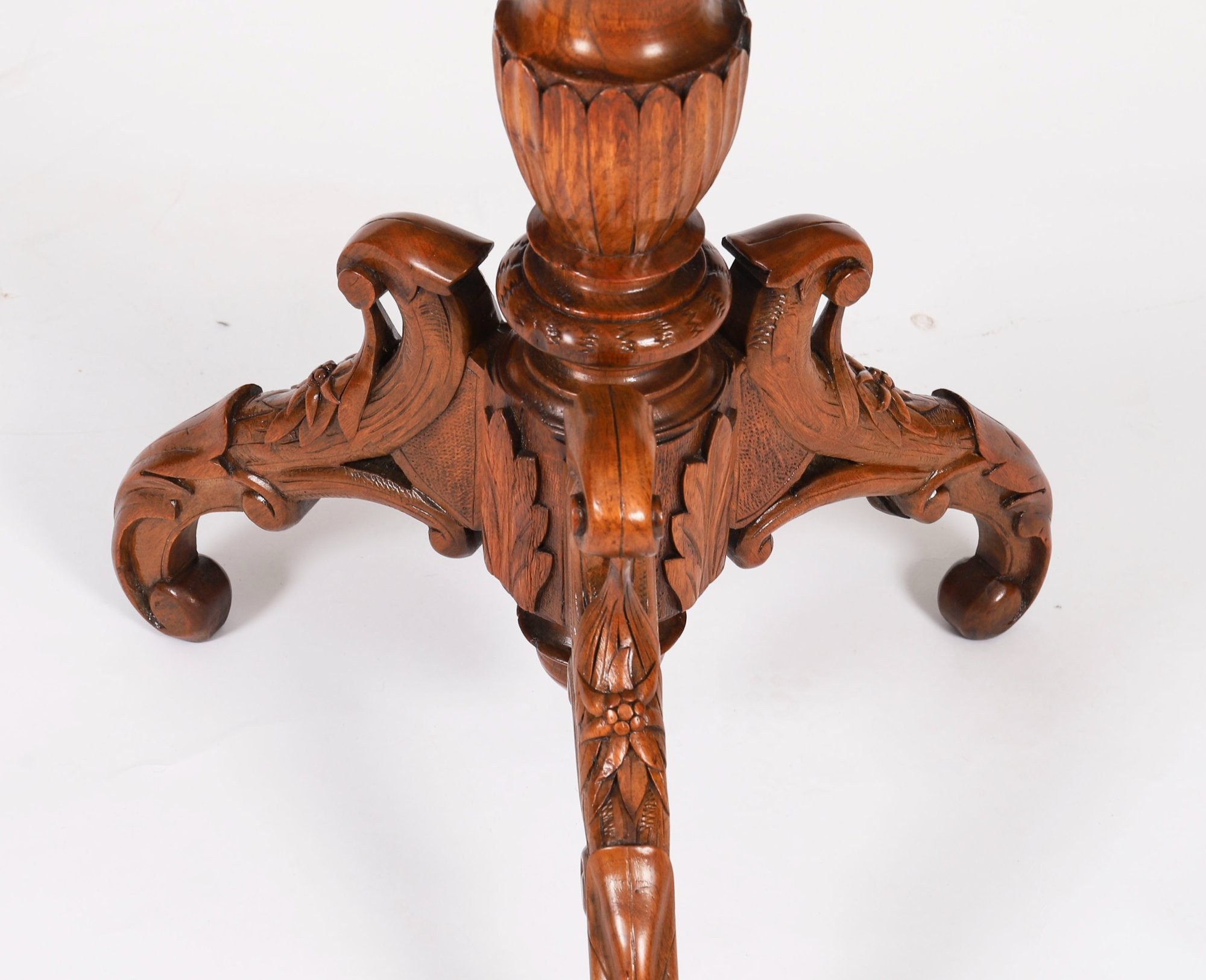
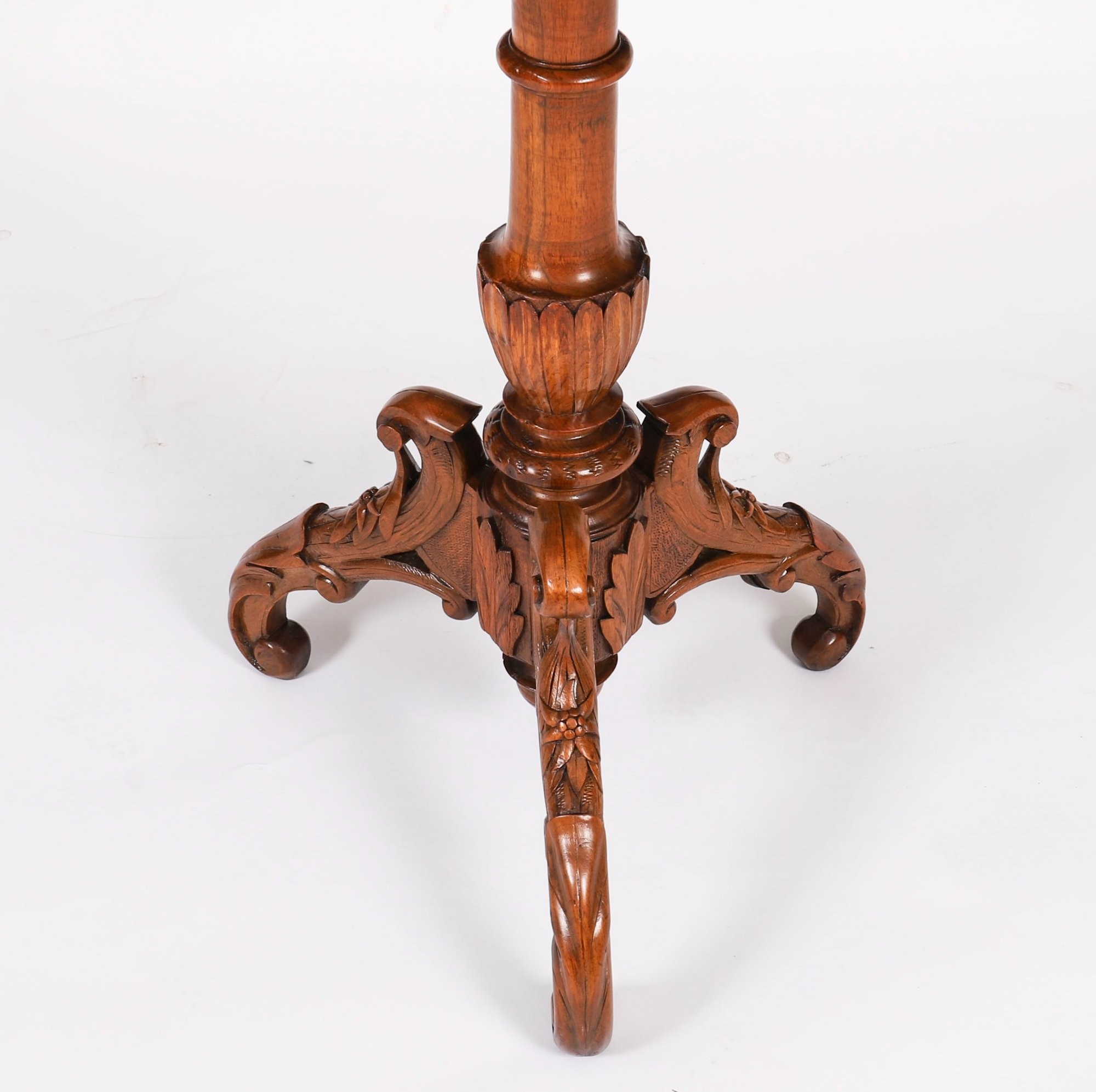
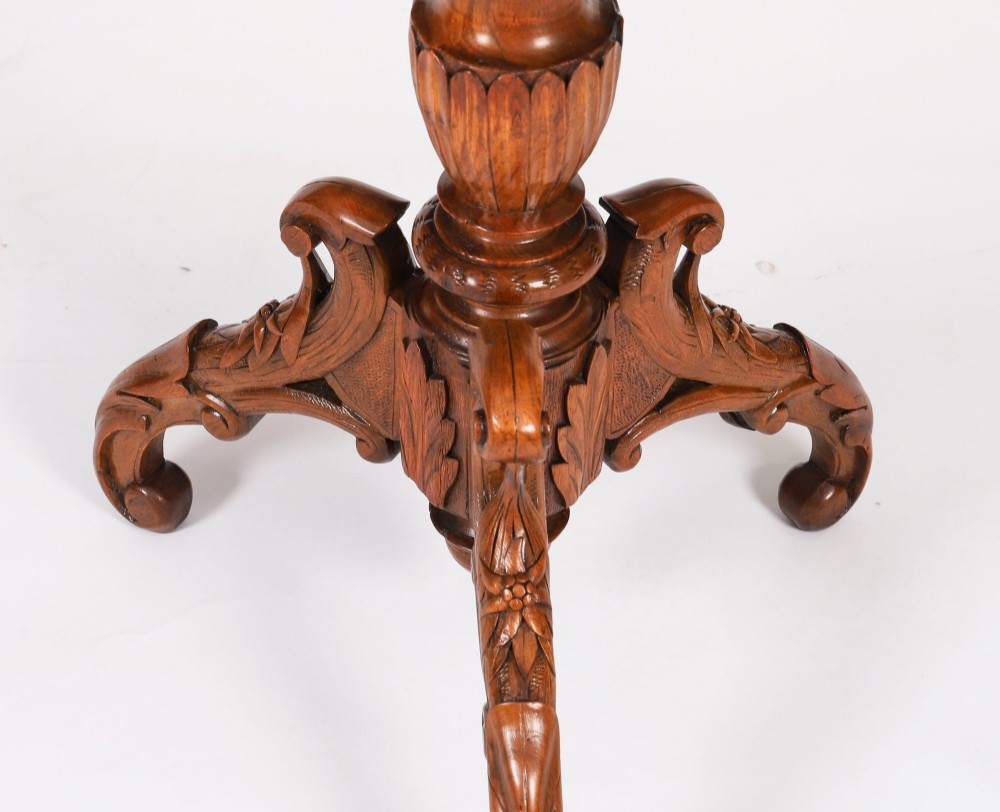
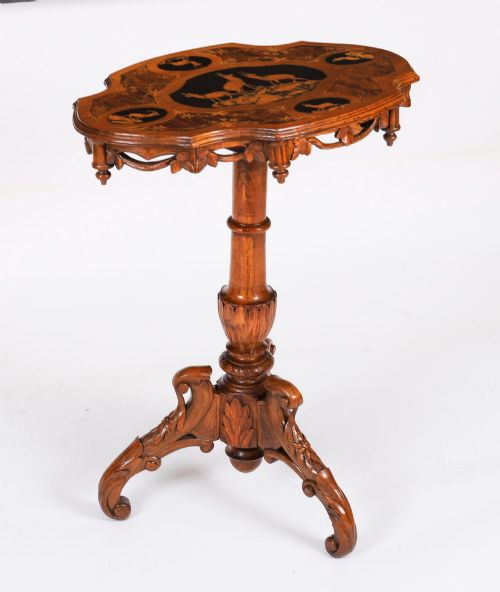
The pierced leaf carved frieze with turned pendants, raised on a turned vase stem with stiff leaf collar on a scroll and leaf carved tripod base with scrolled feet.


The quality and craftsmanship throughout are truly second to none.


An elegant design for your most cherished photograph.

Condition:

In excellent condition, having only been beautifully cleaned and waxed in our workshops; please see photos for confirmation.
Dimensions in cm:

Height 75 cm x Width 61 cm x Depth 41.5 cm

Dimensions in inches:

Height 2 foot, 5 inches x Width 2 foot x Depth 1 foot, 4 inches

Marquetry

is decorative artistry where pieces of material of different colours are inserted into surface wood veneer to form intricate patterns such as scrolls or flowers.
The technique of veneered marquetry had its inspiration in 16th-century Florence. Marquetry elaborated upon Florentine techniques of inlaying solid marble slabs with designs formed of fitted marbles, jaspers and semi-precious stones. This work, called opere di commessi, has medieval parallels in Central Italian "Cosmati"-work of inlaid marble floors, altars and columns. The technique is known in English as pietra dura, for the "hardstones" used: onyx, jasper, carnelian, lapis lazuli and colored marbles. In Florence, the Chapel of the Medici at San Lorenzo is completely covered in a colored marble facing using this demanding jig-sawn technique.
Techniques of wood marquetry were developed in Antwerp and other Flemish centers of luxury cabinet-making during the early 16th century. The craft was imported full-blown to France after the mid-seventeenth century, to create furniture of unprecedented quality.
The Black Forest (German: Schwarzwald)

is actually located in a triangular area that borders Germany, France, and Switzerland, and it extends along the Rhine River. The area of the Black Forest is approximately 100 miles long and 40 miles wide
Wood-carving was and is a traditional cottage industry in the region, and carved ornaments now are produced in substantial numbers as souvenirs for tourists. Cuckoo clocks are a popular example; they have been made in the region since the early 18th century, and much of their development occurred there. In the past, singing bird boxes were produced as well. Luxury goods were made at the royal manufactory of the Gobelins, charged with providing furnishings to decorate Versailles and the other royal residences of Louis XIV. Early masters of French marquetry were the Fleming Pierre Golle and his son-in-law, André-Charles Boulle, who founded a dynasty of royal and Parisian cabinet-makers (ébénistes) and gave his name to a technique of marquetry employing brass with pewter in arabesque or intricately foliate designs.

Our reference: A5413

Date of Manufacture

Regent Antiques has dated this Swiss Walnut Marquetry Table to the 1870s.

Independent Date Check ID 09705725
Dealer's Item Date1870s
Sellingantiques Date1870s
Sellingantiques agingItem 135-165 years old
Test ResultsPassed dating check
Why Sellingantiques dated this piece to THE 1870s:
Fine penwork engraving on the inlaid chamois: hand work before modern printing methods.
Hand-carved edelweiss and acanthus on the tripod legs: skilled bench carving before mechanical routers.
Natural micro-shrinkage along the veneer joints: gradual seasoning over many decades.
Pierced floral frieze with turned drop finials: typical Swiss Alpine work of this era.

This is an independent date report produced by Sellingantiques using its own proprietary system. The process uses the photographs shown on this page. The system is never told the date the dealer has declared. This report shows that the two dates corroborate.

Physical Dimensions
Height
75cm (29.53")
Width
61cm (24.02")
Depth
41.5cm (16.34")
Reference Numbers
Sellingantiques Reference
SA1243675
Dealers Internal Reference
A5413
Description
This is a superb antique Swiss Black Forest carved walnut and marquetry inlaid centre table, circa 1870 in date.

It features a shaped oval tilt top with a central cartouche depicting a chamois on an ebonised ground, and the surround with smaller panels depicting ibex and red stag alternating with floral burr walnut panels.

“
The pierced leaf carved frieze with turned pendants, raised on a turned vase stem with stiff leaf collar on a scroll and leaf carved tripod base with scrolled feet.
Regent Antiques
fig 1. A nineteenth-century Swiss walnut tilt-top occasional table featuring an oval top with intricate marquetry scenes of chamois deer surrounded by floral inlays, supported by a carved column and tripod base.
fig 1. Antique Swiss Walnut Marquetry Occasional Table 19th C


The quality and craftsmanship throughout are truly second to none.


An elegant design for your most cherished photograph.

Condition:

In excellent condition, having only been beautifully cleaned and waxed in our workshops; please see photos for confirmation.

fig 2. A nineteenth-century Swiss walnut tilt-top occasional table featuring an oval top with intricate marquetry scenes of chamois deer surrounded by floral inlays, supported by a carved column and tripod base.
fig 2. Antique Swiss Walnut Marquetry Occasional Table 19th C

Dimensions in cm:

Height 75 cm x Width 61 cm x Depth 41.5 cm

Dimensions in inches:

Height 2 foot, 5 inches x Width 2 foot x Depth 1 foot, 4 inches

Marquetry

is decorative artistry where pieces of material of different colours are inserted into surface wood veneer to form intricate patterns such as scrolls or flowers.

fig 3. A nineteenth-century Swiss walnut tilt-top occasional table featuring an oval top with intricate marquetry scenes of chamois deer surrounded by floral inlays, supported by a carved column and tripod base.
fig 3. Antique Swiss Walnut Marquetry Occasional Table 19th C

The technique of veneered marquetry had its inspiration in 16th-century Florence. Marquetry elaborated upon Florentine techniques of inlaying solid marble slabs with designs formed of fitted marbles, jaspers and semi-precious stones. This work, called opere di commessi, has medieval parallels in Central Italian "Cosmati"-work of inlaid marble floors, altars and columns. The technique is known in English as pietra dura, for the "hardstones" used: onyx, jasper, carnelian, lapis lazuli and colored marbles. In Florence, the Chapel of the Medici at San Lorenzo is completely covered in a colored marble facing using this demanding jig-sawn technique.

fig 4. A nineteenth-century Swiss walnut tilt-top occasional table featuring an oval top with intricate marquetry scenes of chamois deer surrounded by floral inlays, supported by a carved column and tripod base.
fig 4. Antique Swiss Walnut Marquetry Occasional Table 19th C

Techniques of wood marquetry were developed in Antwerp and other Flemish centers of luxury cabinet-making during the early 16th century. The craft was imported full-blown to France after the mid-seventeenth century, to create furniture of unprecedented quality.

fig 5. A nineteenth-century Swiss walnut tilt-top occasional table featuring an oval top with intricate marquetry scenes of chamois deer surrounded by floral inlays, supported by a carved column and tripod base.
fig 5. Antique Swiss Walnut Marquetry Occasional Table 19th C

The Black Forest (German: Schwarzwald)

is actually located in a triangular area that borders Germany, France, and Switzerland, and it extends along the Rhine River. The area of the Black Forest is approximately 100 miles long and 40 miles wide

fig 6. A nineteenth-century Swiss walnut tilt-top occasional table featuring an oval top with intricate marquetry scenes of chamois deer surrounded by floral inlays, supported by a carved column and tripod base.
fig 6. Antique Swiss Walnut Marquetry Occasional Table 19th C

Wood-carving was and is a traditional cottage industry in the region, and carved ornaments now are produced in substantial numbers as souvenirs for tourists. Cuckoo clocks are a popular example; they have been made in the region since the early 18th century, and much of their development occurred there. In the past, singing bird boxes were produced as well. Luxury goods were made at the royal manufactory of the Gobelins, charged with providing furnishings to decorate Versailles and the other royal residences of Louis XIV. Early masters of French marquetry were the Fleming Pierre Golle and his son-in-law, André-Charles Boulle, who founded a dynasty of royal and Parisian cabinet-makers (ébénistes) and gave his name to a technique of marquetry employing brass with pewter in arabesque or intricately foliate designs.

Our reference: A5413

Date of Manufacture

Regent Antiques has dated this Swiss Walnut Marquetry Table to the 1870s.

Independent Date Report ID 09705725
Dealer's Item Date1870s
Sellingantiques dating1870s
Sellingantiques agingItem 135-165 years old
Test ResultsPassed dating check
Why Sellingantiques dated this piece to the 1870s:
Fine penwork engraving on the inlaid chamois: hand work before modern printing methods.
Hand-carved edelweiss and acanthus on the tripod legs: skilled bench carving before mechanical routers.
Natural micro-shrinkage along the veneer joints: gradual seasoning over many decades.
Pierced floral frieze with turned drop finials: typical Swiss Alpine work of this era.

This is an independent date report produced by Sellingantiques using its own proprietary system. The process uses the photographs shown on this page. The system is never told the date the dealer has declared. This report shows that the two dates corroborate.

Height
75cm (29.53")
Width
61cm (24.02")
Depth
41.5cm (16.34")
Reference Numbers
Sellingantiques Ref
SA1243675
Dealers Internal Ref
A5413
Regent Antiques
Regent Antiques
Sellingantiques verified Since Sep 2016

We specialise in english and continental furniture, silver, porcelain and decorative items.

Dealer Profile

You can view the stock and full dealer information on the Regent Antiques Profile Page

Trade Associations

Regent Antiques is a registered member of LAPADA  CINOA
PDF SHARE
SAVE
A nineteenth-century Swiss walnut tilt-top occasional table featuring an oval top with intricate marquetry scenes of chamois deer surrounded by floral inlays, supported by a carved column and tripod base.
1 / 15
Archive I A nineteenth-century Swiss walnut tilt-top occasional table featuring an oval top with intricate marquetry scenes of chamois deer surrounded by floral inlays, supported by a carved column and tripod base.

Antique Swiss Walnut Marquetry Occasional Table 19th C
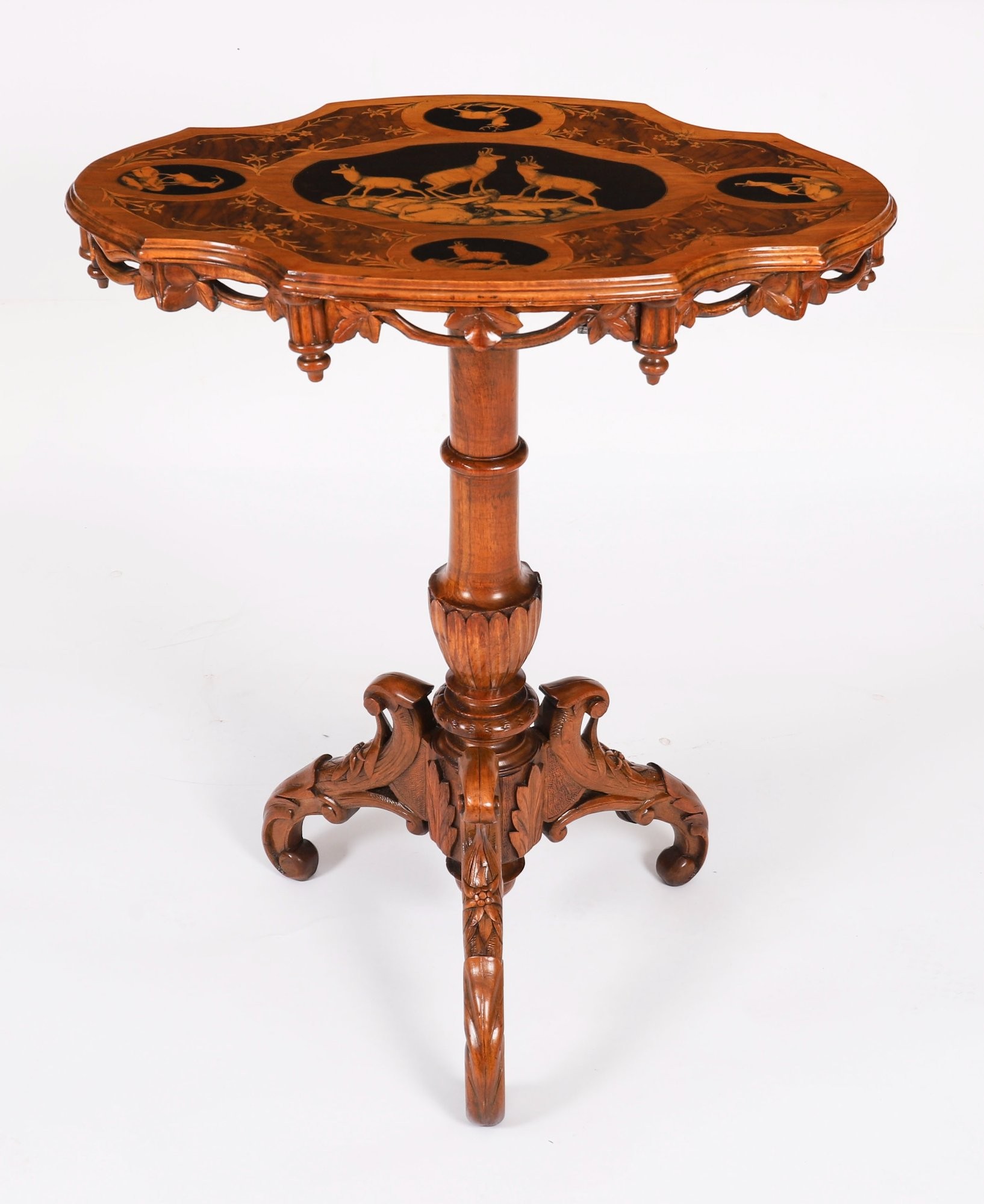
Archive II A nineteenth-century Swiss walnut tilt-top occasional table featuring an oval top with intricate marquetry scenes of chamois deer surrounded by floral inlays, supported by a carved column and tripod base. View II
Archive III A nineteenth-century Swiss walnut tilt-top occasional table featuring an oval top with intricate marquetry scenes of chamois deer surrounded by floral inlays, supported by a carved column and tripod base. View III
Archive IV A nineteenth-century Swiss walnut tilt-top occasional table featuring an oval top with intricate marquetry scenes of chamois deer surrounded by floral inlays, supported by a carved column and tripod base. View IV
Archive V A nineteenth-century Swiss walnut tilt-top occasional table featuring an oval top with intricate marquetry scenes of chamois deer surrounded by floral inlays, supported by a carved column and tripod base. View V
Archive VI A nineteenth-century Swiss walnut tilt-top occasional table featuring an oval top with intricate marquetry scenes of chamois deer surrounded by floral inlays, supported by a carved column and tripod base. View VI
Archive VII A nineteenth-century Swiss walnut tilt-top occasional table featuring an oval top with intricate marquetry scenes of chamois deer surrounded by floral inlays, supported by a carved column and tripod base. View VII
Archive VIII A nineteenth-century Swiss walnut tilt-top occasional table featuring an oval top with intricate marquetry scenes of chamois deer surrounded by floral inlays, supported by a carved column and tripod base. View VIII
Archive IX A nineteenth-century Swiss walnut tilt-top occasional table featuring an oval top with intricate marquetry scenes of chamois deer surrounded by floral inlays, supported by a carved column and tripod base. View IX
Archive X A nineteenth-century Swiss walnut tilt-top occasional table featuring an oval top with intricate marquetry scenes of chamois deer surrounded by floral inlays, supported by a carved column and tripod base. View X
Archive XI A nineteenth-century Swiss walnut tilt-top occasional table featuring an oval top with intricate marquetry scenes of chamois deer surrounded by floral inlays, supported by a carved column and tripod base. View XI
Archive XII A nineteenth-century Swiss walnut tilt-top occasional table featuring an oval top with intricate marquetry scenes of chamois deer surrounded by floral inlays, supported by a carved column and tripod base. View XII
Archive XIII A nineteenth-century Swiss walnut tilt-top occasional table featuring an oval top with intricate marquetry scenes of chamois deer surrounded by floral inlays, supported by a carved column and tripod base. View XIII
Archive XIV A nineteenth-century Swiss walnut tilt-top occasional table featuring an oval top with intricate marquetry scenes of chamois deer surrounded by floral inlays, supported by a carved column and tripod base. View XIV
Archive XV A nineteenth-century Swiss walnut tilt-top occasional table featuring an oval top with intricate marquetry scenes of chamois deer surrounded by floral inlays, supported by a carved column and tripod base. View XV
Enlarged Archival View
Location
Manor Warehouse
318 Green Lanes
London
N4 1BX
United Kingdom
Verified Since Sep 2016
Items For Sale 653
Items Sold 2,710
Regent Antiques
Regent Antiques
Verified Since Sep 2016
View Dealer Info
Location: Manor Warehouse, 318 Green Lanes, London, N4 1BX, United Kingdom
Verified
Sep 2016
For Sale
653
Sold
2,710
A nineteenth-century Swiss walnut tilt-top occasional table featuring an oval top with intricate marquetry scenes of chamois deer surrounded by floral inlays, supported by a carved column and tripod base.
Antique Swiss Walnut Marquetry Occasional Table 19th C
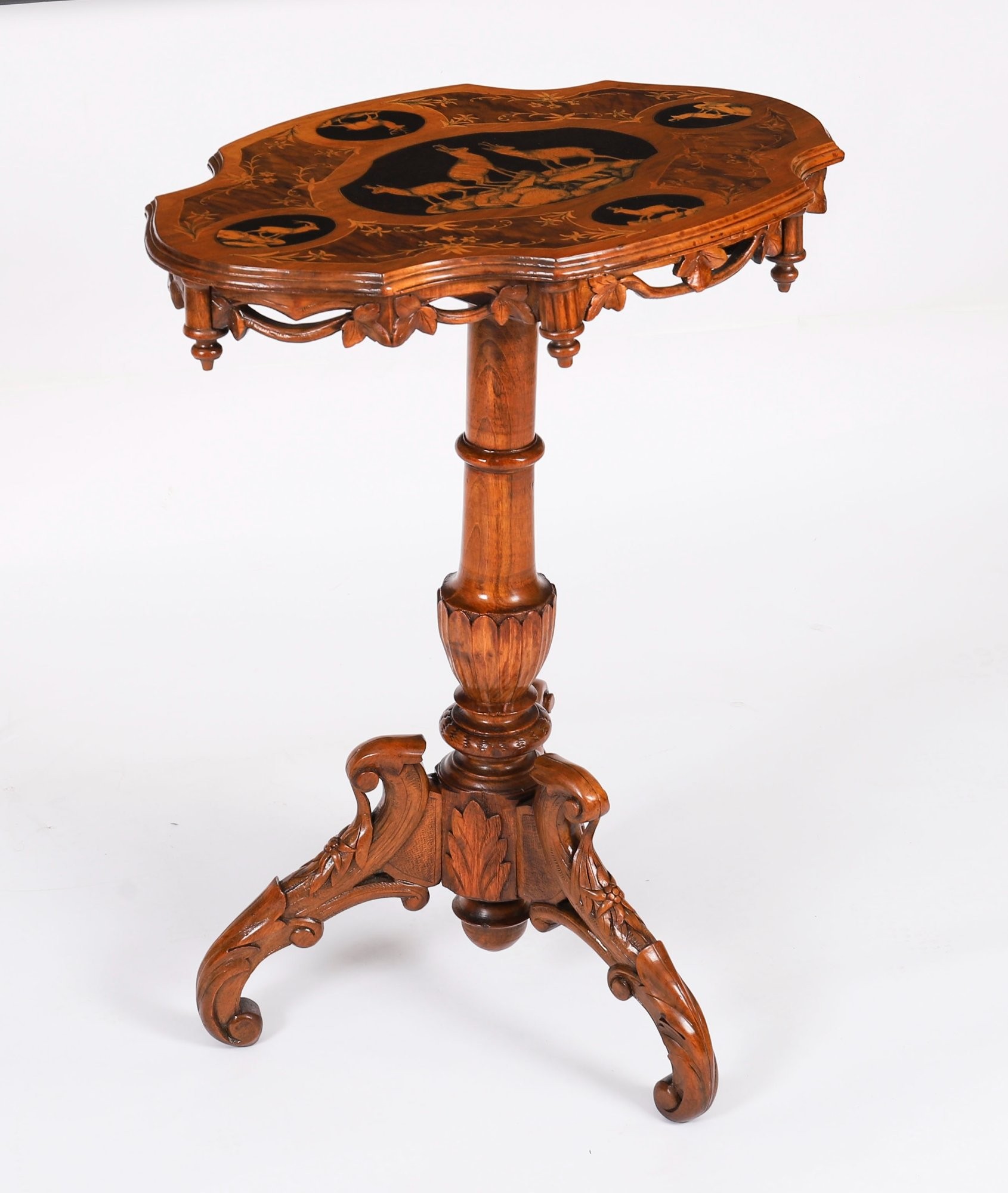
Ref: SA1243675
A nineteenth-century Swiss walnut tilt-top occasional table featuring an oval top with intricate marquetry scenes of chamois deer surrounded by floral inlays, supported by a carved column and tripod base.
Detail View 1
Detail View 2
Detail View 3
Detail View 4
Detail View 5
Detail View 6
Detail View 7
Detail View 8
Detail View 9
Detail View 10
Detail View 11
Detail View 12
Detail View 13
Detail View 14
Archival Detail
Every single antique dealer on our platform is individually approved by our internal team. We verify their professional trade history, ethical standards, and photographic quality to ensure a secure, high-standard buying environment. Upon joining, every dealer agrees to a strict 9-point code of conduct. While issues can occasionally arise, our dealers typically resolve them swiftly and directly with the buyer. In fact, since our founding in 2002, Sellingantiques has only had to step in to help resolve an issue on roughly five occasions—a true testament to the quality of our dealers and their dedication to your happiness.
Our dealers are highly experienced in packing and shipping fragile, high-value antiques. Because you are in direct contact with the dealer, you will be able to easily go through all available shipping and insurance options together to ensure your item arrives safely.
Antiques are the ultimate green purchase. By choosing historical pieces over newly manufactured goods, you completely eliminate the carbon footprint of modern mass production while preserving exceptional, timeless craftsmanship.
Written by Sellingantiques from the dealer’s photographs and listing
  • ObjectOccasional Tables
  • Period19th century
  • StyleSwiss Alpine
  • MaterialWalnut, Ebony, Mixed Fruitwoods
  • ColourWarm Brown
  • MotifsChamois marquetry, Tripod carved legs, Shaped tilt top, Floral inlay border
  • SizeH 75 cm (30 in) x W 61 cm (24 in) x D 41.5 cm (16 in)

This nineteenth-century Swiss Alpine occasional table uses walnut, ebony, and mixed fruitwoods to create a warm brown tone. The shaped tilt top displays a central chamois marquetry panel set against an ebonised ground, accompanied by smaller animal inlays, floral burr walnut panels, and a surrounding floral inlay border. A turned vase stem with a stiff leaf collar sits above scroll and leaf-carved tripod legs ending in scrolled feet. The table measures 75 cm high, 61 cm wide, and 41.5 cm deep. In a contemporary home, this piece suits placement in an empty corner as a decorative accent surface. The carved column and tripod base provide a stable structure, while the detailed marquetry provides visual interest across the surface. The waxed timber finish highlights the grain of the wood and the contrast of the inlaid scenes.

Nineteenth-century Swiss marquetry furniture originated primarily in the Bernese Oberland region, famous for Brienz woodcarving, where craftspeople created decorative pieces using contrasting timber inlays to depict native wildlife, floral patterns, and alpine landscapes.

These tables typically feature solid walnut or fruitwood frames, combined with fine veneers such as ebony, maple, pearwood, and stained woods to construct the detailed inlay panels.

Authentic period pieces show hand-cut veneer joints, natural timber shrinkage over time, hand-carved leg detailing, and traditional joinery techniques such as pegged joints and hand-turned central columns.

Place the table as an accent piece in a reading corner, foyer, or alongside low-profile modern seating to showcase the pictorial tabletop design as functional art.

Keep the wood away from direct heat sources and sunlight to prevent veneer lifting or fading. Dust regularly with a dry microfibre cloth and apply high-grade beeswax annually.
items
Add keywords to the filter
Price
£100
£250000
Era
Period
Style
Material
Origin
Stock Location
Recently Added
Online Payments
Categories