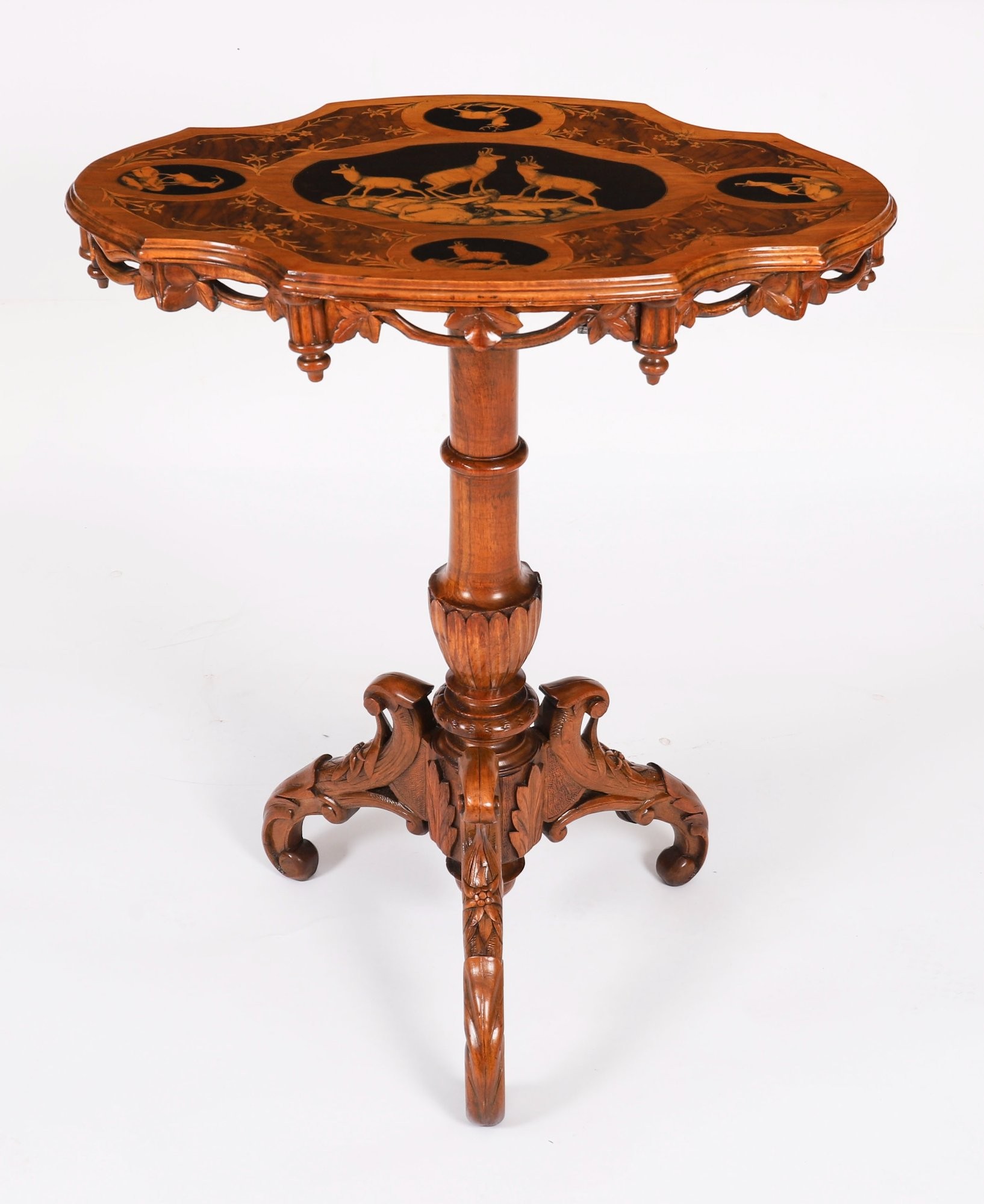
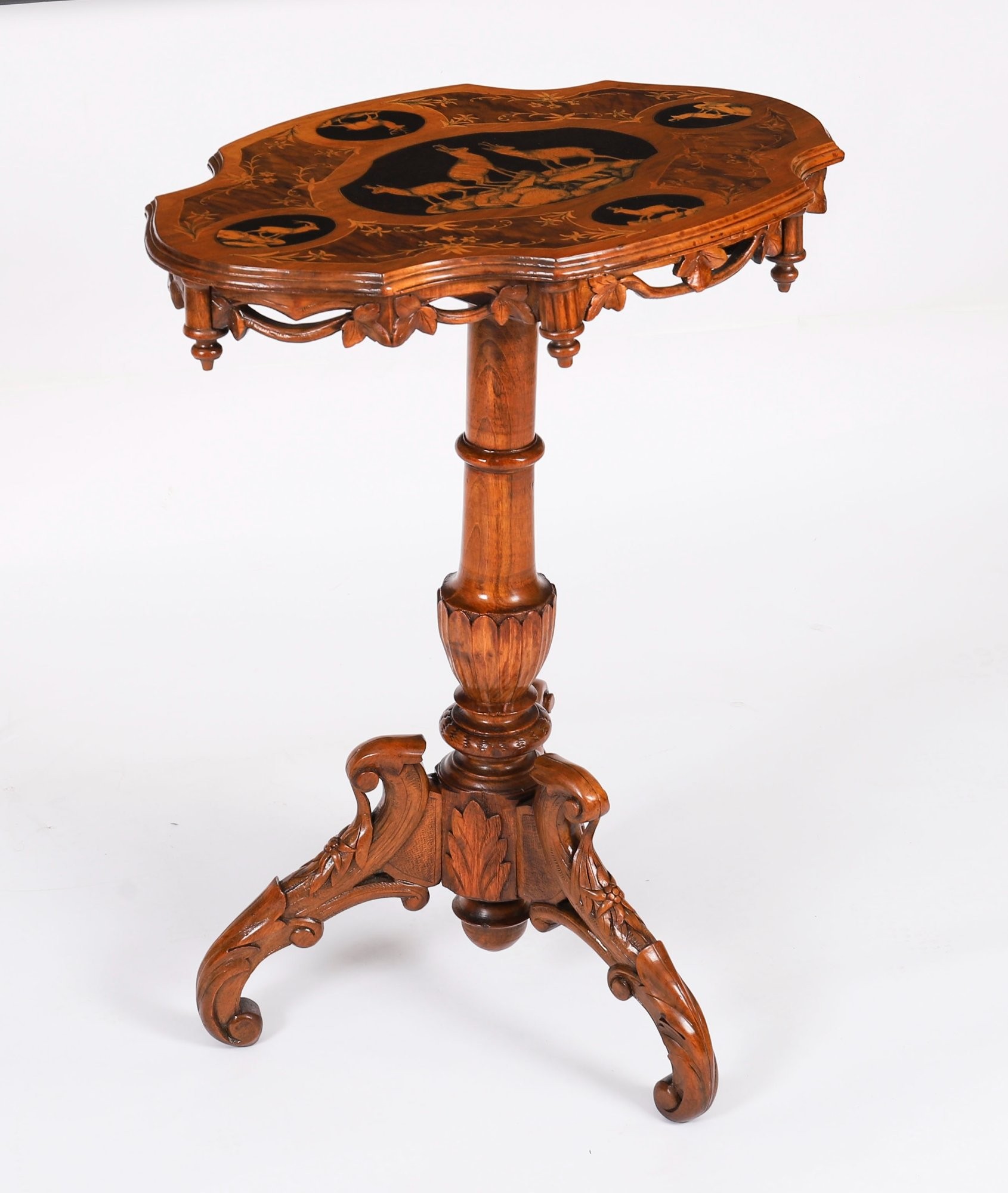
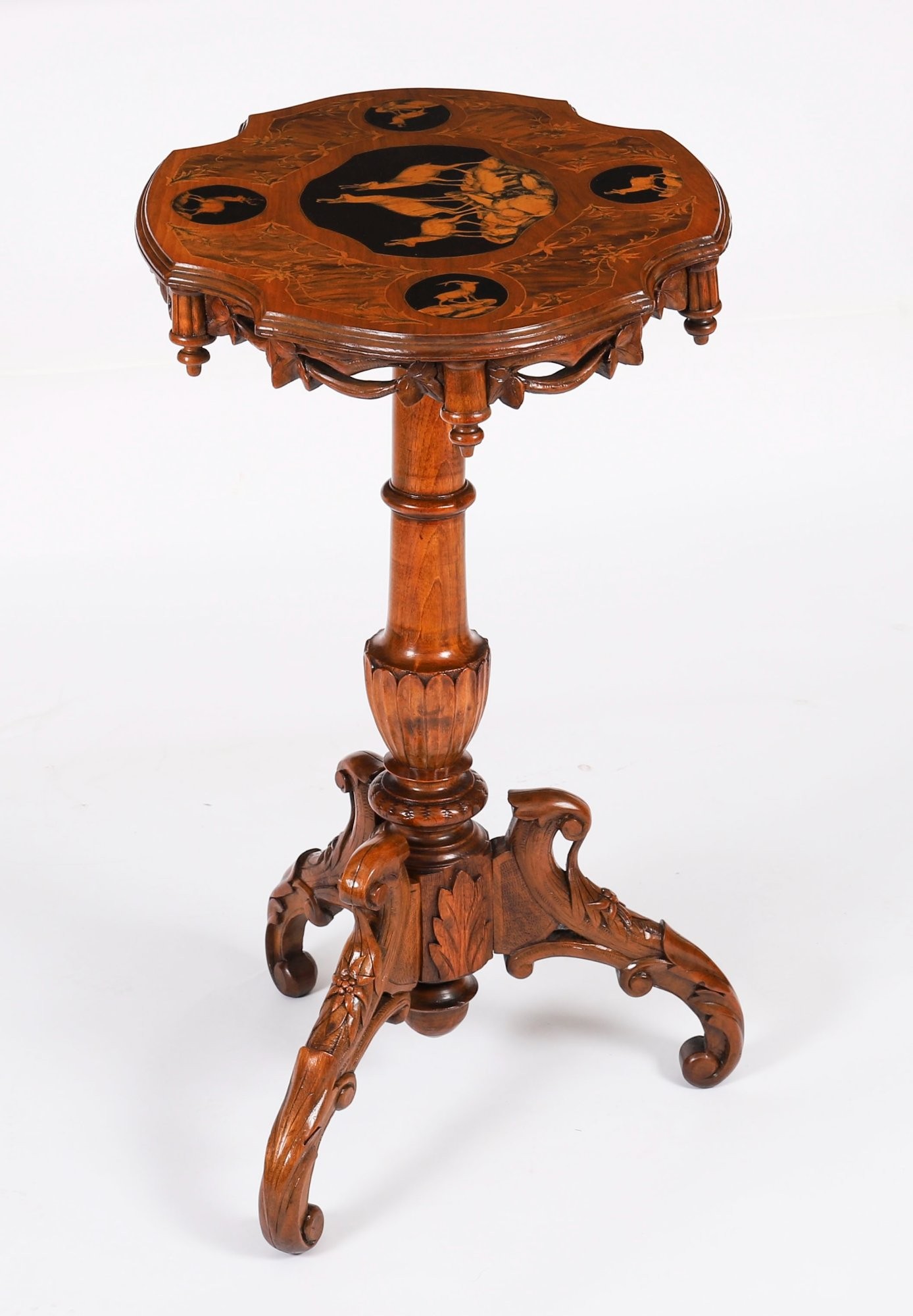
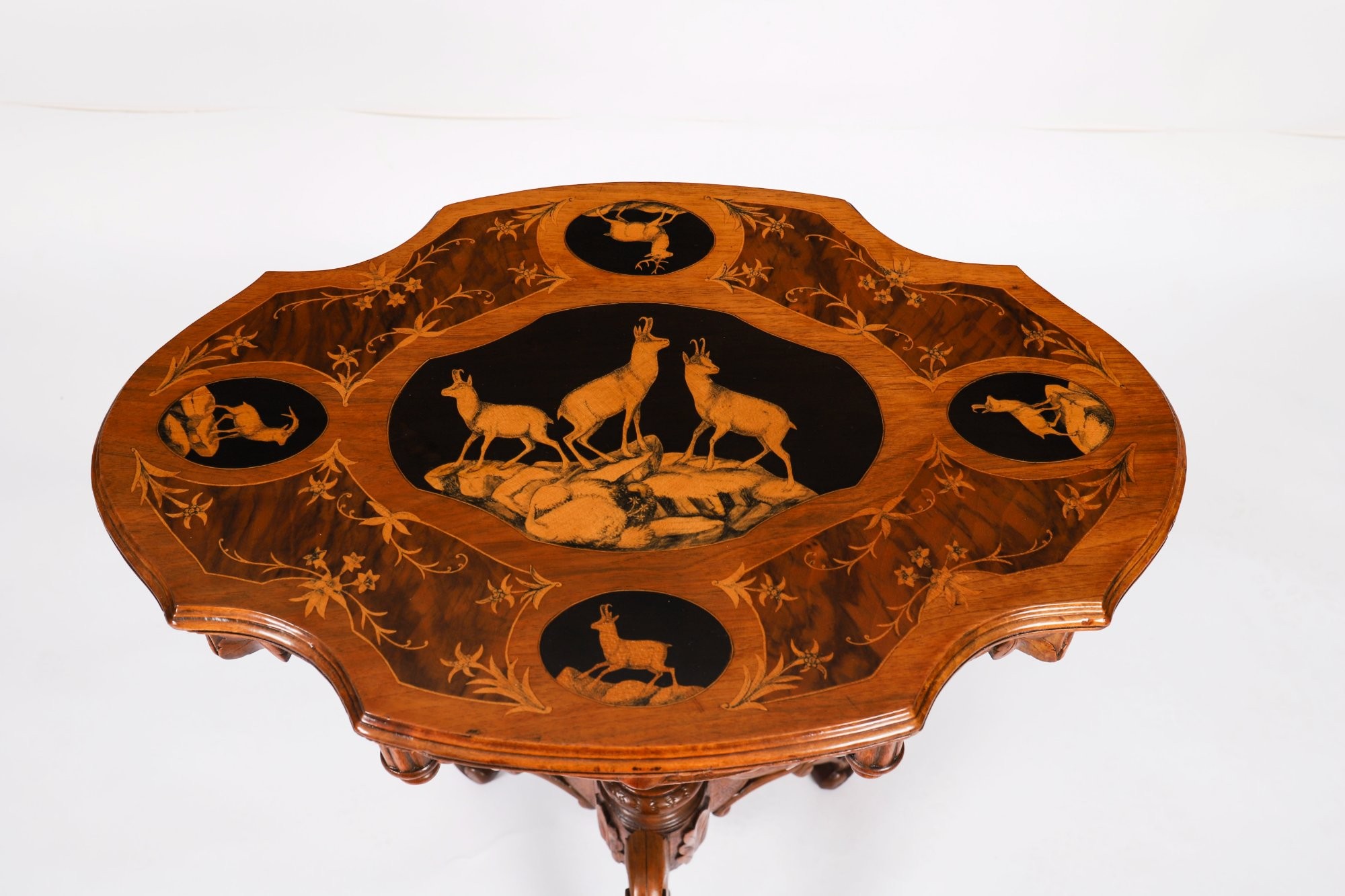
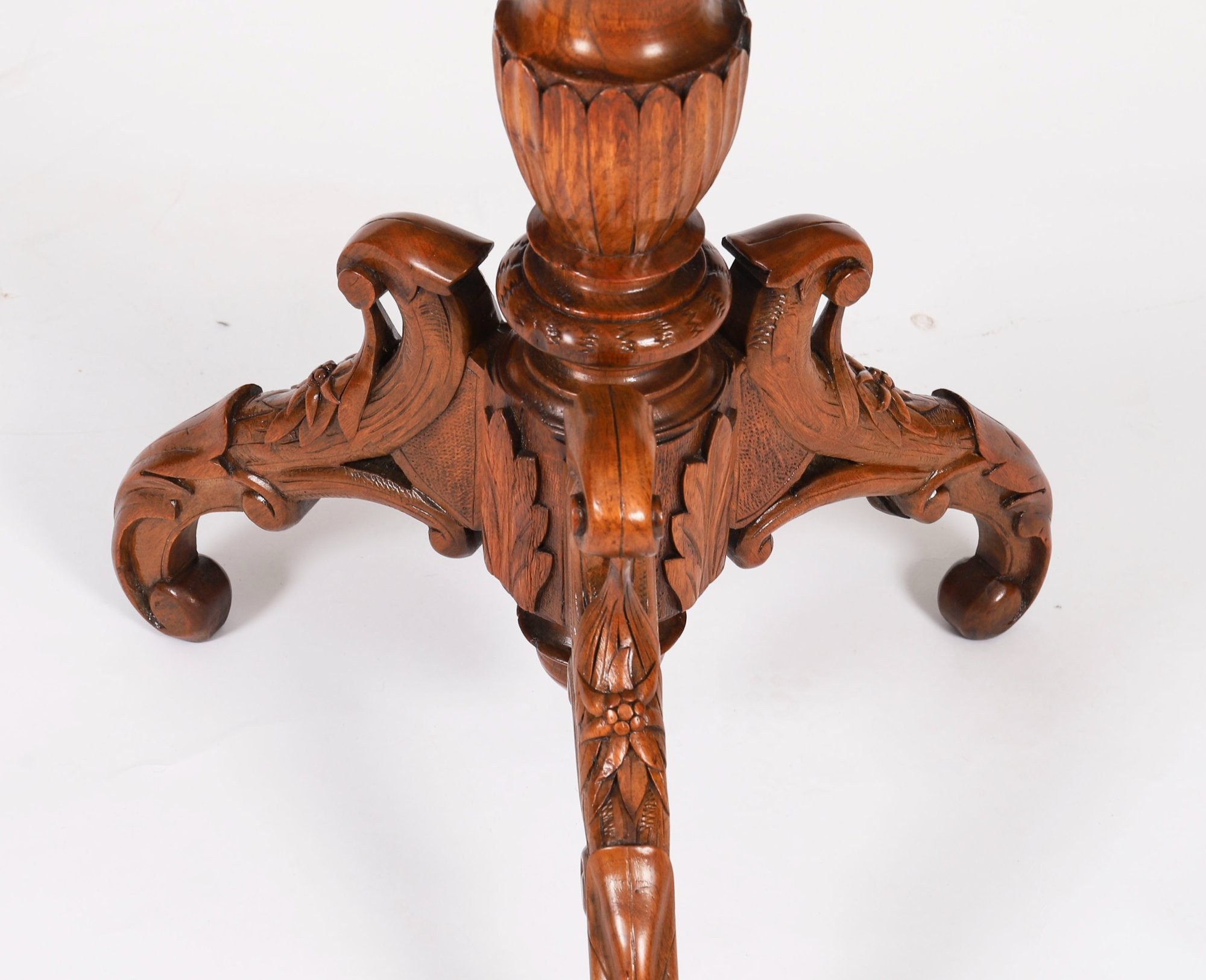
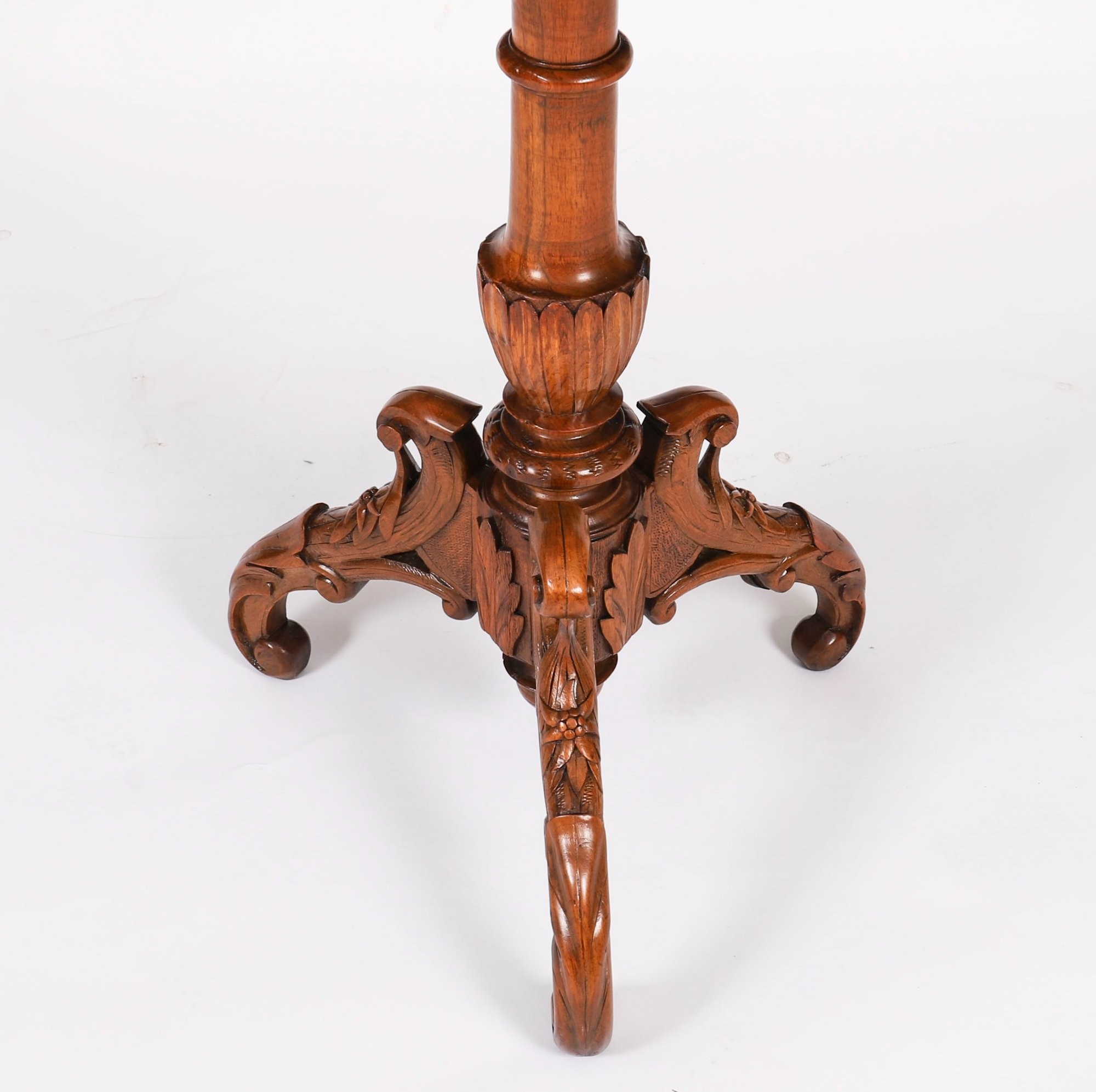
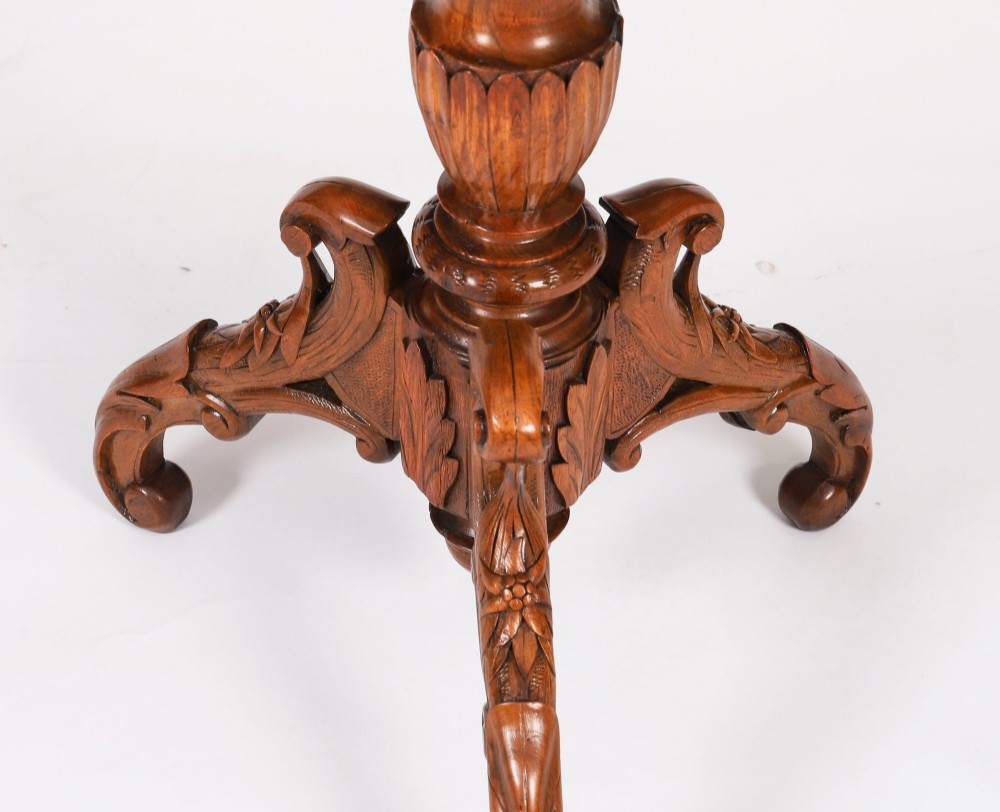
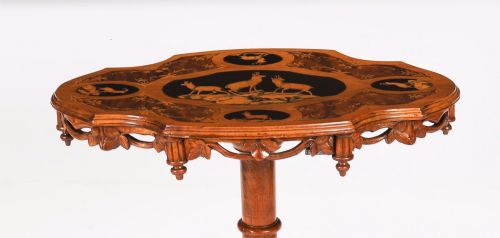
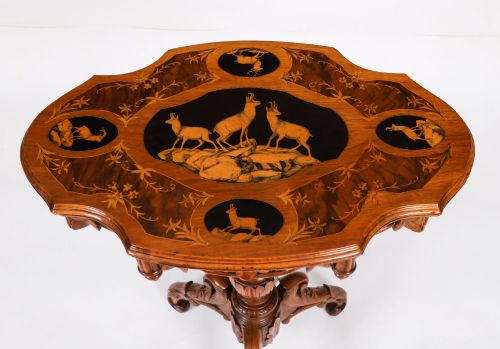
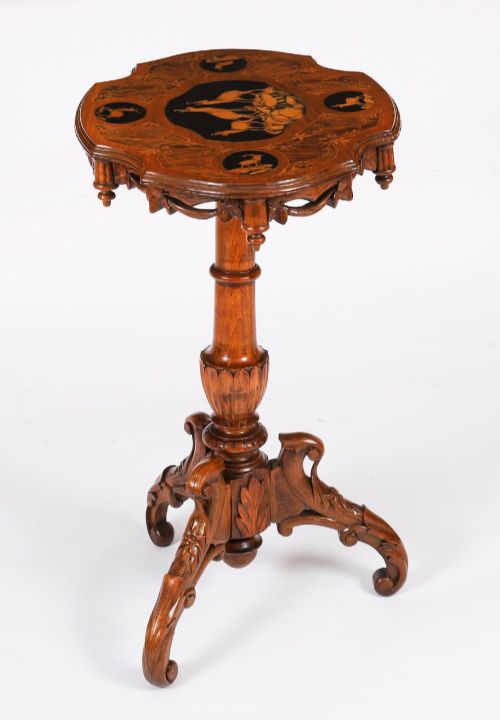
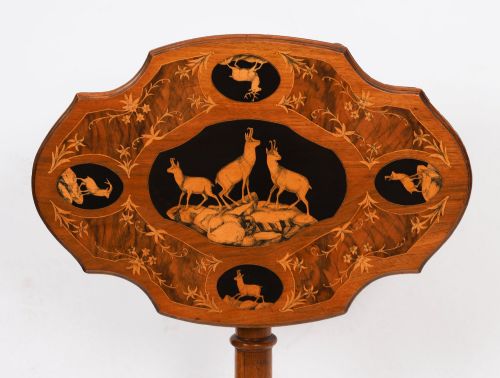
Regent Antiques has dated this Swiss Walnut Marquetry Table to the 1870s.
This is an independent date report produced by Sellingantiques using its own proprietary system. The process uses the photographs shown on this page. The system is never told the date the dealer has declared. This report shows that the two dates corroborate.
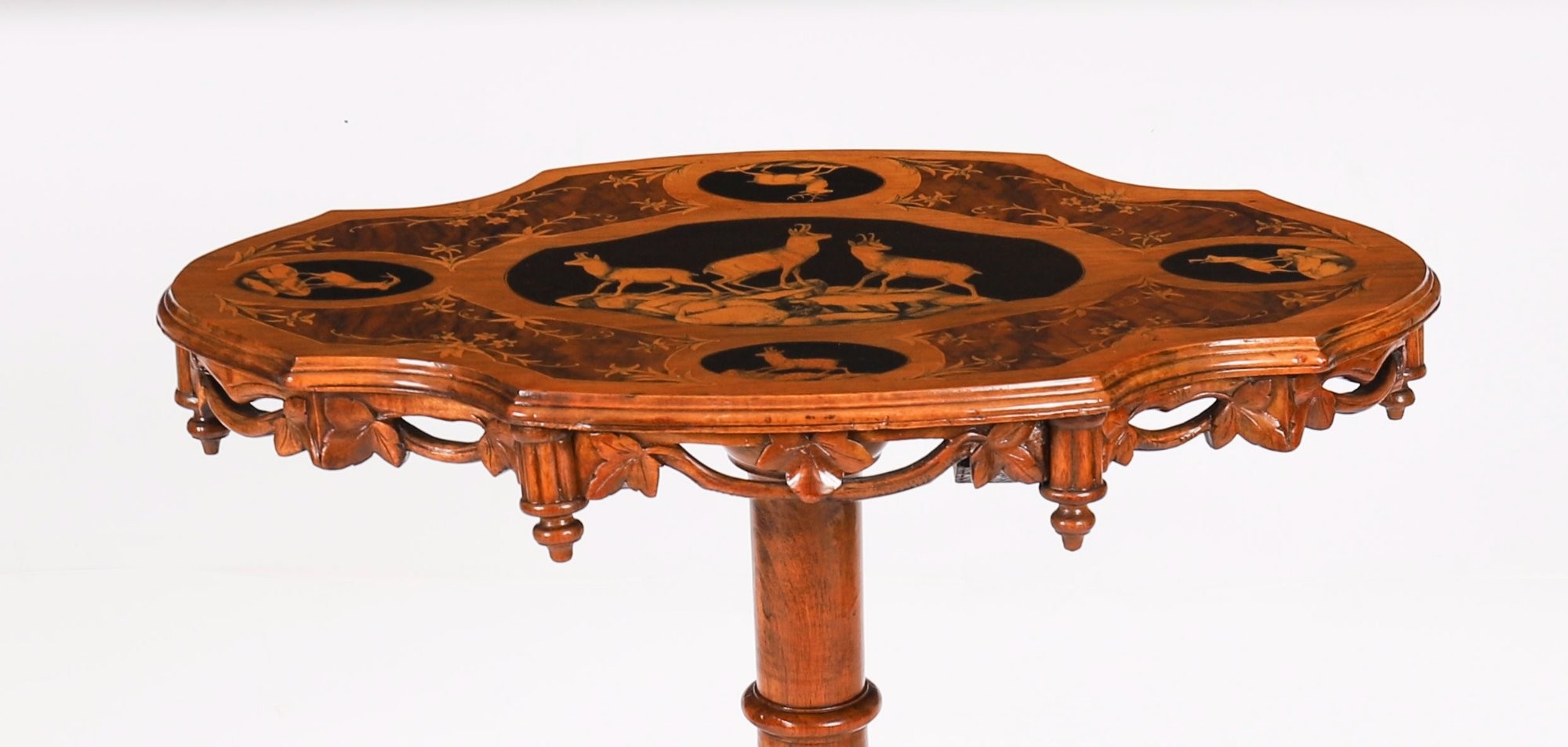
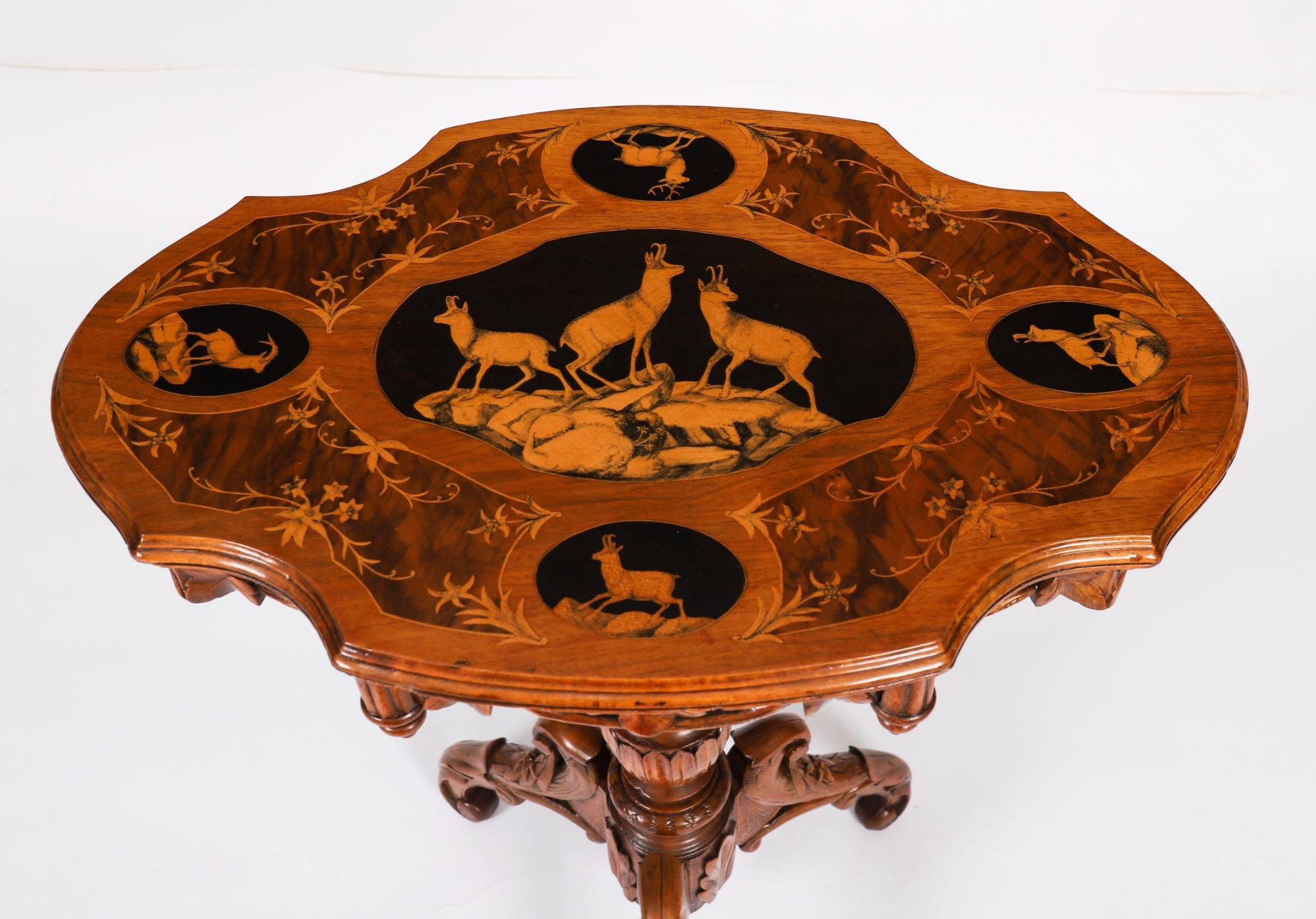
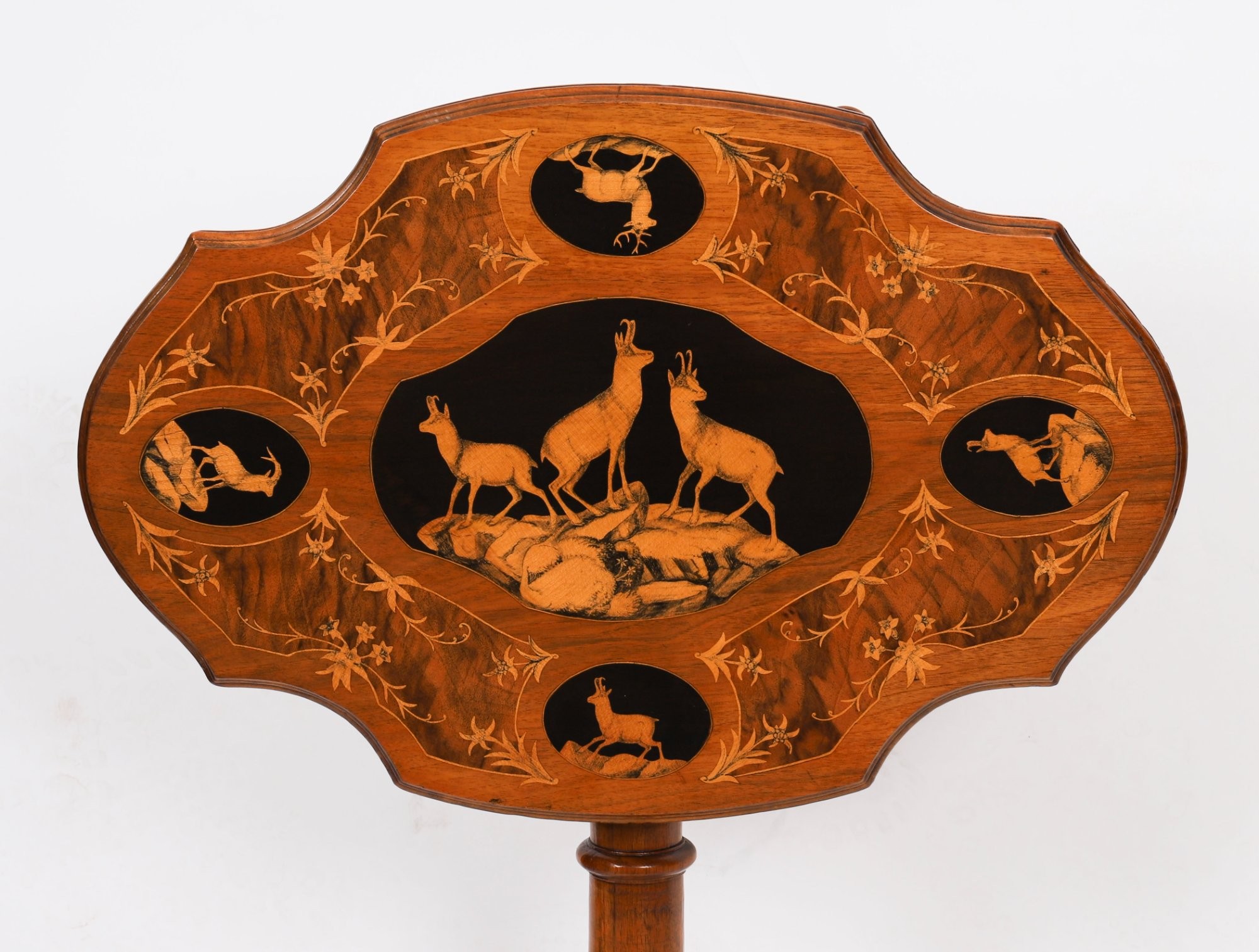
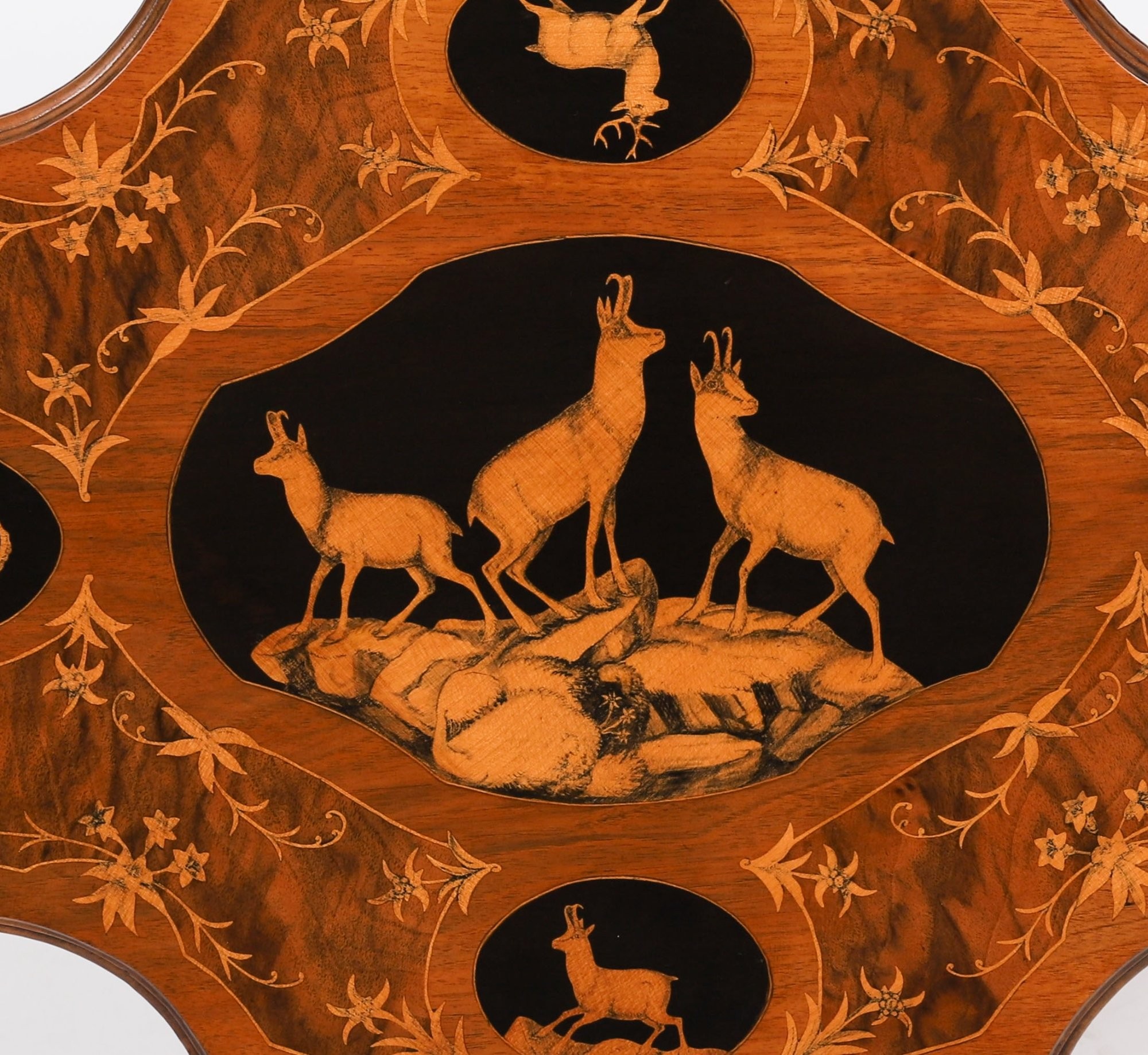
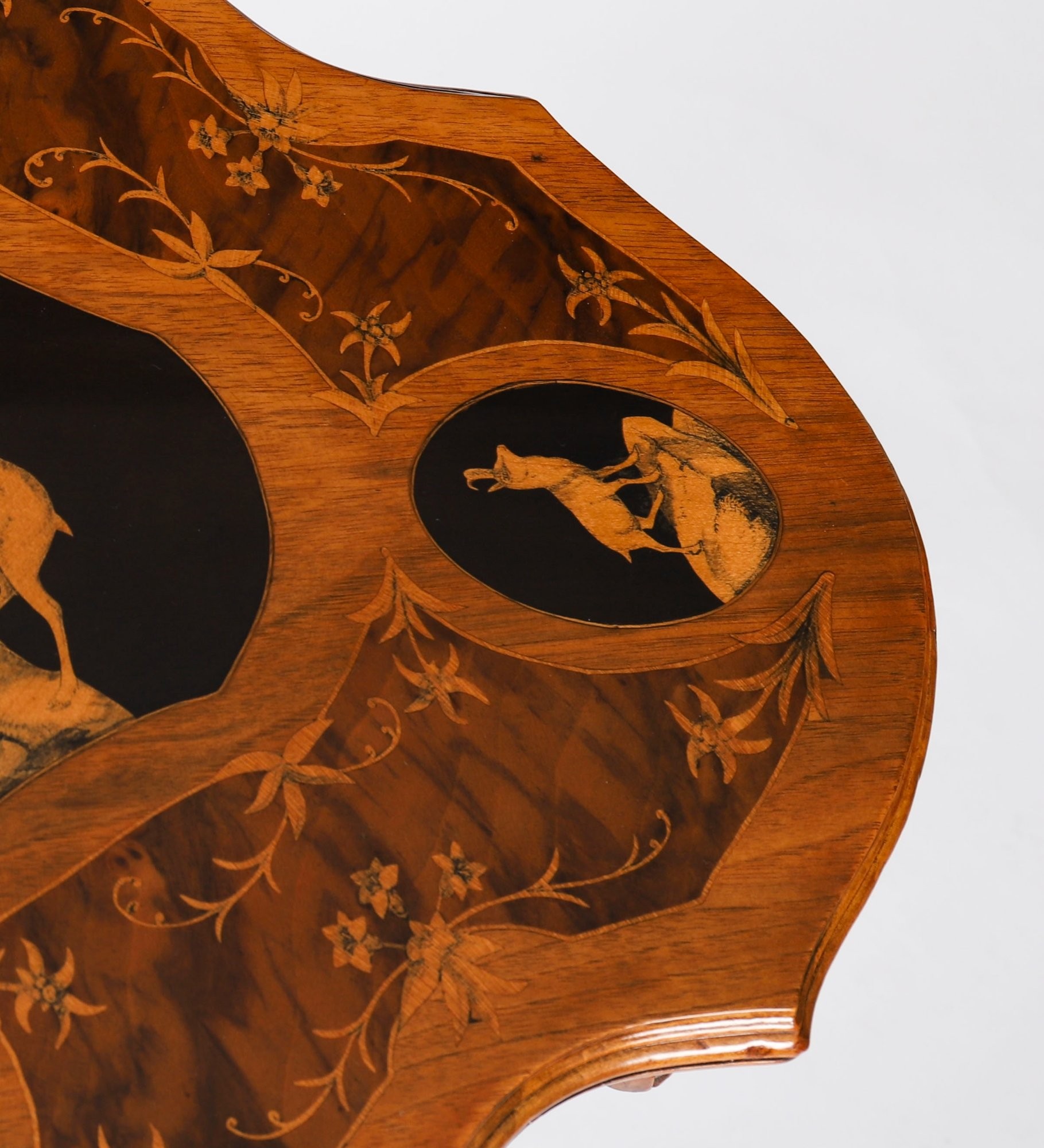
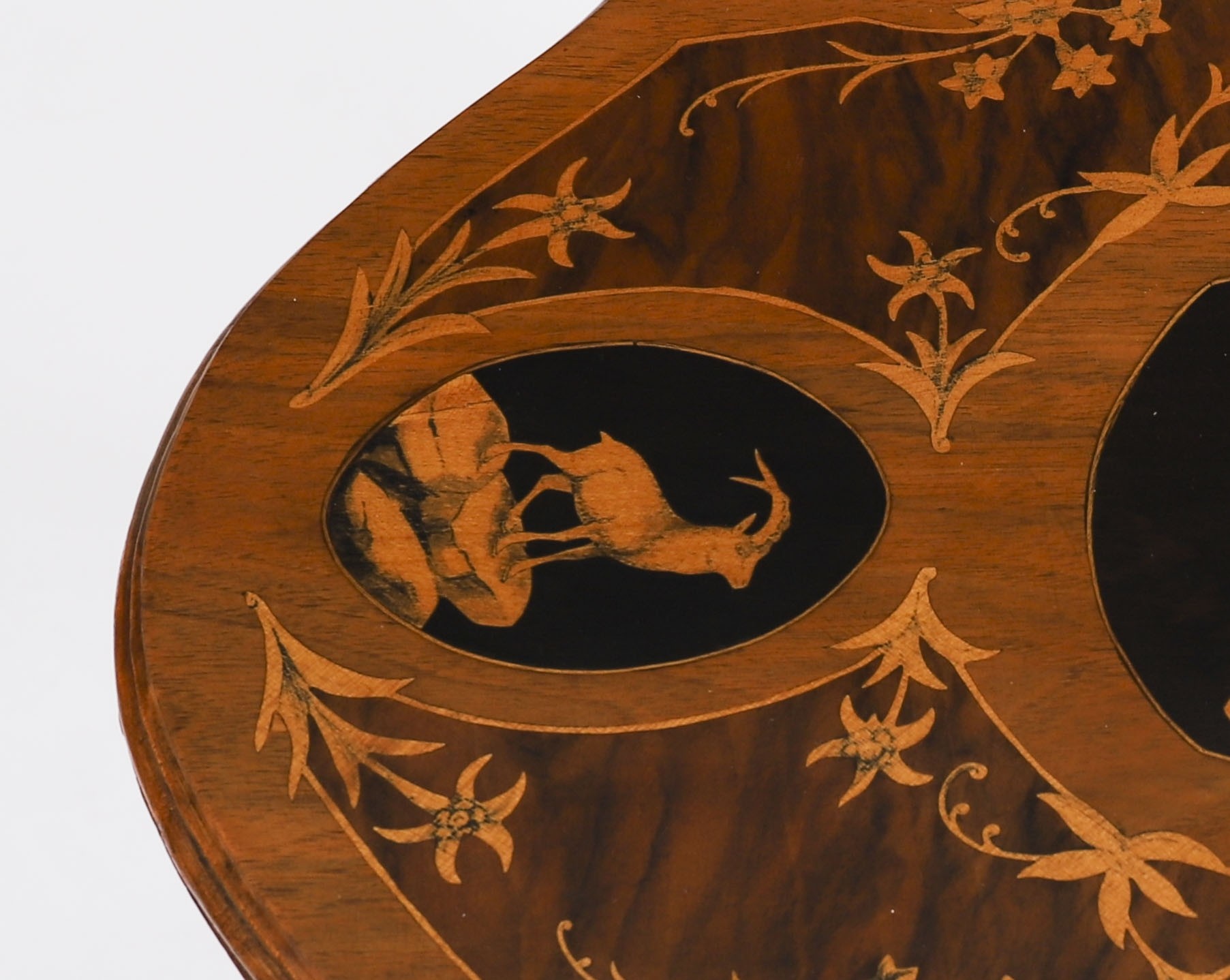
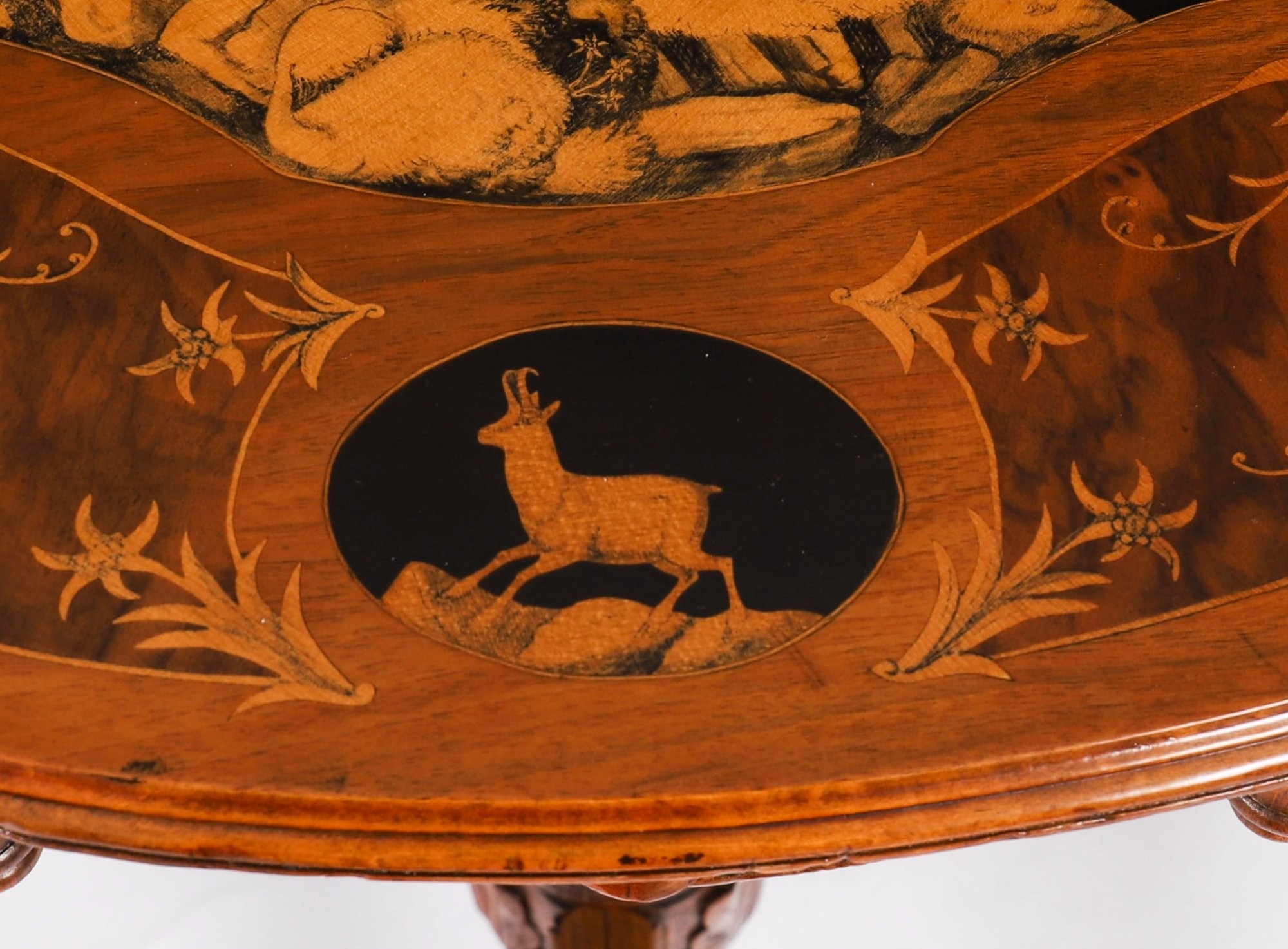
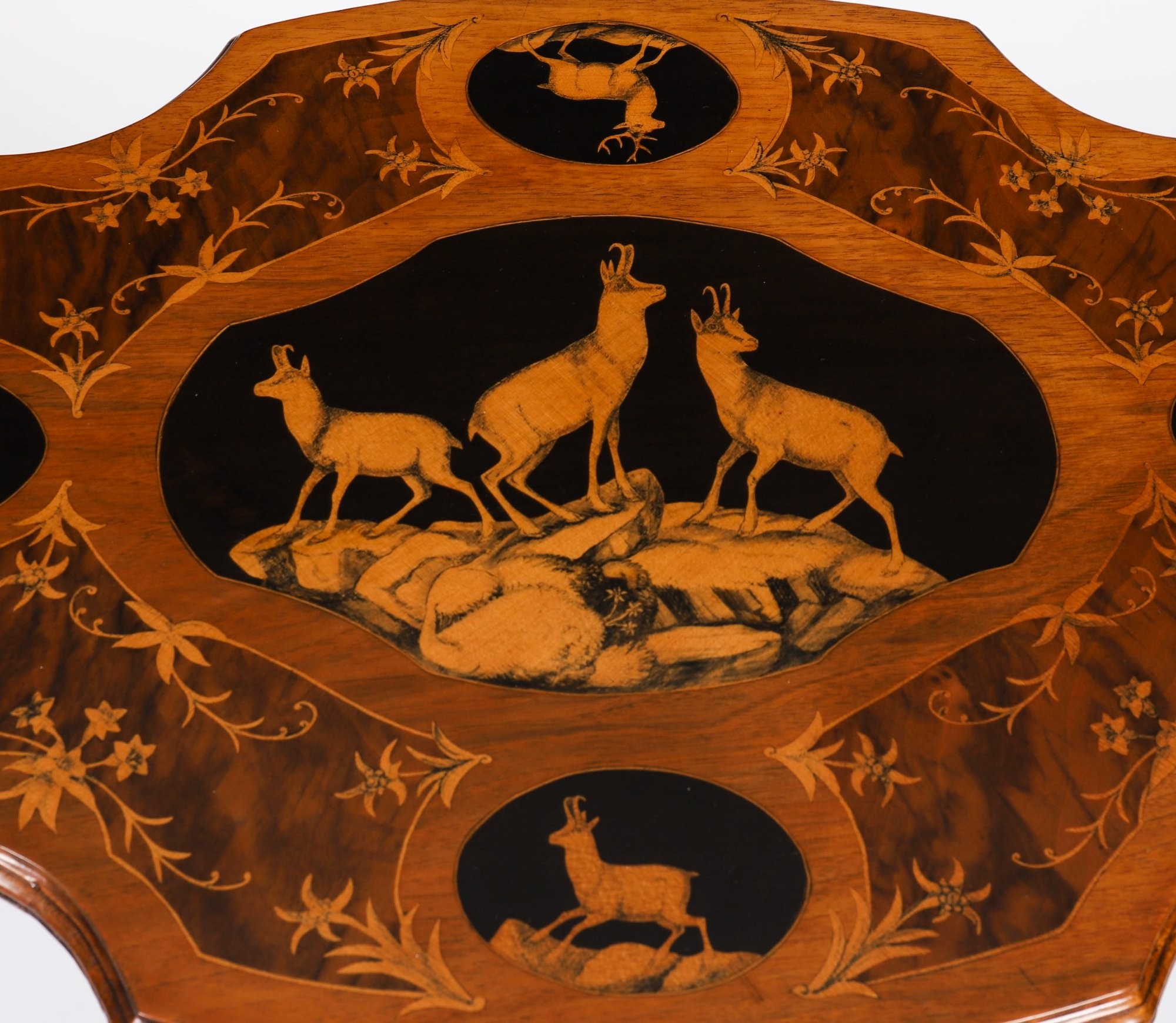
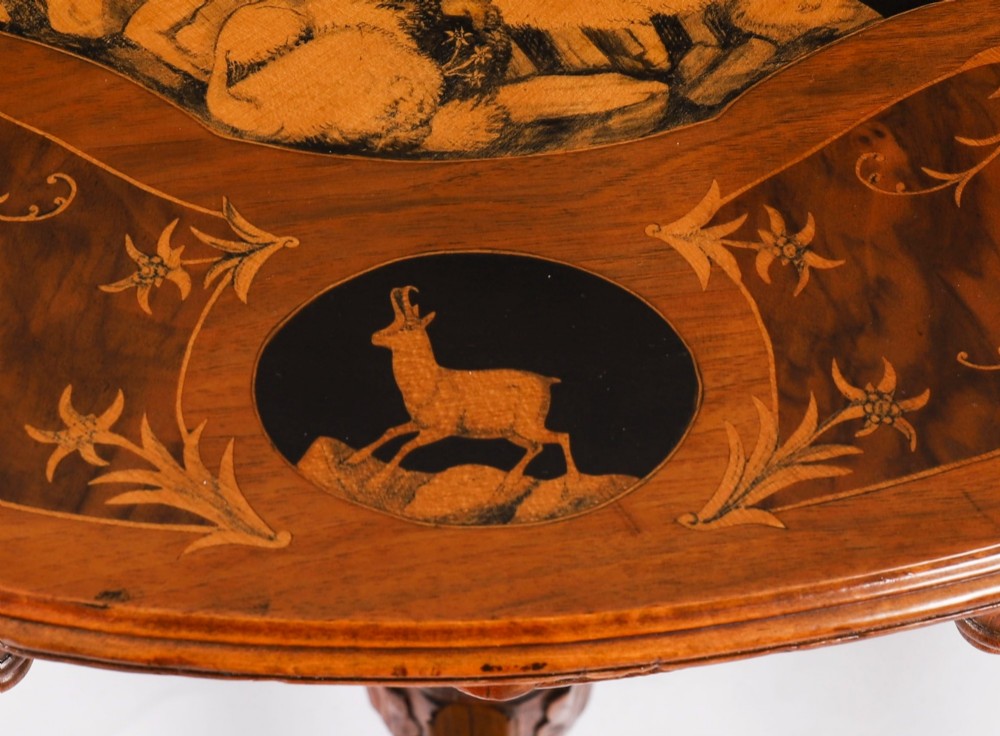
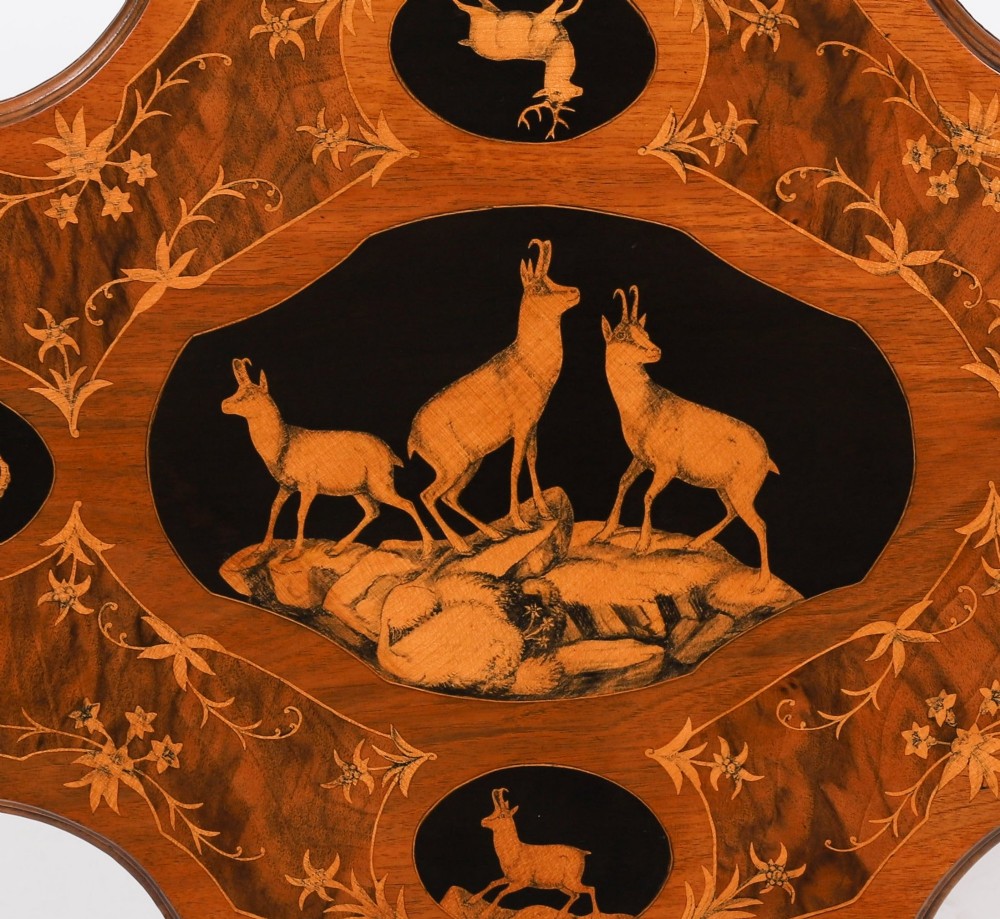
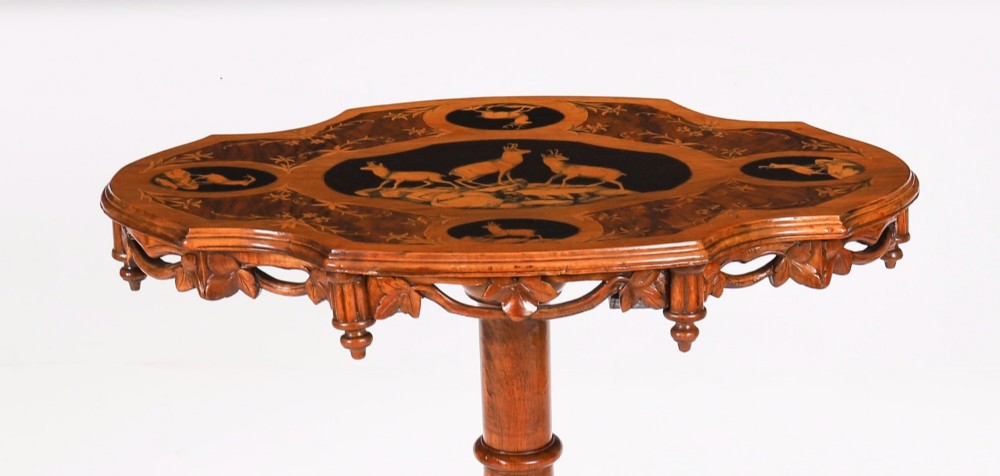
It features a shaped oval tilt top with a central cartouche depicting a chamois on an ebonised ground, and the surround with smaller panels depicting ibex and red stag alternating with floral burr walnut panels.
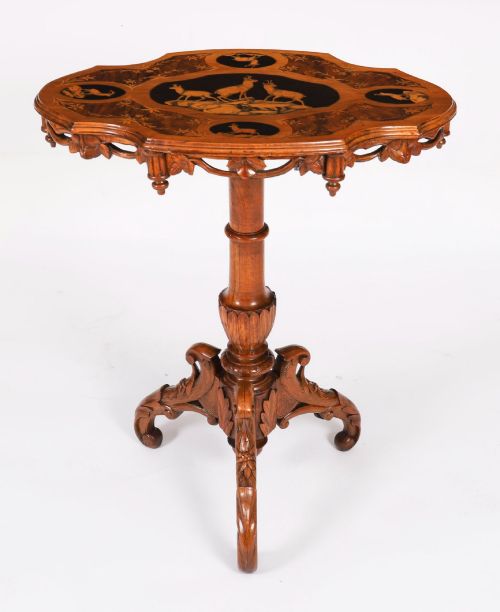
The quality and craftsmanship throughout are truly second to none.
An elegant design for your most cherished photograph.
Condition:
In excellent condition, having only been beautifully cleaned and waxed in our workshops; please see photos for confirmation.
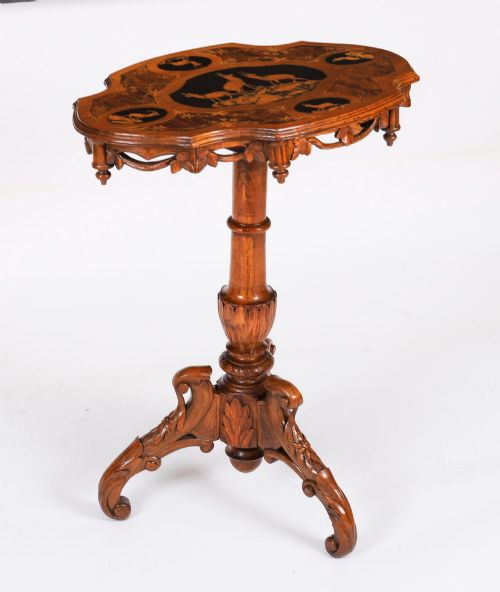
Dimensions in cm:
Height 75 cm x Width 61 cm x Depth 41.5 cm
Dimensions in inches:
Height 2 foot, 5 inches x Width 2 foot x Depth 1 foot, 4 inches
Marquetry
is decorative artistry where pieces of material of different colours are inserted into surface wood veneer to form intricate patterns such as scrolls or flowers.
The technique of veneered marquetry had its inspiration in 16th-century Florence. Marquetry elaborated upon Florentine techniques of inlaying solid marble slabs with designs formed of fitted marbles, jaspers and semi-precious stones. This work, called opere di commessi, has medieval parallels in Central Italian "Cosmati"-work of inlaid marble floors, altars and columns. The technique is known in English as pietra dura, for the "hardstones" used: onyx, jasper, carnelian, lapis lazuli and colored marbles. In Florence, the Chapel of the Medici at San Lorenzo is completely covered in a colored marble facing using this demanding jig-sawn technique.
Techniques of wood marquetry were developed in Antwerp and other Flemish centers of luxury cabinet-making during the early 16th century. The craft was imported full-blown to France after the mid-seventeenth century, to create furniture of unprecedented quality.
The Black Forest (German: Schwarzwald)
is actually located in a triangular area that borders Germany, France, and Switzerland, and it extends along the Rhine River. The area of the Black Forest is approximately 100 miles long and 40 miles wide
Wood-carving was and is a traditional cottage industry in the region, and carved ornaments now are produced in substantial numbers as souvenirs for tourists. Cuckoo clocks are a popular example; they have been made in the region since the early 18th century, and much of their development occurred there. In the past, singing bird boxes were produced as well. Luxury goods were made at the royal manufactory of the Gobelins, charged with providing furnishings to decorate Versailles and the other royal residences of Louis XIV. Early masters of French marquetry were the Fleming Pierre Golle and his son-in-law, André-Charles Boulle, who founded a dynasty of royal and Parisian cabinet-makers (ébénistes) and gave his name to a technique of marquetry employing brass with pewter in arabesque or intricately foliate designs.
Our reference: A5413
Regent Antiques has dated this Swiss Walnut Marquetry Table to the 1870s.
This is an independent date report produced by Sellingantiques using its own proprietary system. The process uses the photographs shown on this page. The system is never told the date the dealer has declared. This report shows that the two dates corroborate.
We specialise in english and continental furniture, silver, porcelain and decorative items.
You can view the stock and full dealer information on the Regent Antiques Profile Page
Regent Antiques is a registered member of LAPADA CINOA
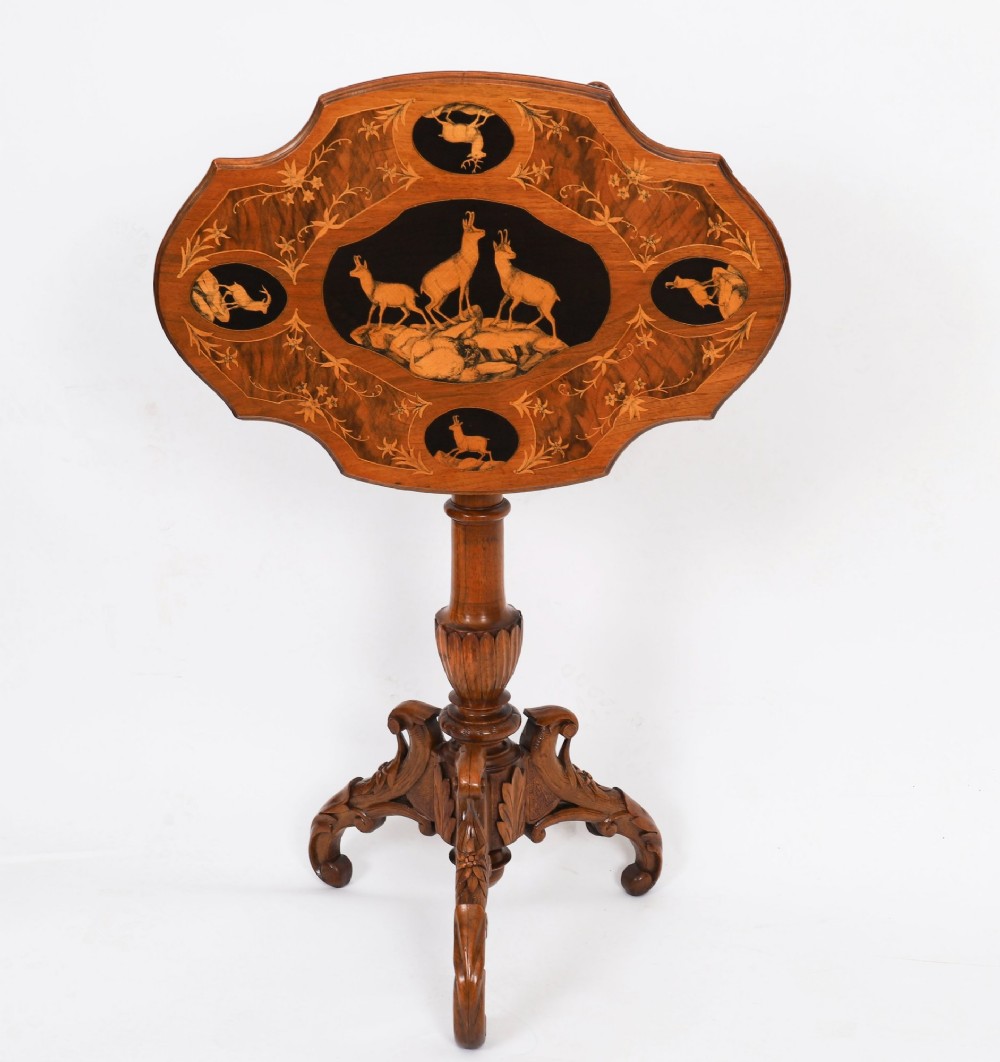
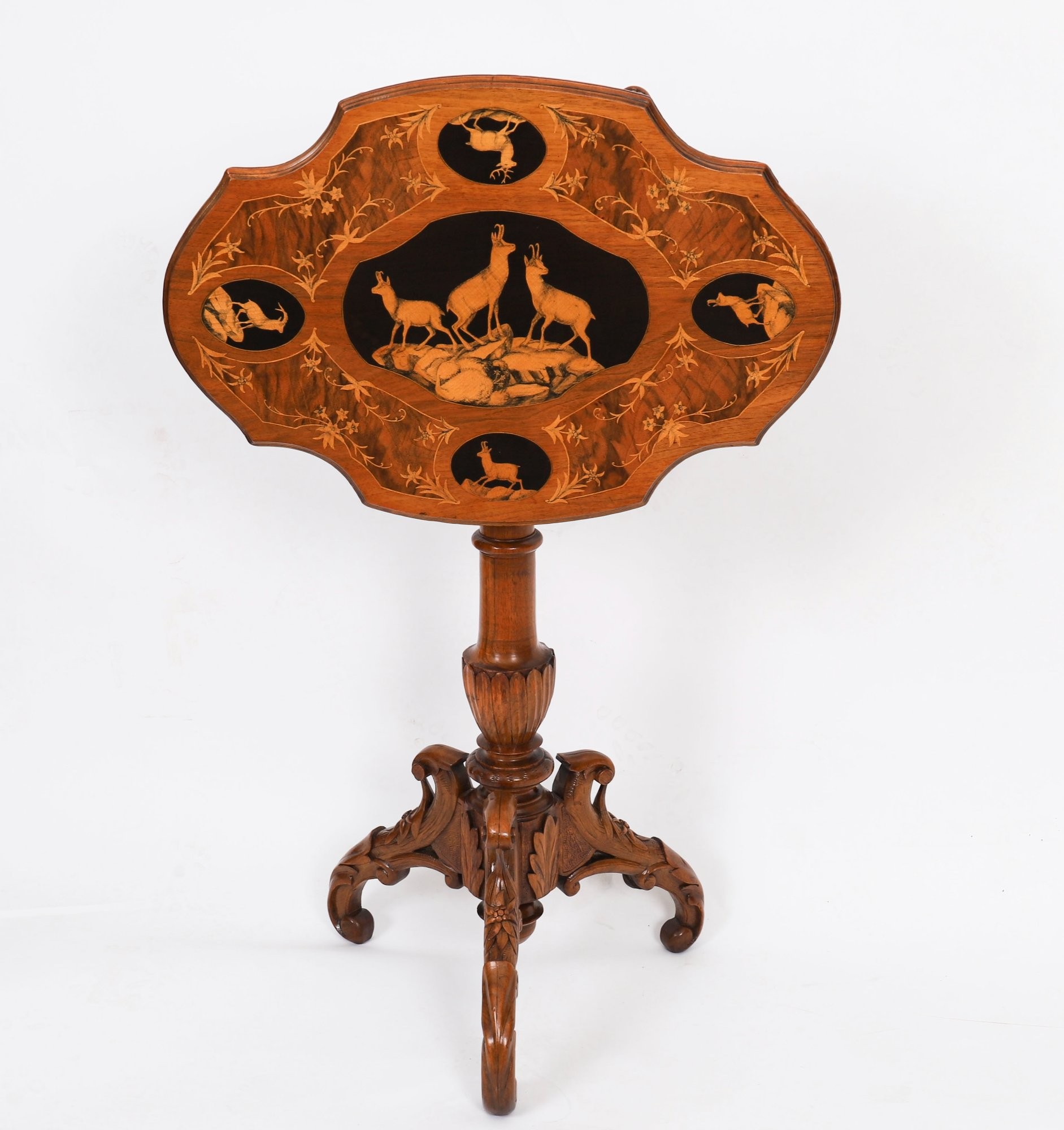
Antique Swiss Walnut Marquetry Occasional Table 19th C