

Inlaid Tilt Top Table
An inlaid tilt top table combines a practical folding mechanism with intricate surface decoration, offering both compact storage and decorative presence.
Inlaid Tilt Top Table
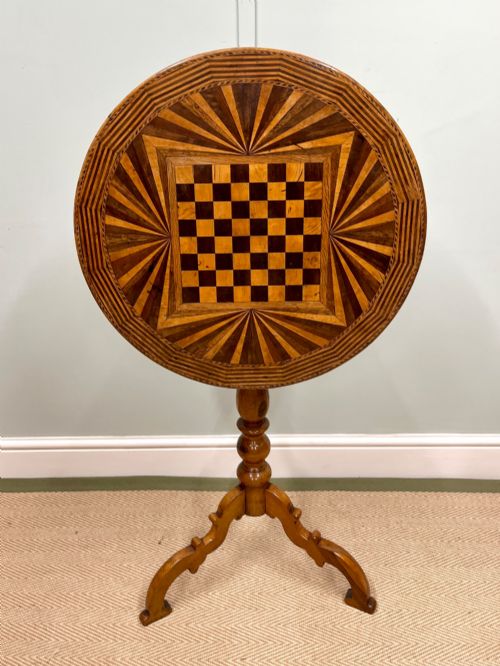
An inlaid tilt top table is typically encountered as a Victorian or Regency piece, spanning occasional, centre, and breakfast forms. These tables function as both compact wall-standing items and expansive dining surfaces due to the hinged mechanism fitted beneath the top.
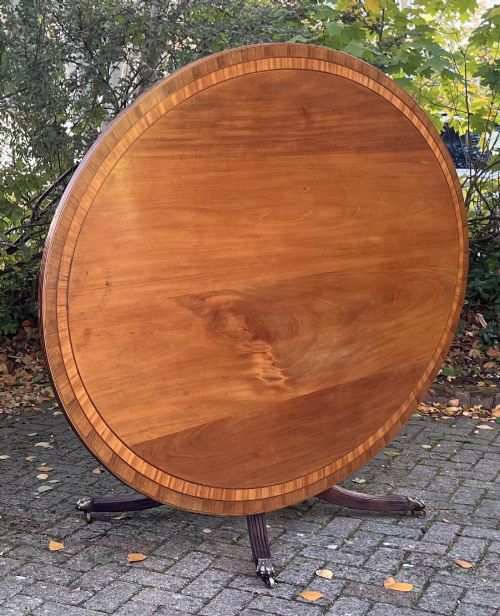
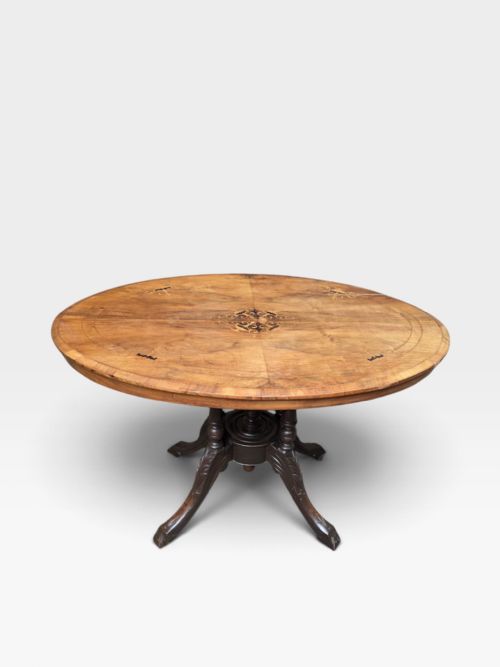
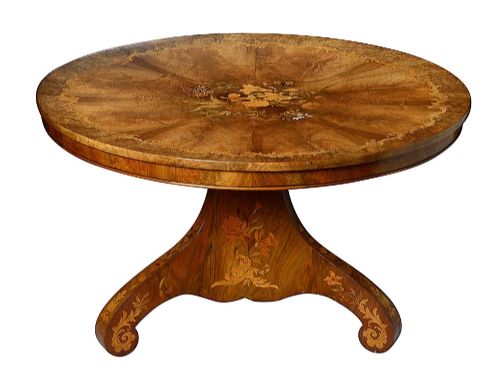
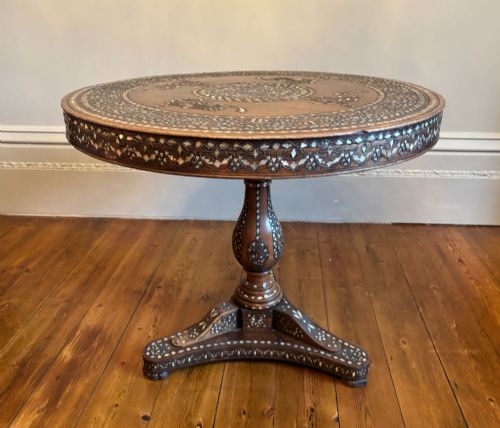
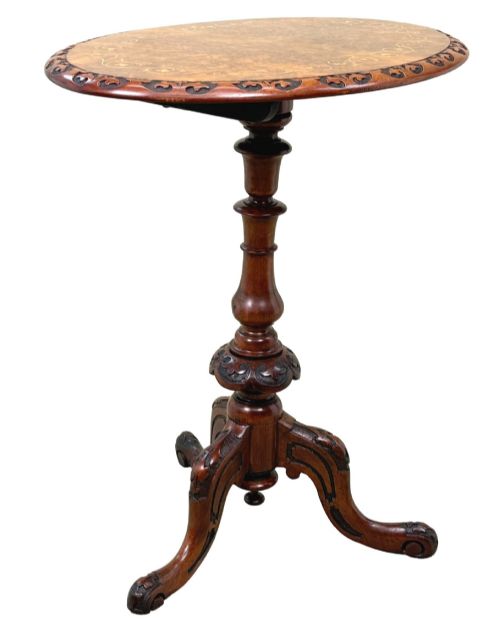
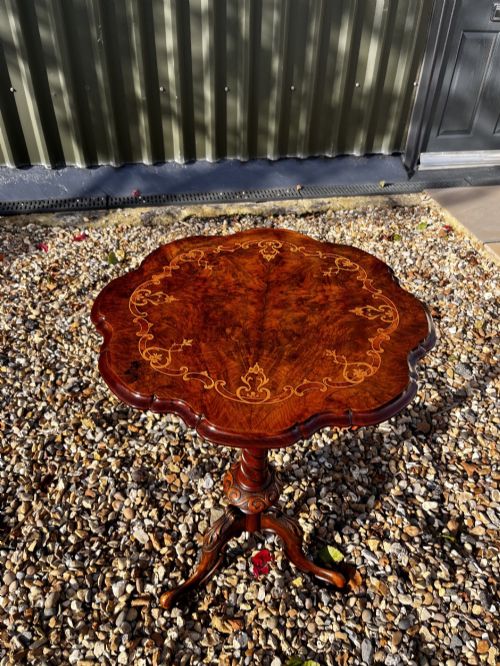
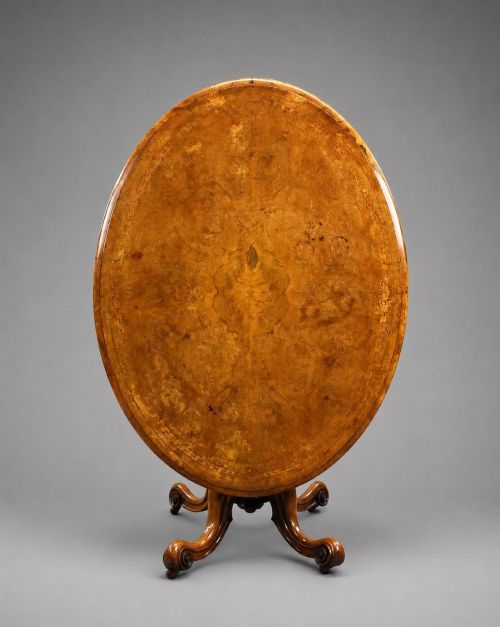
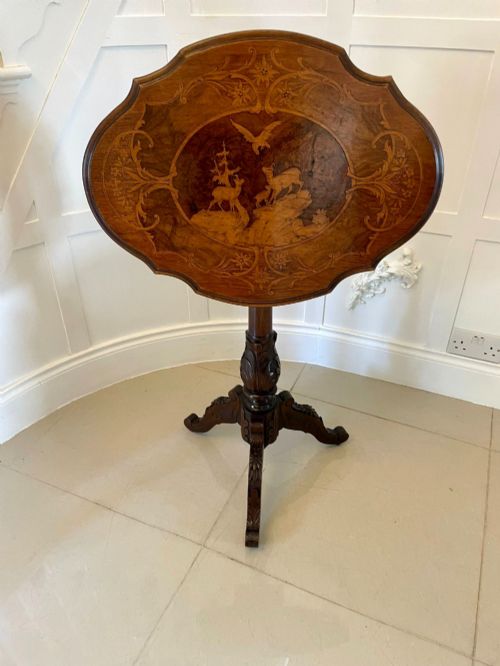
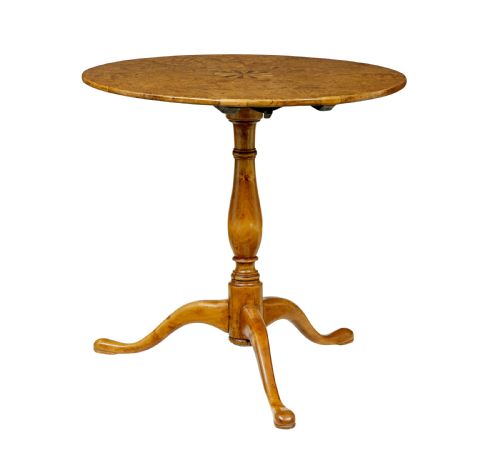
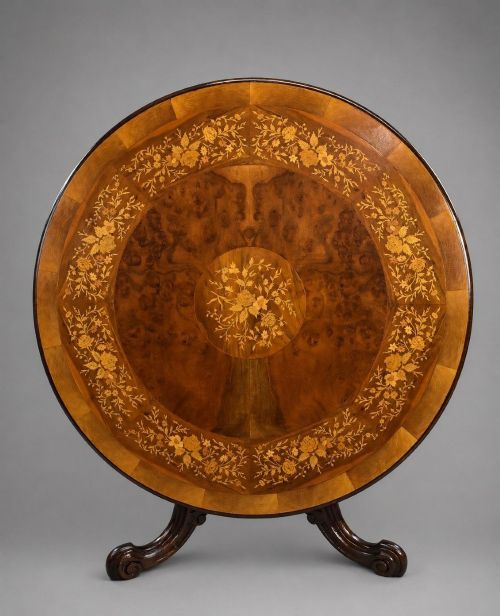
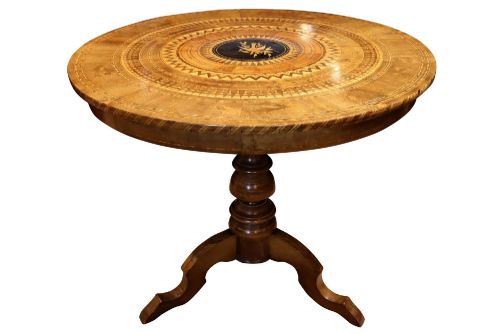
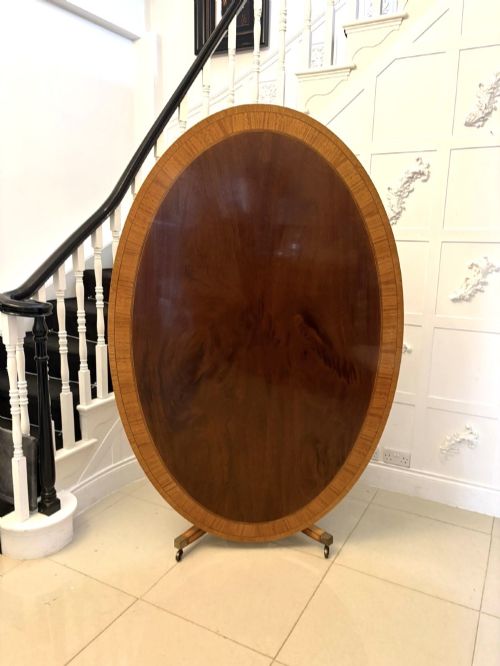
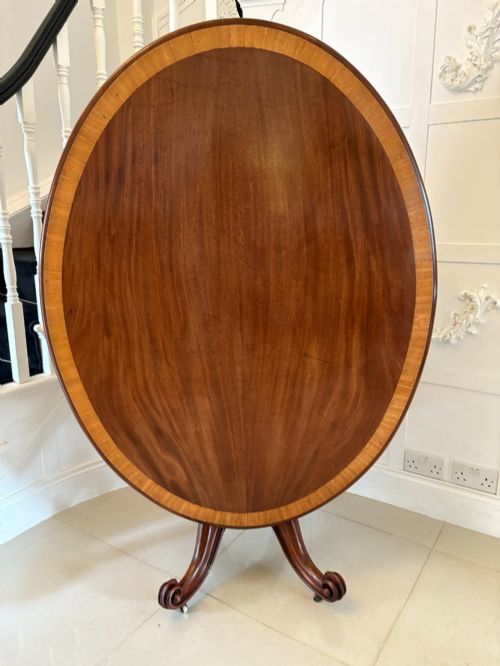
The most common examples on this page are Victorian walnut and burr walnut pieces featuring marquetry inlay and oval tops. Alongside these, buyers find round breakfast tables, occasional tripod models, and specialised Anglo-Indian or Sorrento import pieces.
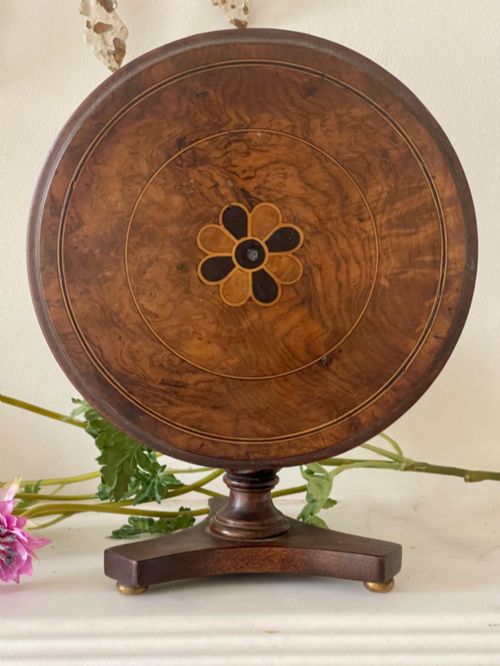
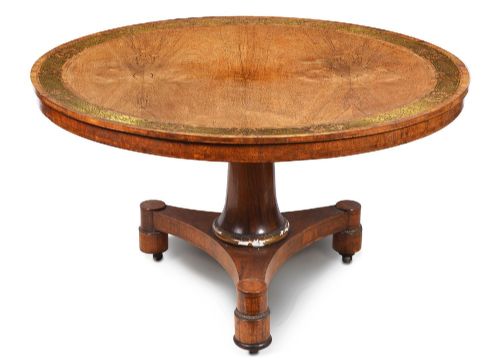
Earlier Georgian and Regency variants appear in mahogany and rosewood with simpler geometric or brass inlay. Miniature or apprentice pieces also occur, mirroring the full-scale proportions of larger loo and dining tables in a smaller format.
Materials and construction
Cabinet makers constructed these surfaces using dense native hardwoods such as mahogany, walnut, and rosewood, often enhanced by decorative veneers like burr elm or satinwood. The tilting mechanism relies on a sturdy central pedestal supported by three or four legs.
Surface decoration incorporates marquetry inlay, mother of pearl, ivory, fruitwood, and brass detailing. These materials were carefully cut and fitted into the primary timber ground to create contrasting floral, geometric, or pictorial motifs.
Inlaid Tilt Top Table Retail Price Guide 2026
Typical asking prices for inlaid tilt top table among the pieces listed under this phrase on Sellingantiques today, from the lower quarter to the upper quarter. They describe what is for sale here now, not the wider market.
Miniature apprentice pieces appear among the full-sized breakfast and loo tables, serving as tiny trial models.
Judging the standard of an inlaid tilt top table
Quality rests in the precision of the inlay work and the choice of underlying timber veneers. Tables displaying finely figured burr walnut, rosewood, or complex marquetry represent the upper tier of execution.
The stability of the central hinge and tripod base determines mechanical success. Superior pieces maintain a flush fit when the surface is locked horizontal and show no wobble in the pivoting mechanism.
The Inlaid Tilt Top Table Glossary
- Tilt top
- A table mechanism that allows the surface to pivot vertically for storage against a wall when not in use.
- Marquetry
- A technique of fitting decorative wood veneers and other materials into a primary background to form complex patterns.
- Loo table
- A large Victorian table, frequently oval and tilt top, originally designed for the card game loo.
- Specimen table
- A surface constructed from multiple varied timber samples, often displaying different grain patterns and colours.
- Tripod table
- A piece supported by a single central pillar resting on three spreading feet.
Inlaid Tilt Top Table: Frequently Asked Questions
What is an inlaid tilt top table?
An inlaid tilt top table is a historical piece of furniture featuring a hinged top that rotates to a vertical position for convenient storage. The surface is decorated with contrasting wood veneers, mother of pearl, or brass.
These tables served diverse functions in period homes, operating as dining surfaces, breakfast tables, or decorative occasional furniture in parlours and drawing rooms.
How do I use a tilt top table?
To use the table, release the retaining catch beneath the top and pivot the surface from vertical to horizontal until it locks securely onto the pedestal base. This allows the piece to function as a stable centre or side table.
When floor space is required, simply reverse the action to stand the table flat against a wall, utilising its hinged design for compact storage.
How do I date an inlaid tilt top table?
Dating relies on identifying the primary timbers, the style of the pedestal base, and the nature of the inlay work. Regency examples often feature rosewood with brass stringing, while Victorian pieces frequently showcase burr walnut with elaborate marquetry.
Construction methods and leg configurations, such as tripod bases with carved cabriole legs or octagonal columns, also provide clear indicators of the manufacturing period.
Are these tables suitable for everyday dining?
Many larger examples, particularly Victorian loo and breakfast tables, were built robustly enough for substantial daily use. Their pivoting mechanisms are engineered to support weight when locked horizontally.
Care should be taken to protect delicate marquetry and veneered surfaces from excessive moisture and heat by using appropriate table coverings during meals.