


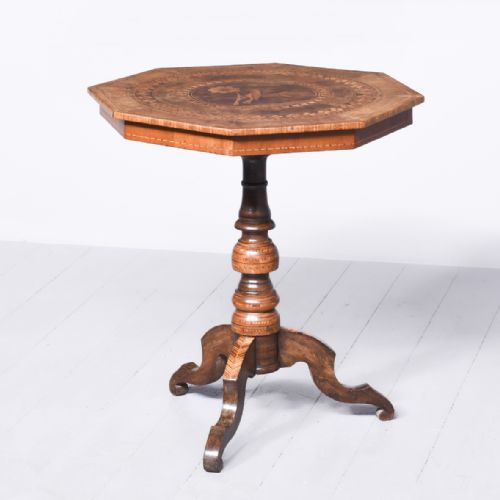

Sorrento Ware Table
These sorrento ware table pieces bring intricate Italian marquetry into the home, offering collectors tactile surfaces and rich wood tones.
Sorrento Ware Table
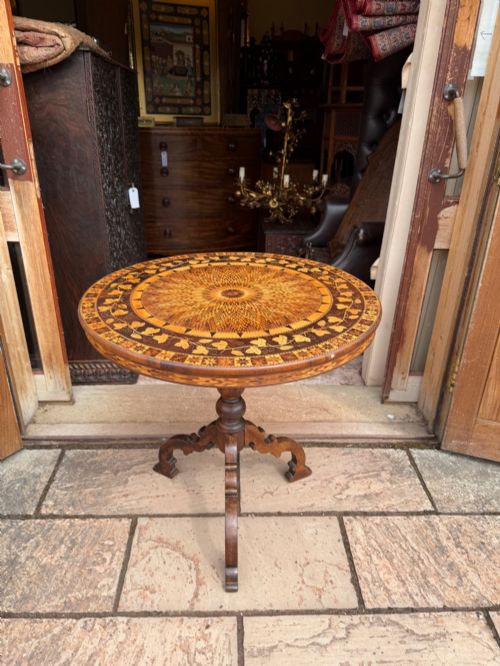
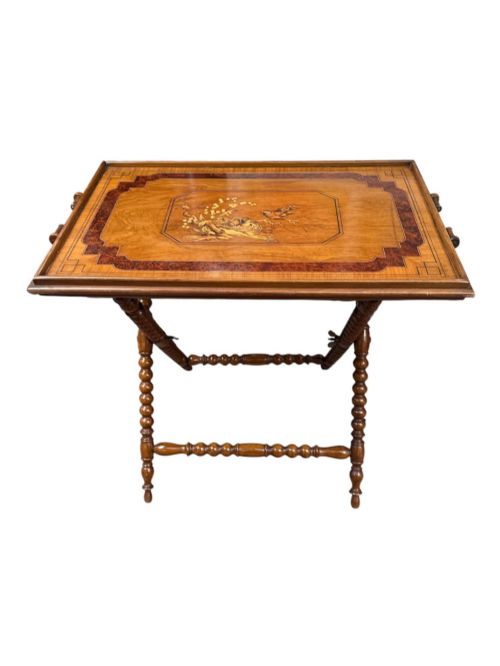
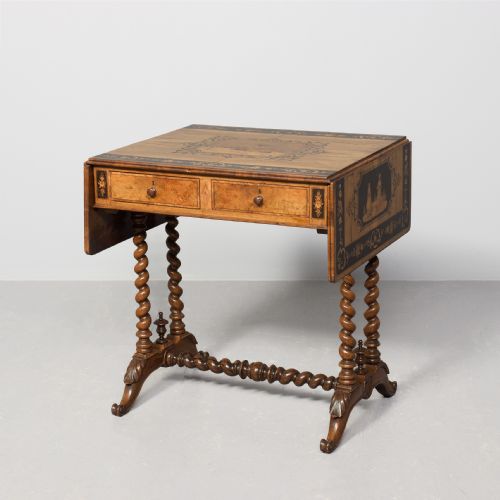
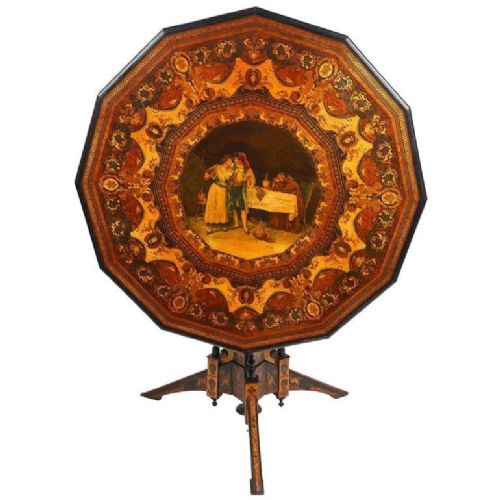
A sorrento ware table combines European craftsmanship with intricate wood-working traditions, spanning occasional tables, side tables, and tray tables. When exploring a sorrento ware table, buyers encounter varied forms like folding travel items, pedestal bases, and gueridon designs.
Most examples originate from the nineteenth century, including Victorian and Edwardian periods, alongside Grand Tour Italian items. These pieces showcase detailed floral and geometric motifs across tops that frequently utilise multiple timber species.
Occasional and coffee tables dominate the surviving selection, often featuring tripod bases or fitted butler trays. Each sorrento ware table serves as a functional surface whilst displaying elaborate surface decoration typical of Italian workshops.
Materials and construction
Makers constructed these surfaces using solid foundations of walnut, olive wood, and fruitwood, applying mixed hardwood veneers over the primary structure. Marquetry inlay and parquetry techniques required precise cutting of contrasting timber pieces to form complex pictorial or geometric designs.
Craftsmen utilised natural wood tones rather than artificial dyes, selecting woods like olivewood and fruitwood for their distinct grain patterns and varied colours. Skilled hands assembled these individual veneer segments meticulously onto table tops, mirrors, and tray surfaces.
Sorrento Ware Table Retail Price Guide 2026
Typical asking prices for sorrento ware table among the pieces listed under this phrase on Sellingantiques today, from the lower quarter to the upper quarter. They describe what is for sale here now, not the wider market.
Listings feature items from the 19th Century, Victorian, and Edwardian periods, constructed in walnut, olive wood, and fruitwood.
Assessing quality and execution
Quality rests primarily in the precision of the marquetry inlay and the complexity of the botanical or geometric compositions across the top. Superior examples display tighter joins between contrasting veneers and greater variation in the natural timber species utilised.
The architectural stability of the pedestal, tripod, or folding mechanism also distinguishes finer items from simpler production pieces. Well-preserved surfaces retain their original polish, allowing the natural grain of the walnut and olivewood to show clearly.
Almerico Gargiulo
The Sorrento Ware Table Glossary
- Marquetry inlay
- The art of creating decorative patterns on a wooden surface by fitting together small pieces of tinted or natural wood veneer. This technique defines the visual character of the tabletop.
- Parquetry
- A geometric mosaic of wood pieces used for decorative floors and table surfaces. It creates repeating patterns across the timber.
- Gueridon
- A small decorative stand or table, often supported by a central pillar or figures. These French-derived forms found favour in nineteenth-century Italian workshops.
- Grand Tour
- A traditional trip through Europe undertaken by upper-class Europeans, particularly during the eighteenth and nineteenth centuries, to acquire art and cultural artefacts. Many Sorrento items were brought back by these travellers.
- Specimen wood
- Timbers chosen for their unique colour, grain, or rarity, often assembled into sample tables or decorative panels. Makers used these to display botanical diversity.
Sorrento Ware Table: Frequently Asked Questions
How do I date a sorrento ware table?
Dating relies on examining the construction methods, wood types, and stylistic indicators such as pedestal bases or Victorian framing. Most pieces date from the nineteenth century, spanning periods from the 1860s through the Edwardian era.
Signatures or labels on the underside sometimes provide specific maker attribution, such as works associated with Almerico Gargiulo. Comparing the complexity of the marquetry and the hardware used also helps narrow down the production decade.
How should I care for my table?
Maintain these wooden surfaces by keeping them away from direct sunlight and extreme humidity fluctuations to prevent veneer cracking. Regular dusting with a soft, dry cloth preserves the polished finish without harming the delicate inlaid timber.
Avoid placing hot cups or moisture directly onto the antique wood surface, using coasters or protective mats instead. Gentle conditioning with appropriate furniture wax helps maintain the natural lustre of the olivewood and walnut.
What woods are used in Sorrento ware?
Craftsmen utilised a variety of native and exotic timbers to achieve contrasting colours in their inlaid pictorial designs. Walnut and olive wood served as primary structural materials and backgrounds for the intricate work.
Fruitwood and other mixed hardwood veneers provided lighter and darker shades for shading floral motifs and geometric borders. The natural grain of each wood species contributed to the visual depth of the finished tabletop.