







Italian Marquetry Furniture
Italian marquetry furniture brings together intricate wood inlay and classical forms, offering rich historical character for the home.
Italian Marquetry Furniture
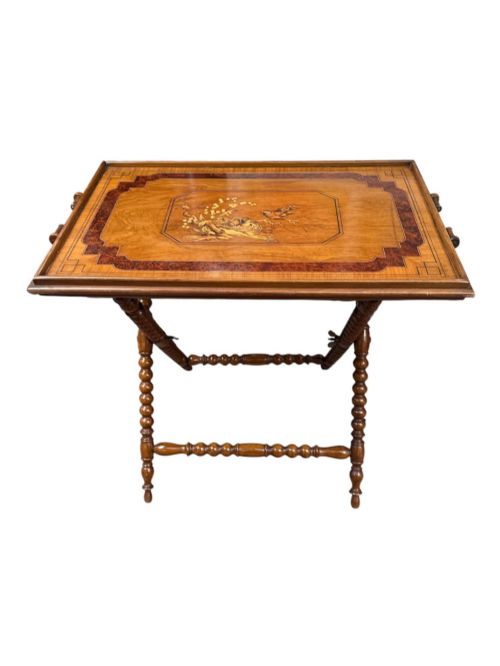
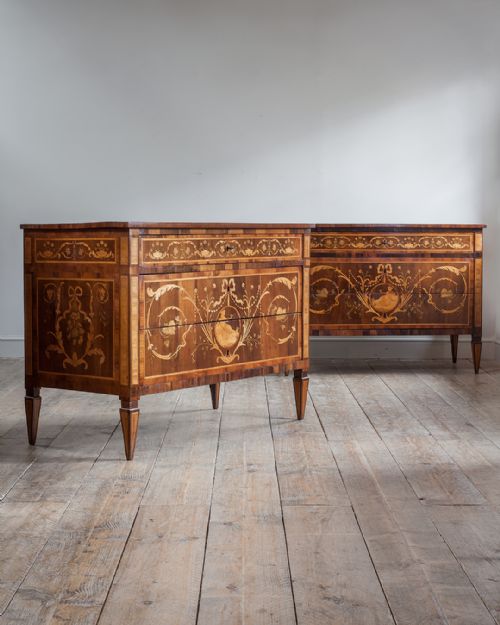
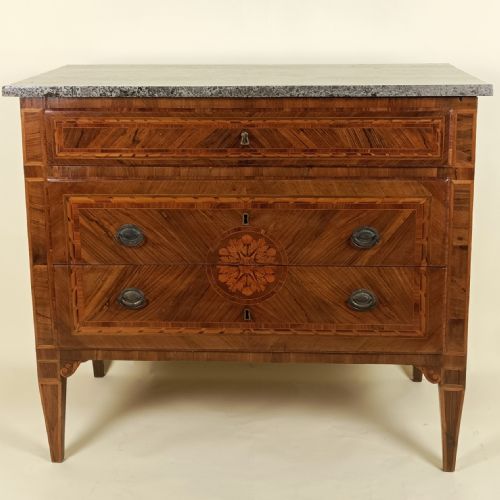
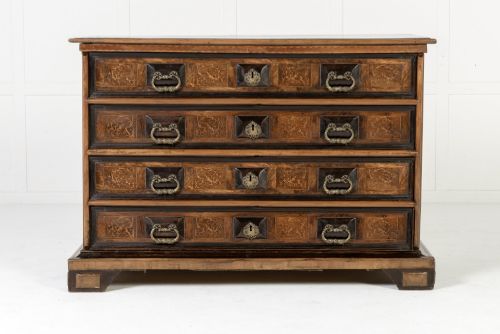
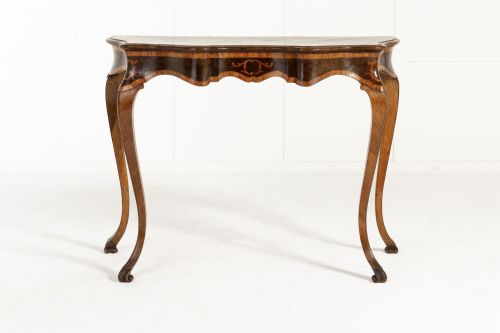
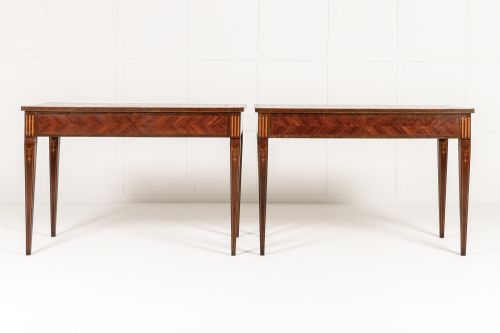
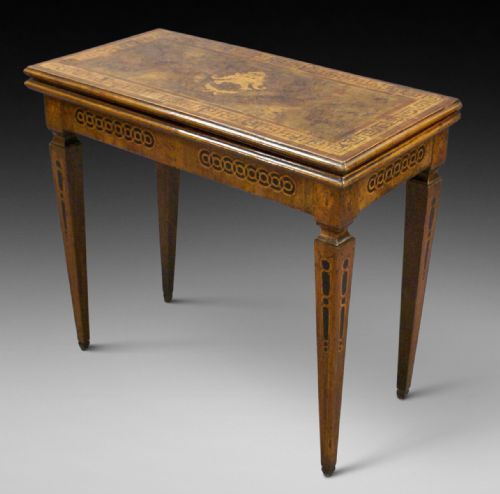
Italian marquetry furniture encompasses decorative chests of drawers, console tables, and occasional tables spanning the eighteenth and nineteenth centuries. Buyers searching for Italian marquetry furniture frequently encounter Sorrento ware pieces from the Victorian era alongside eighteenth-century commodes.
The selection ranges from neoclassical commodes to Moorish revival cabinets and low tables. Pieces originate from various regions, including Lombardy and Sorrento, reflecting distinct local stylistic traditions.
Materials and construction methods
Craftsmen built these pieces using walnut, kingwood, and olive wood as primary timber supports. Fruitwood inlay and brass embellishments provided contrasting tones and metallic accents for intricate surface patterns.
Woodcutters shaped diverse timber veneers to create pictorial and geometric marquetry designs. These veneers were applied meticulously to structural carcases such as chests and tables.
Object forms include corner shelves, butler's tray tables, and secretaire desks alongside standard chests of drawers.
Assessing quality and execution
Quality rests upon the precision of the veneer work and the complexity of the inlaid designs. Superior examples display seamless integration of multiple fruitwoods and natural grain variations across the surface.
The architectural proportion of the underlying furniture piece determines its overall standing. Master workshops achieved greater depth and balance in their pictorial compositions than routine production items.
Adriano Brambilla·Almerico Gargiulo
The Italian Marquetry Furniture Glossary
- Marquetry
- Decorative veneer applied to a wood structure in patterns or pictures. It differs from inlay by covering the entire surface rather than being set into recessed cavities.
- Sorrento ware
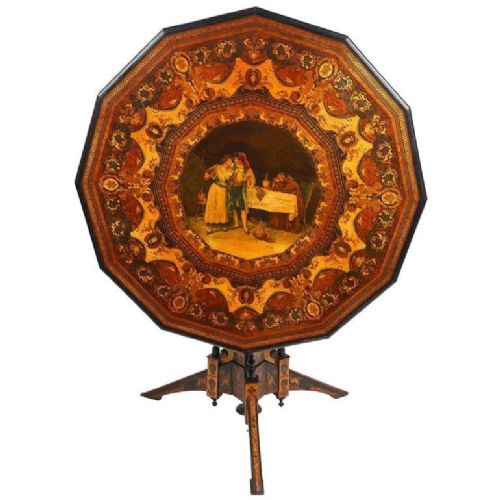
- Woodwork and marquetry produced in the Italian town of Sorrento during the nineteenth century. This work often incorporates local olive wood and intricate geometric motifs.
- Commode
- A decorative chest of drawers designed for formal rooms. Eighteenth-century versions frequently feature serpentine fronts and elaborate veneered surfaces.
- Kingwood
- A dense, dark timber utilised for high-end cabinet making. Its distinct grain patterns contrast effectively with lighter fruitwoods in marquetry panels.
- Neoclassical
- A style drawing inspiration from classical antiquity. It emphasises symmetry, straight lines, and restrained decorative elements.
Italian Marquetry Furniture: Frequently Asked Questions
How do I date these pieces?
Dating relies on stylistic markers such as neoclassical symmetry or Victorian revival motifs. Construction details and timber choices further clarify the production period.
Eighty-century pieces often display robust walnut frames, whereas nineteenth-century Sorrento examples utilise lighter olive wood veneers and distinct pictorial themes.
Where should I place a commode?
A commode serves well in a hallway, drawing room, or bedroom as a primary statement piece. Its decorated surface and drawers provide both visual weight and functional storage.
Keep such timber pieces away from direct sunlight and strong heat sources to preserve the delicate fruitwood veneers.
What is Sorrento ware?
Sorrento ware refers to decorative wooden items and furniture produced in coastal Italy during the nineteenth century. It is celebrated for intricate mosaic inlay and local timber usage.
Tables and trays from this tradition often depict architectural scenes or complex geometric patterns executed in diverse fruitwoods.
How do I care for inlaid wood?
Maintain the finish by dusting with a soft, dry cloth and avoiding liquid polishes or harsh chemical cleaners. Consistent indoor humidity prevents the wood veneers from cracking or lifting.
Periodic waxing by a specialist helps nourish the antique timber surfaces without harming the intricate marquetry work.