
Brown Wood Tilt Table
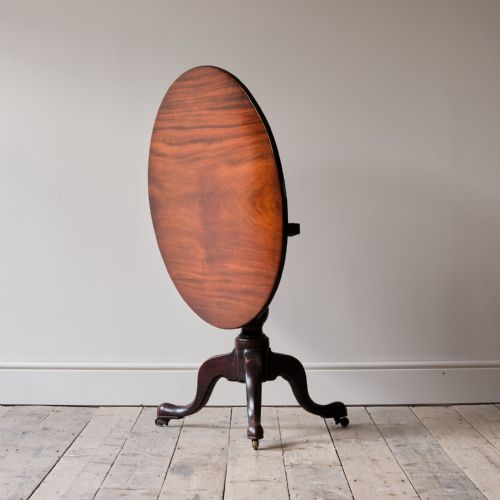
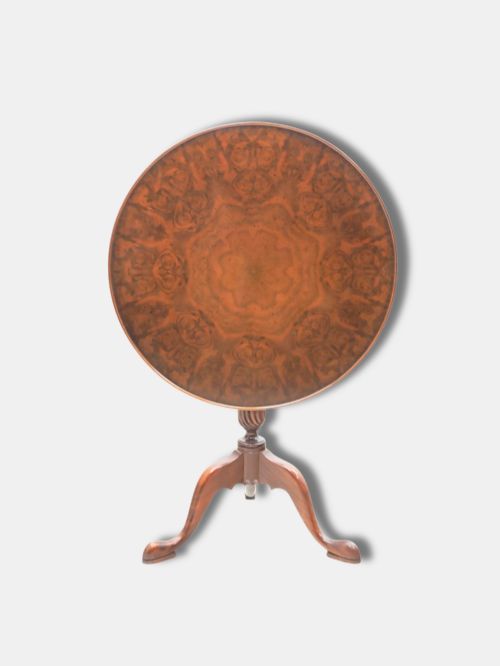
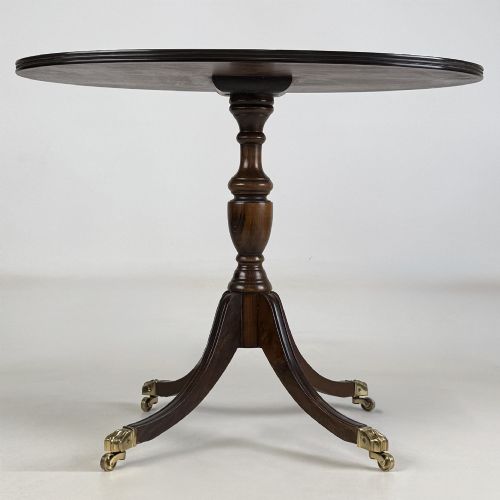
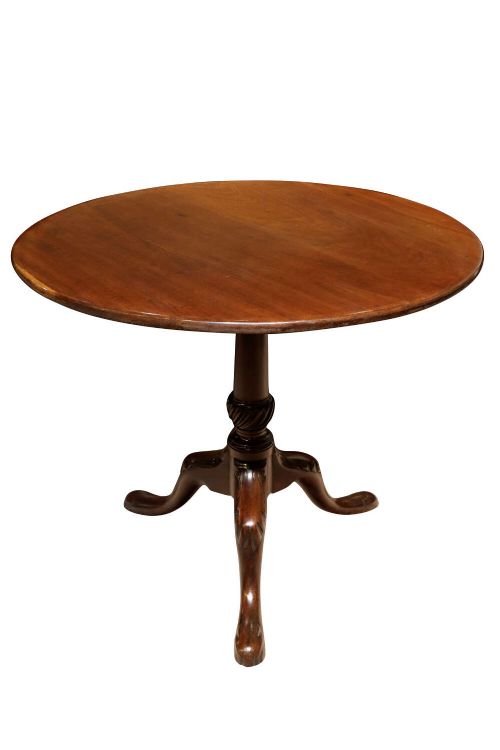
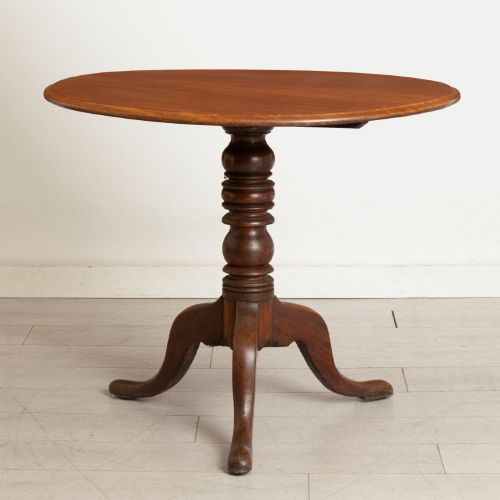
A brown wood tilt table offers both a sturdy surface and a clever folding mechanism for compact storage.
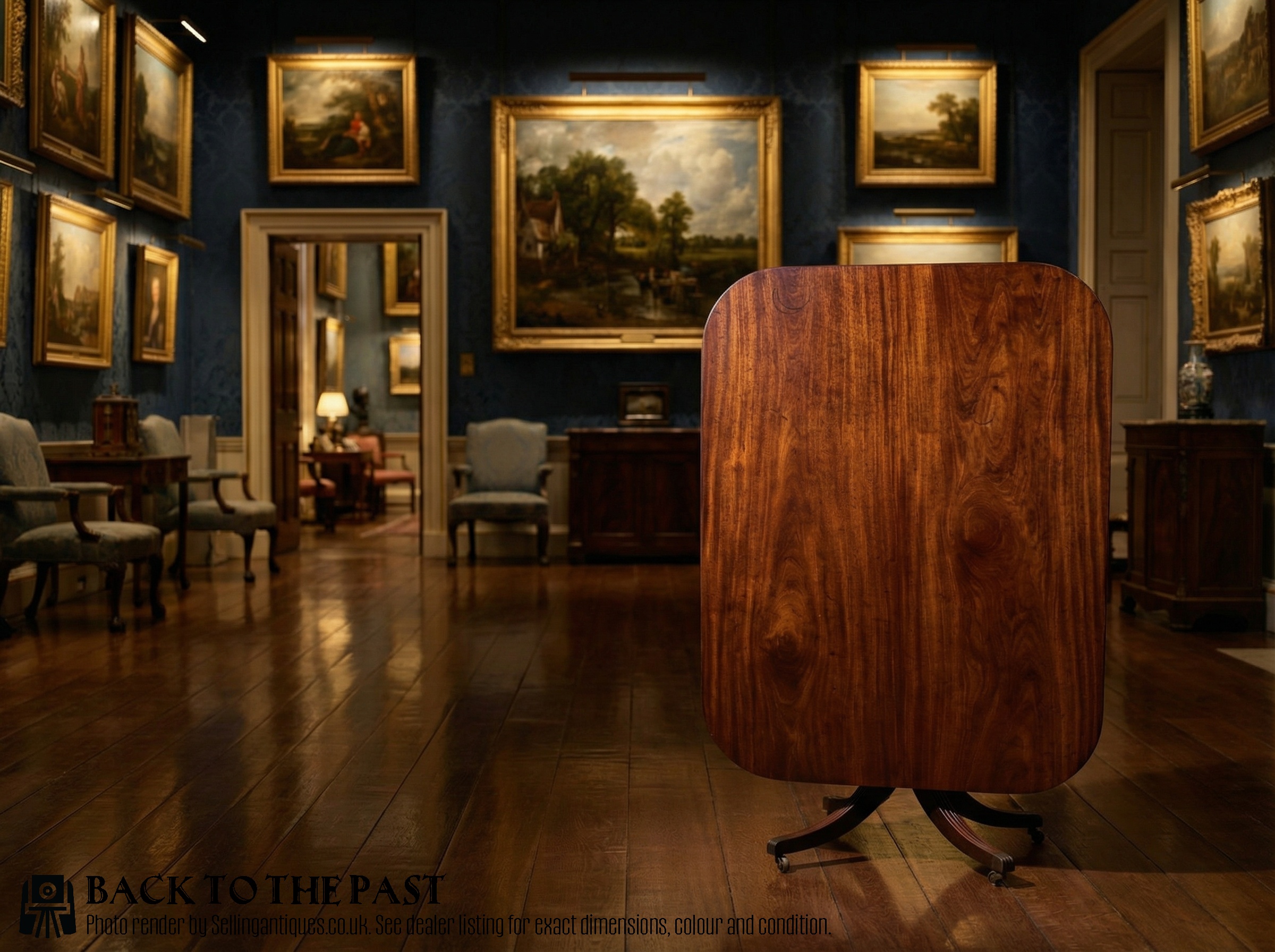
Identifying a brown wood tilt table
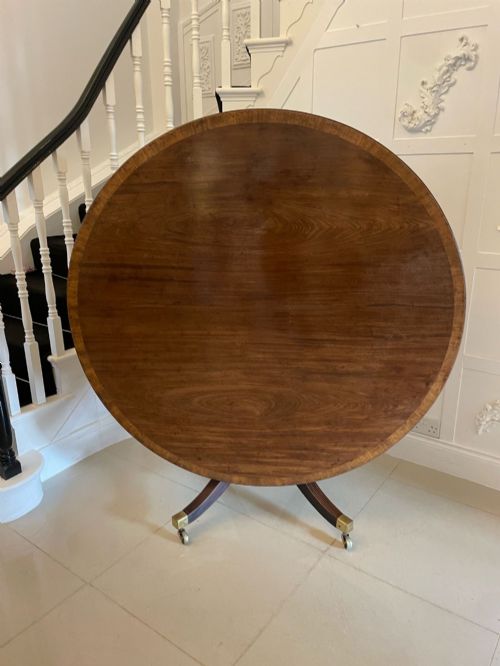
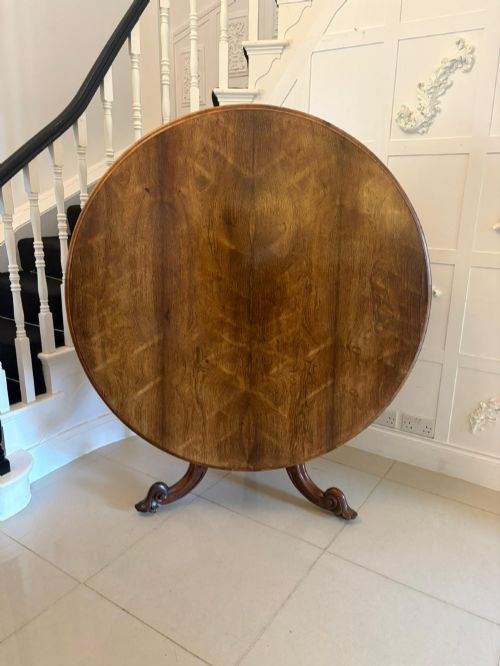
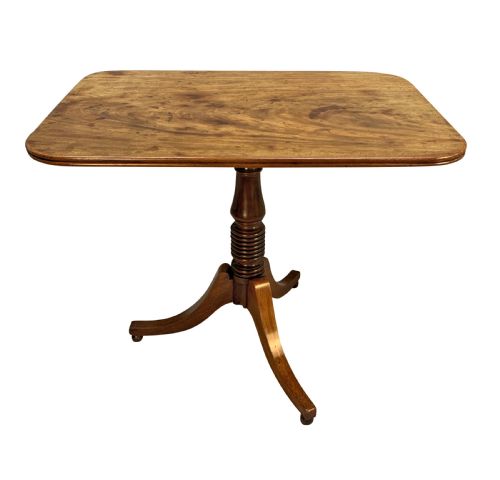
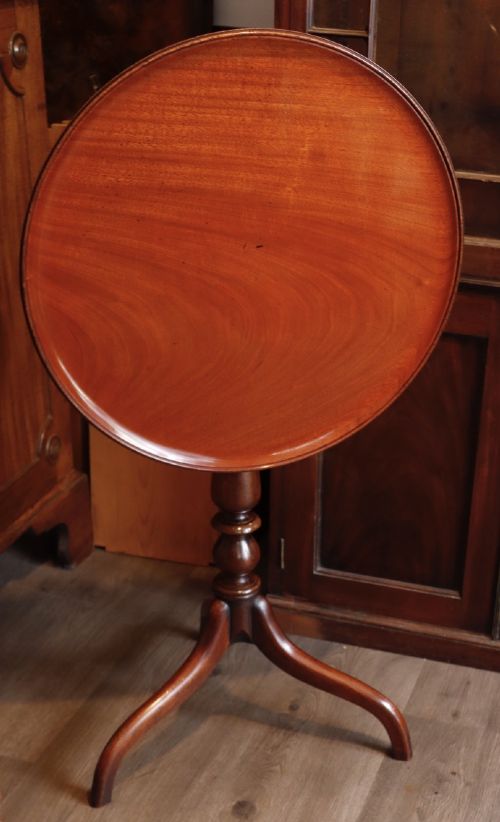
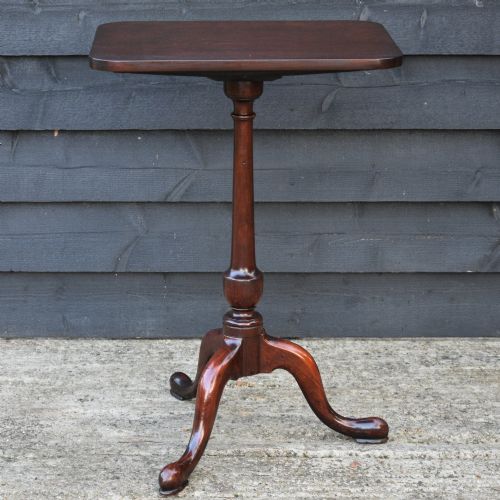
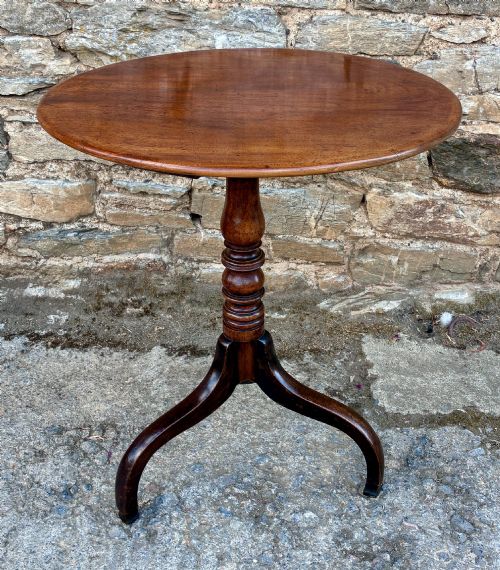
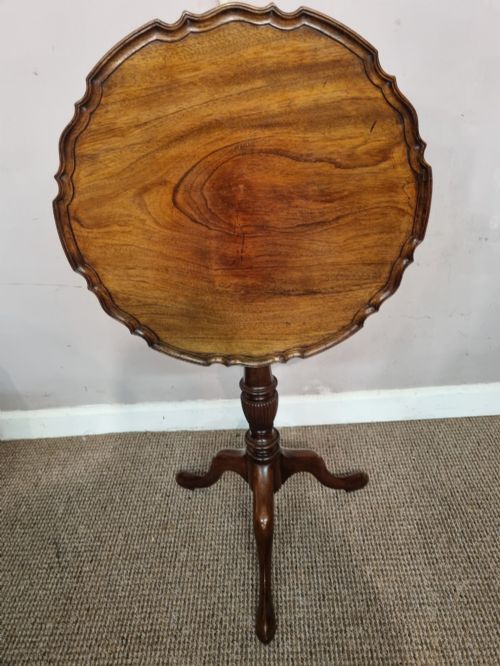
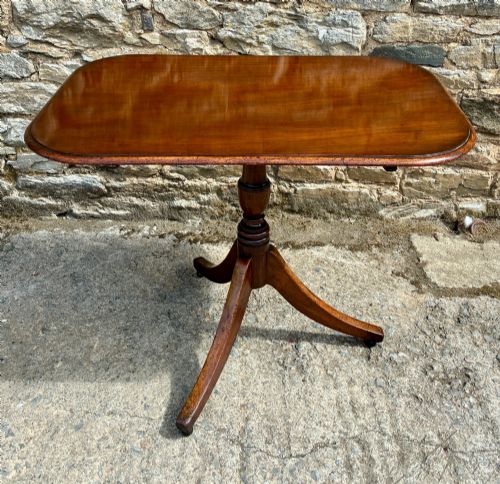
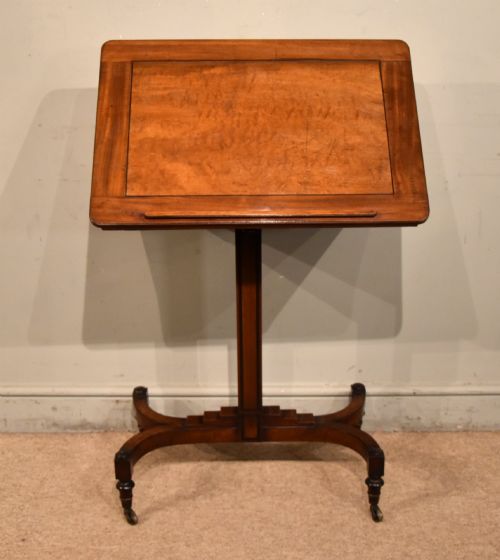
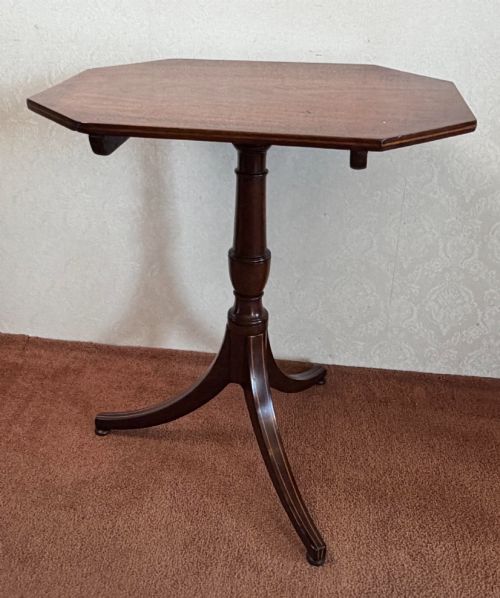
A brown wood tilt table combines practical domestic utility with clever engineering designed to save space when not in use. These pieces appear as dining tables, occasional tables, side tables, and centre tables across the inventory.
The selections span the eighteenth century, the nineteenth century, the year eighteen hundred, and the Regency period. Examples originate from English workshops as well as Irish Georgian and Italian makers.
Most items on this page take the form of breakfast tables or snap top tables featuring a hinged mechanism. This allows the top to pivot upright against the pillar when pushed to the edge of a room.
Materials and construction methods
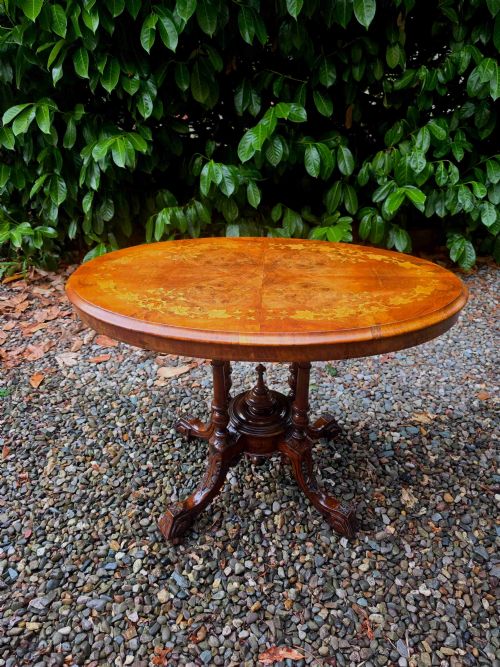
Cabinet makers constructed these pieces primarily using solid mahogany, walnut, and olive wood. Fruitwood inlay and brass details frequently adorn the surfaces to create contrast and visual interest.
Joinery techniques focus on sturdy pillar and pedestal supports combined with pivoting top mechanisms. Inlaid sections require precise hand-cutting to fit flush into the primary timber body.
Retail Price Guide 2026
Typical UK retail prices for brown wood tilt table, calculated from the Sellingantiques database of over a million retail prices indexed since 2003. This retail price guide relies exclusively on Sellingantiques data; no external sources or auction records are used, so the figures do not describe the wider market.
Early makers designed these clever tops so diners could literally sweep the crumbs off and hide the table against the wall.
Assessing craftsmanship and design
Superior examples distinguish themselves through the choice of figured timber and the precision of brass inlay. Finer pieces demonstrate careful attention to the turning of the central column and the stability of the folding mechanism.
Regional variations, such as Irish Georgian proportions or Sorrento mosaic work, introduce distinct artistic merit. The harmony between timber selection and decorative inlay dictates the standing of each piece.
Almerico Gargiulo
The Brown Wood Tilt Table Glossary
- Tilt top
- A tabletop mounted on a pivot mechanism that swings from horizontal to vertical. This allows the furniture to stand flat against a wall when not in use.
- Snap top
- An alternative term for a tilting surface, often secured with a small catch or latch underneath. It keeps the table rigid during use.
- Breakfast table
- A pedestal dining table designed for morning meals, typically featuring a round or rectangular top that tilts. These were popular in formal households.
- Regency
- A design period spanning the early nineteenth century characterised by classical revival motifs and dark woods. Furniture from this era often incorporates brass inlay.
- Inlay
- A decorative technique where contrasting materials such as fruitwood or brass are inserted into recesses within the base wood. This creates a flat, ornamental surface.
Frequently Asked Questions
What is a tilt top table used for?
These tables served multiple purposes in historic homes, functioning as breakfast tables, side tables, or centre tables. Their primary advantage was the ability to fold flat and stand out of the way against a wall.
In period rooms, homeowners would tilt the top upward after meals to reclaim floor space. When needed, the surface locked back into a horizontal position for daily tasks.
How do I date a brown wood tilt table?
Dating relies on identifying stylistic markers from periods such as the eighteenth century, the nineteenth century, or the Regency era. Cabinet making techniques and timber choices also provide reliable clues.
Tables from eighteen hundred often display specific Regency characteristics like brass inlay. Examining the pivot mechanism and structural joinery helps narrow down the decade of manufacture.
What woods were used for these tables?
Cabinet makers predominantly utilised mahogany and walnut for their rich colour and durability. Olive wood and fruitwood inlay also appear in more decorative examples.
Figured mahogany was particularly prized for its grain pattern. Contrast was often achieved by pairing dark primary timbers with lighter inlaid details.
Are Irish and Italian tables different?
Regional variations reflect distinct aesthetic traditions among makers across Europe. Irish Georgian pieces often exhibit robust proportions and specific regional joinery.
Italian examples, particularly those from Sorrento, frequently feature elaborate mosaic fruitwood inlay. These decorative techniques set them apart from standard English cabinet work.