

Regency Mahogany Breakfast Table
A regency mahogany breakfast table is a pedestal dining piece built for morning meals and easily tilted out of the way when not in use.
Forms and periods
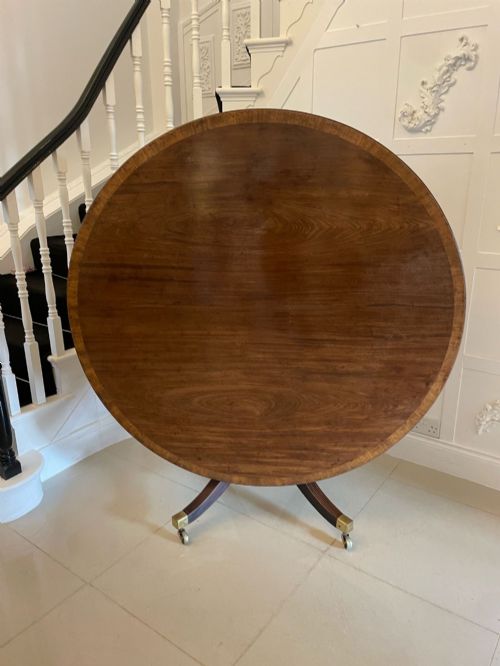
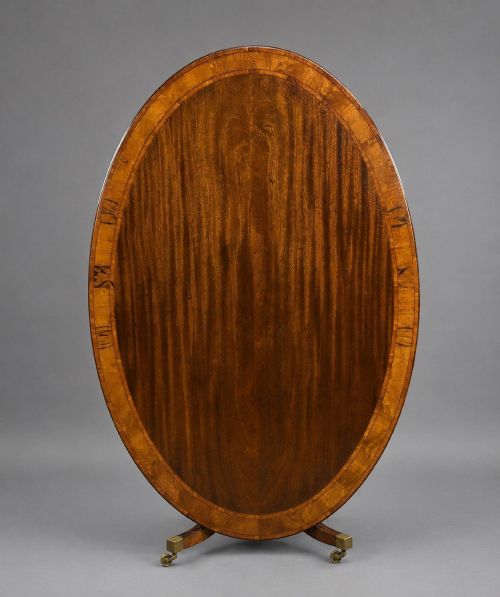
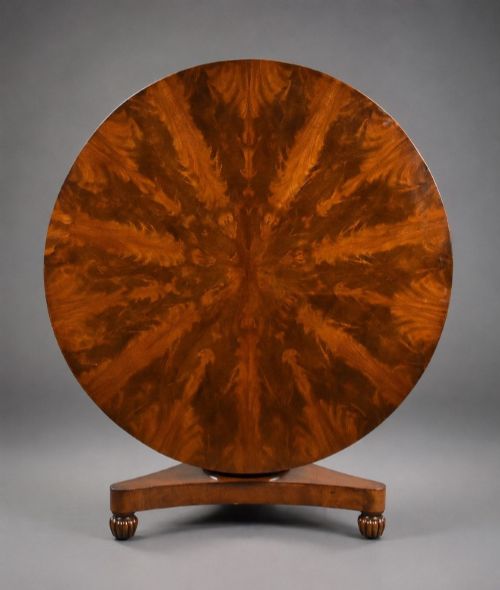
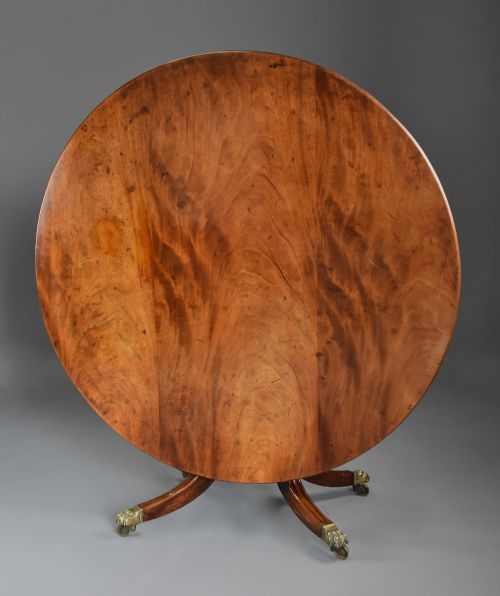
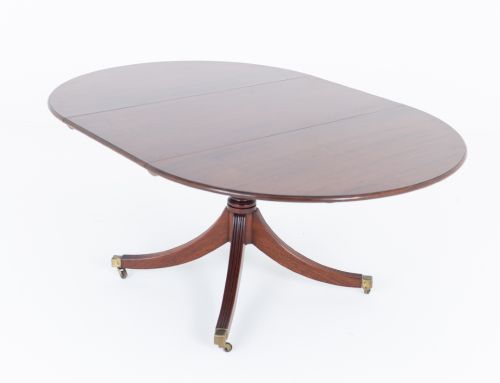
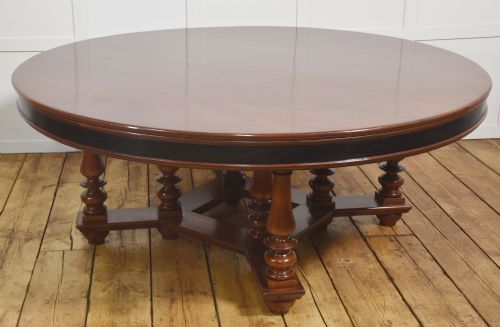
A regency mahogany breakfast table appears primarily in circular, oval, and rectangular shapes designed for versatile placement in domestic interiors. These examples date from the georgian and regency periods, with many originating around eighteen hundred to eighteen twenty-five.
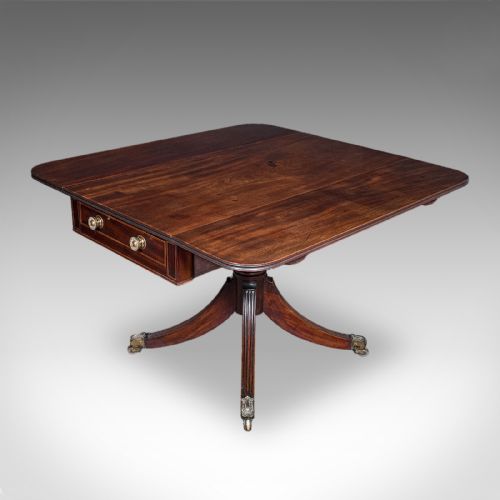
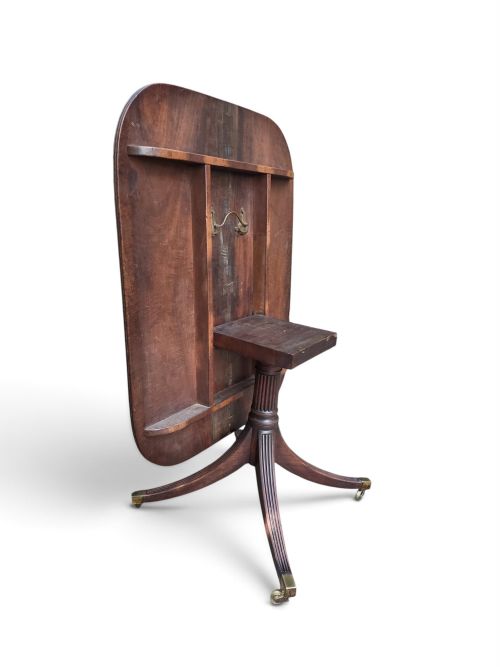
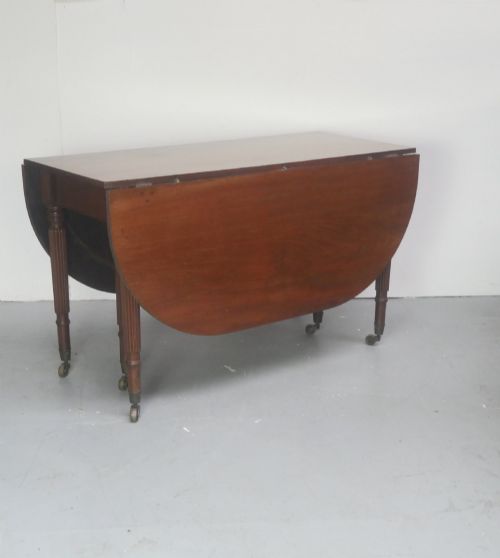
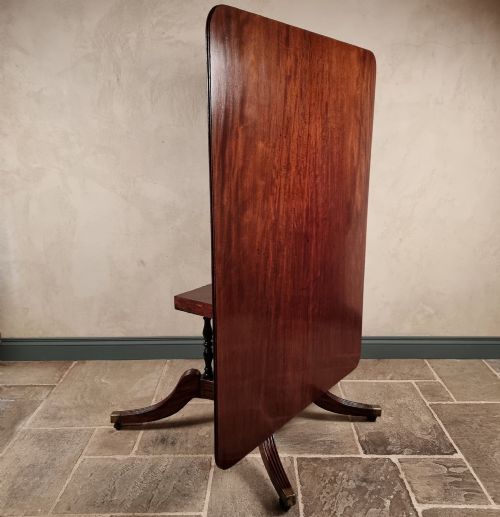
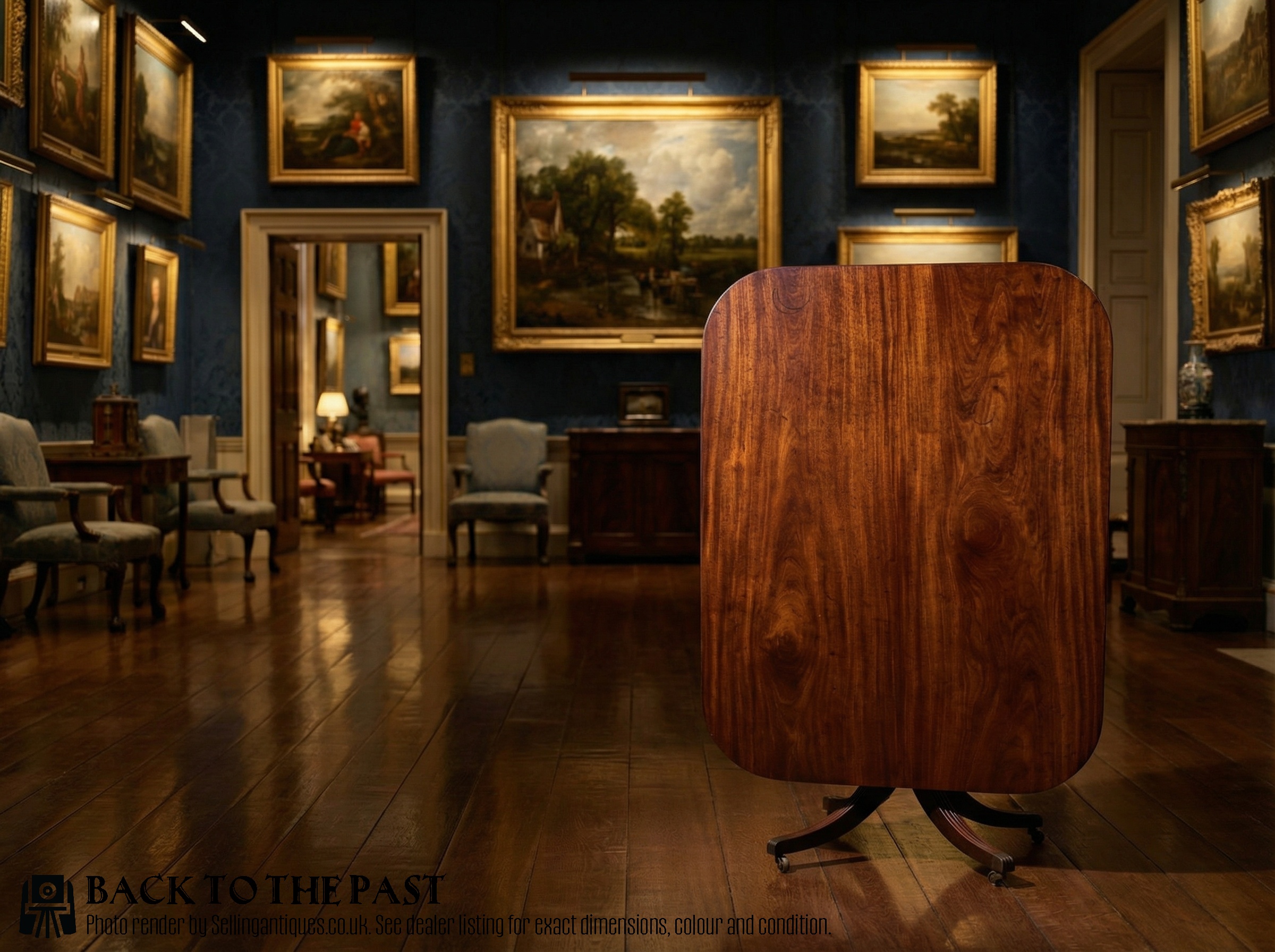
The tilt-top action is a defining mechanism of the form, allowing the table surface to stand vertically against a wall. Drop-leaf and pembroke variations also appear in the record alongside pedestal dining tables.
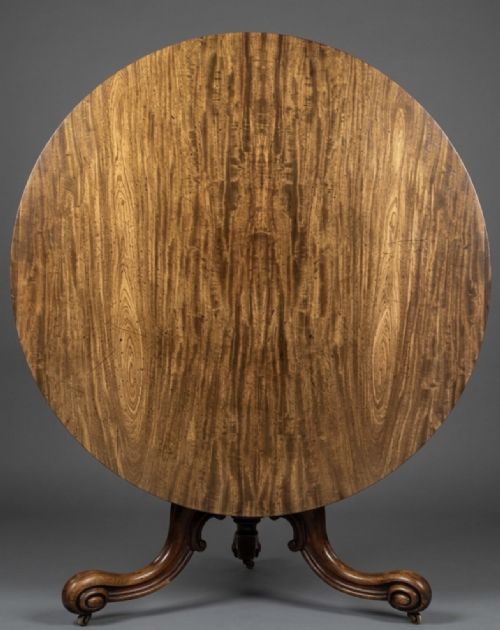
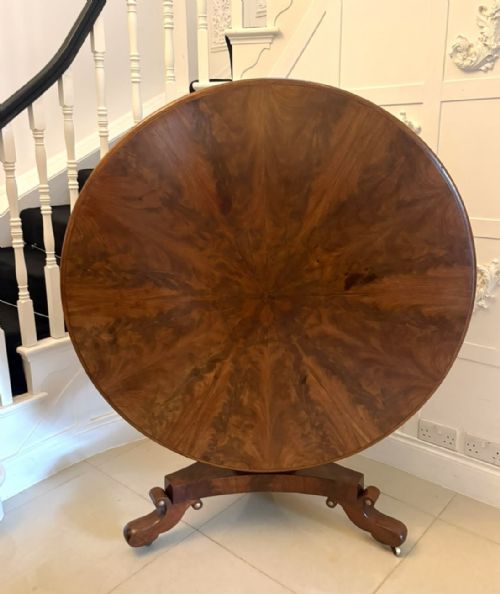
Makers utilised figured mahogany, cuban mahogany, and flamed mahogany to achieve rich grain patterns across the tabletop. Crossbanding and rosewood banding provide contrasting borders on selected surfaces.
Materials and construction
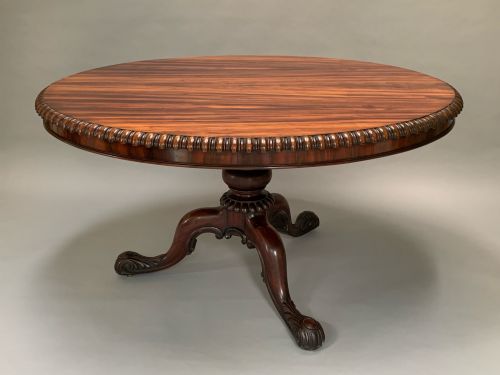
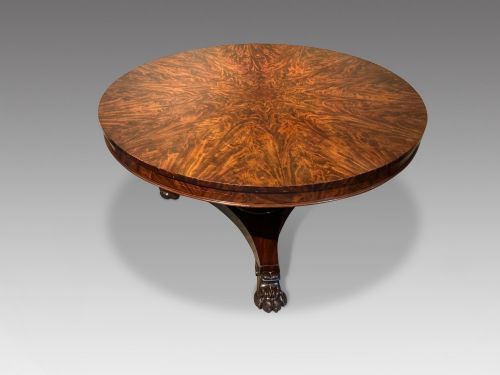
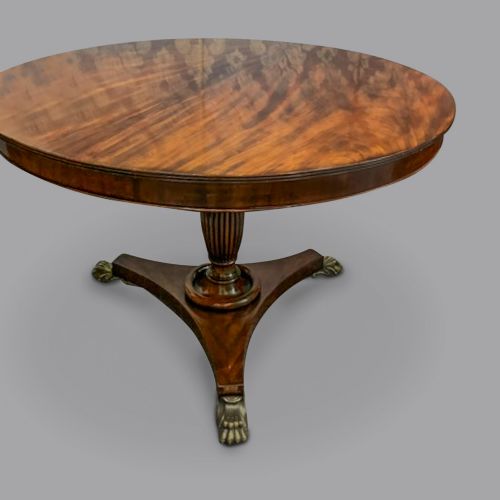
Cabinet makers built these tables using mahogany timber, selected for its strength and capacity to take a high polish. Turned pillars and pedestal supports anchor the central column, often terminating in paw and claw feet.
Brass fittings appear on castors and tipping mechanisms, providing mobility and operational strength to the heavy timber frames. Inlaid details and crossbanding require precise woodworking techniques to frame the primary mahogany surfaces.
Retail Price Guide 2026
Typical UK retail prices for regency mahogany breakfast table, calculated from the Sellingantiques database of over a million retail prices indexed since 2003. This retail price guide relies exclusively on Sellingantiques data; no external sources or auction records are used, so the figures do not describe the wider market.
The listings on this site record mahogany and brass as the primary materials, spanning the regency and georgian periods.
Distinctions in craftsmanship
The choice of timber creates a primary distinction, moving from standard mahogany to highly figured, flamed, or plum pudding varieties. Superior examples exhibit exceptional grain matching across the expanse of the breakfast table top.
Carved details on the pedestal pillar and the execution of the paw and claw feet demonstrate the sculptor's hand. The smoothness of the tilt-top action and the integrity of the brass fittings further separate standard workshop production from finer cabinet work.
Gillows
The Regency Mahogany Breakfast Table Glossary
- Mahogany
- A durable tropical hardwood imported for high-end furniture manufacturing during the georgian and regency eras. Its rich reddish-brown tone deepens with age.
- Tilt top
- A pivoting tabletop mechanism that allows the surface to rotate vertically on its base. This feature saved floor space in period drawing rooms.
- Crossbanding
- A border veneer applied perpendicularly to the main grain of the tabletop. It creates a contrasting visual frame around the edge.
- Pembroke table
- A small occasional table featuring drop leaves supported by hinged brackets. Some period variants double as breakfast tables.
- Pedestal table
- A freestanding furniture form supported by a single central column rather than four corner legs. This configuration allows greater legroom for diners.
Frequently Asked Questions
What is a regency mahogany breakfast table?
A regency mahogany breakfast table is a pedestal dining table produced during the early nineteenth century. These pieces feature timber surfaces designed to tilt vertically when not in use.
They served versatile functions in period homes, moving between dining rooms and drawing rooms as needed. The form combines practical space-saving mechanics with decorative mahogany grains.
How do you use a tilt top table?
The tilt top mechanism operates through a catch beneath the surface that releases the tabletop from the pedestal base. This allows the heavy timber top to pivot into a vertical position.
Historically, this action enabled owners to push the furniture against a wall to reclaim floor space between meals. Modern interiors utilise this feature for display or compact storage.
What is figured mahogany?
Figured mahogany refers to timber boards displaying distinctive, highly decorative grain patterns caused by natural variations in tree growth. Cabinet makers reserved these premium cuts for prominent surfaces like tabletops.
Varieties include flamed and plum pudding mahogany, which catch the light and create depth across the polished wood. Standard mahogany lacks these complex patterns but shares the same rich colour.
How do I date a regency breakfast table?
Dating relies on stylistic markers such as pedestal pillar shapes, brass castor designs, and the choice of mahogany veneers. Pieces associated with the regency period typically date between eighteen hundred and eighteen thirty.
Construction methods, including the joinery of the tilt mechanism and the presence of crossbanding, provide additional chronological clues. Comparing the piece to dated archival examples helps narrow the period.