

Vintage Mahogany Drop Leaf
These vintage mahogany drop leaf tables offer practical folding surfaces spanning Georgian, Regency, Victorian, and Edwardian periods.
Vintage Mahogany Drop Leaf
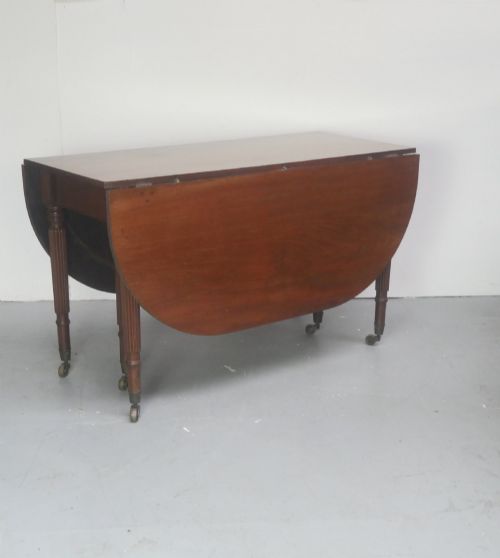
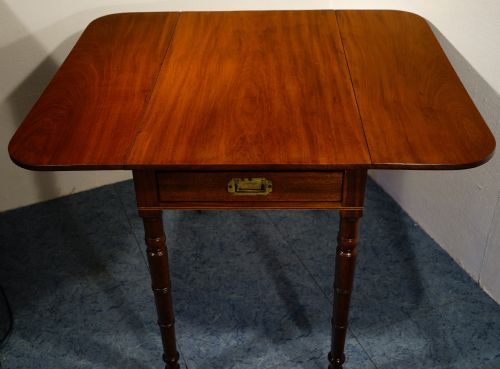
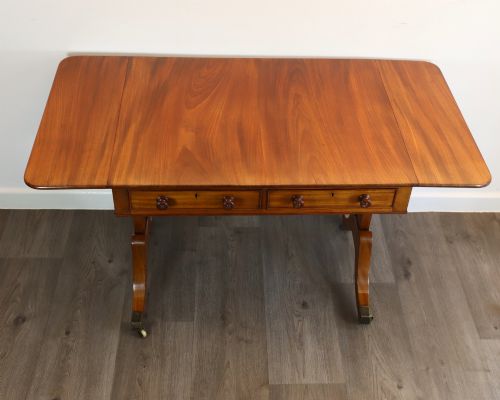
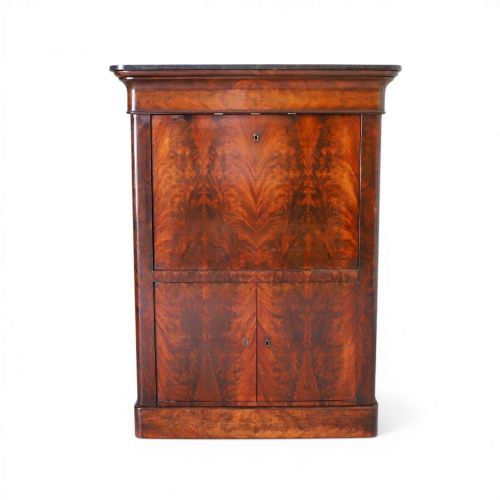
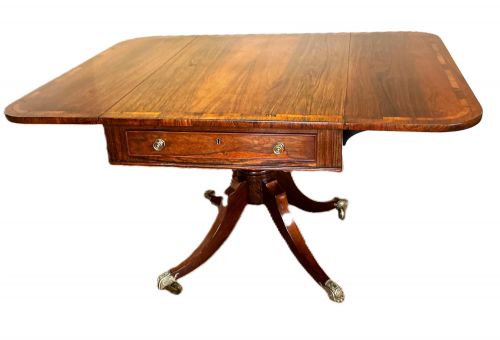
When you search for vintage mahogany drop leaf tables, you encounter versatile folding furniture designed to expand surface area when needed and tuck away compactly otherwise. The pieces appearing here span centuries of design, with particular strength in Pembroke tables, Sutherland tables, and larger dining formats.
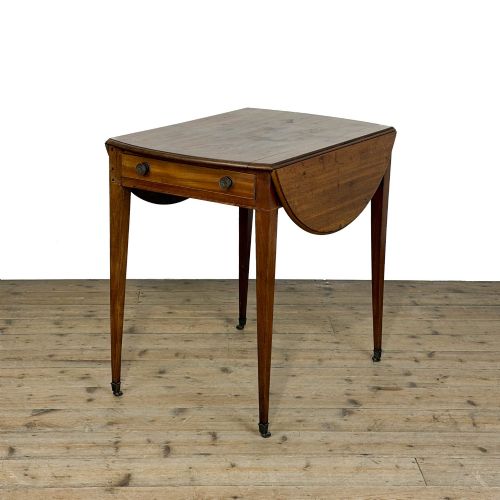
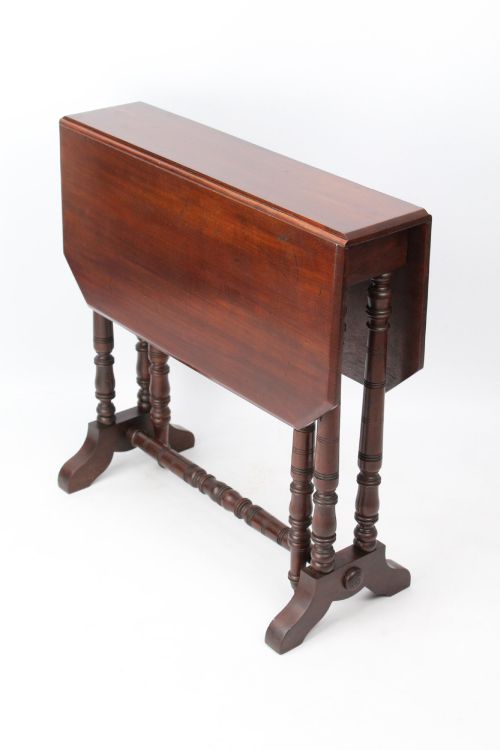
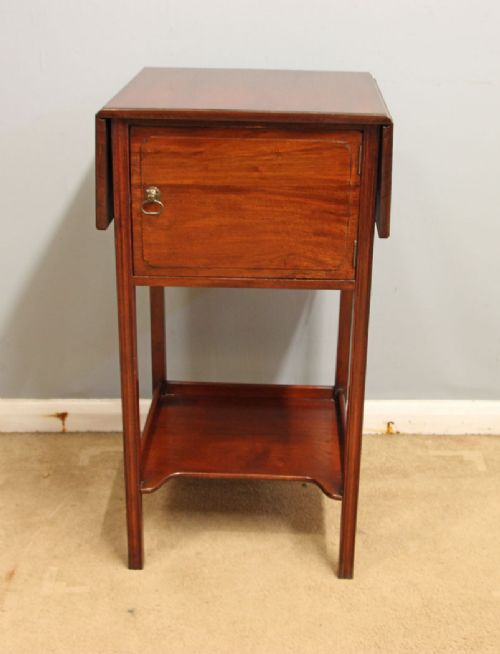
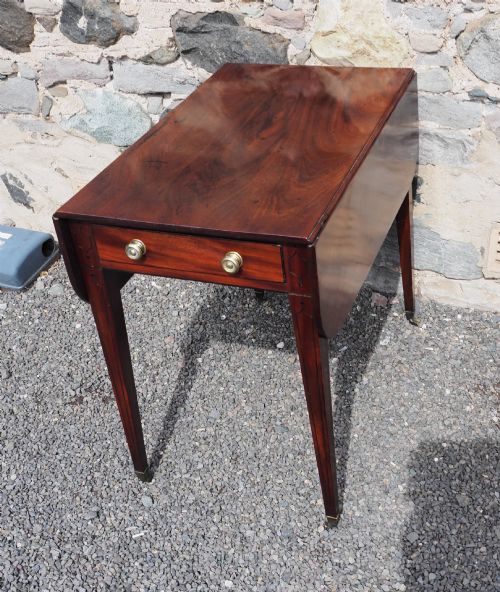
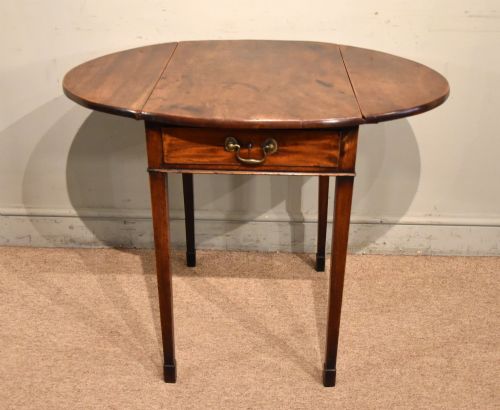
The selections on this page run from 18th century George III examples up through Victorian and Edwardian iterations. Pembroke tables with slender legs and small side flaps dominate the offerings, alongside narrow Sutherland tables and occasional tables with drop flaps.
Origins stretch across Georgian, Regency, William IV, and Edwardian styles, reflecting changing domestic habits from formal dining rooms to intimate parlours. Mahogany remains the constant anchor, occasionally augmented by boxwood or satinwood inlay.
How they were made
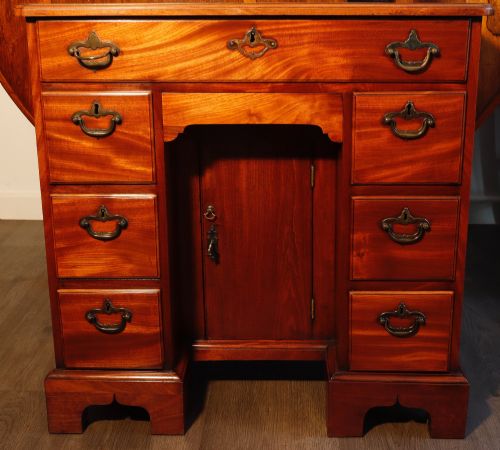
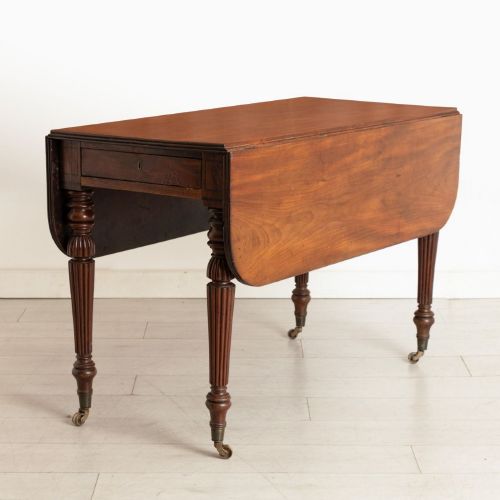
Cabinet makers utilised solid mahogany and figured mahogany veneers over secondary woods, shaping structural elements to support pivoting or folding flaps. Brass hinges, castors, and drop handles appear frequently on Regency and Victorian pieces to facilitate movement.
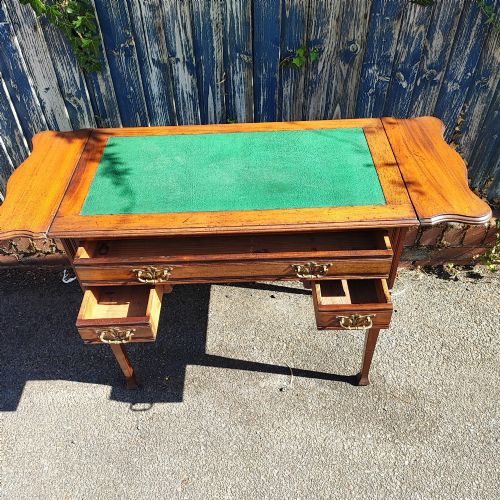
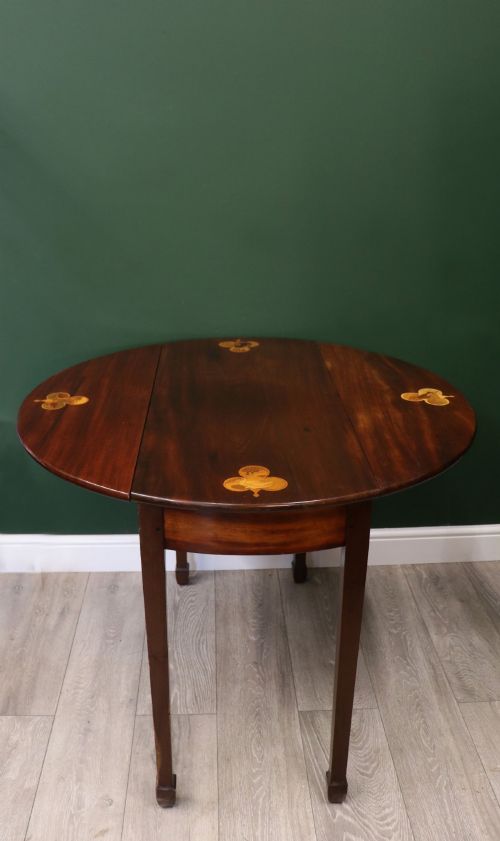
Detailing often involved delicate wood inlay, including boxwood and satinwood stringing, particularly on Edwardian and late 18th century butterfly Pembroke tables. Marquetry panels and subtle edge banding give definition to table tops and drawer fronts without cluttering the surface.
Vintage Mahogany Drop Leaf Retail Price Guide 2026
Typical asking prices for vintage mahogany drop leaf among the pieces listed under this phrase on Sellingantiques today, from the lower quarter to the upper quarter. They describe what is for sale here now, not the wider market.
Listings span the 18th, 19th, and early 20th centuries, uniting Georgian, Regency, Victorian, and Edwardian eras through the shared medium of mahogany.
What varies in quality
Quality rests heavily on the selection of timber, particularly the grain figuration in the mahogany top and the crispness of any inlaid banding. Finer examples display symmetrical wood grains and meticulous joinery at the hinge lines where the leaves meet the fixed centre.
Proportion and structural integrity separate standard utility pieces from high style examples. Gracefully tapered legs, original brass hardware, and smoothly operating flap supports indicate superior craftsmanship across Georgian and later revival periods.
Andrew Thomson And Sons
The Vintage Mahogany Drop Leaf Glossary
- Pembroke table
- A small rectangular table featuring two hinged side flaps supported by hinged brackets or rule joints. These tables often include one or two small end drawers.
- Sutherland table
- A narrow table with exceptionally slender drop leaves that fold down almost vertically. They were introduced in the Victorian era to save space in smaller sitting rooms.
- Gateleg table
- A table with hinged leaves supported by legs that swing outward like gates. This design provides sturdy support for larger dining surfaces when fully opened.
- Rule joint
- A moulded joint connecting a table top to its drop leaf. It conceals the hinge and leaves no gap when the leaf is raised.
- Satinwood
- A pale, hard timber utilised for contrasting inlay and stringing on mahogany furniture. Its golden hue provides a sharp visual border against darker woods.
Vintage Mahogany Drop Leaf: Frequently Asked Questions
What is a pembroke table?
A Pembroke table is a compact form featuring hinged leaves on two opposite sides. It typically includes a small drawer and slender legs.
Cabinet makers designed them for light utility use in bedrooms, studies, and intimate drawing rooms.
How do you date a drop leaf table?
Dating relies on leg styles, timber selection, and hardware construction. Georgian pieces often show square tapered legs or slender cabriole supports.
Later Victorian and Edwardian examples incorporate machine-made brass hinges, heavier proportions, and decorative stringing or marquetry.
Where were drop leaf tables used?
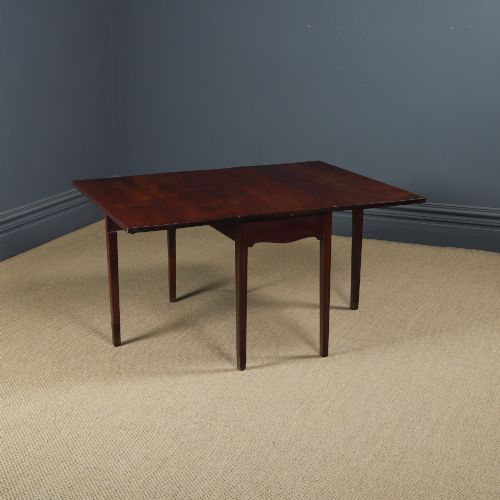
These tables served multiple functions in domestic spaces, acting as breakfast tables, writing desks, and occasional tea surfaces. Their folding leaves allowed them to sit flat against walls when floor space was required.
Larger versions functioned as dining tables that accommodated additional guests by raising the side flaps.
What is a sutherland table?
A Sutherland table is a specific variation of the drop leaf design characterised by very narrow fixed central tops and wide leaves. When lowered, the leaves hang almost vertically to minimise the table footprint.
Victorian homes utilised them extensively as versatile tea or occasional tables that moved easily about the room.