

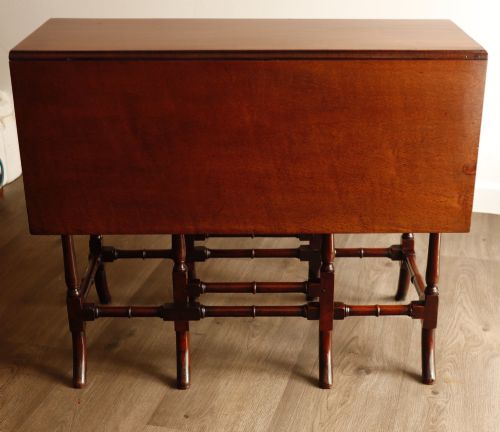
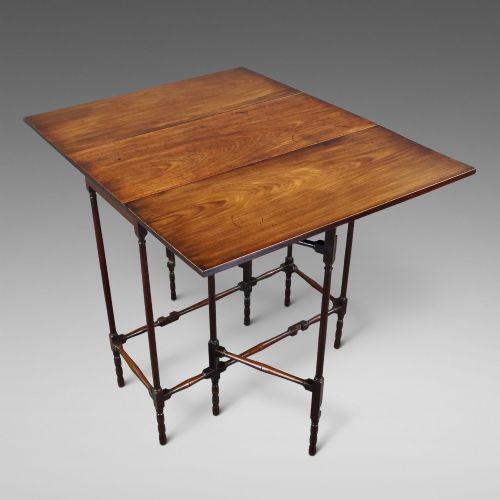


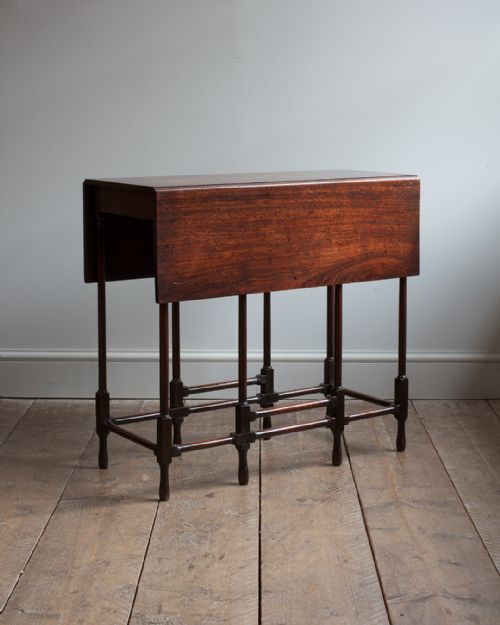


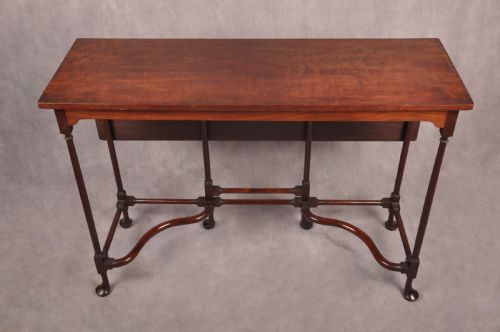


Georgian Spider Leg Table
A georgian spider leg table offers delicate proportions and folding leaves, making it a clever choice for compact spaces.
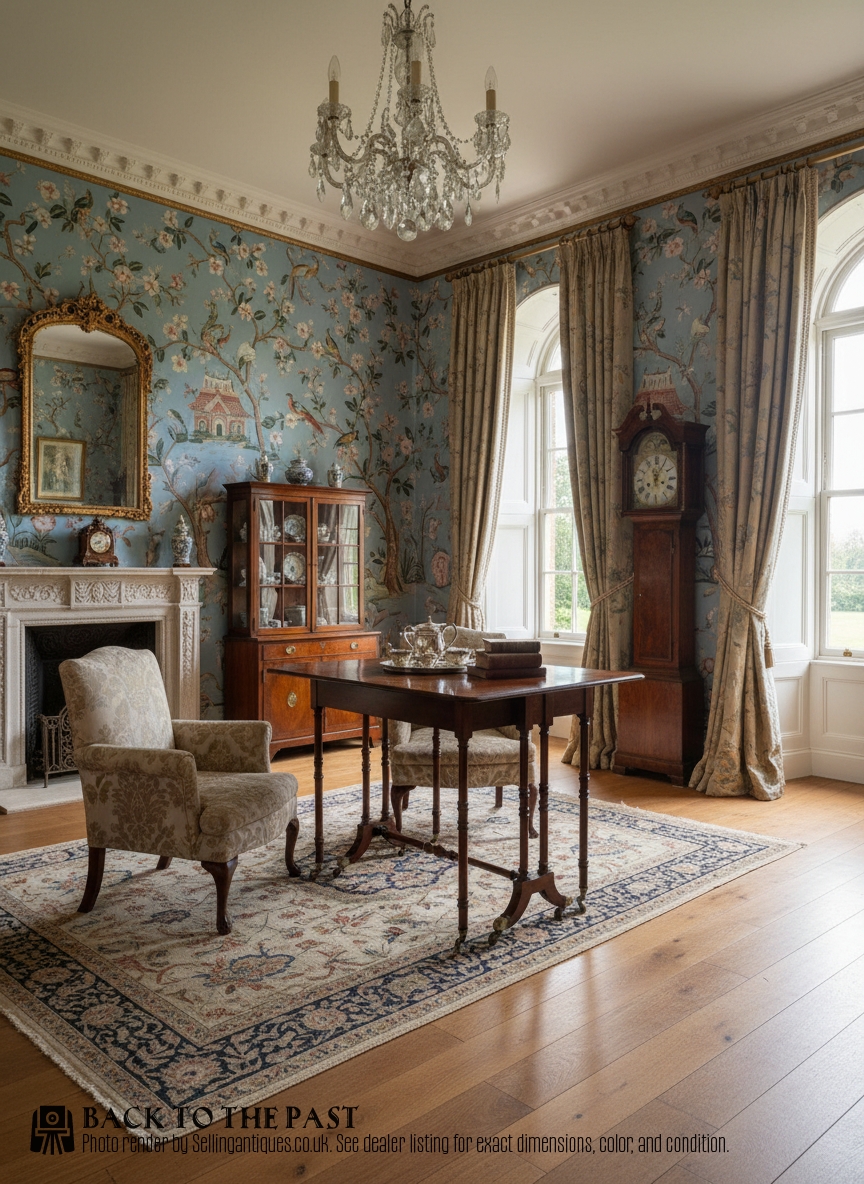
What a georgian spider leg table is
A georgian spider leg table is an occasional table defined by slender turned supports and drop leaves, designed to fold down when not in use. These pieces primarily date from the eighteenth century and the George III period, alongside later interpretations.
Buyers will most frequently meet mahogany examples on this page, often configured as side tables, occasional tables, or drop-leaf tables. The form serves well beside a chair or against a wall, providing surface space without visual weight.
How they were made
Makers constructed these tables predominantly from mahogany, utilising the timber's strength to support the exceptionally thin turned legs characteristic of the form. Brass fittings occasionally appear on hinges and related hardware.
The construction relies on drop-leaf and gateleg mechanisms that allow the sides to drop smoothly against the central frame. Joinery techniques from the period ensured stability despite the remarkably slender legs.
Retail Price Guide 2026
Typical UK retail prices for georgian spider leg table, calculated from the Sellingantiques database of over a million retail prices indexed since 2003. This retail price guide relies exclusively on Sellingantiques data; no external sources or auction records are used, so the figures do not describe the wider market.
Listings here span the 18th Century, 1800, and 1920 periods, all constructed in mahogany with occasional brass hardware.
What varies in quality
Quality in a georgian spider leg table rests primarily in the crispness of the turning on the slender legs and the overall balance of the frame. Superior examples maintain structural firmness despite the inherent delicacy of the design.
The choice of mahogany grain and the precision of the drop-leaf hinges also separate standard examples from finer ones. The retention of original timber patination enhances the character of the piece.
The Georgian Spider Leg Table Glossary
- Mahogany
- A dense tropical hardwood valued for its rich brown colour and stability, used extensively in eighteenth-century furniture. It takes a fine finish and allows for detailed turning.
- Drop-leaf
- A table design featuring hinged flaps that fold down to reduce the footprint of the furniture. These leaves rest on pivoting supports or gatelegs when raised.
- Gateleg
- A table construction where hinged legs swing outward like a gate to support the drop leaves. This mechanism provides sturdy support beneath an otherwise lightweight surface.
- George III
- The stylistic period spanning from 1760 to 1820, characterised by refined classical proportions and elegant craftsmanship. Furniture from this era often combines utility with restrained ornamentation.
Frequently Asked Questions
What is a spider leg table?
A spider leg table is a slender drop-leaf table characterised by exceptionally thin turned legs. The design prioritises a light visual appearance and a compact footprint.
These pieces function primarily as occasional or side tables within a room. Their folding leaves allow them to tuck neatly against a wall when not in active use.
How do you use a drop leaf table?
Drop leaf tables provide flexible surface area by allowing the sides to fold down or raise up as needed. Raising the leaves expands the top for holding drinks, books, or decorative objects.
Lowering the leaves transforms the furniture into a narrow console or side piece. This adaptability made them popular in period interiors where space required clever economy.
Are these tables sturdy?
Despite their delicate appearance, well-made examples utilise dense mahogany and careful joinery to ensure stability. The swing-out legs or gatelegs provide reliable support underneath the extended leaves.
Careful placement and gentle use prevent strain on the slender framework. They suit quiet corners and display purposes rather than heavy daily burdens.
How can you tell the period?
Dating relies on examining the timber species, joinery methods, and turning details characteristic of eighteenth-century craftsmanship. Mahogany and specific brass hardware offer clear clues to the era of manufacture.
Later interpretations often reflect earlier George III styles while incorporating twentieth-century construction traits. Comparing the patination and wear patterns helps clarify the age of the piece.