
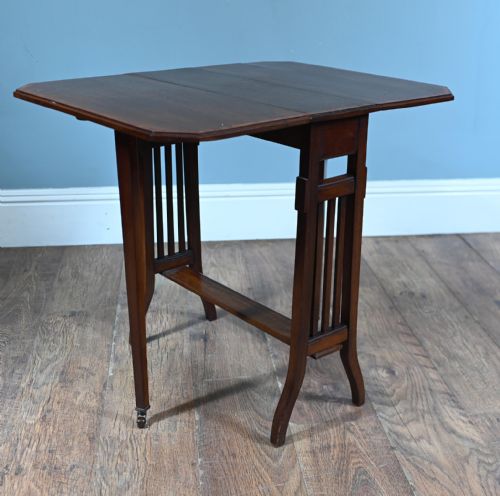
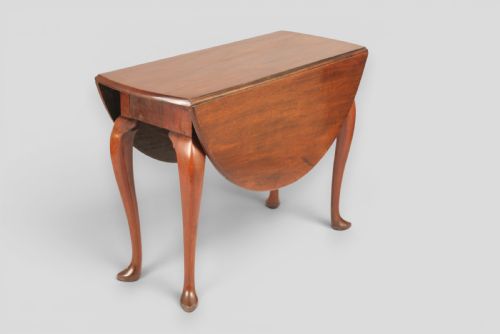


Drop Flap Tea Table
A drop flap tea table brings folding timber surfaces and Georgian or Victorian ingenuity straight to your sitting room.
Drop Flap Tea Table
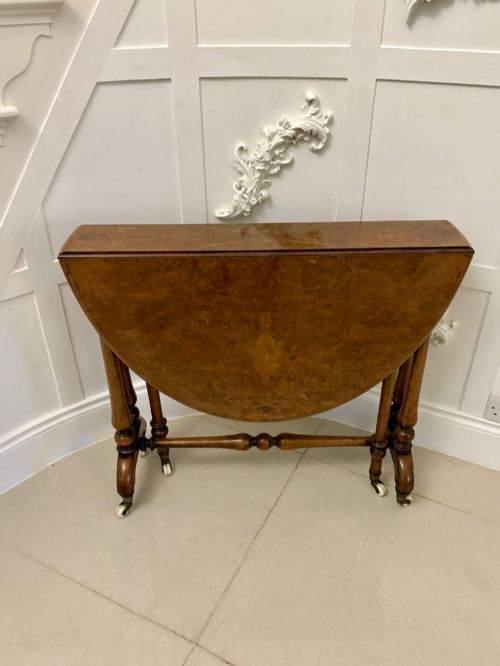
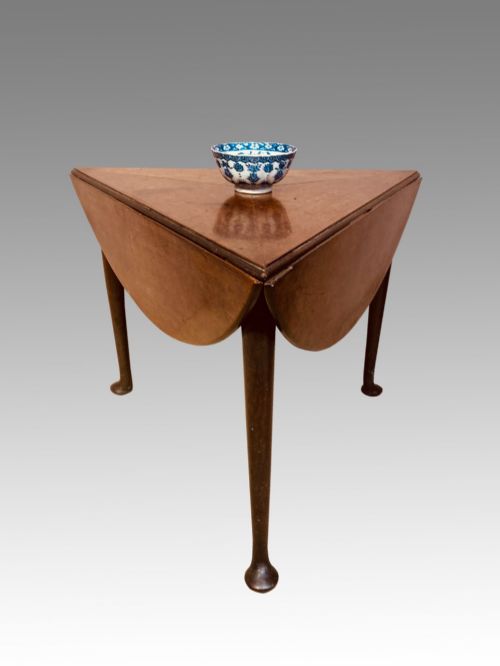
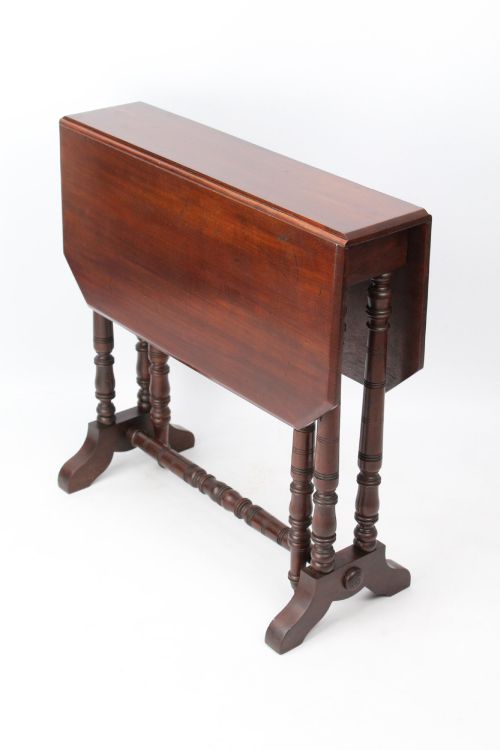
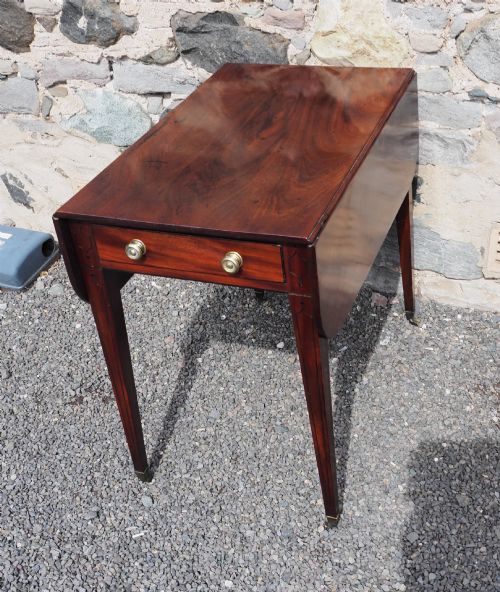
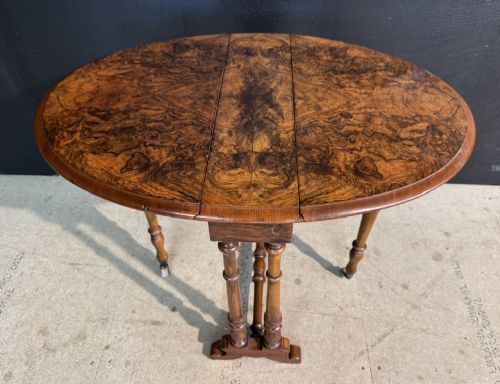
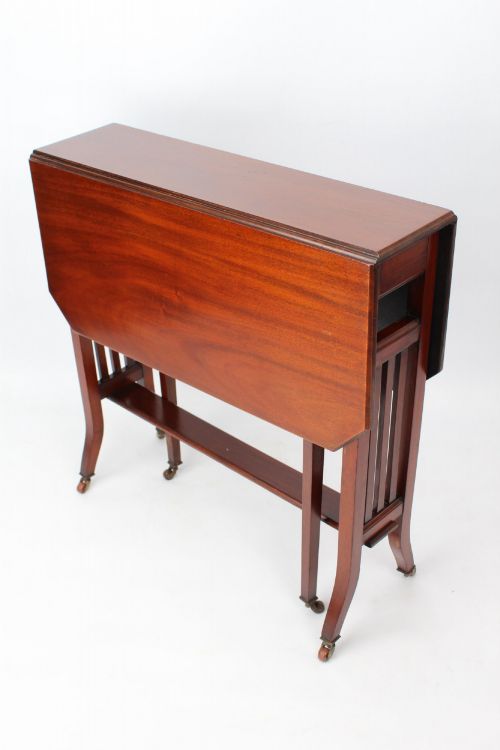
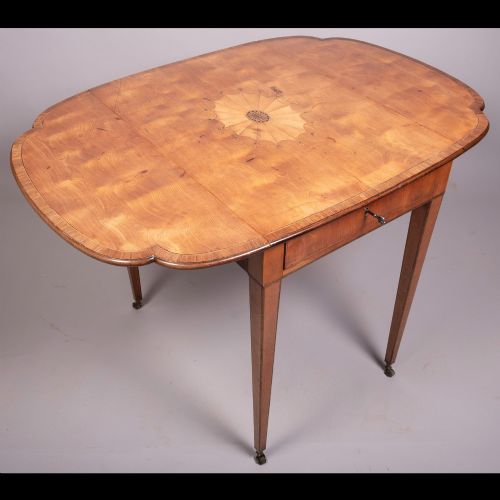
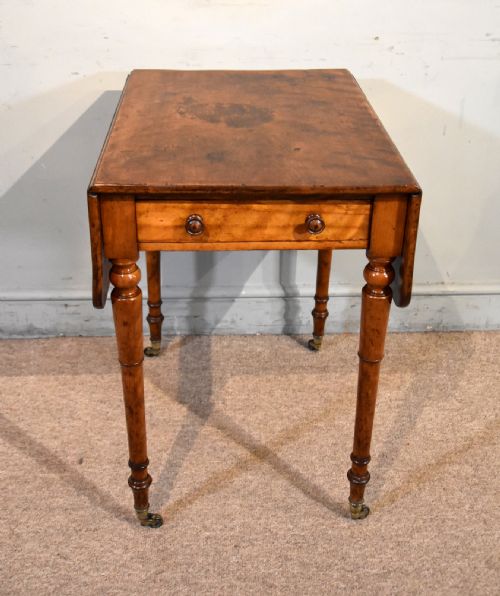
A drop flap tea table satisfies the perennial demand for versatile furniture that expands for service and tucks away neatly against a wall. When you search for a drop flap tea table, you encounter versatile forms including Pembroke tables, Sutherland tables, and gateleg tables designed with hinged leaves.
The pieces appearing here span from the 18th century through the Georgian, Regency, and Victorian eras into the Edwardian period. Mahogany dominates the selection, alongside walnut, burr walnut, rosewood, and occasional uses of satinwood and oak.
Pembroke and Sutherland tables represent the most common manifestations of this search phrase on this page. These examples demonstrate how makers adapted portable tables for tea-drinking and social rituals in domestic interiors.
Judging the quality of folding tables
Superior examples display crisp timber figure, tight joinery around the hinged flaps, and original brass fittings. Subtle details like stringing, marquetry, and fine inlay separate standard production pieces from workshop highlights.
Proportion and scale dictate much of the appeal in smaller variants like miniature Sutherland or baby Pembroke tables. Well-balanced leg structures that support the drop leaves firmly without wobble indicate superior initial construction.
A tiny spider leg table can make an entire room feel remarkably polite.
Johnstone and Jeanes·Liberty and Co.
The Drop Flap Tea Table Glossary
- Pembroke table
- A small occasional table featuring two hinged drop leaves on opposite sides, often equipped with one or more drawers. It gained popularity during the 18th century for breakfast or tea use.
- Sutherland table
- A narrow drop-leaf table characterised by particularly slender legs and leaves that fold down almost vertically. This design allows the piece to occupy minimal floor space when closed.
- Gateleg table
- A table with hinged leaves supported by legs that swing outward like a gate. This mechanical support provides sturdy reinforcement for the extended flaps.
- Marquetry
- The art of applying decorative pieces of veneer to a structure to form intricate patterns or pictures. Craftsmen utilised contrasting woods like boxwood and satinwood for this detailed work.
- Spider leg
- A term describing exceptionally slender turned wooden legs found on delicate 18th-century occasional tables. They maintain lightness of form while supporting folding tops.
Drop Flap Tea Table: Frequently Asked Questions
What is a drop flap tea table used for?
These tables served historically for taking tea and social gatherings in the parlour or drawing room. The folding leaves allowed servants or hosts to expand the surface area quickly when needed and reduce it afterward.
Today, they function brilliantly as flexible accent furniture in smaller rooms. You can place one against a wall with both flaps down, or open it fully for a lamp and books.
Are these tables sturdy enough for daily use?
Most surviving examples have endured centuries of domestic life because they were built from dense hardwoods like mahogany and walnut. The hinged mechanisms require gentle handling, but the frames remain robust.
Avoiding excessive moisture and placing them away from direct heat sources will keep the timber stable. Regular, careful use helps preserve both the joints and the polished surface finish.
How do I identify the period of a drop flap table?
Georgian and 18th-century pieces often display rich Cuban mahogany, fine proportions, and subtle carving like spade feet or tapering legs. Regency examples introduce rosewood and bolder brass mounts.
Victorian and Edwardian versions frequently showcase burr walnut veneers, ebonised details, or lighter satinwood inlay. Examining the secondary woods underneath and the style of the turning provides further clues to the date.