
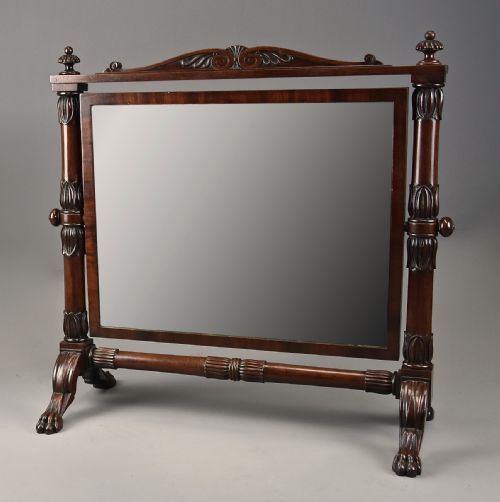
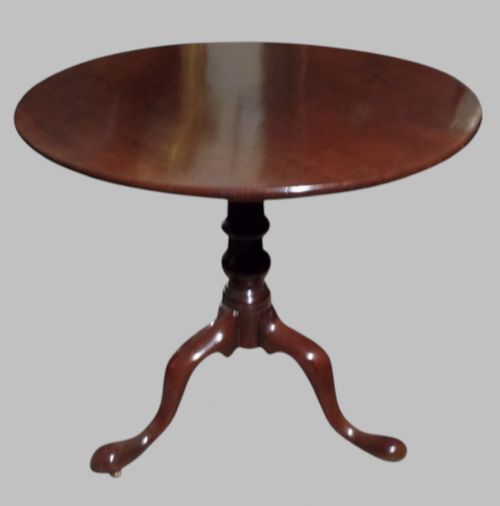
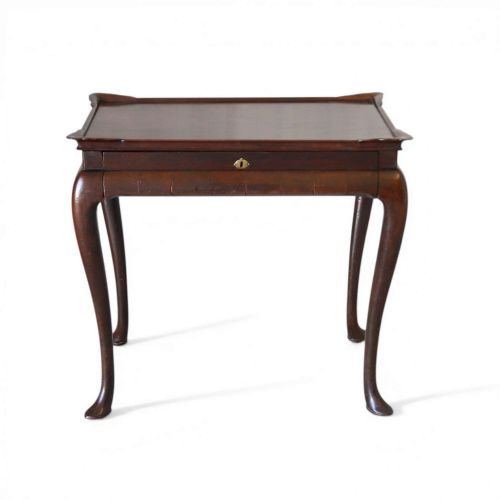
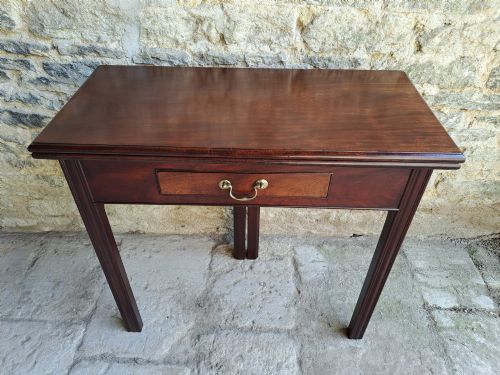


Cuban Mahogany Table
A cuban mahogany table brings dense timber and dark grain into a room, spanning forms from tripod wine stands to large extending dining furniture.

What a cuban mahogany table is
When searching for a cuban mahogany table, buyers encounter a dense range of British furniture built primarily across the eighteenth and nineteenth centuries. The material itself provides a heavier weight and deeper grain than ordinary mahogany, making each piece remarkably solid.
Dining tables and extending variants sit alongside smaller occasional forms like pembroke tables, card tables, and tripod wine stands. Georgian and Regency pieces dominate the selection, bringing period proportions and traditional joinery to domestic spaces.
Side tables, lowboys, and silver tables appear frequently among the listings, alongside larger gateleg and drop-leaf formats. These surfaces served specific social functions in period interiors, from card games to tea service.
How they were made
Cabinetmakers utilised dense Cuban mahogany timber, selected for its rich colour and heavy density, often combining solid boards with stable secondary woods for interior framing. Brass fixtures, including castors, hinges, and counter wells, provide functional contrast to the dark timber.
Construction techniques involve traditional joinery such as mortise and tenon frames, dovetailed drawer linings, and clever folding mechanisms for tea and card tables. Carved details like cabriole legs, pad feet, trifid feet, and pie crust edges demonstrate manual dexterity without relying on surface veneer.
Retail Price Guide 2026
Typical UK retail prices for cuban mahogany table, calculated from the Sellingantiques database of over a million retail prices indexed since 2003. This retail price guide relies exclusively on Sellingantiques data; no external sources or auction records are used, so the figures do not describe the wider market.
Listings span Georgian, Regency, and Victorian periods, utilising solid Cuban mahogany alongside brass hardware.
What varies in quality
Quality rests in the selection of the timber and the crispness of the cabinetwork rather than surface decoration alone. Dense grain patterns and deep natural patination distinguish superior pieces from standard domestic examples.
Proportion and structural integrity dictate the upper tier of the range. Tables that retain their original brass hardware, uncompromised timber thickness, and fluid carving on cabriole legs or tripod pedestals command greater attention.
Gillows
The Cuban Mahogany Table Glossary
- Pembroke table
- A small rectangular drop-leaf table with hinged flaps on either side, introduced in the eighteenth century for breakfast or writing use.
- Gateleg table
- A drop-leaf table supported by hinged legs that swing out like a gate to hold up the leaves.
- Tripod table
- A small occasional table supported by a pillar and three spreading feet, often with a tilt-top mechanism.
- Lowboy
- A small kneehole dressing table or side table with one or more rows of drawers, common in the Georgian period.
- Demi-lune
- Half-moon in shape, commonly used to describe fold-over tea tables designed to sit flat against a wall.
- Trifid foot
- A carved foot ending in three lobes, typically found on cabriole legs of early eighteenth-century pieces.
Frequently Asked Questions
How do I identify Cuban mahogany?
Cuban mahogany is notably heavier and denser than Honduras or African varieties, with a deep, dark colour and characteristic chatoyant grain that catches the light.
Under close inspection, the timber often displays fine white chalky deposits within the pores, which helps distinguish it from other mahogany species.
Are these tables suitable for daily dining?
Many of these pieces were built for active domestic use, including sturdy gateleg and extending dining tables designed to seat several guests.
Using coasters and placemats protects the historical polish and timber surface from moisture and heat during everyday meals.
How do I date a Georgian table?
Dating relies on observing structural clues such as hand-cut dovetails, timber thickness, and leg styles ranging from early cabriole shapes to later tapering forms.
Hardware fixings, tool marks on the underside, and the presence of swing-out drawers further narrow the manufacturing decade.
What is a tilt-top table used for?
Tilt-top occasional tables feature a mechanism that allows the surface to rotate vertically when not in use.
This clever design saved valuable floor space in period rooms, enabling the table to stand flat against a wall until needed for tea or reading.