

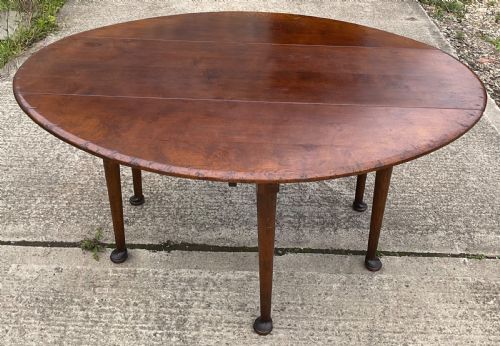


Antique Wake Table
An antique wake table provides generous dining space through folding leaves supported by swinging legs, answering the modern need for flexible hosting.

Antique Wake Table
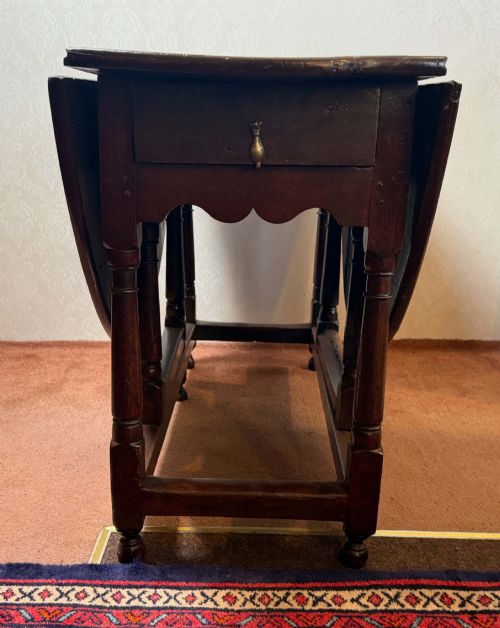
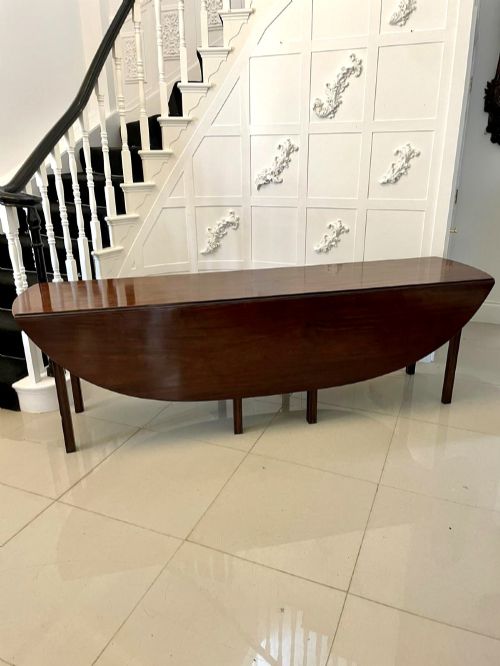
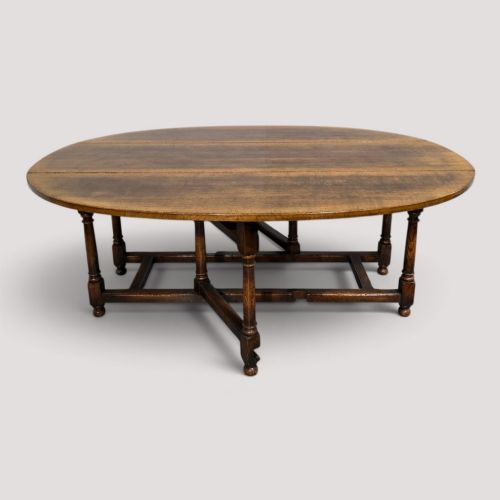
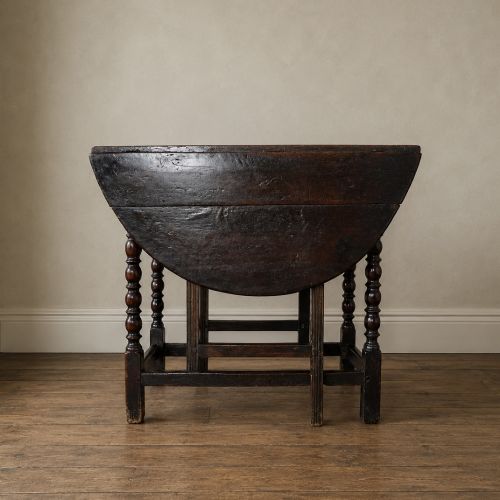
An antique wake table takes the form of a large oval drop-leaf dining table designed to seat many people when fully extended. These tables span several centuries, with examples originating from the seventeenth century through to the twentieth century in various revivals.
The primary variants encountered on this page include robust oak gateleg constructions and refined mahogany pieces with cabriole legs. Buyers frequently find larger formats described as wake or hunt tables, alongside standard drop-leaf dining tables from the Georgian period.
Origins stretch across English country workshops and Irish cabinet makers, utilising timber species suited to heavy domestic service. The form bridges utilitarian tavern furniture and sophisticated dining rooms.
Assessing quality and craftsmanship
Quality rests upon the choice of timber figure, particularly the depth of grain in figured walnut or Cuban mahogany and the tightness of growth rings in early oak. Superior examples display balanced proportions when fully opened, maintaining stability without excessive sagging in the centre leaf.
Carving detail on knees, friezes, and pad feet separates standard utility pieces from high-status commissions. The crispness of turning on legs and the integration of functional swing gates reflect the skill of the original maker.
Antique Wake Table Retail Price Guide 2026
Typical asking prices for wake table among the pieces listed under this phrase on Sellingantiques today, from the lower quarter to the upper quarter. They describe what is for sale here now, not the wider market.
Listings span seventeenth-century oak gateleg designs through to twentieth-century mahogany and walnut Georgian style reproductions.
The Antique Wake Table Glossary
- Wake table
- A large drop-leaf dining table with multiple legs designed to seat numerous guests for feasts or gatherings. These forms often utilise gateleg frames to support extended oval leaves.
- Gateleg table
- A table with hinged leaves supported by legs that swing outward like a gate. This construction provides robust support for heavy timber tops.
- Drop-leaf table
- A table featuring a fixed centre section and two hinged flaps that fold down when not in use. This design allowed tables to be stored against walls to save floor space.
- Pad foot
- A rounded foot resting flat on the floor at the base of a cabriole leg. This style is frequently seen on eighteenth-century mahogany examples.
- Cabriole leg
- A furniture leg that curves outward in a convex arc and then bends inward in a concave arc, mimicking animal limbs. It often terminates in a pad or claw foot.
Antique Wake Table: Frequently Asked Questions
How many people can sit at a wake table?
These tables typically accommodate six to ten diners when both leaves are fully raised and supported by the swinging legs.
The oval shape allows for flexible seating arrangements without rigid corner restrictions.
Where were wake tables used historically?
They originated in large country houses and communal halls for feasts, community gatherings, and wakes.
Their versatile drop-leaf design meant they could also serve everyday domestic functions when folded down.
How do I tell seventeenth-century oak from later revivals?
Early pieces exhibit deep patination, hand-riven timber, and traditional pegged joinery reflecting period hand tools.
Twentieth-century revival pieces often show more uniform machine milling and different internal construction markers.
How should I care for a mahogany drop-leaf top?
Keep the timber away from direct heat sources and strong sunlight to prevent the large mahogany leaves from warping.
Apply traditional wax polish occasionally to nourish the grain and protect the surface from minor spills.