
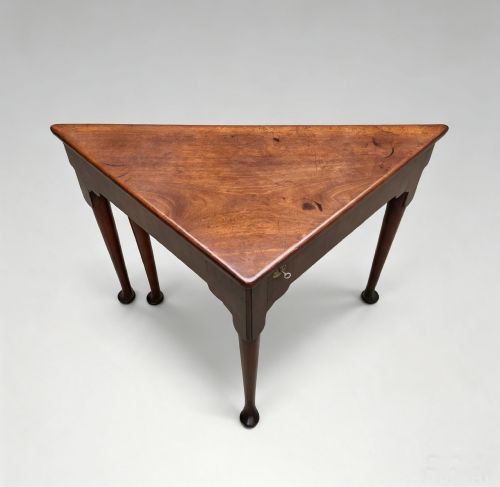
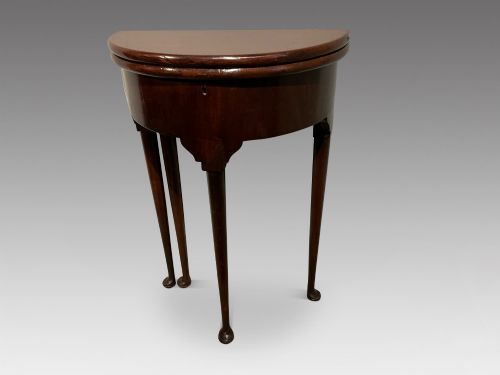
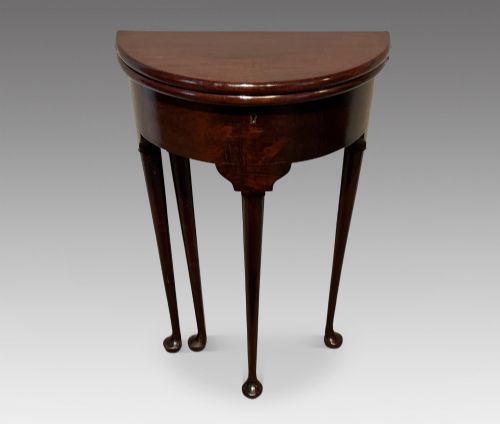
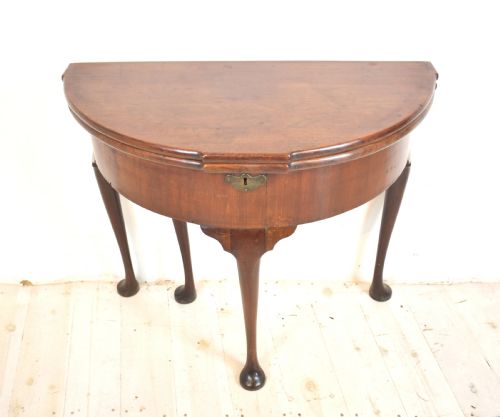



Pad Foot Card Table
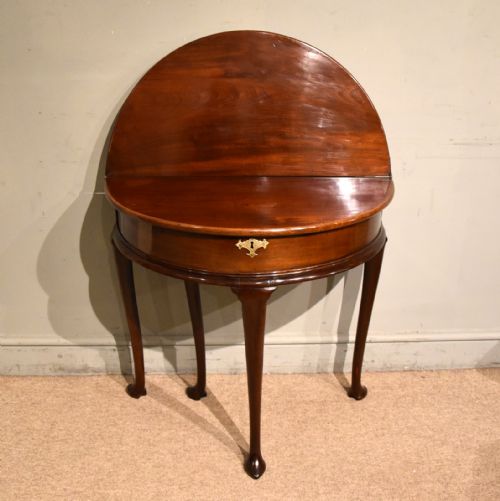
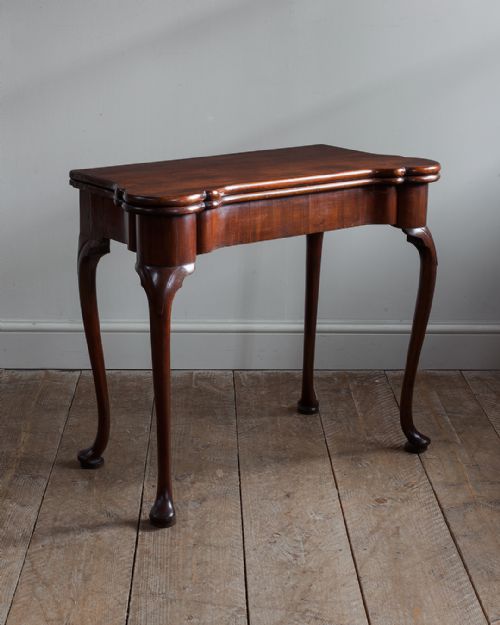
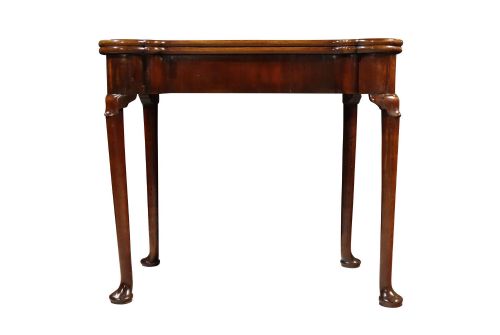
These pad foot card table examples are functional domestic pieces from earlier centuries, offering folded timber surfaces for gaming.
Pad Foot Card Table
A pad foot card table is a folding furniture form designed for domestic gaming and social play during past centuries. The pieces seen here span periods from the seventeenth century through the Georgian era to the Edwardian period.
Most examples function as games tables, card tables, or tea tables with fold-over tops, concertina actions, and trifold configurations. Forms include demi lune tables, D shaped tables, and corner tea tables equipped with dished gaming wells, guinea wells, and counter wells.
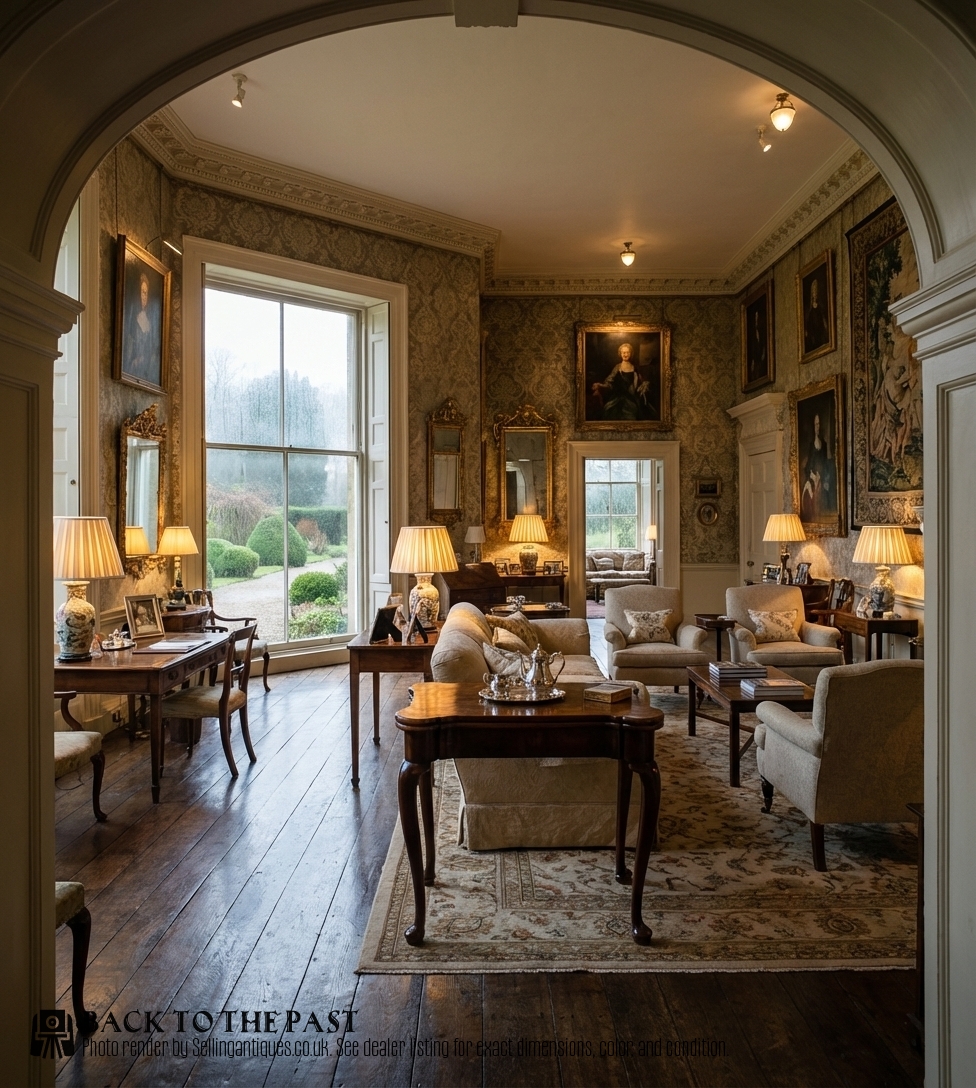
Materials and Construction
Makers constructed these tables primarily from timber, utilising mahogany, red walnut, walnut, and Cuban mahogany. Brass fittings also appear on certain examples.
Joinery techniques facilitate the folding tops, concertina actions, and drawers recorded across the inventory. Surfaces are worked into specific shapes such as demi lune, D shape, and envelope configurations.
Pad Foot Card Table Retail Price Guide 2026
Typical asking prices for pad foot card table among the pieces listed under this phrase on Sellingantiques today, from the lower quarter to the upper quarter. They describe what is for sale here now, not the wider market.
Listings feature mahogany, walnut, and Cuban mahogany timbers across Georgian and Edwardian periods.
Distinctions in Execution
The Pad Foot Card Table Glossary
- Pad foot
- A foot design where the leg terminates in a flattened, rounded pad resting directly on the floor. This foot type appears on various eighteenth century tables.
- Concertina action
- An expanding frame mechanism that allows the table frame to pull outward to support a folded leaf when opened. This mechanism provides stable support for the extended gaming surface.
- Guinea well
- A small circular recess carved into the playing surface to hold gold coins during card games. These wells prevent coins from sliding around during play.
- Demi lune
- A half moon shape utilised for table tops and frames. This configuration allows the closed table to sit flat against a wall.
- Trifold
- A table top construction featuring three hinged sections that unfold to create a larger playing surface. This design often reveals compartments or wells underneath.
Pad Foot Card Table: Frequently Asked Questions
What is a pad foot card table?
A pad foot card table is a folding table designed for card games and social gatherings, featuring distinctive rounded pad feet at the base of the legs.
These pieces typically date from the eighteenth century and utilise timber such as mahogany or walnut.
How do you use a fold over card table?
The hinged top unfolds to double the surface area for playing cards or serving tea, often supported by a swing leg or concertina action.
When not in use, the table folds closed to occupy less space against a wall.
What are guinea wells on these tables?
Guinea wells are small circular depressions carved into the corners of the gaming surface to hold coins during card play.
They help keep stakes organised during games.
How do you identify an eighteenth century table?
Identification relies on observing construction methods, timber choices like Cuban mahogany or red walnut, and stylistic indicators associated with Georgian periods.
Details such as concertina actions and pad feet also help date the piece.