


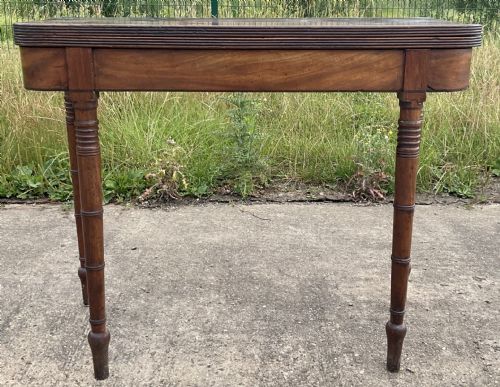
18th Century Gaming Table
An 18th century gaming table brings fold-over surfaces and period craftsmanship into a room for social play or display.
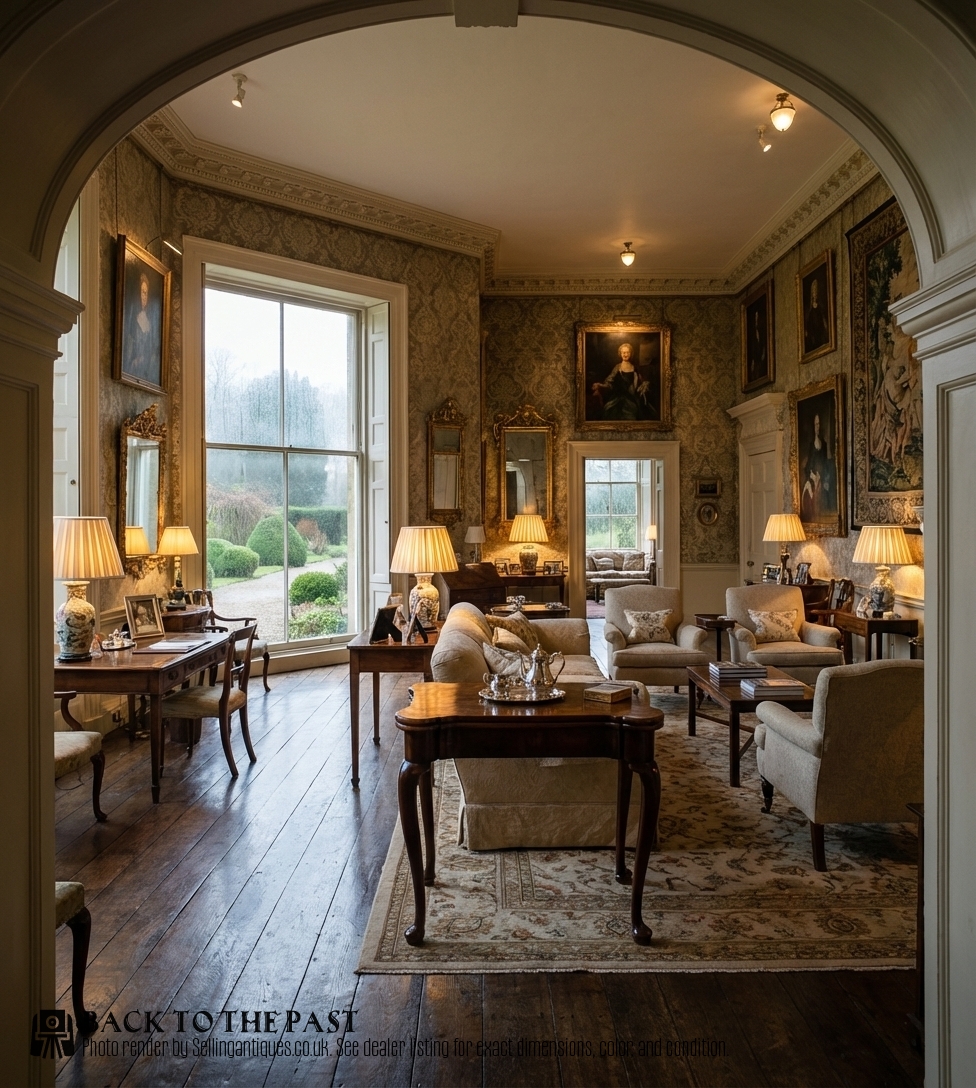
18th Century Gaming Table
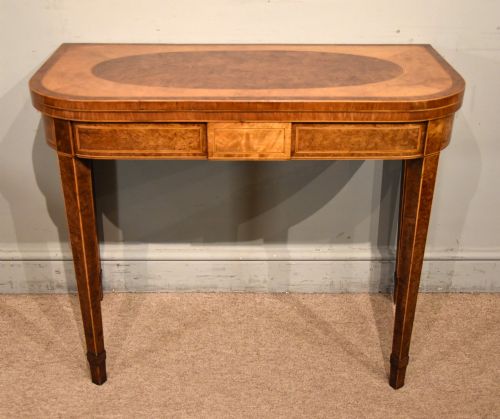
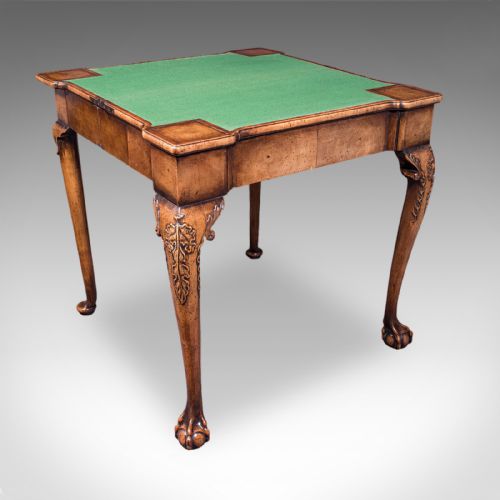
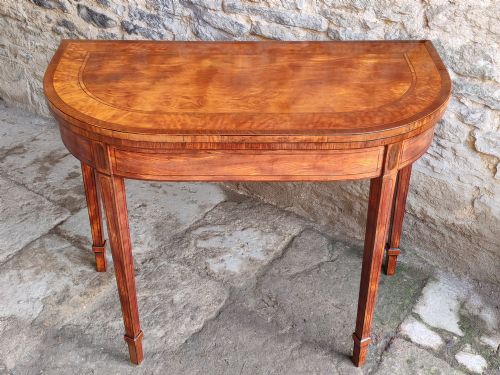
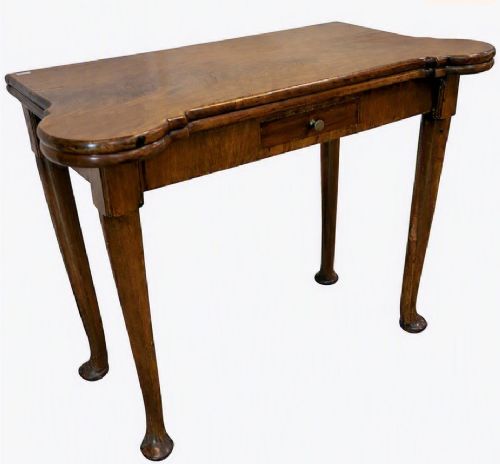
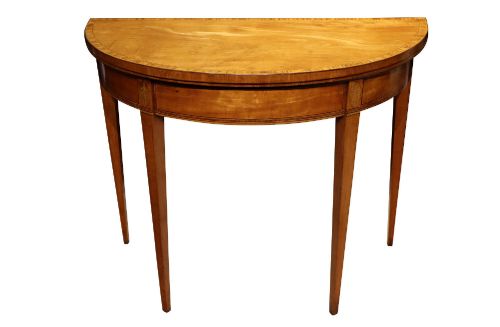
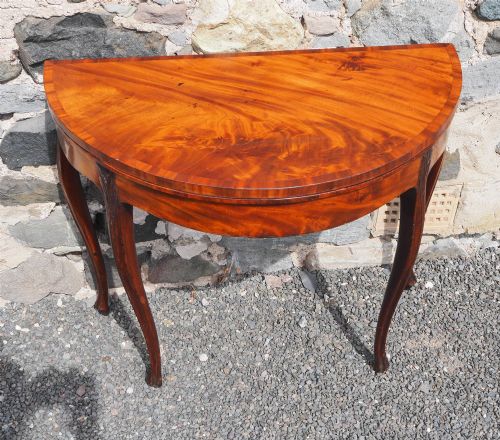
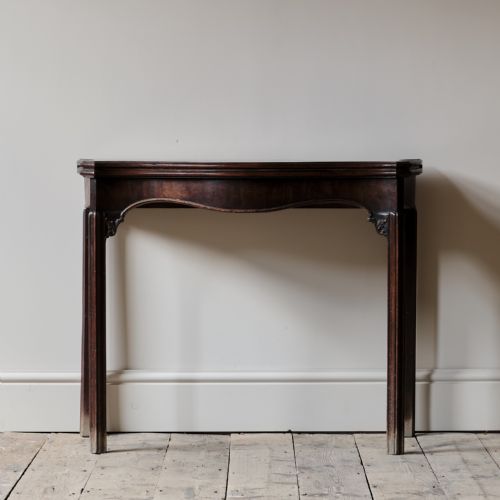
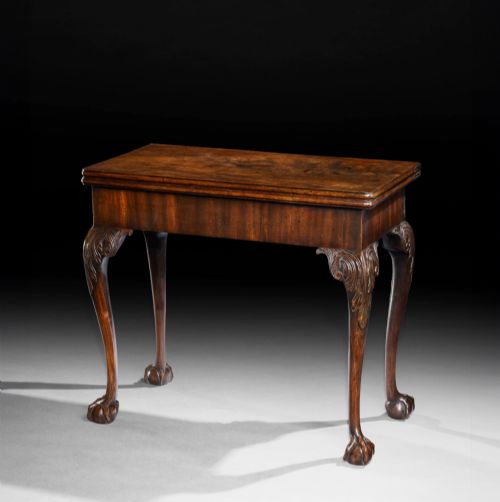
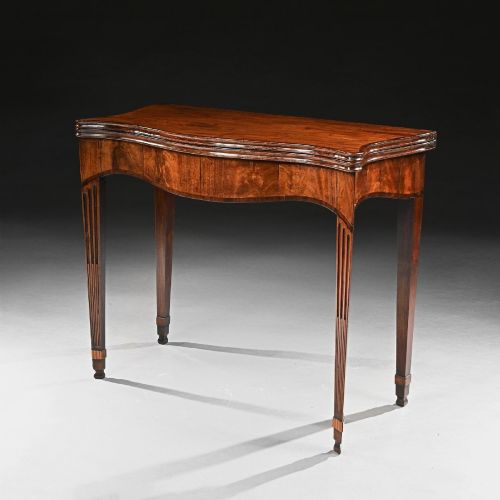
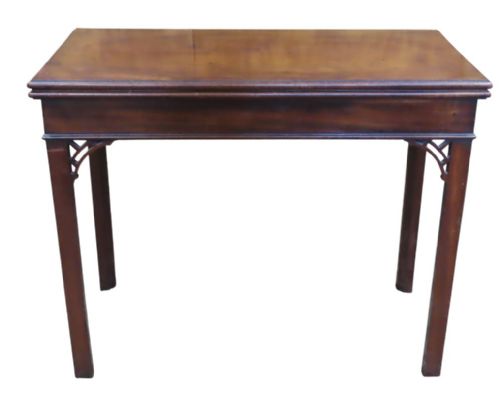
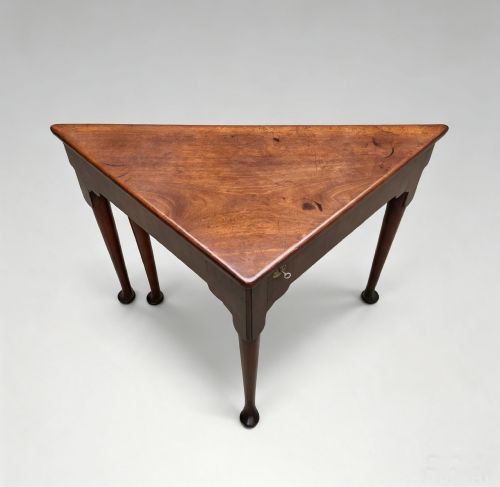
An 18th century gaming table typically appears as a card table, tea table, or console table designed for domestic leisure. The listings show forms ranging from straight-sided folding designs to demi-lune shapes and serpentine fronts.
Makers of these pieces worked during periods such as the Georgian era, incorporating styles like Chippendale, Hepplewhite, and Sheraton. English, Irish, and French origins emerge across the inventory, alongside occasional later interpretations.
Buyers encounter fold-over tops that conceal baize-lined playing surfaces or compartments. Concertina actions and swivel legs support the extended leaves when opened for use.
Design and Material Quality
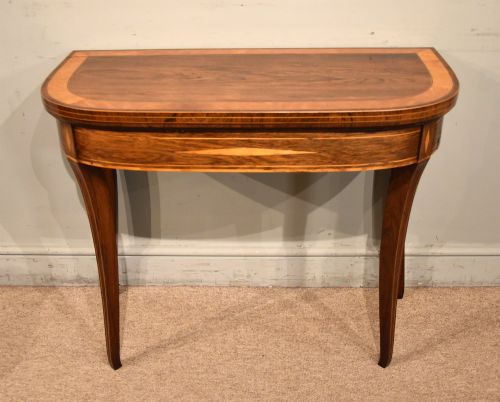
The sophistication of the timber figure dictates much of the visual distinction, from plain mahogany boards to heavily figured flame mahogany and satinwood. Crossbanding and inlaid motifs demand precise woodworking skill to execute cleanly.
The complexity of the frame action separates standard folding leaves from concertina mechanisms that maintain uniform leg placement on all four corners when open. Original surface patination and timber selection remain central to the standing of each piece.
Some tables include small corner recesses intended to hold round gaming counters safely during play.
The 18th Century Gaming Table Glossary
- Demi-lune
- Half-moon shape. Tables with this curved front often sit flat against a wall until opened.
- Concertina action
- An expanding frame mechanism. This allows all four legs to move outward symmetrically to support a fold-over top.
- Baize
- A woolen felt fabric. This material lines the playing surface of card and games tables.
- Crossbanding
- A border veneer technique. Strips of wood are laid with the grain running perpendicular to the main panel.
- Serpentine
- A wave-like curved contour. This profile curves outward in the centre and inward at the sides.
18th Century Gaming Table: Frequently Asked Questions
How do I use an 18th century gaming table today?
These tables function well as console tables against a wall when folded shut. Opening the top reveals a surface suitable for cards or board games.
Their compact closed footprint allows them to serve as side tables or occasional tables in living spaces.
What woods were used on these tables?
Mahogany serves as the dominant timber across the recorded pieces, often appearing in figured varieties like flame mahogany or Cuban variants.
Satinwood, walnut, rosewood, and amboyna appear as primary woods or decorative veneer elements alongside boxwood and ebony stringing.
How do I identify different Georgian styles?
George II pieces often display heavier mahogany construction and robust cabriole legs. George III and Sheraton designs introduce lighter satinwood veneers, straight tapering legs, and geometric inlay.
Chippendale examples incorporate carved bracket feet and elaborate edge moulding while retaining solid proportions.