
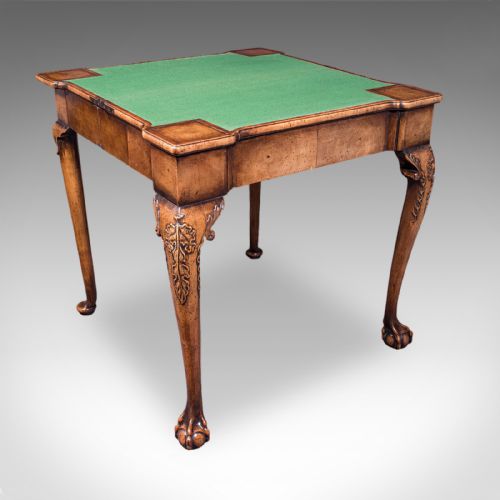
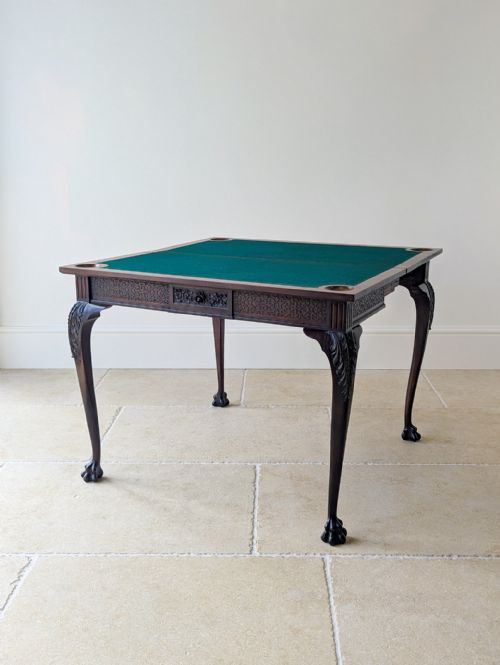
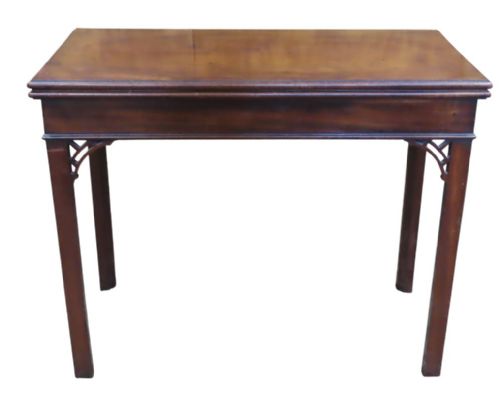
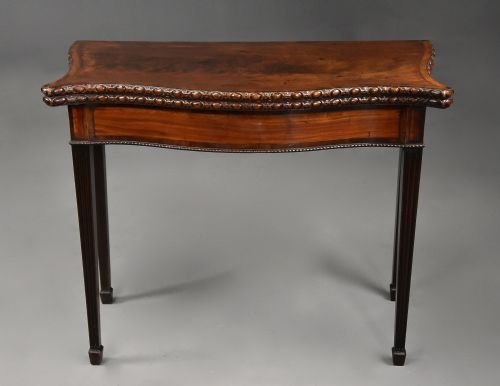

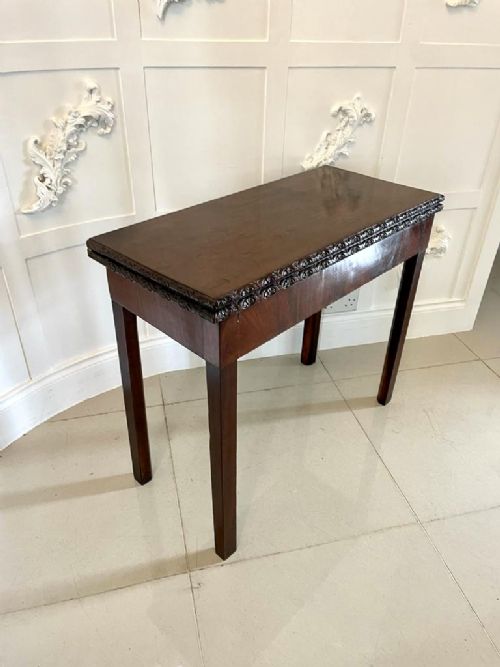


Chippendale Games Table
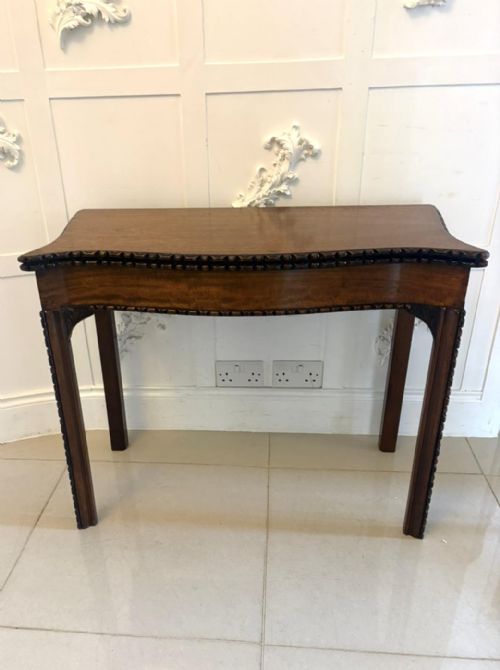
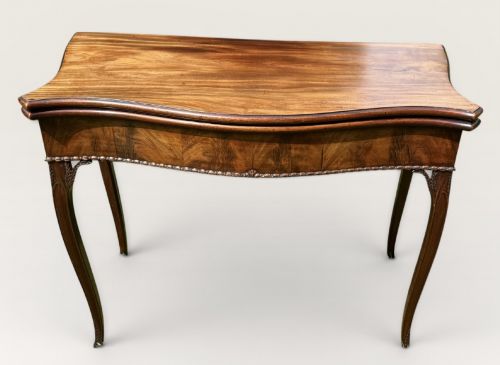
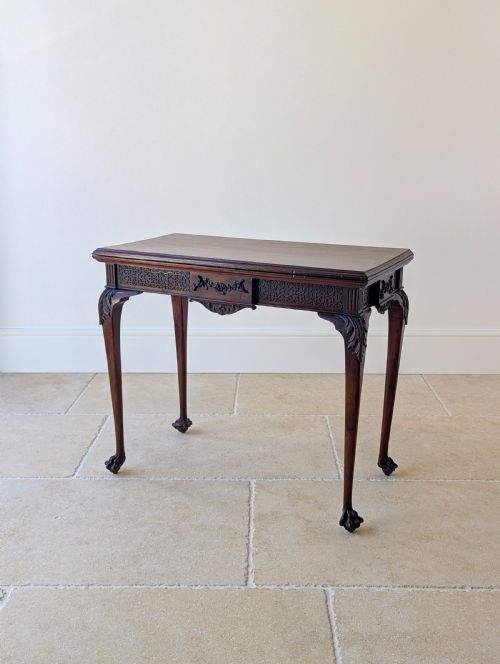
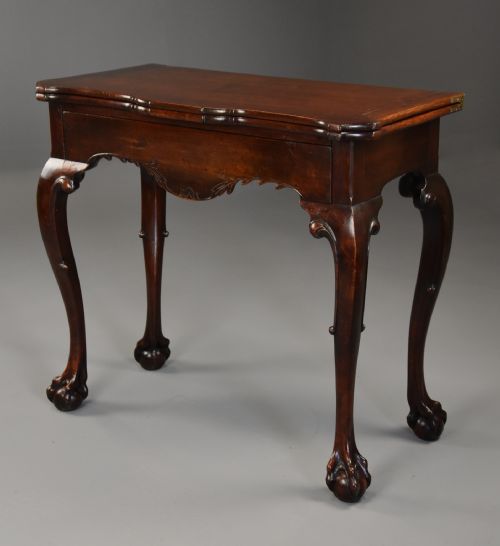
These chippendale games table pieces are Georgian and later timber folding surfaces built for evening card play.
What they are
A chippendale games table combines a folding top with storage space or concertina action mechanisms designed for card playing. Most examples date from the eighteenth century or follow Georgian design traditions closely.
How they were made
Maker workshops construct these tables using rich mahogany timber, often featuring intricate carved details associated with the style. Brass hardware frequently appears on hinges, swing legs, and internal compartments.
Joinery techniques include concertina actions that support the opened leaf securely during play. Foldover tops rely on hinged joints to expand the usable surface area smoothly.
Retail Price Guide 2026
Typical UK retail prices for chippendale games table, calculated from the Sellingantiques database of over a million retail prices indexed since 2003. This retail price guide relies exclusively on Sellingantiques data; no external sources or auction records are used, so the figures do not describe the wider market.
The site listings feature eighteenth-century pieces alongside nineteenth and twentieth-century revival examples constructed from mahogany.
What varies in quality
Quality separates simple revival items from period originals through the crispness of timber carving and the complexity of the internal action. Superior pieces demonstrate precise concertina mechanisms and well-figured mahogany surfaces.
The refinement of proportion and the integrity of the folding frame distinguish better examples. Later copies often display simplified joinery and less ambitious decorative carving compared to eighteenth-century models.
Wylie and Lochhead
The Chippendale Games Table Glossary
- Concertina action
- An expanding frame mechanism that allows four legs to support the open table top evenly. This complex joinery ensures stability when the leaf unfolds.
- Foldover table
- A dual-surface furniture form featuring a hinged top that opens to reveal a baize-lined or polished playing area. It serves as a side console when closed.
- Serpentine
- A curved outline featuring a convex centre flanked by concave curves. This contour adds visual movement to the front edge of the table.
- Quadruple top
- A multi-layered table design providing several surfaces for different pastimes. It offers versatility beneath the main folding lid.
Frequently Asked Questions
What is a chippendale games table used for?
These tables provide a stable folding surface designed specifically for card games and social evenings in the home. When closed, they function as decorative console tables against a wall.
Historically, they formed an essential part of Georgian parlour furniture, brought out when guests gathered to play cards or board games.
How do you open a foldover table?
The top leaf lifts and swings backward on specialised hinges to reveal the expanded playing surface inside. Concertina frames extend simultaneously to support the weight of the open leaf.
Careful handling protects the internal wooden hinges and historical joints from excessive strain during operation.
How do you tell an eighteenth century table from a later copy?
Eighteenth-century examples display authentic period timber patination, hand-cut joinery marks, and specific structural wear patterns. Revival pieces from later periods often show uniform machine processing and different internal framing methods.
Examining the secondary woods inside the frame helps confirm the manufacturing era and workshop origin.
What timber is used in these tables?
Mahogany serves as the primary structural and decorative wood across nearly all listed examples. Its rich grain and dense character support detailed carving work.
Makers selected well-seasoned boards to prevent warping across the wide expanse of the folding top.