

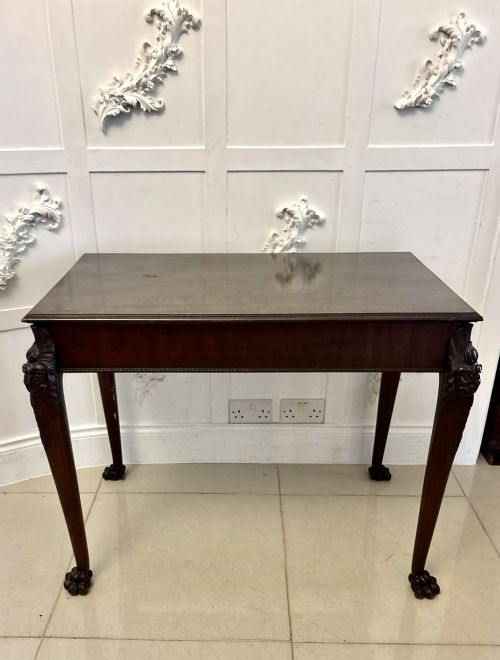
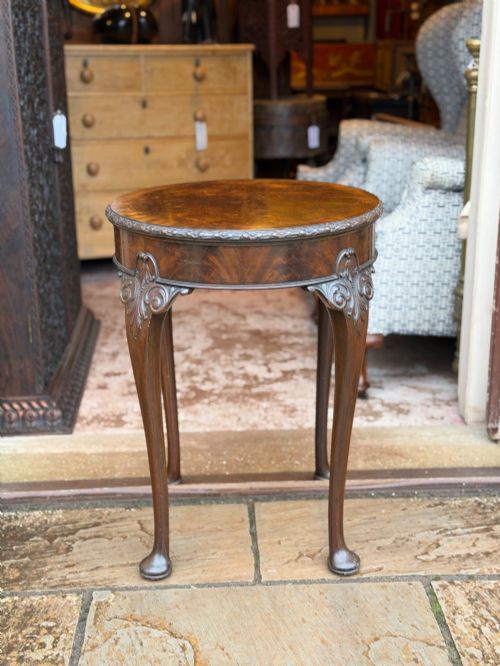
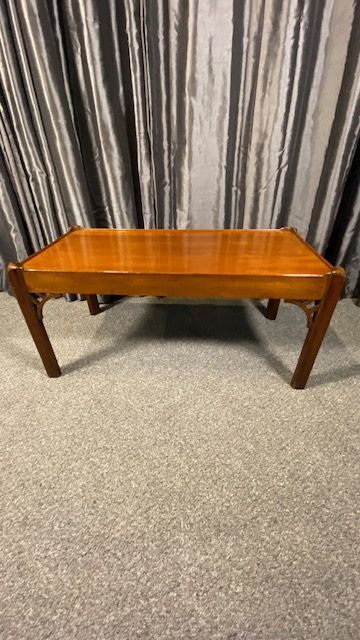
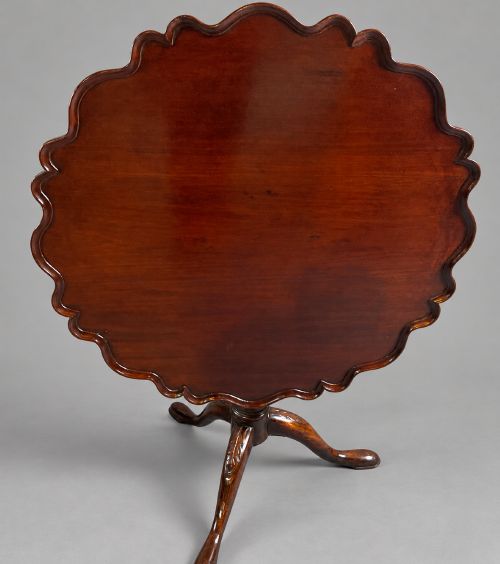
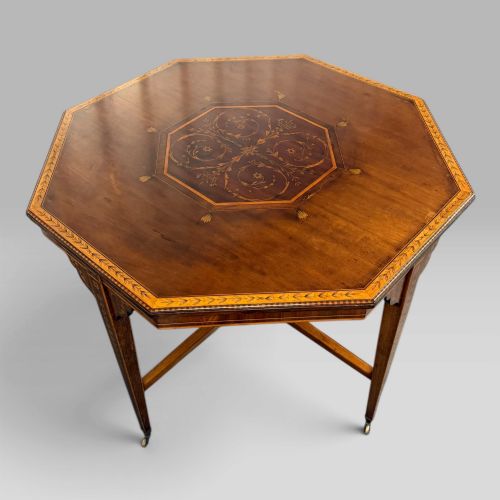
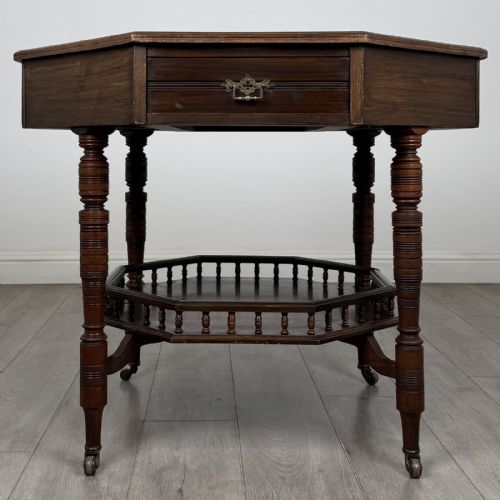
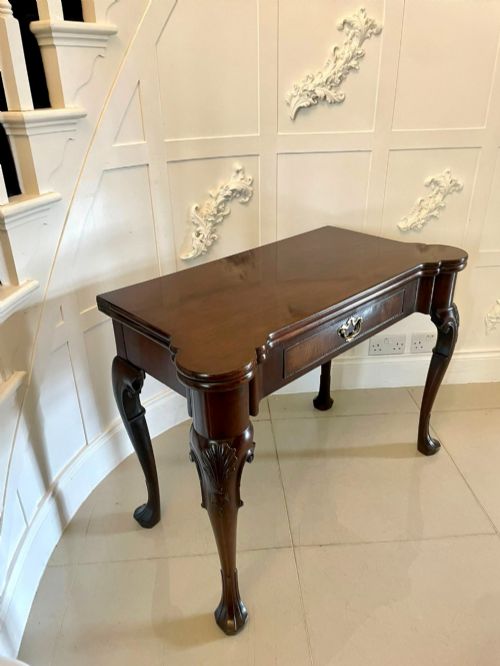
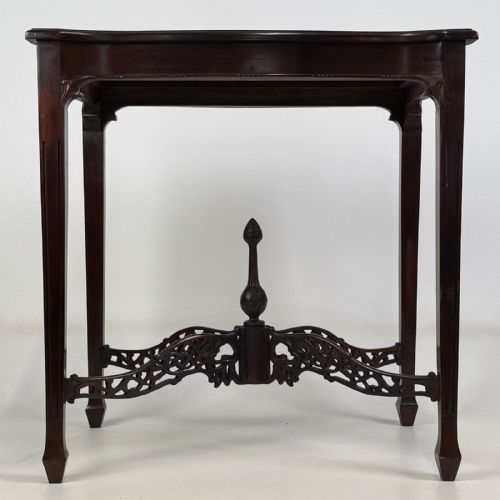
Carved Mahogany Tea Table
A carved mahogany tea table brings the architectural grace of past centuries into a modern room with sturdy timber and sure lines.
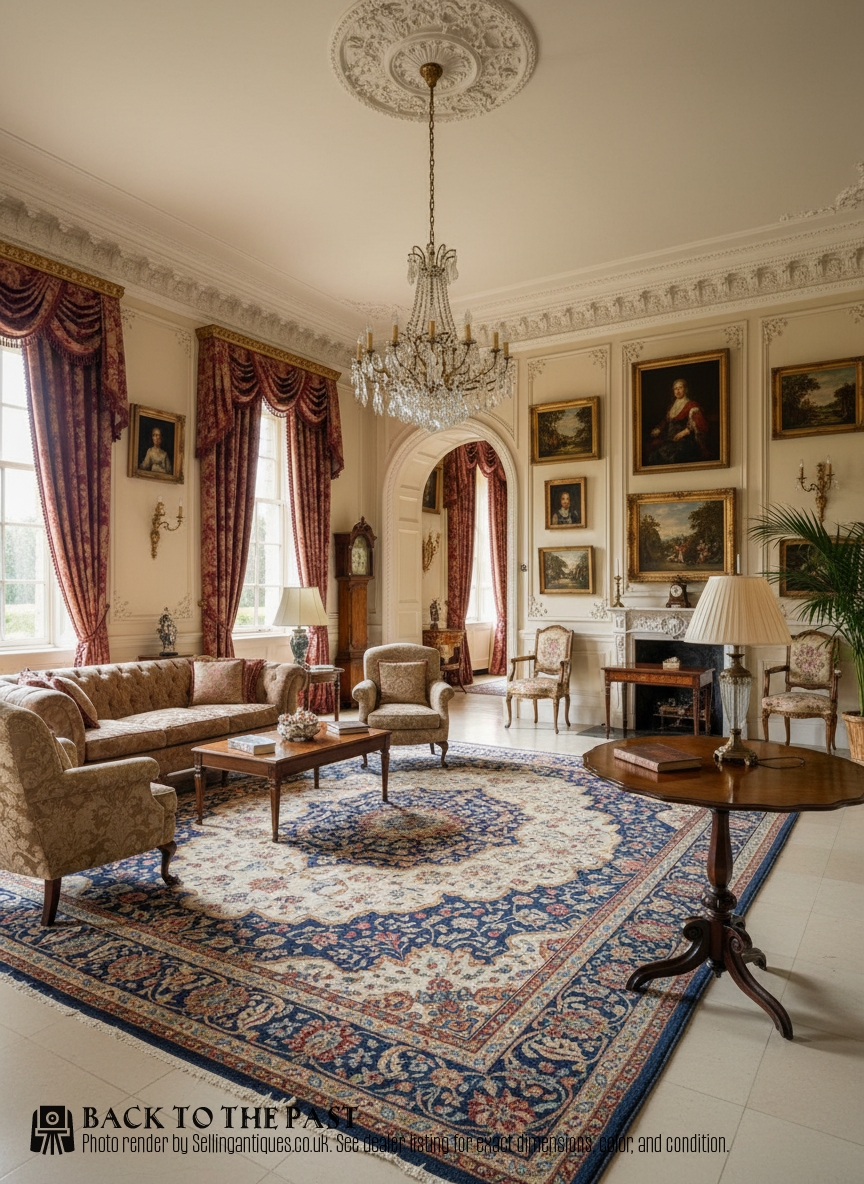
Carved Mahogany Tea Table
When you search for a carved mahogany tea table, you encounter practical surfaces designed for domestic use across several centuries. The examples here span from the mid eighteenth century through the Georgian, Regency, and Victorian eras into the Edwardian period.
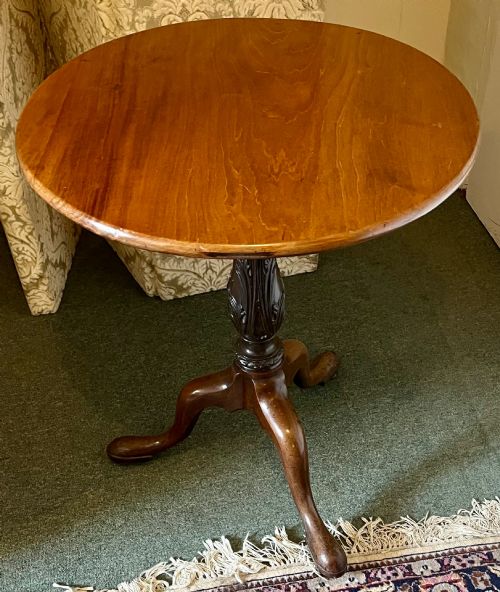
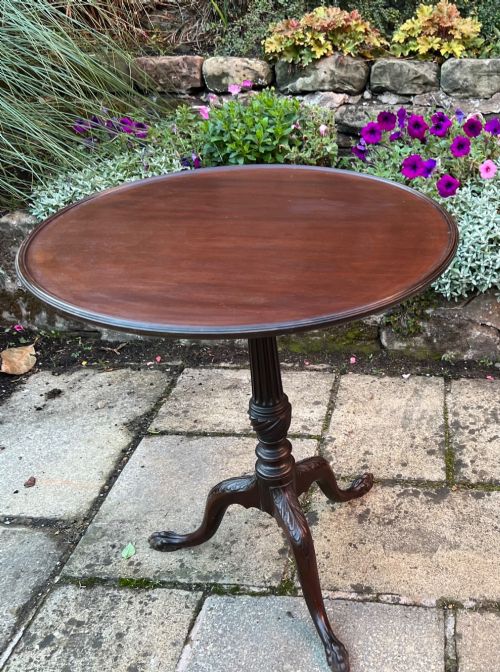
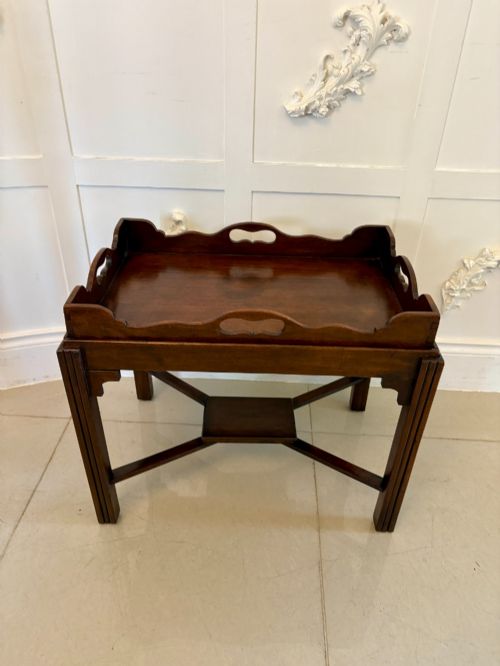
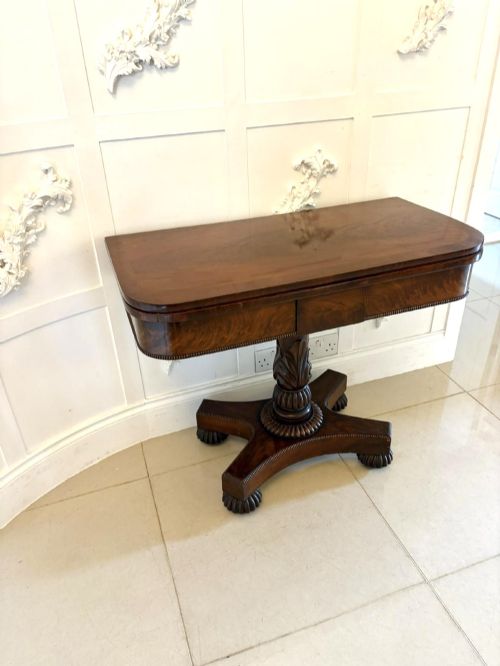
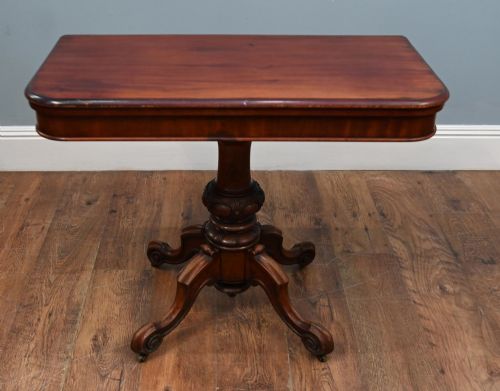
Most entries belong to the occasional, card, or tripod form rather than a rigid fixed top. Tilt-top mechanisms, folding leaves, and pivoting surfaces appear frequently amongst the current selections.
Origins stretch from Irish workshops to English cabinet makers, capturing both formal parlour pieces and lighter occasional tables. The overarching character remains grounded in dense dark timber shaped with deliberate ornament.

How they were made
Makers relied primarily on solid mahogany and figured mahogany veneers applied to secondary timbers. Brass castors, hinges, and occasional marble inserts complete the hardware.
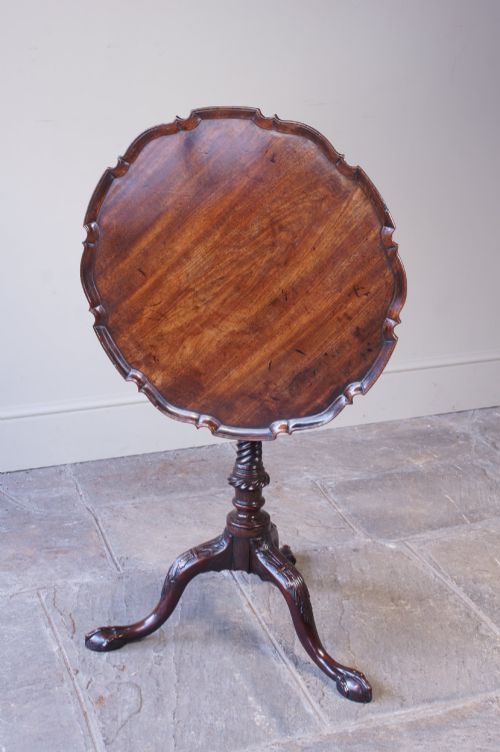
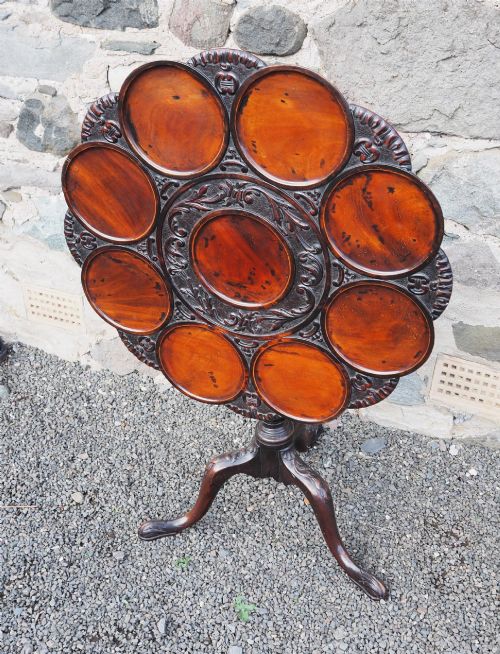
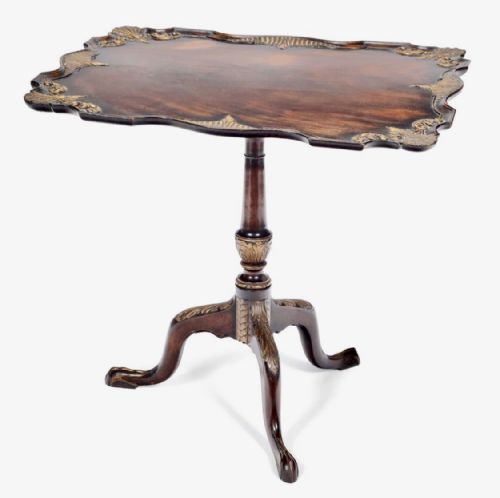
Carving was executed by hand directly into the dense timber, defining details such as pie crust edges, claw and ball feet, and pillar columns. Concertina actions and birdcage mechanisms required precise joinery to allow folding or tilting without weakening the frame.
Carved Mahogany Tea Table Retail Price Guide 2026
Typical asking prices for carved mahogany tea table among the pieces listed under this phrase on Sellingantiques today, from the lower quarter to the upper quarter. They describe what is for sale here now, not the wider market.
Materials appearing across these tables include solid mahogany, figured veneer, brass hardware, and marble inserts.
What varies in quality
The crispness of the hand carving dictates the visual success of the piece, separating sharp acanthus leaves and fluted columns from softer, shallow work. Timber selection also governs value, with deeply figured grain and rich original patination holding higher regard than plain or heavily refinished surfaces.
Structural integrity depends on the cleverness of the original mechanism, whether a smooth concertina action for a card table or a stable birdcage pivot on a tripod base. Pieces that retain their original timber surfaces without excessive repair represent the upper tier of craftsmanship.
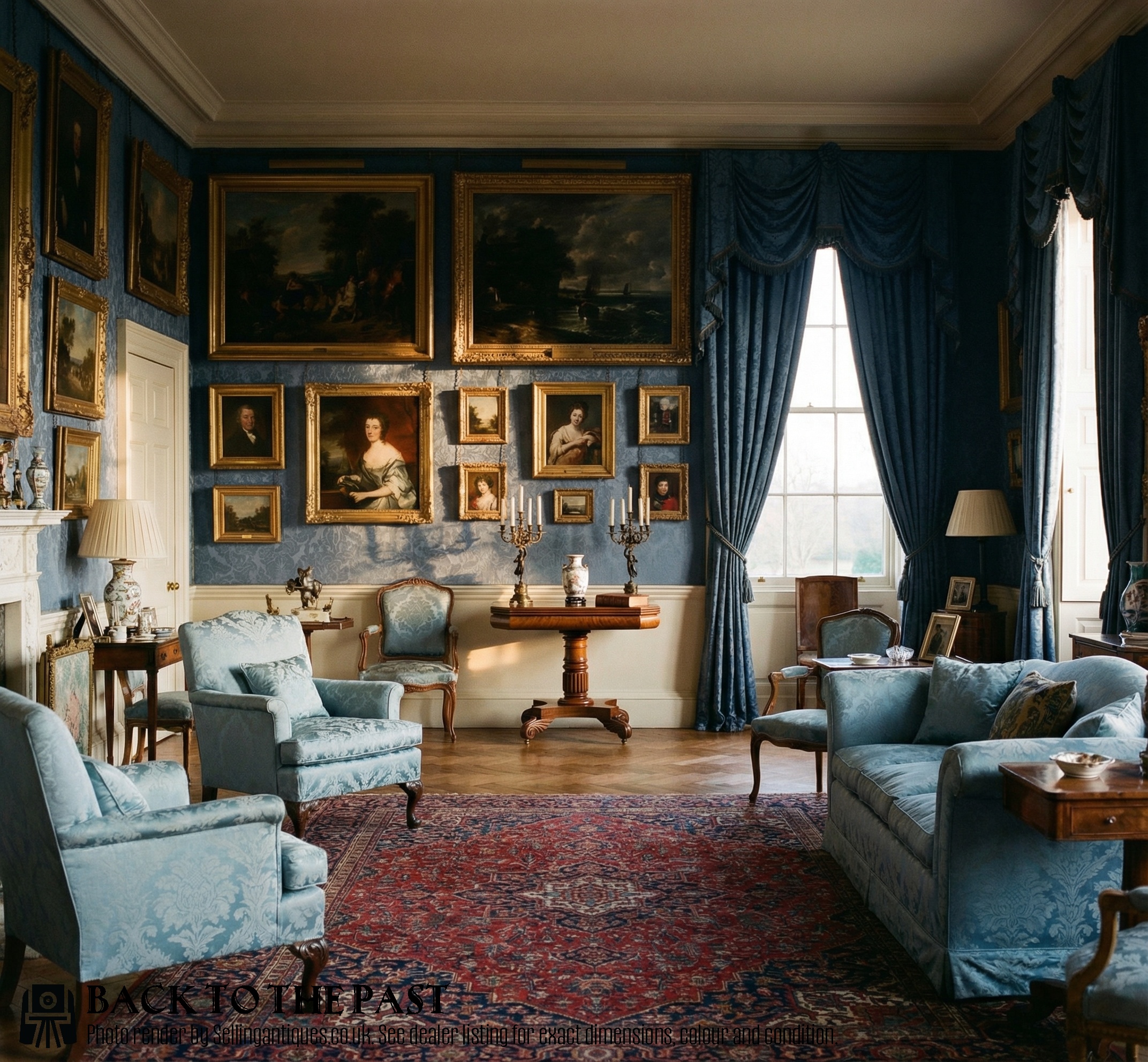
Trevor Page and Co·Giles Grendey·Shapland and Petter
The Carved Mahogany Tea Table Glossary
- Pie crust rim
- A raised, decoratively carved tabletop edge shaped in undulating curves resembling pastry work. This feature is typically found on mid eighteenth century tripod tables.
- Tilt top
- A tabletop mounted on a catch and pivot mechanism allowing the surface to fold vertical when not in use. It conserved floor space in smaller domestic rooms.
- Concertina action
- An expanding frame mechanism used on card tables that extends the rear legs outward when the top unfolds. This provides stable support for the extra leaf without blocking the user.
- Teapoy
- A small box on a pillar stand intended to store tea leaves and utensils safely away from damp air. They often feature interior compartments and sarcophagus shapes.
- Birdcage mechanism
- A rotating wooden frame beneath a tilt top table that allows the surface to spin horizontally as well as tilt. It adds flexibility to tripod tables.
Carved Mahogany Tea Table: Frequently Asked Questions
How do I spot an 18th century tea table?
Eighteenth century pieces typically display denser mahogany timber, hand cut dovetails, and crisp carving such as ball and claw feet. Look for traditional construction methods like pegged joints rather than modern screws.
Proportions also offer clues, as earlier tables often maintain lighter framing and distinct patination developed through centuries of wax polishing.
What is a tilt top table used for?
A tilt top table served as a versatile surface for dining, reading, or serving tea when unlocked and horizontal. When the top tilted vertical, the table could be pushed against a wall to clear space in a crowded room.
This clever space saving design made tripod tables exceptionally popular in smaller drawing rooms during the Georgian and Victorian eras.
How do I care for mahogany furniture?
Maintain mahogany surfaces by applying natural beeswax sparingly and buffing with a soft cloth to preserve the finish. Avoid placing tables near direct heat sources or strong sunlight, which can dry out the timber and fade the colour.
Use coasters and felt pads under objects to protect the polish from moisture rings and scratches.