


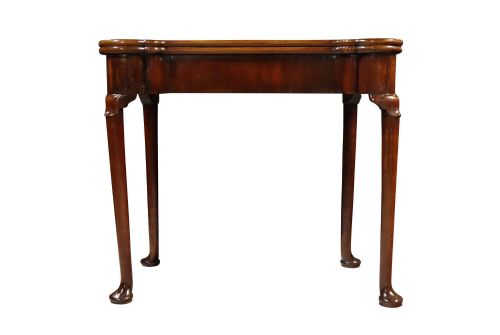


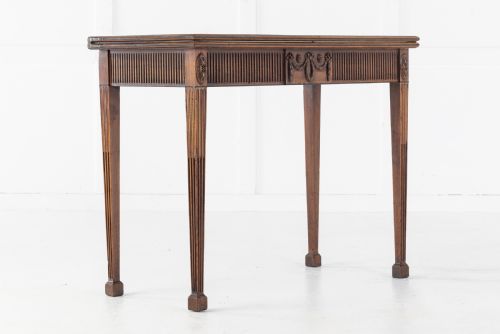
Brown Wooden Foldover Table
A brown wooden foldover table brings versatile surface space and period craftsmanship into a room, offering clever dual-purpose design.
Brown Wooden Foldover Table
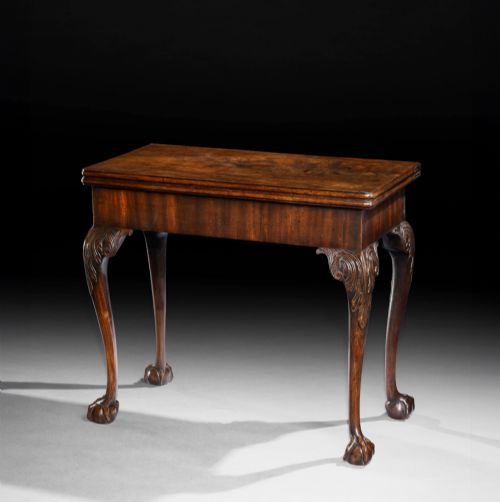
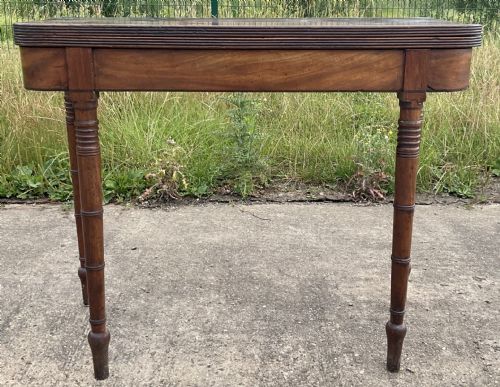
When you search for a brown wooden foldover table, you are looking at clever dual-purpose furniture designed to expand when needed and sit compactly against a wall otherwise. These pieces primarily function as card tables, tea tables, or console tables with hinged tops that reveal baize-lined gaming surfaces or polished timber leaves.
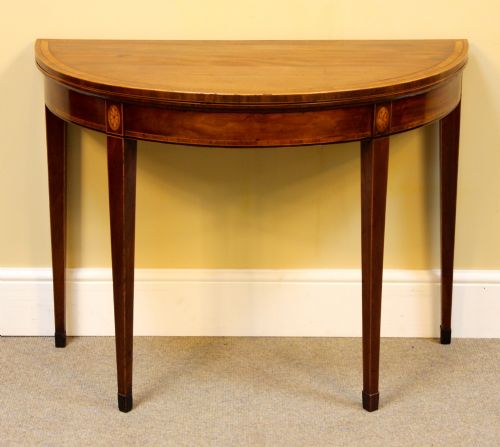
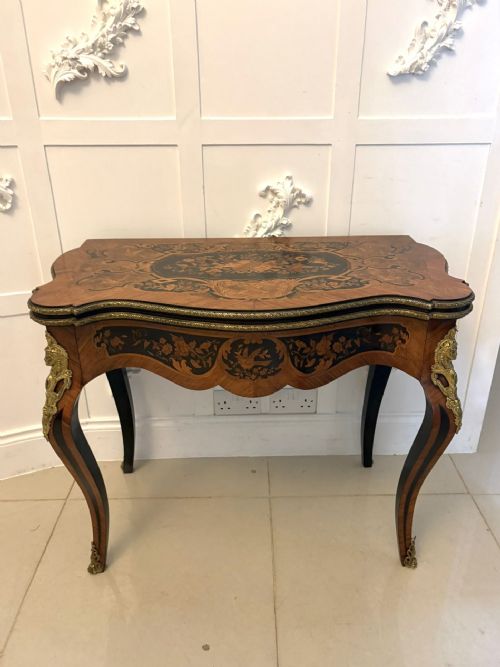
The selections available here span the Georgian, Regency, and William IV eras, alongside mid-nineteenth-century continental pieces. You will most frequently meet mahogany examples from the eighteenth and early nineteenth centuries, often taking rectangular, demilune, or D-shaped forms.
Makers of these tables engineered pivoting or concertina actions to support the opening leaf safely. This clever mechanism allows a modest side table to transform instantly into a full dining or gaming surface without losing its structural balance.
How they were made
Cabinetmakers built these tables using solid timbers and carefully selected veneers, relying principally on rich mahogany alongside satinwood, kingwood, and boxwood. Artisans applied boxwood inlay and marquetry details to enhance the surfaces, while brass hinges and mounts secured the moving leaves and structural joints.
Construction techniques focused heavily on the foldover mechanism and stable leg supports, utilising concertina actions, pivoting leaves, and central pedestals. Craftsmen shaped the wood into tapered legs, cabriole supports, or robust columns depending on the prevailing style of the period.
Brown Wooden Foldover Table Retail Price Guide 2026
Typical asking prices for brown wooden foldover table among the pieces listed under this phrase on Sellingantiques today, from the lower quarter to the upper quarter. They describe what is for sale here now, not the wider market.
Discreet dished gaming wells inside eighteenth-century card tables were carved specifically to keep rolling dice from escaping onto the floor.
What varies in quality
The distinction between ordinary and exceptional examples rests upon the selection of timber grain and the precision of the joinery within the folding mechanism. Superior pieces display book-matched veneers, crisp boxwood inlay, and seamless movement when the top opens to reveal gaming wells.
Attention to detail in the carving, the quality of the Ormolu mounts on continental pieces, and the rigidity of the concertina or pivoting frame set finer specimens apart. A well-executed table maintains absolute stability in both its closed console position and its fully opened format.
Giles Grendey
The Brown Wooden Foldover Table Glossary
- Concertina action
- A table frame that expands outwards on a hinged wooden framework resembling a concertina. This design supports the open leaf evenly by placing weight centrally over four legs rather than two.
- Demilune
- A half-moon shape used for table tops and cabinets. This silhouette allows the piece to sit flat against a wall while saving floor space.
- Marquetry
- The art of forming decorative patterns using thin slices of various woods and other materials applied to a wooden base. It creates intricate pictorial or geometric designs across the surface.
- Ormolu
- Gilded bronze used for decorative mounts and fittings on furniture. It adds metallic contrast and ornamental detail to the timber.
- Baize
- A coarse woollen material traditionally used to line the gaming surfaces of card tables. It provides a soft, tactile surface for playing cards.
Brown Wooden Foldover Table: Frequently Asked Questions
How do foldover tables work?
These tables feature a hinged top leaf that rests flat upon a matching base when closed. Opening the table involves lifting and pivoting or sliding the top, supported by a swing leg or expanding frame.
This mechanism doubles the surface area instantly. It allowed historical households to utilise small console or side tables for daily tasks and expand them for guests or evening games.
What were tea tables used for?
Georgian and Regency households used tea tables to serve afternoon tea from porcelain sets. The foldover top kept the delicate tea equipage secure when not entertaining.
Once tea was cleared, the table often doubled as a surface for card games or reading. Their dual functionality made them central pieces in drawing rooms.
How do I identify a Georgian table?
Georgian tables generally display rich mahogany timbers, straight or tapered legs, and restrained proportions. Details like boxwood stringing or subtle carving reflect the specific decade of manufacture.
Examining the underside reveals hand-cut joints and period hardware. These construction methods distinguish eighteenth-century workshop practices from later reproductions.
Where should I place a foldover table?
A closed foldover table fits neatly against a hallway or living room wall as a console or side table. This position displays the polished wood top while saving floor space.
Pulling the table into the room and opening the leaf provides a functional surface for dining or games. Ensure you allow enough clearance around the piece for the top to unfold safely.