


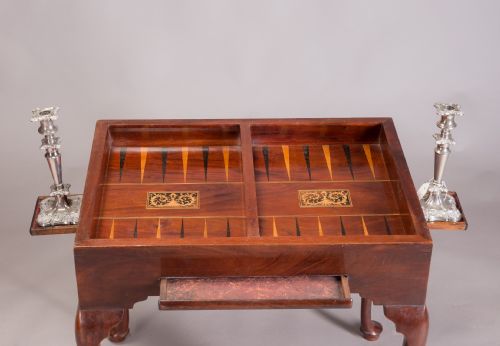

Irish Mahogany Games Table
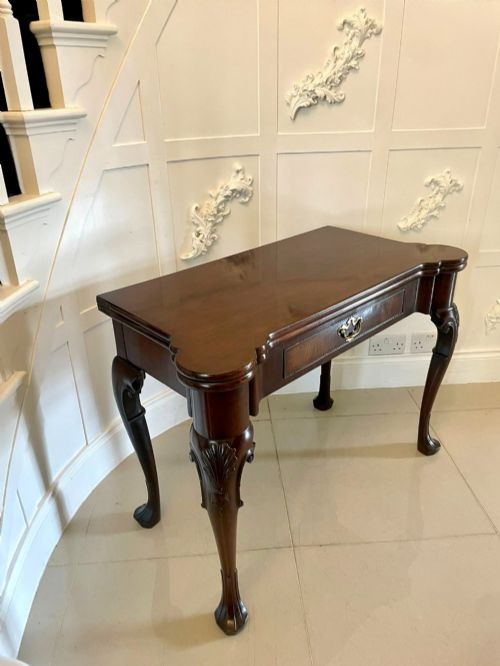
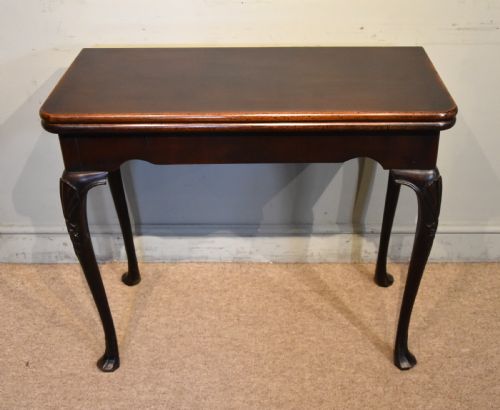
An irish mahogany games table brings rich timber grain and clever folding mechanisms together into one hardworking piece of period furniture.
Irish Mahogany Games Table
An irish mahogany games table combines dark timber and folding tops designed for cards, tea, or general parlour use. The pieces found here span the Georgian and nineteenth-century periods, showing regional Irish cabinet-making traits such as robust carved detailing and concertina actions.
Makers produced these items in forms including card tables, triple-top tables, and demi-lune foldover surfaces. The most common varieties encountered on this page date from the eighteenth century, frequently reflecting George II and George III stylistic influences.
Buyers look for these tables to anchor a drawing room or study with period utility. They offer versatile surfaces that close into slim console or side tables when not in use for gaming.
Materials and construction methods
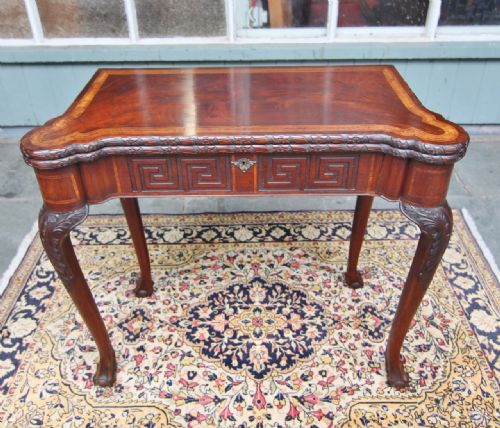
Cabinet-makers relied heavily on solid mahogany, using its dense grain to support heavy carved legs and folding leaves. Workshops often incorporated secondary woods alongside intricate satinwood inlay, boxwood, and ebony stringing.
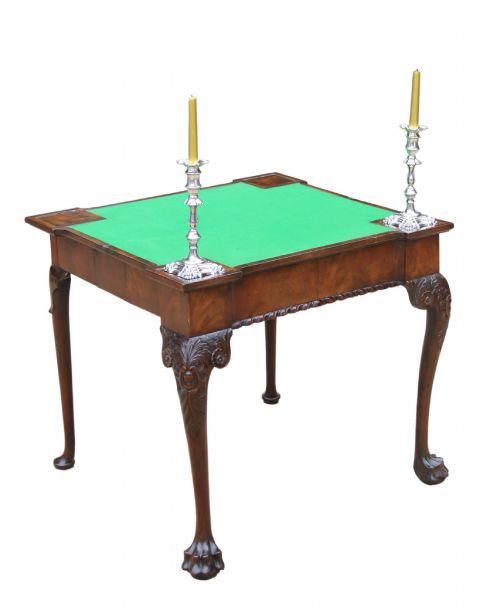
Internal engineering mattered just as much as exterior polish, utilising concertina actions or swing-leg mechanisms to support the open leaf safely. Working surfaces were traditionally lined with baize to provide a soft playing field for card games.
Many a polite eighteenth-century evening hinged entirely on whether the card table baize was brushed before guests arrived.
Assessing quality and execution
Quality rests in the crispness of the timber carving and the precision of the concertina frame when opened. Superior examples display substantial mahogany thickness and refined secondary stringing rather than plain, utilitarian joints.
The sophistication of the folding mechanism separates standard production from top-tier workshop output. Tables that maintain structural alignment across multiple configurations command greater attention from discerning collectors.
The Irish Mahogany Games Table Glossary
- Concertina action
- An expanding frame mechanism that allows all four legs to move outward when the table top opens, providing symmetrical support. This design requires careful joinery to operate smoothly.
- Demi-lune
- A half-moon shape used for table tops that sit flat against a wall when closed. Opening the leaf reveals a full circular or serpentine surface.
- Baize
- A coarse woollen fabric traditionally glued to the interior playing surface of card tables. It reduces the clatter of dice and protects wooden counters.
- Stringing
- Thin inlaid lines of contrasting timber, such as boxwood or ebony, set flush into the mahogany surface. This technique adds linear definition to borders and legs.
Irish Mahogany Games Table: Frequently Asked Questions
How were these tables used originally?
Owners placed them against drawing room walls as decorative side or tea tables during the day. When evening arrived, the top unfolded to accommodate card games or social pastimes.
Many versions included small corner cups or wells carved into the timber surface to hold coins or counters safely during play.
How do I date an eighteenth-century table?
Dating relies on observing stylistic markers such as carved cabriole legs associated with George II pieces versus straighter, inlay-focused George III designs. Timber patination and construction joints underneath also offer clear chronological clues.
Examining the hinges and internal framing reveals whether the piece belongs to the mid-eighteenth century or later nineteenth-century revival periods.
Where should I place it at home?
These pieces fit naturally in hallways, living rooms, or studies where their folded profile acts as a slim console table. Placing them away from direct heat sources protects the old mahogany and inlaid veneers.
Opening the top occasionally helps prevent the hinges and folding mechanisms from binding over time.