
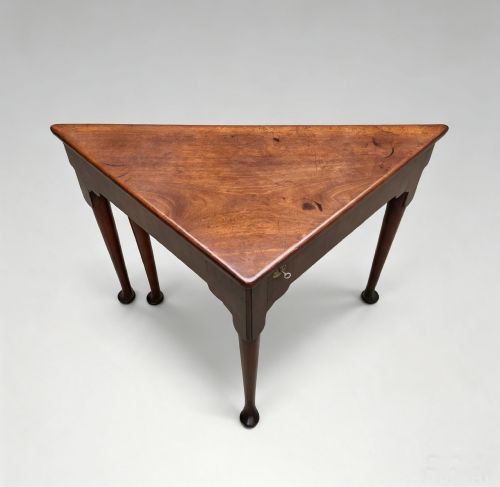
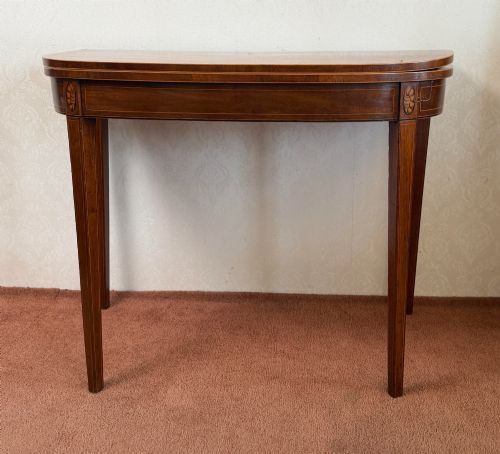
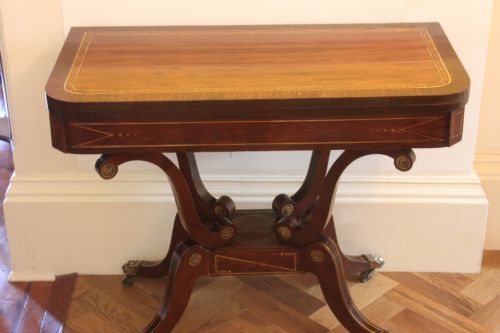
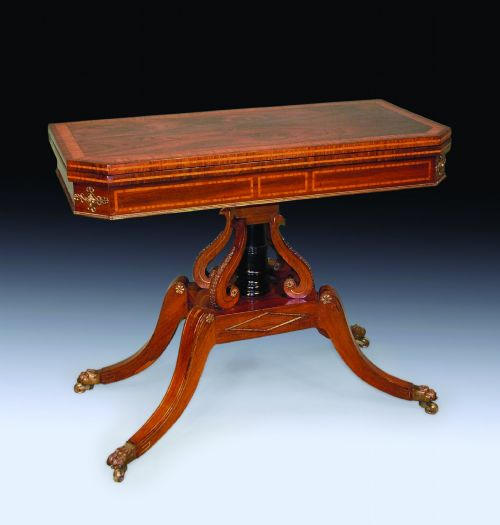
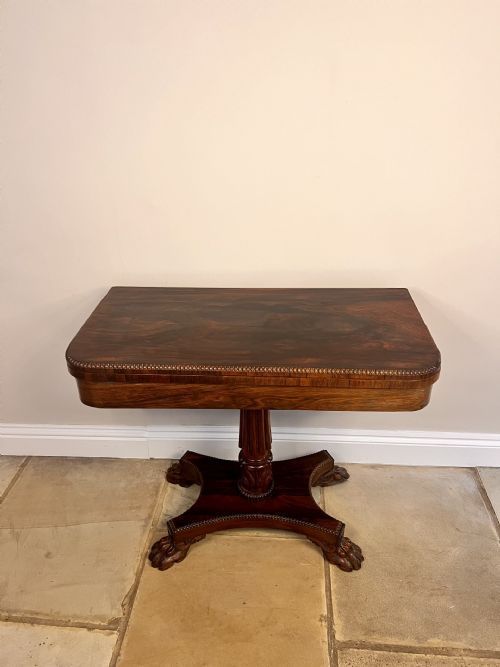
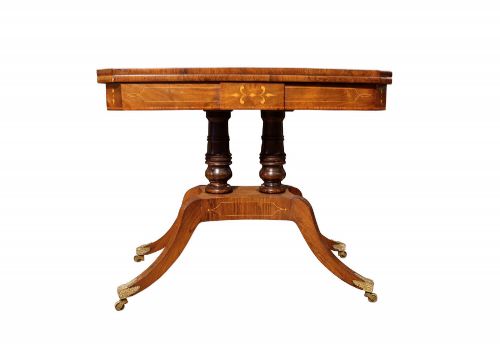
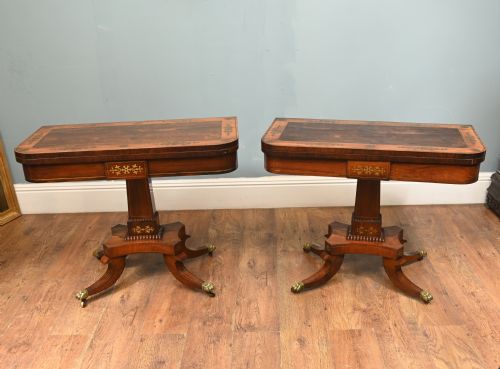
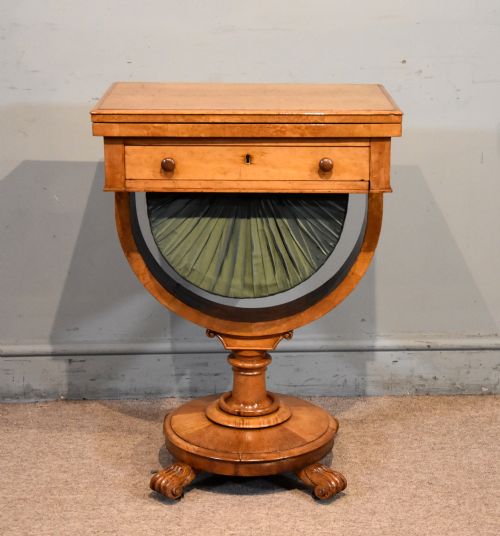

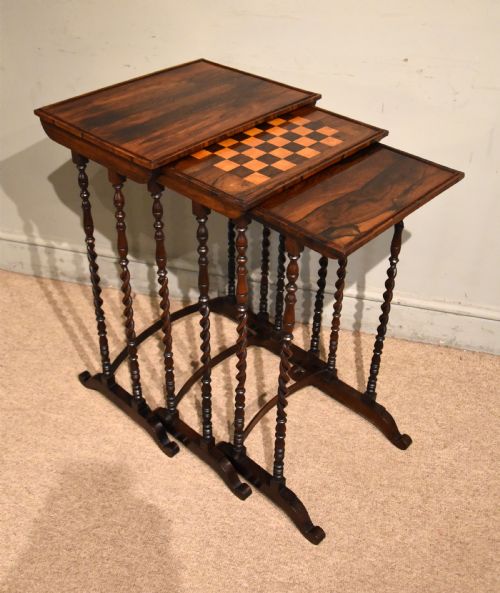


Period Gaming Table
A period gaming table brings social play into the drawing room through folding surfaces and figured woods.
Period Gaming Table
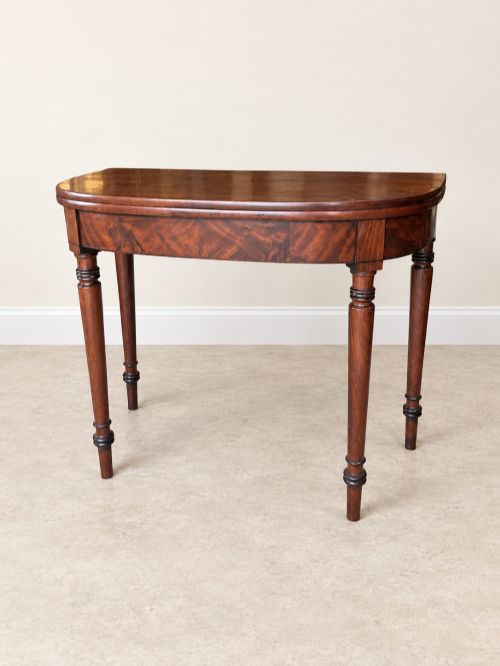
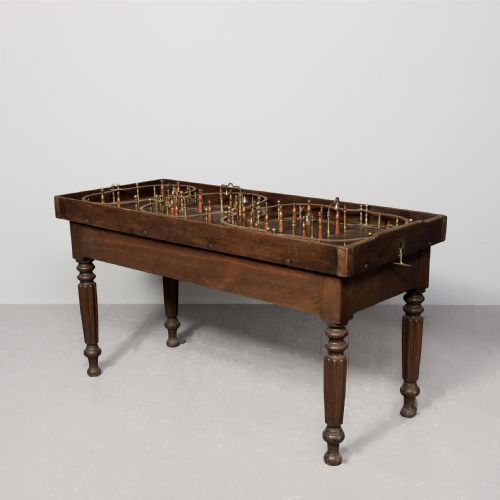
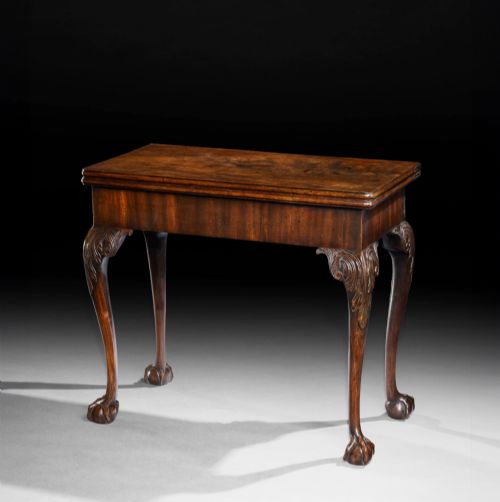
When you examine a period gaming table, you encounter furniture designed for cards, chess, and social play across the eighteenth and nineteenth centuries. The selections span George II, Georgian, George III, George IV, William IV, and Regency eras, reflecting changing tastes in domestic entertainment.
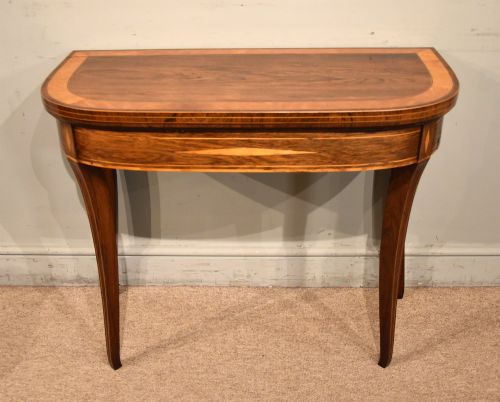
Card tables dominate the form, appearing most frequently with fold-over tops that conceal baize-lined playing surfaces when open and console functions against the wall when closed. You also find specialised pieces incorporating chess boards, penwork details, or separate sewing compartments.
Makers constructed these tables in mahogany, rosewood, satinwood, and oak, utilising shapes ranging from 'D' forms and octagonal tripod bases to freestanding scroll pedestals and concertina actions. The pieces bridge utility and display, functioning as tea tables or occasional surfaces when not in use for games.
Gradations in craftsmanship and design
Quality rests in the selection of the timber and the precision of the brass inlay, where finer examples display seamless integration of metal into rosewood or mahogany surfaces. The crispness of carved details on pedestals and dolphin supports separates standard production from superior workshop output.
Construction integrity defines the upper tiers, evident in smooth concertina actions that align perfectly when closed and rigid support structures that prevent wobble during play. The richness of the figured grain on the top surfaces dictates visual presence within the room.
The listings feature tables constructed from mahogany, rosewood, satinwood, boxwood, ebony, ebonised wood, and oak across Georgian and Regency periods.
Giles Grendey·William Trotter
The Period Gaming Table Glossary
- Concertina action
- A table frame that expands outward on an accordion-like hinge mechanism to support a fold-over top evenly on all four sides. This clever engineering allows the rear legs to move outward when the table opens.
- Fold-over top
- A hinged wooden surface that doubles the table area when unfolded for play. It rests flat against a frieze when closed.
- Penwork
- Decorative surface illustration executed with ink on wood, often depicting geometric or figurative scenes. This delicate technique appears on specialised games tables.
- Sabot
- A metal sleeve fitted to the foot of a table leg for protection and adornment. They are commonly cast in brass on Regency rosewood pieces.
- D 'shaped
- A semicircular table profile resembling the capital letter D, designed to stand flat against a wall when closed. These pieces swivel open to form a full square or circle for cards.
Period Gaming Table: Frequently Asked Questions
How do you open a fold over card table?
You lift the top leaf and rotate or swing it outward on its hinges to reveal the baize playing surface beneath.
The hinged rear leg or framework pivots out simultaneously to support the extended weight of the open leaf.
What were these tables used for originally?
These pieces served households as dedicated furniture for evening card games, chess matches, and social gatherings.
Between games, the folded tops allowed the furniture to function as pier tables, tea tables, or console surfaces against the wall.
How do you date a Regency gaming table?
You look for characteristic Regency design markers such as rosewood veneer, brass inlay, brass sabots, and heavy pedestal bases.
Makers working during this period favoured classical architectural motifs, sabre legs, and lyre or dolphin supports.
Can you use a period card table daily?
You can use these tables for daily surface needs provided you treat the antique wood and historical hinges with care.
Avoid placing damp items or excessive weight on the fold-over leaves to protect the underlying mechanism and veneer.