

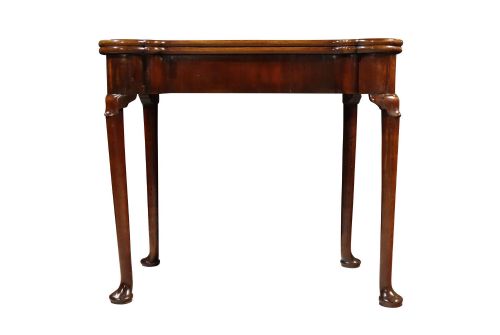
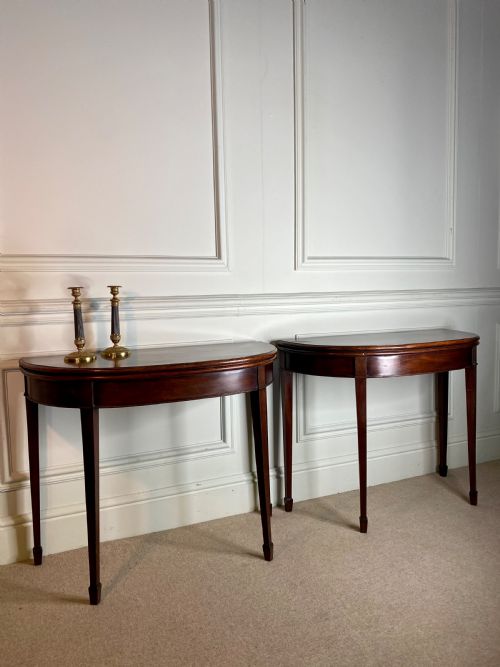

Georgian Mahogany Foldover Table
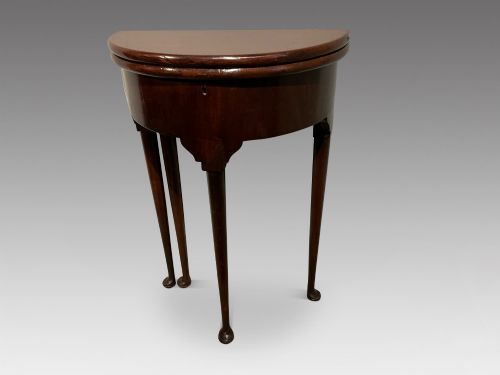
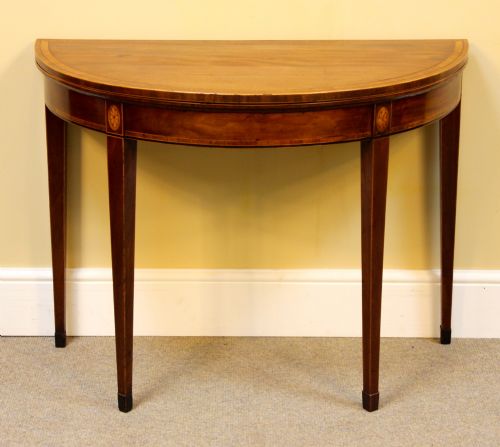
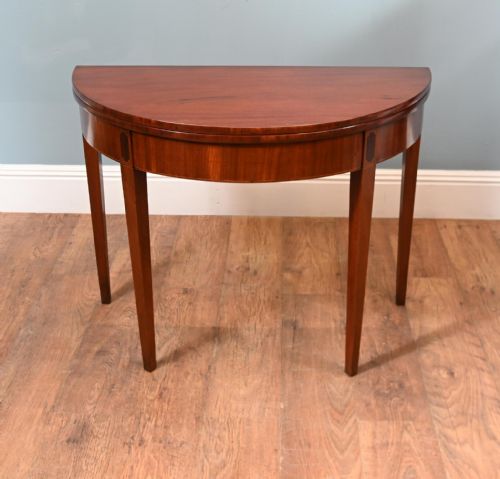
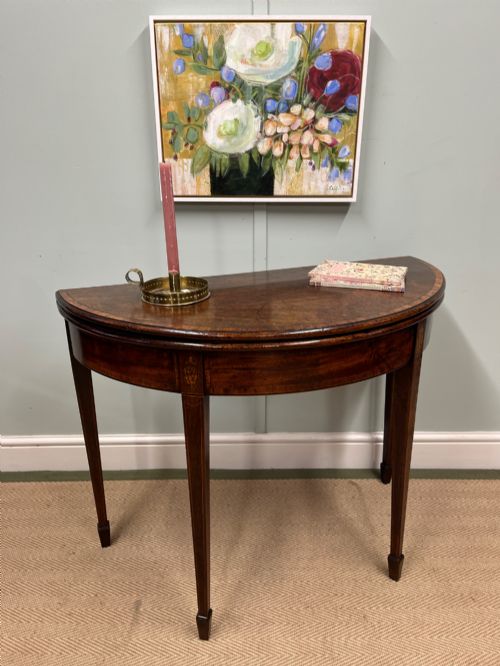
A georgian mahogany foldover table provides a versatile surface for tea or card games, shifting from a compact console to a broad top when needed.
Georgian Mahogany Foldover Table
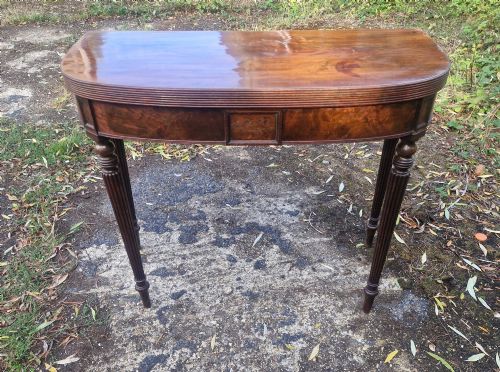
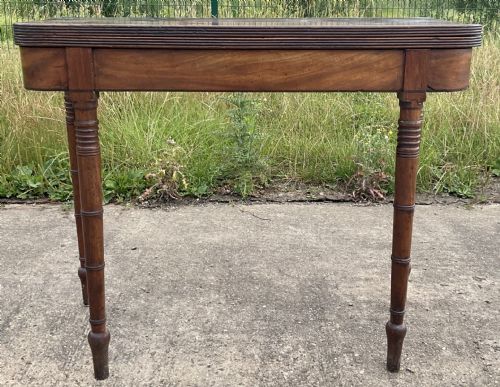
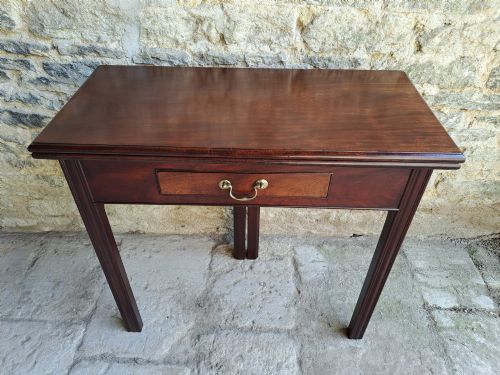
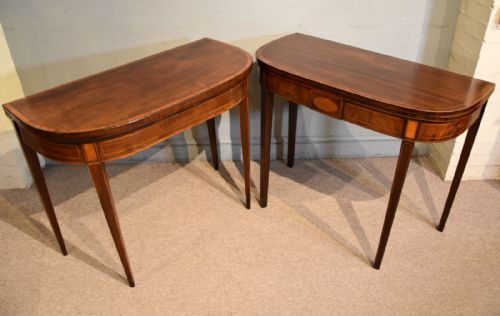
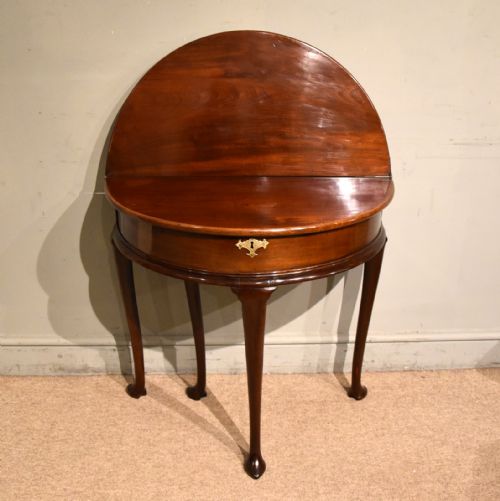
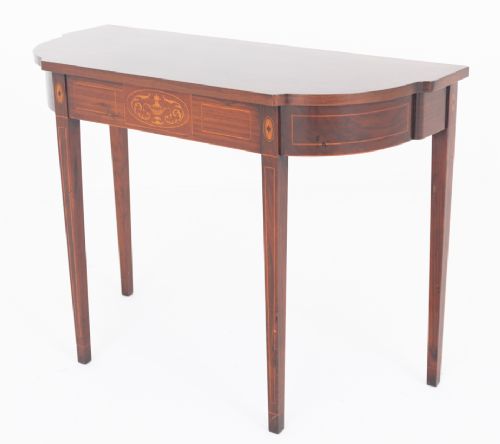
The georgian mahogany foldover table category encompasses dual-purpose furniture designed to stand against a wall until required for evening entertainment or afternoon hospitality. These pieces appear in forms such as card tables, tea tables, and games tables, often taking a demi-lune, D-shape, or rectangular profile.
The material record spans the eighteenth and nineteenth centuries, taking in periods from George II and George III through to the Regency era and later nineteenth-century revivals. Buyers encounter both rectangular formats and half-round consoles that expand via concertina actions or rotating tops to reveal baize-lined playing surfaces or plain timber leaves.
How They Were Made
Cabinet makers utilised dense timbers, notably Cuban mahogany, constructing solid frames and applying fine wood veneers to tabletops. Workshops incorporated secondary elements such as oak or deal for internal framing and drawer linings.
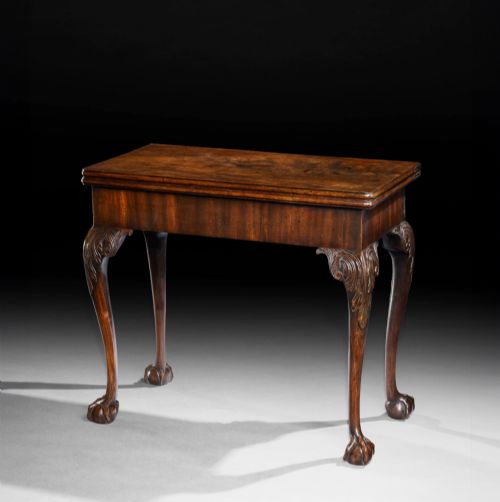
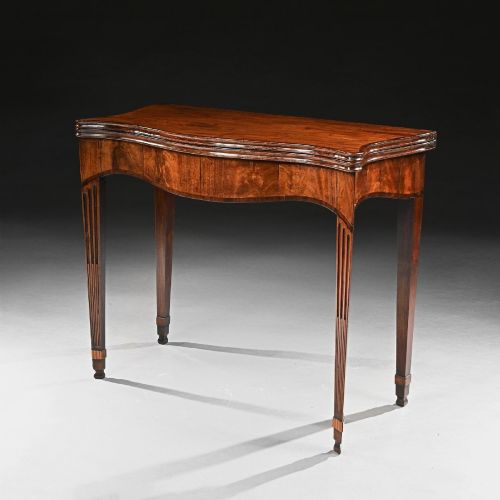
Decoration relied on precision joinery and subtle surface enrichment, integrating boxwood, satinwood, and tulipwood cross banding or stringing. Brass hardware appears on drawer pulls and occasional inlay work, while legs range from plain tapered types to carved cabriole supports with pad feet or stylistic references to Gillows and Chippendale.
Dished gaming wells inside card tables kept stray coins from rolling onto the floor during high-stakes evening play.
What Varies in Quality
The standard of a georgian mahogany foldover table rests on the selection of timber grain and the integrity of the hinging mechanism. Superior examples display figured mahogany veneers with balanced matching across the foldover leaves, alongside tight joints in the concertina or swing-leg frames that support the extended top.
Refinement of carving and inlay also marks the division between everyday utility pieces and high-status commissions. Crisp edges on thumb-moulded tops, precise boxwood and satinwood stringing, and well-executed stylistic details such as carved knees or brass inlay distinguish finer workshop output.
Gillows·Giles Grendey
The Georgian Mahogany Foldover Table Glossary
- Demilune
- Half-moon shaped, describing tables designed to sit flush against a wall when folded. These pieces often feature hinged tops that open to form a full circle for card playing.
- Concertina action
- An expanding frame mechanism that allows the rear legs of a card table to pull outward symmetrically with the opening of the top. This provides stable support for the folding leaf without relying on a single swing leg.
- Cross banding
- A strip of veneer applied to the border of a tabletop with the grain running perpendicular to the central panel. It creates a contrasting framing effect around the primary timber.
- D-shaped
- Formed with a straight back edge and a rounded front, resembling the letter D in plan view. These tables function as side consoles when closed.
- Pad foot
- A simple rounded foot shape found at the base of cabriole legs on earlier eighteenth-century pieces. It rests flat on the floor without a separate castor.
Georgian Mahogany Foldover Table: Frequently Asked Questions
What were foldover tables used for?
These tables served primarily for tea service or card games in domestic parlours and drawing rooms. During the day, they stood closed against a wall to save floor space.
When evening arrived, the hinged top opened to reveal a baize-lined playing surface or a larger wooden expanse for entertaining guests.
How do you open a foldover table?
Most models feature a rotating top that swivels ninety degrees to reveal a concealed well, or a hinged leaf that flips open supported by a swing leg or concertina frame.
Care must be taken to ensure the supporting leg or mechanism takes the weight of the open leaf before releasing it fully.
How to tell George III from Regency?
George III pieces typically display straighter architectural lines, subdued mahogany tones, and occasionally carved cabriole or square tapered legs. Inlay work during this phase often relies on subtle satinwood stringing.
Regency examples tend to incorporate bolder brass inlay, heavier pedestal bases, or more dramatic grain patterns in the mahogany veneer reflecting nineteenth-century tastes.
How to live with antique tables?
Placing these tables away from direct sunlight and heat sources protects the mahogany veneer and polish from drying out or fading over time. Maintaining a stable room climate prevents the timber from warping.
Routine dusting with a dry cloth keeps the surface clean without risking moisture damage to old polish or inlay.