


George II Style Furniture
George ii style furniture brings the robust proportions and rich timber of the mid-eighteenth century into later interiors.
George II Style Furniture
George ii style furniture encompasses seating, tables, and case pieces built during the Georgian era as well as later revival periods including the Victorian age and the early twentieth century. Buyers seeking this aesthetic encounter walnut and mahogany forms that draw directly upon the design vocabulary of the seventeen-thirties and forties.
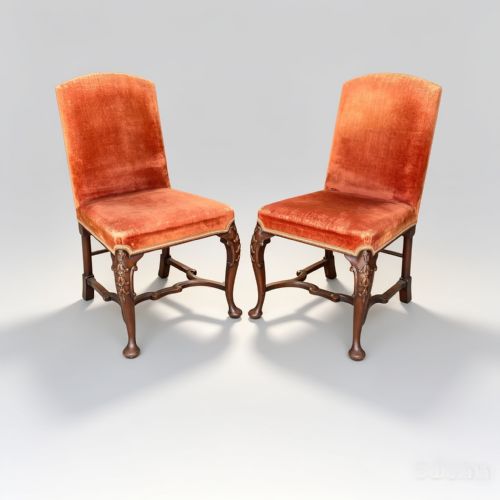
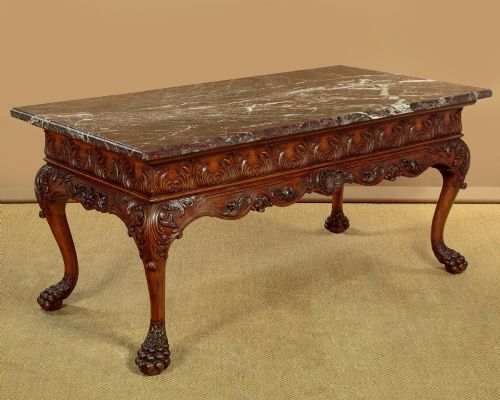
The selection on this page centres heavily on walnut and mahogany items, ranging from side chairs and lowboys to chests of drawers and marble-top centre tables. Miniature furniture and child's chairs also appear alongside full-scale fold-over games tables and dressing chests.
How george ii style furniture was made
Carved walnut and mahogany form the structural core of these pieces, shaped with mortise and tenon joinery and supported by secondary timbers. Cabinetmakers utilised figured walnut veneers on drawer fronts and surfaces, often enhancing them with delicate feather banding.
Surfaces frequently incorporate inset marble slabs on side and centre tables, while seating incorporates upholstered pads covered in textiles and velvet. Brass handles and escutcheons secure drawer furniture on lowboys and chests.
Giltwood elements appear on specific decorative items, adding contrast to the dark tones of walnut and mahogany. Carving is applied directly to solid timber on chair rails, cabriole legs, and table frames.
George II Style Furniture Retail Price Guide 2026
Typical asking prices for george ii style furniture among the pieces listed under this phrase on Sellingantiques today, from the lower quarter to the upper quarter. They describe what is for sale here now, not the wider market.
Miniature chests and child's chairs appear among the full-scale furniture, built with the exact same joinery as their adult-sized counterparts.
What varies in quality
The choice of timber grain dictates much of the visual weight, with highly figured walnut veneers and rich mahogany stock sitting at the upper end of the scale. Figuration on drawer fronts and table tops requires careful matching by the cabinetmaker.
Carving definition on chair splats, legs, and frames separates standard production from finer execution. Crisp edges and deep relief work indicate skilled hand-carving rather than mechanical shaping.
The integrity of secondary woods, original brass hardware, and the stability of joints determine the durability and execution standard of each piece. Surface finishes that retain appropriate warmth and depth rather than heavy modern varnishes preserve the character of the timber.
The George II Style Furniture Glossary
- Feather banding
- A decorative inlay technique using two pieces of veneer cut diagonally and laid to form a herringbone pattern around drawer perimeters. It frames the central timber surface.
- Lowboy
- A small low dressing table or side table fitted with drawers, typically raised on four legs. This form gained popularity during the early eighteenth century.
- Cabriole leg
- A furniture leg that curves out in a convex arc and tapers inward in a concave arc, emulating an animal limb. It frequently terminates in a pad or claw foot.
- Fold-over table
- A table featuring a hinged top that doubles the surface area when unfolded and supported. These pieces served as card or gaming tables.
George II Style Furniture: Frequently Asked Questions
What is george ii style furniture?
George ii style furniture includes both eighteenth-century originals and later nineteenth and twentieth-century revival pieces that emulate the architectural forms and substantial proportions of the seventeen-thirties and forties. These items rely heavily on walnut and mahogany.
Makers across different eras drew on the heavy cabriole legs, carved details, and figured veneers characteristic of the original period to create domestic seating and storage.
How do I identify walnut furniture?
Walnut displays a rich brown colour with varied grain patterns, often enhanced through figured veneers and decorative feather banding on drawer fronts and table tops. It serves as a primary timber for many case pieces and seating.
Inspect the surface under good light to observe the natural chatoyancy and depth of the timber, distinguishing it from stained secondary woods.
Where were lowboys used?
Lowboys functioned as small dressing tables or side tables in bedrooms and parlours, providing convenient drawer storage for personal items. Their compact footprint made them versatile additions to domestic rooms.
They typically feature three drawers and stand on slender legs, offering a surface for mirrors and grooming accessories.
How do I date a piece?
Dating relies on examining construction methods, secondary timbers, hardware fixings, and overall wear patterns alongside stylistic markers. Pieces range from the eighteenth century through Victorian revivals to early twentieth-century examples.
Comparing drawer linings, joint types, and timber preparation helps distinguish an eighteenth-century original from a later nineteenth or twentieth-century interpretation.