
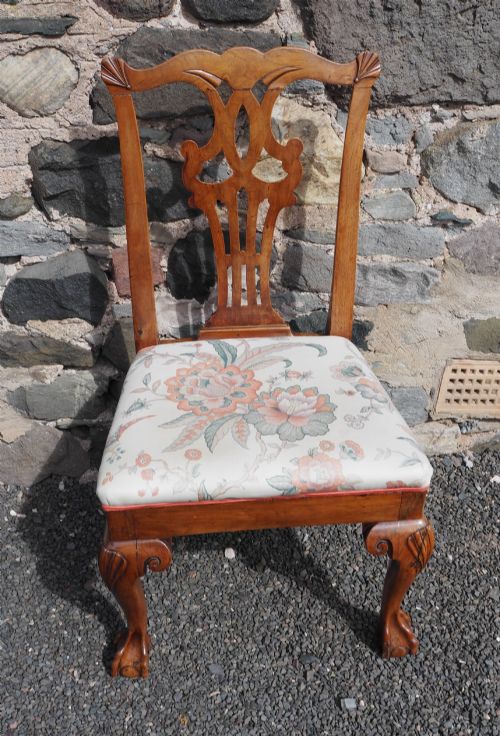
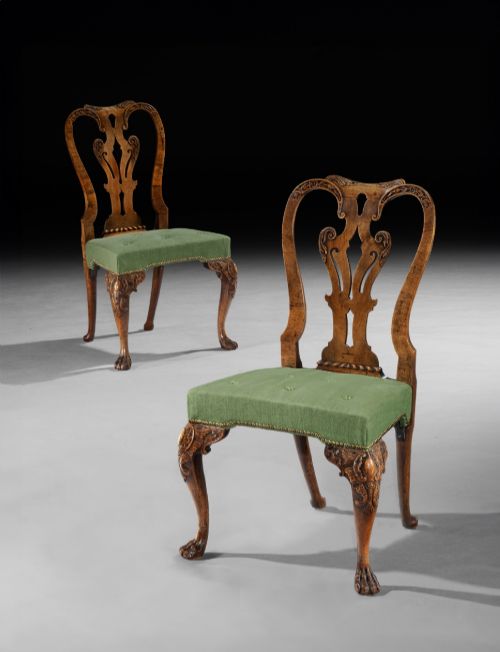
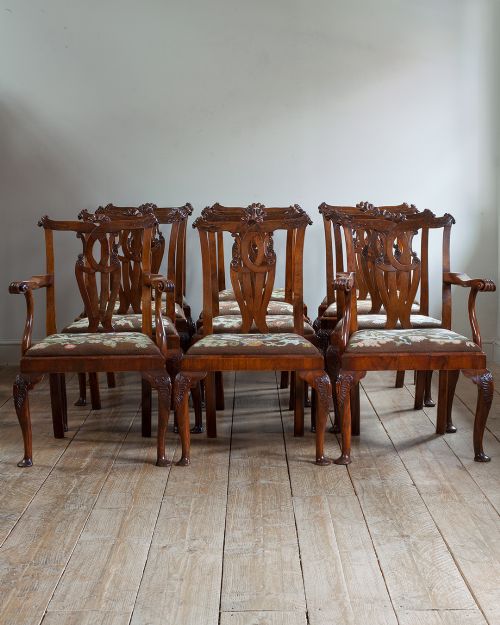
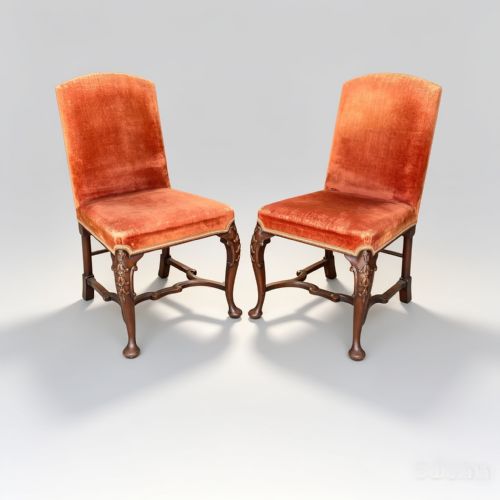


George II Side Chairs
George ii side chairs bring mid eighteenth century proportion and walnut or mahogany timber to the modern dining room.
What george ii side chairs are
When you search for george ii side chairs, you are looking at seating produced during the Georgian era, most frequently encountered as matching pairs or larger sets in walnut, red walnut, and mahogany. These forms serve as traditional dining chairs or occasional seating, often featuring carved details on the frame.
The material palette spans walnut, burr walnut, and red walnut, alongside mahogany pieces from the eighteenth century. Regional variations include Irish examples in red walnut and revival interpretations produced later in the nineteenth century.
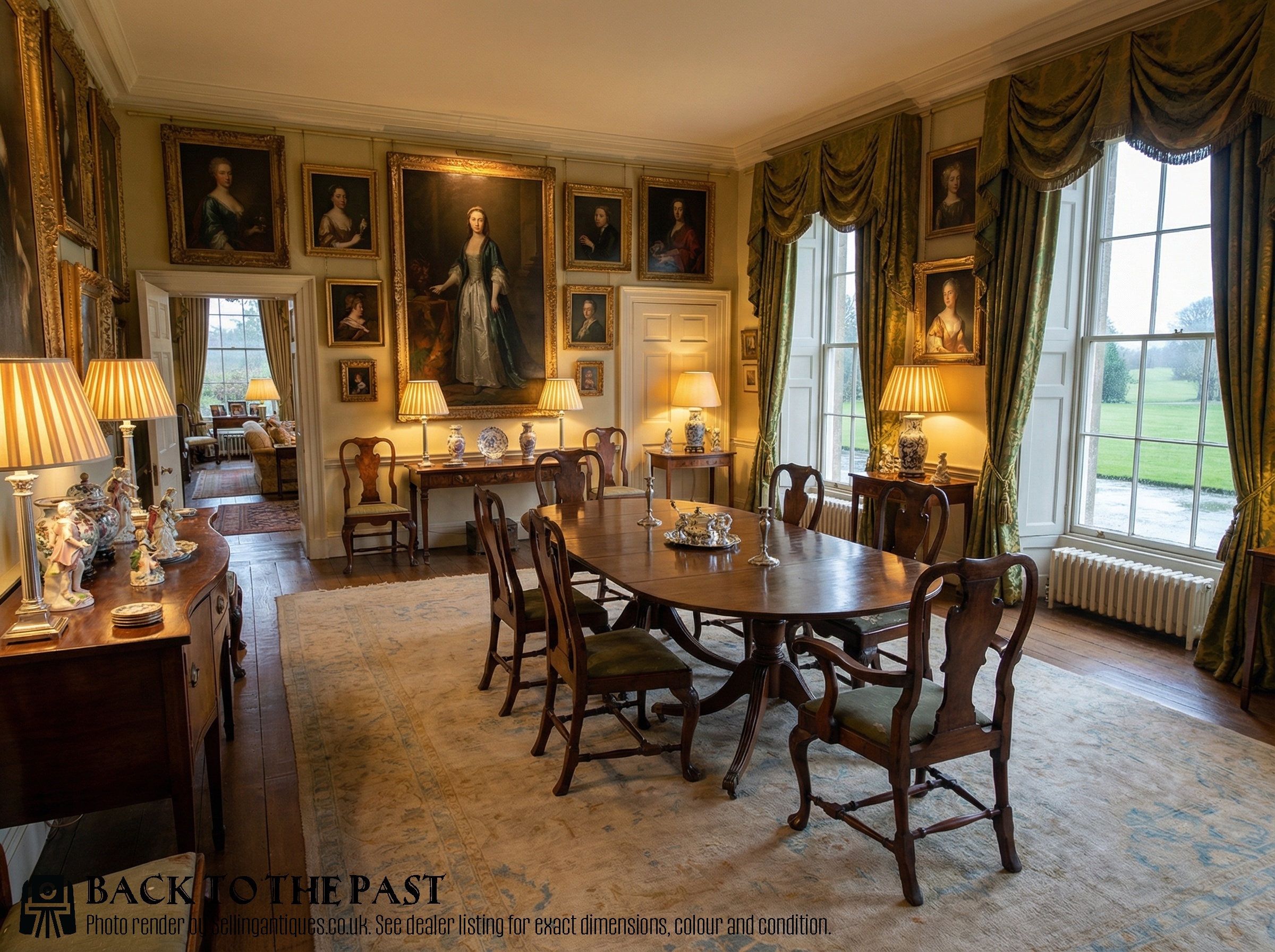
The profile typically incorporates a solid or upholstered back above a drop-in seat supported by cabriole legs. These proportions reflect the seating requirements of grand eighteenth century interiors.
How they were made
Makers utilised timber such as walnut, mahogany, elm, and oak, often selecting burr walnut veneers for decorative surfaces. Frames were constructed using traditional joinery methods, supplemented by carved ornamentation along the top rails and knees.
Seating portions incorporate timber frames designed to hold drop-in pads or upholstered foundations. Upholstery materials recorded in the evidence include fabric, textile, brass, velvet, and tapestry fabric.
Retail Price Guide 2026
Typical UK retail prices for george ii side chairs, calculated from the Sellingantiques database of over a million retail prices indexed since 2003. This retail price guide relies exclusively on Sellingantiques data; no external sources or auction records are used, so the figures do not describe the wider market.
Some eighteenth century country chairs doubled as hall furniture where guests waited before dinner.
What varies in quality
The distinction between standard examples and the finest pieces rests in the crispness of the carved details and the choice of timber figure. Walnut and burr walnut surfaces exhibit natural grain patterns that elevate the visual presence of the frame.
Structural integrity depends on the original construction of the cabriole legs and the retention of period elements. Pairs and sets maintain higher desirability when their timber patination and joinery remain uniform across every chair.
The George II Side Chairs Glossary
- Cabriole leg
- A furniture leg that curves outward at the knee and tapers inward toward the foot, mimicking animal limbs. This form appears frequently on walnut seating from the mid eighteenth century.
- Drop-in seat
- A removable frame upholstered separately and dropped into the seat rails of the chair. It allows for straightforward reupholstering without altering the primary wooden structure.
- Red walnut
- A specific regional or tonal variety of walnut timber utilised in eighteenth century cabinet making. Irish workshops frequently employed this dense material for dining and side chairs.
- Burr walnut
- Timber sliced from walnut tree growths that display highly convoluted, swirling grain patterns. Cabinet makers used these veneers on prominent surfaces to create decorative contrast.
- Scroll top
- A decorative terminal shaped into a spiral curve along the top rail of a chair back. This silhouette defines specific mid Georgian seating forms.
Frequently Asked Questions
How are george ii side chairs used today?
These pieces function primarily as dining chairs positioned around a formal table or as accent seating in living spaces and halls. Their sturdy timber frames accommodate regular daily use while adding historical character to a room.
Collectors also place single chairs or pairs against walls as decorative elements in hallways or bedrooms. Their compact side chair proportions allow them to fit into spaces where larger armchairs cannot go.
What timber was used for george ii side chairs?
Makers constructed these chairs predominantly using walnut, red walnut, and mahogany. Burr walnut veneer was often applied to the primary surfaces to highlight the natural grain.
Secondary woods like elm and oak occasionally appear in country or regional variants. Timber selection generally reflects the fashion of the mid eighteenth century and the workshop's geographic origin.
How do you identify a genuine period chair?
Identification relies on examining the timber patination, joinery techniques, and the tool marks left by eighteenth century makers. Original surface wear and construction methods provide clues to a piece's age.
Later nineteenth century revival pieces replicate the earlier styles but display different secondary timbers and modern fastening methods. Comparing the carving depth and structural wear helps distinguish between periods.