
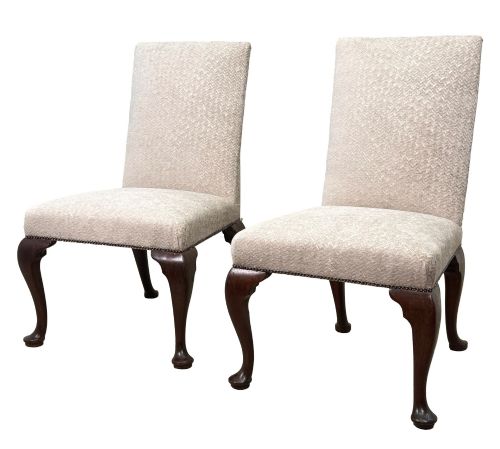
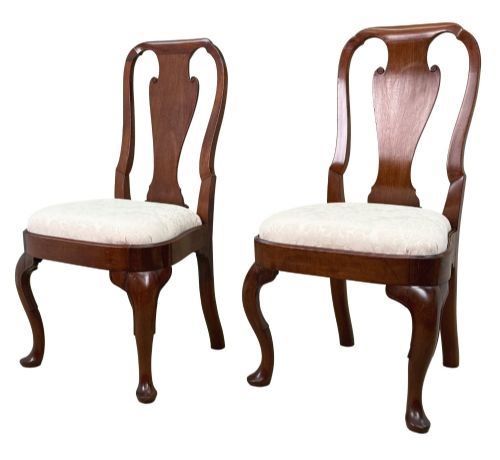
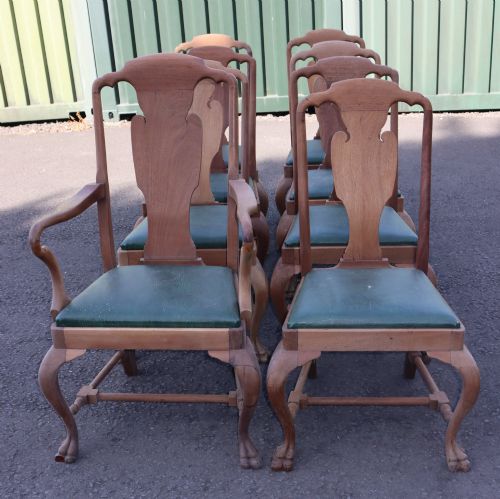
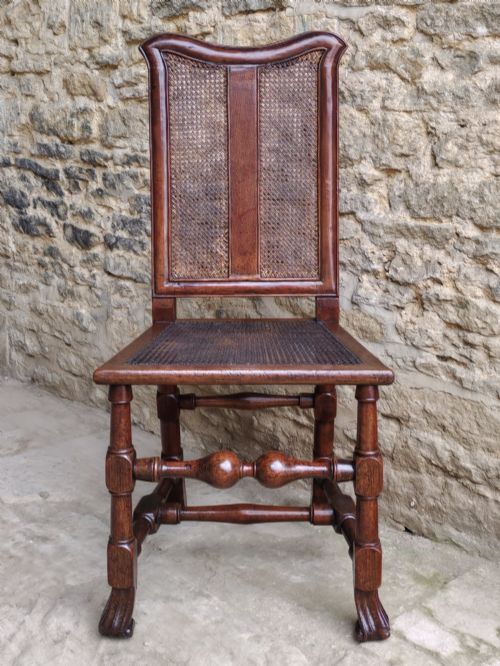
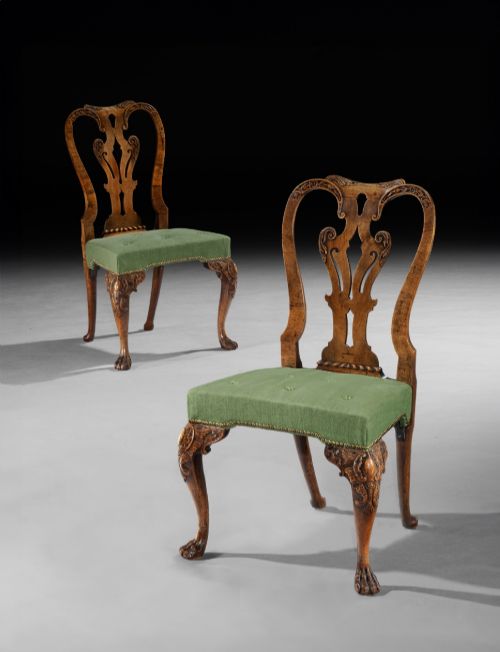
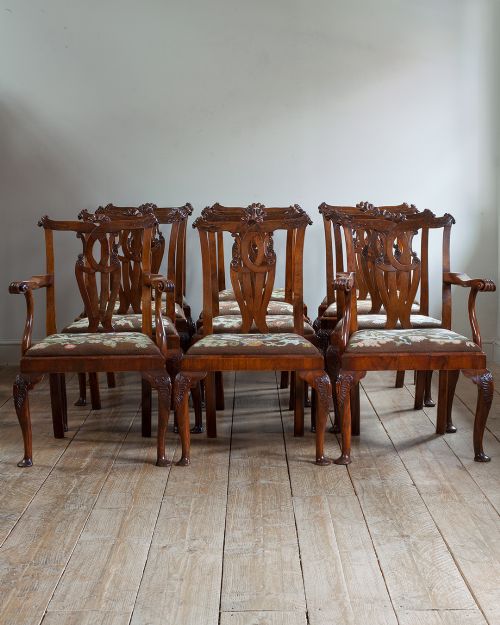
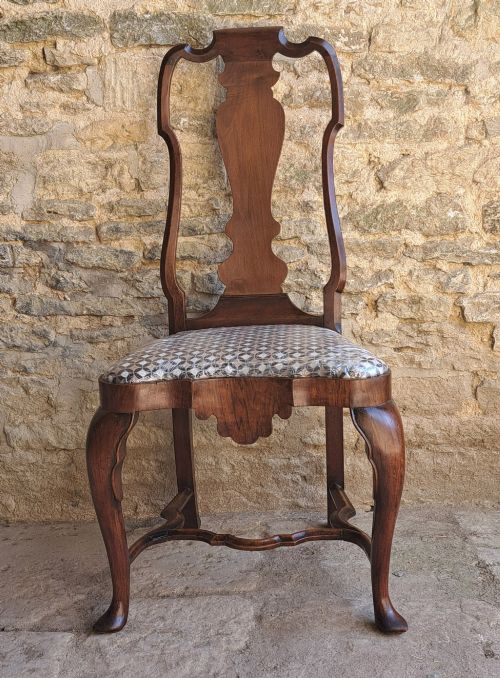
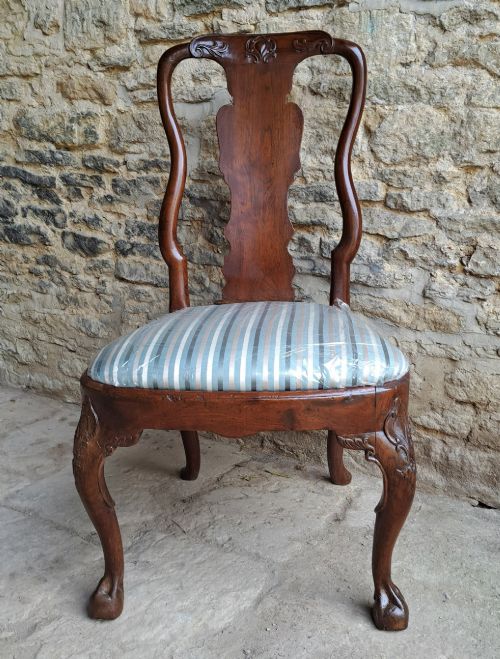
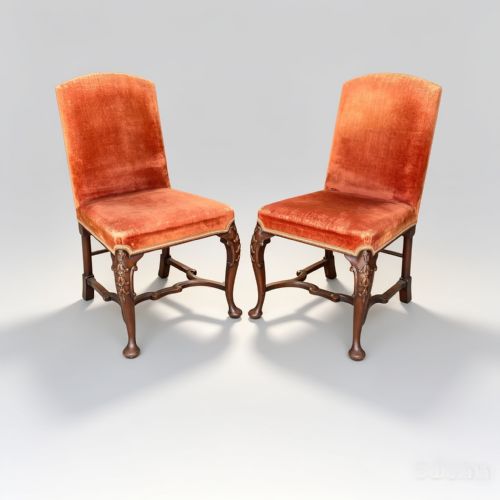
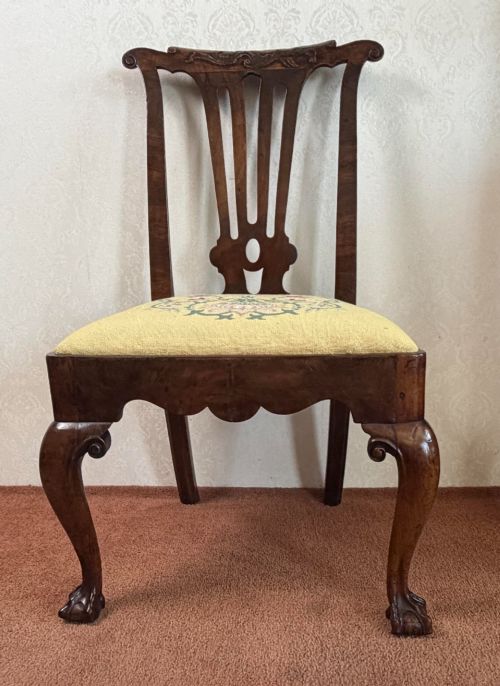
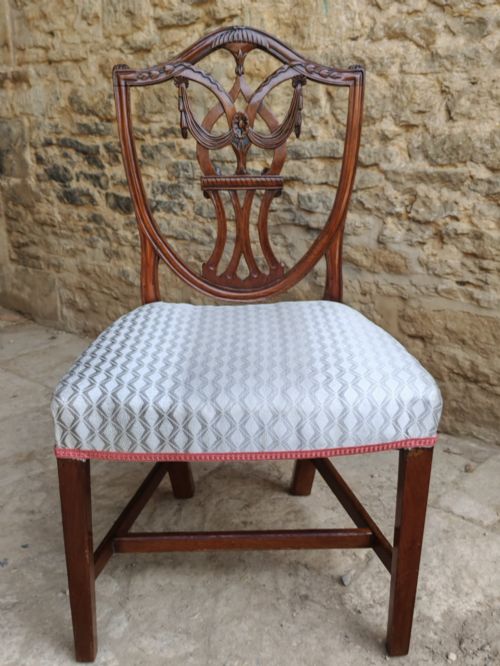
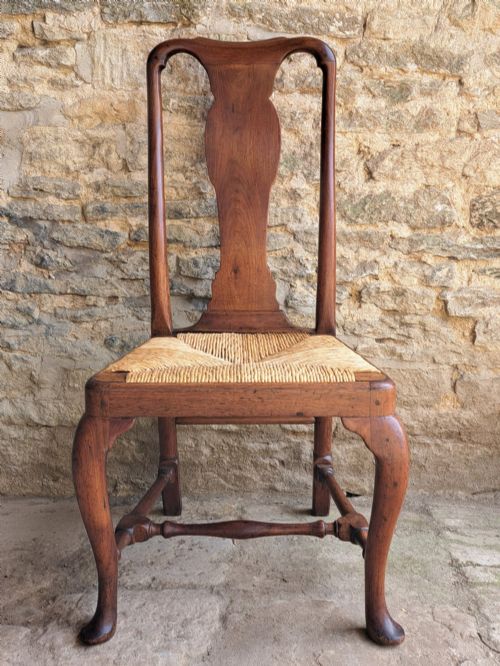
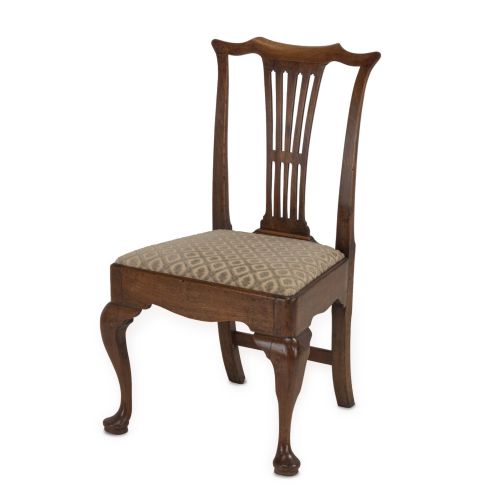

Georgian Walnut Side Chairs
Georgian walnut side chairs offer rich timber grain and sculptural cabriole legs, bringing understated formality to a traditional interior.
Materials and Construction
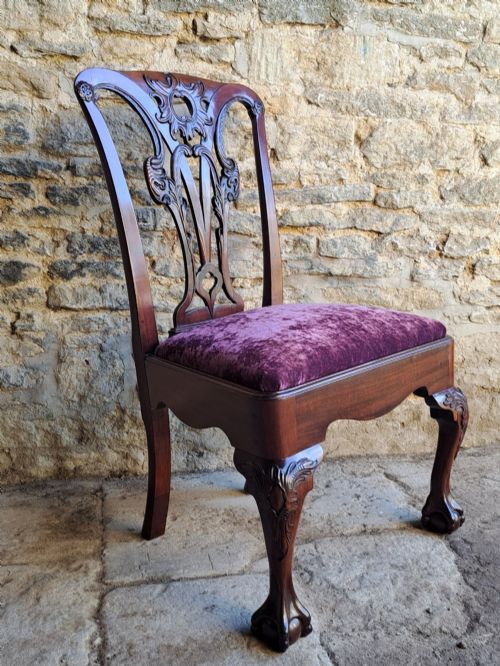
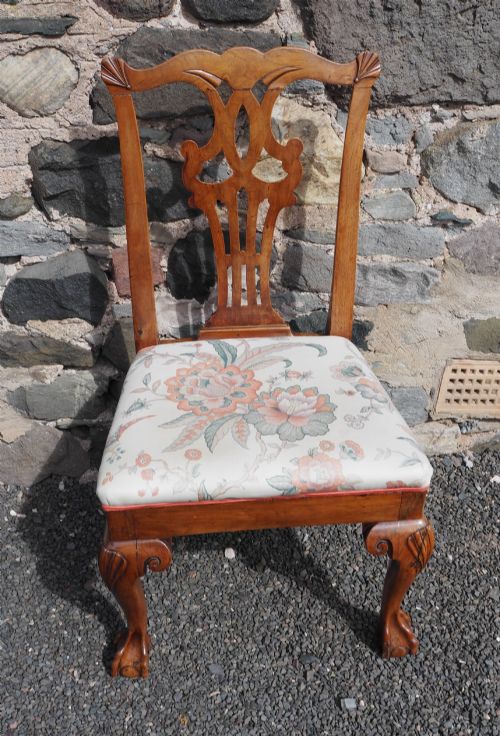
Cabinetmakers constructed these frames using solid walnut and burr walnut veneers applied to secondary timbers, often shaping the wood with hand tools to achieve smooth cabriole profiles. Carved details like scrolling top rails and shell motifs on the knees required precise chisel work by skilled hands.
Seat frames were commonly built as drop-in units webbed and stuffed with traditional materials before being covered in textiles, needlepoint, or leather and secured with brass tacks. Joinery relied on mortise and tenon techniques reinforced with corner blocks to withstand weight and movement.
Factors That Determine Quality
The degree of crispness in the carved ornamentation separates standard examples from exceptional ones, particularly along the knees of cabriole legs and the edges of splat backs. Timber selection also dictates grade, with highly figured burr walnut commanding greater attention than plain stock.
Originality of the frame construction and surface finish largely defines the standing of a piece within its period. Chairs retaining their early surface patination and uncompromised joinery hold more integrity than those with extensive timber replacements or heavily sanded frames.
Georgian Walnut Side Chairs Retail Price Guide 2026
Typical asking prices for georgian walnut side chairs among the pieces listed under this phrase on Sellingantiques today, from the lower quarter to the upper quarter. They describe what is for sale here now, not the wider market.
Listings feature walnut, brass, and diverse textiles including needlepoint, velvet, and leather across the eighteenth, nineteenth, and twentieth centuries.
Whytock & Reid of Edinburgh·Spillman & Co
The Georgian Walnut Side Chairs Glossary
- Cabriole leg
- A furniture leg that curves outward at the knee and tapers inward toward the foot, mimicking animal limbs. This form became dominant during the early eighteenth century.
- Drop-in seat
- A removable wooden frame padded and upholstered separately before being dropped into a recess in the chair seat rail. It allows for straightforward reupholstery.
- Splat
- The vertical central strip of wood in a chair back connecting the seat to the top rail. Pierced splats often feature carved cut-outs.
- Ribbon back
- A chair back design where the wooden splat is carved to resemble interlaced ribbons or flowing fabric folds. It appears on mid-eighteenth-century seating.
- Needlepoint
- Canvas worked with wool or silk yarns using counted-thread embroidery stitches. It frequently covers eighteenth and nineteenth-century seat pads.
Georgian Walnut Side Chairs: Frequently Asked Questions
How do I spot a revival piece?
Revival chairs from the nineteenth or twentieth century often display machine-cut elements, standardised turnings, and modern internal webbing materials beneath the upholstery.
Examine the timber underneath for tool marks and wear patterns that align with eighteenth-century hand-tool methods rather than later industrial production.
Are these chairs suitable for daily dining?
Solidly built eighteenth-century and revival frames remain structurally robust for regular use around a dining table, provided the joints are sound and secure.
It is wise to check the internal framing and glue blocks periodically, as centuries of atmospheric changes can loosen traditional mortise and tenon joints.
What is Irish red walnut?
Irish red walnut refers to timber imported into Ireland during the eighteenth century that possessed a distinct reddish hue and dense grain structure.
Furniture makers in Dublin and surrounding regions utilised this specific stock to build side chairs with robust proportions and vigorous carving.
Why do some chairs have rush or slip seats?
Slip seats and drop-in frames were designed for convenience, allowing household staff to remove them easily for cleaning or reupholstery.
This construction method kept the main structural frame intact while enabling the upholstery to be updated as fashions in textiles changed.